Tiktok being in my life has brought me very little positives if I’m being real. A time suck at worst, most days, an overwhelming source of writing tips and information I can barely process at best. That being said, it did make me aware of an interesting situation that was unfolding on the booktok side of the app. I’m going to give you a quick recap if you’re not aware of what has been going down, maybe because you are spending your time actually being productive and are NOT chronically online. Sooooo…. let’s get started.
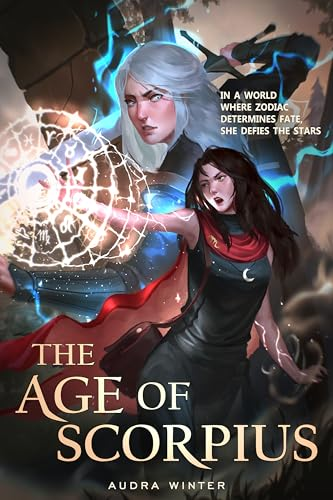
Ok. So. Our story begins with Audra Winter, an aspiring author who through her various tik toks promoting her book, amassed an audience eagerly awaiting the release of her first book, Age of Scorpius. Her world was based on a magic zodiac system that I will not be delving into at this time, but just know, people were excited. I think naturally, people love to sort stuff, especially when it comes to book factions. I think that’s one of the secrets behind the Hunger Games or Harry Potter success so perhaps the same thing was occurring here. It also didn’t hurt that she had an amazing team of artists on her side. She commissioned character artwork, helping people visualize the characters and the world and, as someone who has seen this artwork, it is GOOD.
So the stage is set. Everyone is pumped and she announces she’s going to be publishing her book. Pre-orders come flooding in. It’s a success before it has even found its way into the hands of readers. But then it did…
Age of Scorpius received overwhelmingly negative reviews for poor writing, plot, and editing, despite its viral marketing. Due to the backlash, Audra is reportedly re-editing the book for a new edition, as the first version is no longer available. Wow. Yeah.
So, what happened here exactly? Is the book that bad? According to the overwhelming majority of reviews, yes. And from the passages I have read, also yes. The book reads as a first, unedited draft. I’m not going to pretend I have not produced work similar to Audra. No one is really taking issue really with the work she has produced here, except for the fact that she chose to publish it, expected people to pay for this work, and then had a rather defensive reaction when negative reviews came flooding in. Honestly, her continual reaction to criticism seems to be single-handedly keeping the discussion surrounding this debacle going.
People got what they had paid money for, true, but as paying customers who were dissatisfied with the product, they had the right to leave their review, bad or good. End of story. I don’t think many people would disagree on this point so I’m not really interested in pursuing it further.
What I am interested in in this scenario is what Audra seems to represent here. Their social media illustrates someone very proud of their entrepreneurship and a desire to assemble a whole team and multimedia studio based around their work. All before their book actually came out, mind you. It seemed Audra had built in her head this idea of what her author status would lead to. That everyone would love her book and she would continue to see success… clearly she was getting to ahead of herself, though, because step 1 of the plan was fumbled. Step 1 being writing a good book!
Age of Scorpius read as rushed. It did not get the time, care, or attention the story truly needed. It seemed Audra’s eyes were so set on appearing to be a successful author that they forgot that in order to get there, they needed to make something worth reading. They liked the idea of having a end product more than actually writing. They lost sight of the craft. I think that’s something we can all learn from.
Social media commodifies everything. Everything gets reduced to an aesthetic and/or brand. This process can apply to our hobbies, and then suddenly we are “performing” our hobby and not actually DOING the hobby or enjoying it for that matter. In a world that is filled with terms like “hustle” and a “be your own boss” mindset, it’s easy to see any hobby as a business or a means to an end. We should not be focusing on this when it comes to true craft. Our main goal should simply be to get better. Improve our writing and maybe, at the end of it all, produce something worth other people’s time to read.
If you are interested in further deep dives on the Audra Winter controversy, I’m sure you can find plenty of videos on it on youtube (I should know, I’ve listened to multiple). Mostly the point I want to get across in this post is simple: We are all capable of this. Social media makes this mistake easier and even encourages it. Don’t give in. Get good. Get better. Slowly and steady wins the race.
Recently, a certain topic has been occupying my thoughts more and more. I have read a few books and listened to a handful of podcasts on it, yet I still feel like it is not discussed nearly enough. I am, of course, talking about friendship. Female friendship specifically.
Right now, we live in a time where dating advice is everywhere. Dating coaches dominate social media feeds, and the internet is overflowing with content about how to attract, keep, or heal from “the one.” Meanwhile, friendship, and the role it plays in shaping our lives, often feels like an afterthought. It is treated as something secondary or assumed, rather than something that also requires intention, care, and understanding.
My interest in this topic has only grown as I have moved through different stages of life. There are particular growing pains that surface when you and your friends make the leap from high school to college. Things become complicated, but not in the dramatic, obvious ways we expect. Instead, the complications are quieter, slower, and often harder to name.
High school friendships are already known for their turbulence. There are obvious highs and lows, and plenty of material there for discussion. Lately, though, what draws my attention most are articles and podcasts that focus on adult friendship. These are conversations led by people who are trying to put language to experiences many of us share, especially those that feel unique to this moment in history. How do you transition from high school to college without losing everyone you care about? Why does it suddenly feel like people are drifting away or ignoring you? Why do your friends start changing in ways that make you wonder whether the friendship can survive at all?
There are also new complications that previous generations did not have to navigate in quite the same way. I have a friend who is a terrible texter, and our friendship has suffered because of long distance. Before the age of phones, this kind of constant but uneven communication was barely possible. Now, silence can feel personal, even when it is not meant to be. We find ourselves living in a unique era for adult friendship, one shaped by technology, mobility, and shifting expectations. That reality fascinates me.
These nuances still feel under-discussed, so I want to share a few of the voices I have been reading and listening to lately that have really fueled my interest in this topic.
First, and easily my favorite, is Alexandra Hayes Robinson. She is a YouTuber who runs an advice column, and she gives friendship the kind of thoughtful attention it deserves. One of her most well-known ideas is the “six besties” theory, which I love so much that I want to briefly recap it here.
The core idea is that different friends play different roles in your life, with varying levels of closeness and responsibility. She talks about a Good-Time Bestie, someone you genuinely enjoy spending time with and can have fun with, but who may not be the person you call during a crisis. She also introduces the North Star Bestie, the friend who plays an active, steady role in your life and who feels safe knowing the deepest parts of you. She goes on to describe coworker besties, people you genuinely like and enjoy within a work environment, even if you rarely see each other outside of professional settings, along with other friendship categories that reflect real adult dynamics.
I appreciate this theory because it helps make sense of how messy adult friendships can look once you leave the structured world of school. Not every friendship has to be all-consuming or lifelong to be meaningful. This framework allows for friendships to shift without immediately jumping to the conclusion that they have failed or must be ended entirely.
I also think this approach helps manage expectations. Not every friend can, or should, meet the same emotional needs. This theory simply gives language to a truth many of us already feel but struggle to articulate. For that reason alone, I highly recommend checking her work out.
Next up is Charlotte Morabito. While I do not watch her content quite as regularly, she has a strong catalog of thoughtful videos on friendship, particularly on the unhealthy mindsets we often cling to that end up creating unnecessary conflict in our relationships.
Just this morning, I watched an excellent video of hers titled “Why You Always Care More Than Your Friends.” What I appreciated most is what the video does not do. She does not default to the familiar narrative of telling you that you are “just such a giver,” while everyone else is lazy, selfish, or simply not worthy of your time. There is no rush to villainize your friends or to encourage cutting people off at the first sign of imbalance.
Instead, she approaches the topic with a more critical and grounded lens, walking through a variety of dynamics that could realistically be at play. One possibility she explores is the idea that you might be trying to prove your friendship to someone by immediately showering them with praise, favors, and attention. While this often comes from a good place, it can quickly become overwhelming and even unhealthy, especially when it is rooted in insecurity or fear of being abandoned.
She also talks about how mismatched expectations can quietly erode friendships. It is possible that you have never clearly communicated what you need from your friends. Maybe they genuinely believe you enjoy planning every outing or initiating every conversation and do not want to step on your toes. In that case, what feels like neglect to you may simply be a misunderstanding on their end.
I really appreciate this framework for discussion because it steers away from accusation and instead encourages self-reflection. It asks people to consider how their own patterns, assumptions, and unspoken expectations might be contributing to the situation or even creating it entirely. If there is one thing that feels universally true, it is that people can get very lost inside their own heads.
Anyway, I have linked the video below if you are interested in checking it out for yourself.
Third up is Psychology with Dr. Ana. She is a licensed psychologist, which brings a slightly different and more scientific perspective to many of the scenarios she discusses, and that is especially true when it comes to her conversations about friendship.
Much of her content centers on the expectations we carry in our heads but never actually communicate to the people around us. She talks about boundaries, the importance of naming your needs, and the thinking patterns that can quietly cause us to get in our own way without us realizing it. Rather than framing these issues as personal failures, she presents them as habits that can be examined and adjusted with awareness and practice.
What I appreciate most is that she manages to cover these topics without slipping into overly polished, holier-than-thou therapy language. Her approach feels accessible and practical, which makes her insights easier to absorb and apply to real-life friendships rather than leaving them stuck in the abstract.
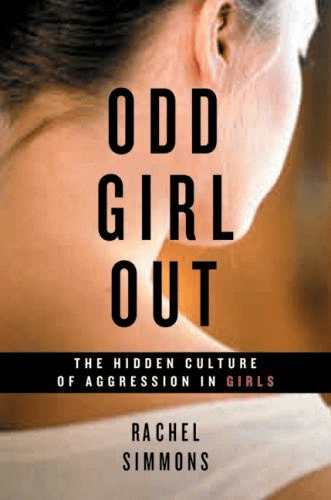
Finally, I read a book. Yes, everyone, I am now an expert.
That said, I will admit it is not as directly related to adult friendship as my previous recommendations. The book focuses specifically on female friendship during middle school and high school. Even so, I found it incredibly relevant. It explores how, as women, our friends often have the ability to wound us more deeply than almost anyone else in our lives, all while leaving us questioning whether we are imagining the hurt in the first place.
A large portion of the book examines female aggression and the subtle ways it tends to be expressed. Rather than overt conflict, it looks at exclusion, silence, passive behavior, and emotional manipulation, patterns that are often dismissed or minimized. While the book is not explicitly about adult friendship, I still think it is an excellent resource for anyone who carries a lot of baggage from past female friendships, or honestly, for anyone at all.
I do not have to tell you that some people do not outgrow the behaviors described in this book. Those patterns can easily follow us into adulthood if they are never named or challenged. Because of that, I also think this book can be useful as a mirror. It gives us the opportunity to check ourselves, to make sure we are saying what we mean, communicating clearly, and having necessary conversations instead of letting resentment quietly build. (See said book below)
IN CONCLUSION…
Friendship is not a static thing we master once and carry effortlessly through life. It changes as we change, shaped by distance, time, technology, and the quiet evolution of who we are becoming. The transition from adolescent friendship to adult friendship can feel disorienting precisely because there are so few clear scripts for it. We are often left trying to interpret silence, shifting priorities, and unmet expectations on our own.
What these books, videos, and conversations have helped me realize is that many of the tensions we experience in friendship are not signs of failure, but signs of growth happening in real time. Adult friendship asks us to be more self-aware, more communicative, and more honest than we were ever required to be before. It challenges us to examine our expectations, our insecurities, and the roles we unconsciously assign to the people we love and probably want to keep around!
If nothing else, I hope this encourages more open conversation around friendship, especially female friendship. It deserves the same thought, care, and nuance we so readily give to romantic relationships. I think this post is probably the beginning of many, as I delve deeper into this topic, so there is likely more to come! Stay tuned!
Please excuse the obvious titling. In truth, it’s not just TikTok specifically, though, that has been the newest catalyst for this problem I’m experiencing regarding social media and its relationship to the creative process. You might be wondering: what problem exactly am I referring to? What is there to be said on this topic that hasn’t already been reiterated numerous times online? Social media is distracting and, therefore, we become too distracted to create. Duh. We all know this.
And yes, this much is true. Social media is horrible for our attention spans, but I’m going to take a break from railing against this specific issue and focus on another one that I have personally experienced this month. This is the issue of inspiration overload and the resulting creative paralysis that ensues.
I love a good Pinterest scroll. This was my first social media of choice as a teen. I felt like it helped me get started on a project by getting my brain churning with endless inspiration. It had it all! Writing prompts, concept art, writing playlists, tips, life hacks—everything!!!
For the most part, I walked away from my Pinterest scrolls feeling positive at this time. I’d scroll with a specific goal in mind, further develop an idea, pin a few pins (or even create a new board for this one idea), and then walk away within 10–15 minutes. Done!
I don’t know where I went wrong… well, I have a guess, so let’s discuss.
There came a point where my social media habits became less orderly. As an adult, school took up less time, I got on additional social media, and simultaneously, those platforms became more attention-grabbing and endless. I remember a time when you could scroll Instagram and it would eventually give you a message like, “That’s it! You’ve seen everything new that there is to see! Now go do something else!”
It definitely no longer does this.
You can scroll and scroll and scroll. This is true of every social media platform right now. “It’s for inspiration!” I’d say. After all, it was writing-related content that I was consuming. After a point, however (whether due to the nature of the content or the sheer amount of it), I found it very easy to slip into the role of consumer as opposed to creator. Ideally, you should be able to do both, but that does require a certain level of balance that feels nearly impossible to obtain. What is that magic amount of time to scroll BookTok or Pinterest concept art before the very practice itself becomes a creativity-eating monster?
What I found was that after consuming copious amounts of writing content, I was hit with this intense feeling of creative paralysis. I recalled the gazillions of writing tips and do’s and don’ts. I recalled all that I should be doing. Show, don’t tell. Use metaphors. Don’t use metaphors. Use them sparingly. Adverbs are evil. Adjectives are evil. Passive voice is okay. Passive voice is evil. Develop your world entirely before writing. It will develop as you write, and then you have to rewrite it all. Put your character development above worldbuilding. Worldbuilding is key. And blah, blah, blah, blah.
I can’t write and I suck. That’s the conclusion of today’s writing session.
You see, we weren’t made to have this many voices speaking into our lives, much less our creative process.
At some point, inspiration stops being fuel and starts being noise. And while social media loves to market itself as a wellspring of creativity, it rarely tells us when to stop drinking. Creativity, at least for me, doesn’t thrive in a crowded room full of opinions shouting over one another. It needs quiet. It needs boredom. It needs the uncomfortable stretch of sitting with an idea long enough for it to become something mine.
So maybe the solution isn’t cutting out inspiration entirely, but treating it with a little more intention and a lot more restraint. Fewer voices. Fewer rules. More trust. Because the work doesn’t happen in the scroll. It happens when you finally close the app, sit down, and let yourself write badly, imperfectly, and freely again.
So happy late new year! Let’s make stuff again and give it a rest. The mantra I want to embody this year is Less is more. No more drinking out of a fire hose. Let’s try to think of it more as taking a sip from a well. Slow and steady.
Look, I know reading is supposed to be fun. And if you love any of these tropes, that’s great. Truly. I’m not judging you. I promise, dear, reader. I’m directing my judgment towards the industry that keeps churning out the same lukewarm leftovers and calling it gourmet fiction. I know these tropes have a place in fiction somewhere but I have a few gripes as they become widespread…
So buckle up while I gently roast some beloved tropes. If I hit your comfort trope… I’m sorry. (I’m not sorry.)
Enemies to Lovers (I’m begging… please stop)
Look, I know this trope is BookTok’s golden child. But at this point, it’s been done so much that authors are scrambling to manufacture hostility out of absolutely nothing. Or worse…they’re romanticizing behaviors that go way beyond a mild red flag.
I’m tired. I want conflict with substance, not passive-aggressive banter and emotional constipation that magically becomes love in chapter 17.
legitimately abusive people who get a redemption arc because they’re hot
or
villains who are “morally grey,” except their actions are… actually just evil?
There’s a difference between “tragic complexity” and “this man kills entire villages but has one soft scene with a kitten so we swoon.”
BookTok, release him. I’m begging.
Every Brooding Love Interest, Ever
I’ve reached my broody quota for the decade. If has “shadows behind his eyes” one more time, I’m throwing the book.
Can we get more emotionally balanced romantic leads??? Men who communicate??? Men who don’t describe themselves as a monster but just… deal with it in other ways? They don’t even always have to be healthy, I just need a break from the “I treat X main character like crap because of the tragedy.” What if he deals with his feelings by cracking jokes all time? Trying to be liked and loved by everyone? A greed for money or power because it would have prevented his personal tragedy? Idk, I’ll even take a shopping addiction at this point. Please, just change it up sometimes.
Mythological Retellings
I’ve my breaking point. Every Greek myth, Roman myth, Celtic myth, minor footnote of a myth has been rewritten, gender-swapped, aestheticized, and thrown into a love triangle. You name it, its been done but with a twist!
I used to love these, but the market is so flooded I feel like I need a snorkel. Give the myths a nap. Let them rest.
Underdeveloped Magic Systems
I’m tired of magic that’s basically:
vibes
and zero rules.
Magic doesn’t need to be hard sci-fi level, but if plot problems are solved with “because the magic suddenly works this time,” then I’m checking out. I need a little structure here. Develop. Elaborate. Establish. Please.
Fantasy Formula Fatigue
A much more broader complaint but the BookTok effect is real. Something goes viral, sells 10 billion copies, and suddenly we get:
the same cover,
the same “aesthetic”,
the same plot beats,
the same protagonist with “fire in her veins” or whatever.
It feels like copy-paste culture. I want fresh stories, not reskinned bestsellers.
Childhood Friends Who End Up Together
This one is personal: I just don’t care for it.
Also applies to “the leads always end up together” no matter how incompatible, underdeveloped, or generically pleasant they are. Sometimes characters should just… not date? Sometimes the chemistry isn’t there?
And that’s okay!
Let them end the book with growth, not forced romance. Ghibli has been doing this right since forever.
Tragic Backstories (Especially the Last-Minute Ones)
Not everyone needs a traumatic fifteen-page flashback to be interesting.
And oh my goodness, can we PLEASE have more stories where the characters have loving, functional families? Actual parents? Actual siblings? Families that aren’t evil, dead, or conveniently absent so the protagonist can be “strong and independent”?
There is so much narrative potential in healthy, intact families.
Imagine:
an adventuring party that’s literally a family business
siblings questing together and bickering the whole time
a fantasy inn run by a chaotic family who’ve seen every hero, villain, and bard in the realm
a family cracking a mystery together and following clues
Tell me that wouldn’t slap.
Broody Mentors
Sorry if I’m repeating myself but this combo of tropes specifically gets under my skin. If the mentor is mysterious, brooding, evasive, emotionally stunted, and 500 years old… no thank you.
There is something inherently weird about that dynamic, and adding brooding on top of it makes my skin crawl. Give me wise, funny mentors. Give me competent, happy mentors. Give me mentors who aren’t one bad day away from a villain arc.
The Chosen One (I Don’t Hate It, But Please Cool It)
It started as a classic but hasn’t evolved much since.
I’d love to see more stories about the supporting character who never becomes the star, who chooses loyalty over destiny, who stays in the background and is okay with it.
There’s beauty in being the one who helps and not the one who saves the world.
Aaaand I think that about wraps it up! I could probably go on but that’s enough venting and negativity for the day. Hopefully you got some mild enjoyment from this post or at least related a little to some of my reading icks.
Got tagged by Riddhi B. over at Whispering Stories! Thank you so much for the tag—it’s been far too long since I’ve done one of these, and honestly? I miss it. I love feeling connected to the broader blogging world, so today we’re diving into a little game of “Yay or Nay” with some popular bookish trends.
This trend was originally created by Beckyover on her blog, so definitely check out her post if you want to see where it all started!
With the intro out of the way… let’s jump in.
Bookish Tropes
I’m very on the fence here. Tropes can be fun and comforting…like that warm blanket you’ve wrapped yourself in a thousand times sitting on the corner of your couch (And may look a little ratty) but still love. But sometimes they feel exhausted (Much like aforementioned couch blanket). (And yes, I’m looking straight at you, enemies-to-lovers. I’ve read so many versions that my eyes roll on instinct now.)
The real issue is when publishing leans too heavily on whatever trope BookTok is obsessed with that month. It can feel like creativity gets shoved into a garbage can and quickly forgotten: “Write this trope, this way, with these beats, or it won’t sell.” So tropes are a Half Yay, Half Nay for me.
Alternating POV
Yay! When authors do this well, it’s incredibly engaging. You get different layers of the story, different emotional angles, and sometimes even dramatically different interpretations of the same event.
But when it’s done badly? It’s torture. You’re stuck slogging through a POV you don’t care about, flipping pages praying to get back to the character who actually has something interesting going on. So maybe technically another half yay and half nay, thinking on it now.
Ambiguous Endings
Mostly Yay from me. I love when an ambiguous ending feels intentional. I like when the author is almost asking you at the end to imagine where they go. Use that brain of yours!
What I don’t love is when it feels like the author simply… ran out of ideas. Or panicked. Or thought, “What if I just… stopped here?” Ambiguity should fit the story, not be a last-minute escape hatch.
Non-Fiction
Yay! Shocking to my high-school self, who would’ve voted “Nay” with her whole chest. But I’ve grown to love nonfiction of all sorts… memoirs, nature writing, cultural commentary, even the occasional self-help (ok, a lot of self help). Sometimes real life is intriguing.
Historical Fiction
A personal Nay for me. I’ve tried! I really have! Something about the pacing or the tone or the dusty-old-period-piece vibes doesn’t click for me. Maybe I just haven’t met the right historical fiction book yet, but until then… nay. I am so far from a Jane Austen girl too.
Morally Grey Characters
Another split vote. Truly morally grey characters? A Yay. Give me complex motivations, ethical dilemmas, conflicted loyalties! It can be chef’s kiss.
But a lot of “morally grey” characters in romance are really just… rude. Or emotionally unavailable. Or hot with trauma. That’s not morally grey, that’s a red flag. Go get therapy. So: Half Yay, Half Nay.
First Person POV
Big Yay. My favorite POV, honestly. I just love being inside a character’s brain and hearing their inner monologue, watching them rationalize questionable decisions, and getting that close, personal connection. When it’s done well, it feels like borrowing someone else’s brain for a few hundred pages.
Audiobooks
Nay! I’ve tried but it simply doesn’t work for me. My brain wanders unless I’m physically turning pages. Plus, I feel like I retain the story so much better when reading visually. There’s something about the tactile act of reading that makes the story stick.
Re-Reading
Yay! If it was good the first time, why not revisit it? I love catching details I missed or rediscovering lines that hit harder now that I’m older… or just more tired.
Classic Novels
Mostly Nay. I struggle to read a lot of classics without feeling like I’m decoding something. But I do have my favorites: The Princess Bride (forever iconic), Sherlock Holmes (so witty), Little House on the Prairie, and Animal Farm (simple and brutal).
Annotating
Nay. I wish I could be that aesthetic cottagecore annotator with all the colorful tabs but I can’t bring myself to write in my books. It feels like vandalism. My brain screams “crime!” every time.
Cracking Book Spines
Depends. A beautiful special edition? Absolutely not, I treat it like a museum artifact. A beat-up, well-loved personal copy? Crack away. That’s character development.
Character-Driven Books
BIG FAT YAY. My beloved. Give me deep and flawed characters, emotional journeys, growth arcs…yes, please. Plot is great, but characters are what keep me thinking about a book weeks later.
Past/Present Split Timeline
Mostly Nay. I can admire the skill required to weave two timelines together, but it’s not my favorite reading experience. There’s a lot of hopping around, and sometimes I feel like I’m doing mental gymnastics just to keep track of who knows what and when.
Heavy World Building
Yay! Build your world! Flesh it out! Let me smell the air and know the currency system! I love when an author actually commits to making their universe feel real. It shows care.
Signed, Me (your local fantasy enthusiast)
In conclusion…
That’s all for this round of Yay or Nay! Thanks so much for reading and thanks again to Riddhi for tagging me. I’ll drop my own tags below as I have already put together my list of victims… I mean, fellow bloggers and friends.
Hello, readers! I’ve got a useful “writing” guide for you today. I realize that I’ve dedicated this blog to writing tips on how to better one’s craft, so what’s more on theme with that mission than making a guide on how to use AI to accelerate your “writing” process! No, not editing. Writing. The writing itself. You read that right. Read on to figure out how you can craft a best seller without typing a single paragraph of prose and bothering with the whole pesky process of… actually thinking up original ideas and how to effectively communicate that to your readers.
In short, in today’s rapidly accelerating digital age, writers have unprecedented tools at their disposal. With the rise of artificial intelligence, crafting an entire manuscript has never been easier. Why rely on your own voice, perspective, or hard-earned life experience when a silicon parrot can spit back something resembling prose?
Step 1: Pick Your Genre
Choose a genre you love deeply. Something personal. Something meaningful. Then immediately ignore all of that and ask AI to brainstorm “10 hot book ideas in any genre that sells.” Even try “trending book themes” if you’re at a loss for what moral you should convey in this piece. Morality should be determined by mas market, which is what your AI companion will reflect.
Step 2: Prompt the AI… a Lot.
Type a prompt. Then rewrite it fourteen times because the AI keeps misunderstanding your “tone.” (It’s almost like… writing? Except somehow worse.)
“Make it more whimsical.” “But also somber.” “But also funny, but not too funny.” “And can it sound like me even though I haven’t written a word?”
Step 3: Marvel at How Fast the Words Appear
After all, this is the age of INSTANT gratification. Our writing process should evolve to follow suit. Books should be written in the time it takes to make instant oatmeal. That’s how you get a meaningful piece of work worth sharing with the world.
Step 4: Experience the Sudden Realization That This… Is Mediocre
Realize that this work is nothing but a Frankenstein of everything that has come before it. With extra emphasis on what’s been trending in writing in the last 5 years. As everyone knows, literature peaked when Romantasy Slop started being churned out and hitting shelves. These books are all so similar, you can’t quite remember if you’ve read them before or not, but that’s alright, the indulgent story beats are comforting if not entirely formulaic and overdone… right? We read for comfort. Comfort should always be a priority in literature at all times. At. All. Times. Do NOT present anything discomforting or something that could be perceived as causing your reader to THINK.
Wait, what we’re we talking about again.
Step 5: Denial or Rewrite
You’re at a crossroads at this step. You can continue to tell yourself it’s fine and send it off for publishing anyway, or you can attempt to salvage your AI slop by editing. A lot. Please, by all means, continue editing. Realize every sentence feels like it was handcrafted by someone who has never tasted food, felt sunlight, or endured a junior-high breakup. Rewrite one paragraph. Then two.
Suddenly, you’ve rewritten the entire chapter.
Suddenly, you’re rewriting the entire book.
Congratulations! You have now done the exact amount of work you were trying to avoid in the first place. You’ll tell yourself this is simply “refining your AI-assisted draft,” but really you’ve rewritten 90% of it because your actual human brain finally woke up and said, “No. This is wrong. It sounds wrong and it’s not good.”
Step 6: Face the Existential Crisis
Ask yourself why you thought skipping the workout would get you stronger. Then look at AI and realize it’s not your writing partner. It can’t write for you in the same way it can go on a run for you, make a call to your mother for you, can’t eat healthy for you, can’t laugh for you, can’t love people for you, can’t, can’t, can’t.
The shortcut is so tempting, and AI companies will lead you to believe that the possibilities of AI are endless. Sure, there are uses to be explored, but AI is not endless, nor should it be. AI will never write a novel for you. AI will never be a human for you. It is in its name. It is against its very nature. You are human. Writing is in YOUR nature.
Author’s note:
This is not an ultimate condemnation of AI. More so a thought exercise to make sure we’re not using it irresponsibly. I’m quite curious how AI can function as an editing assistant or writing prompt generator. But the sudden flood of AI slop books on Amazon, where not a single word was penned by a being with a brain, has me clutching my pearls a bit. Feel free to leave your thoughts in the comments below, AI in writing has become a common topic on this blog as it invades the writing world, for better worse, and I’m always happy to hear others’ thoughts on these changes.
Or, at least mine is, come to find out. But before I dive into today’s blog post, I just wanted to say hi and recap my last post. I gave you readers a little life update about how I want to commit more time to writing and continue to fight this nasty habit of mine: doomscrolling instead of doing something that actually makes me feel fulfilled. I’ve made numerous posts about this little struggle, which I’m sure is becoming almost universal at this point. Who isn’t trying to lower their screen time these days? Especially when we all know there are tons of more fulfilling things to do.
So that leads me into today’s post, which comes from a few random thoughts I had when I realized that I’d actually managed to lower my screen time lately. To a whole two hours a day! (Cue the round of applause.)
Okay… so maybe it could still be better, but as a self-proclaimed YouTube essay addict, cut me some slack. This is better. But I began to wonder how I managed this over the past month. I’ve made a variety of attempts to lower my screen time with varying degrees of success, so it felt important to pinpoint what strategy finally worked for my life. Why exactly was I able to reduce my screen time this time around? What changed?
The conclusion I arrived at was simple: I needed a hobby.
In my previous blog posts, I’ve described my distant desire to reduce screentime, but I didn’t elaborate much on my strategy for doing so because I assumed it would be as simple as that. I’d decide to be on my phone less, and therefore, I would be. Alas, it doesn’t always pan out that way (hence those varying degrees of success I mentioned).
Turns out sheer willpower is a tough thing to rely on when it comes to breaking a bad habit. You need to fill that empty space with something else. You, or at least I, need something else to occupy your time. I feel a little sheepish typing that out. The conclusion seems obvious, but it wasn’t so obvious to me at first. Certain months, I was terrible about filling my evenings after work, and lo and behold, those were the nights I was most likely to do something… screen-y.
This last month, however, was different. I didn’t plan for it to be different. It just sort of happened. I wanted a book from the library. I wanted to spend more time writing. So I invested time in both. My focus was less on reducing screen time and more on simply doing something else. But it seems that the lack of doomscrolling was a delightful byproduct. And so, my conclusion was made: I need to stop focusing so much on not getting on my phone and instead focus on what hobby sounds fun to dive into on a random weeknight.
This is probably obvious to everyone reading and hardly a novel discovery, but, fool that I am, I didn’t realize until recently that I need more than willpower to kick an overindulging screen habit. I need a hobby. Actually, a few of them.
But if you happen to be in my shoes and are possibly just as dense as me, maybe this post helped you realize that you’re not a weak-willed weenie. You just need to direct your attention toward something else you enjoy. Focus less on not doing something, and more on doing something better for you.
So here’s your gentle reminder for the week: put the phone down, pick something up, and let your hands and mind get busy with life again.
I’ll probably keep making these posts until I die. Yaknow, the obligatory “I haven’t posted in X months but! I’m not dead!” posts. All that being said, wow! I haven’t posted in about 2 months, and yes! I am indeed not dead. I think ya’ll are used to this song and dance by now.
So! What have I been up to, two or maybe even THREE of you may be wondering. In short: not writing. But before you bring out the tomatoes and fruit to throw at me (as I literally wrote a post about not procrastinating writing like three posts ago), I will say, it’s been a busy past couple of weeks. This was less of me blobbing around and doing anything but writing and more of me rushing around and doing anything but writing. Big difference.
(Relevant instagram post inserted above because I actually have no pictures on my computer yet).
So yeah! It’s been busy. Making room in your house for another human is also an arduous task, especially if you find yourself a collector of a wide array of trinkets and are used to being utterly selfish with your use of space. It has been accomplished, however (if you ignore the study/office space), and we find ourselves finally lapsing into a semblance of routine that we now call normal.
The aftermath is very real though. I am a routine person by nature. When this routine is messed with, I find myself collecting a nice little bouquet of bad habits before I try to get my crap together and shed them again. And that pretty much sums up where I’m at currently.
Living with a lovely man, now known as my husband, and learning to share my life. I have also, as of late, found myself struggling to manage my time (namely, overusing my phone, a constant frenemy of mine), struggling to read, and struggling to eat actual meals, not just a weird variety of snacks and junk food. And then I got sick.
I write this post sitting at home during regular business hours with a cup of mint coffee in a mug beside me (which I’m quite proud of actually, because another bad habit that has been wriggling its way into my life is my over-eagerness to spend $7 on a fancy but delicious coffee. Great treat, but not an everyday purchase.). I caught an annoying cold, which required me to call out sick for probably the rest of the week. Irksome, but I have decided to use the time to do a few dishes and reflect on my life.
This reflecting has yielded a few conclusions: One, I need to get back on track with both my caffeine and time management. Second, I need to work on a new writing project. Now, figuring out what this creative project is, is a whole other problem of its own.
I love thinking up writing ideas, but I think it’s an entirely separate hobby from writing them. I am overflowing with concepts and projects I would love to see brought to life, but I often find myself grasping to find the motivation and time management skills to produce something (ugh, there it is again. Time management. Ick).
Creating an actual end product writing-wise just takes so darn long, and, possibly, linking me back to the whole time management thing, I don’t like taking that time. I often find myself spending that time making a Pinterest board for it and nothing more. This, unsurprisingly, leaves me entirely dissatisfied. And I’m tired of being dissatisfied.
(After all, it’s been a few months since my latest poetry book release and I’m getting ANTSY)
So! The anthem for the next month or so is to work on SOMETHING. It doesn’t matter if it’s a singular huge project or a bunch of tiny little ones. I just need to get back into the creative mindset of making something and letting it suck. And perhaps, in all this project bouncing around, I’ll find out what I want to set my eyes and attention on consistently, and that elusive next project will make itself known.
So stick around, there’ll hopefully be more to come as I’m getting back into the swing of things. And if not, I give you permission to throw the fruit this time. Throw a few “boos” in there too if you’d like.
There’s a special kind of writing slump that sneaks up on people if they’re not careful. It’s sometimes not the one where you’ve got zero motivation, but the one where your words feel… stale. The same old metaphors. The same style. The same syntax. It becomes a formula of sorts and doesn’t feel fresh. It gets old.
I think a big culprit behind this is writing without reading.
When we only pour out words but never take any in, our writing starts to echo itself. It’s like talking to yourself in a room with no one else around. Eventually, you’ll run out of new things to say.
Reading gives life to your work. It stretches your brain into shapes you wouldn’t find on your own. You pick up little tricks without even realizing it. This could be a fun phrase, a surprising metaphor, or a way to pace a scene. Sometimes it’s not even about the writing itself but about remembering why you wanted to write in the first place. Books can also remind us of the wonder that made us pull out a pen or our laptop in the first place.
I didn’t read much throughout college and good gracious, it showed in my writing. Everything I wrote felt…Safe. The echo chamber became comfortable. Because, you see, a crappy side effect of not reading is sometimes not even REALIZING the echo chamber your writing is becoming until you sit down with a fresh pair of eyes and you find your own writing boring! It’s bland. It’s missing something. But when I began to pick up reading again (post college), I found writing easier and the quality better.
So if you’re in a slump, maybe the best cure isn’t another thousand words of pushing through. Maybe it’s picking up something off your shelf, letting someone else’s voice break through the echo chamber, and remembering that writing is, at its core, a conversation between you, your imagination, your inspiration, and your readers. And you can’t hold up your end of the conversation if you’re not listening, too.
Anyways, happy Tuesday, and thanks for dropping by and reading my little mini-rant.
When I was in middle school, I had no qualms about just opening a Word doc and shooting from the hip. Who cares, right?? I’m in middle school. But as an adult, I can tell you a completely different story…
My tune has definitely since changed. As self-doubt and perfectionism have become a more prevalent issue in my writing life, I have found that writing when you know where you’re headed is not always easy. Even when you’ve got the finish line in sight, writing WITH a plan is hard enough.
But writing when you don’t believe in the ending? When you’re not even sure if the ending is good, or if the whole thing is worth finishing? That can be a little petrifying or even a slog depending on your personality. That’s like trudging through fog with no map and hoping you’re still on track.
And honestly, that’s where a lot of us live, I think.
We start a project full of enthusiasm, picturing readers crying or laughing at the perfect final scene. Then somewhere around the middle, the plot feels flat, the characters stop talking to us, and we start wondering if we’ve just wasted months of our life. Or maybe we planned the ending and Oh Shoot! It doesn’t feel like it fits anymore! What now???
My advice?
1. Remind yourself you don’t have to believe in it to keep going
You can keep typing even while thinking, This is probably terrible. You can finish a chapter while doubting whether it will all make sense in the end. Doubt doesn’t have to be a stop sign. Resign it to some annoying background noise, and you may even forget about it. Try and loosen up a bit and actually enjoy this whole writing ordeal; otherwise, it may be worth abandoning altogether if you cannot find a shred of enjoyment in it. Just don’t be so hard on yourself, and maybe attempt to write through the doubt.
2. Lower the bar when you’re in the fog
If you can’t see the grand, perfect ending right now, fine. Just write the next part. You’re not committing to keeping it forever. You’re committing to getting it downon the freaking page. Sometimes a clunky placeholder scene is the bridge to the better one you’ll write later. This is the whole “one foot in front of the other” tactic and it works rather nice in my opinion.
3. Let the ending find you
The pressure to “have it all figured out” before you get there will kill your momentum. Sometimes you only discover the right ending after you’ve written the wrong one. Keep moving forward and trust that clarity comes from progress. I have often found that the right ending can come to me when I see how these characters have progressed and grown. I am better equipped by the end of the story to say “ahhh this feels right.”
4. Remember: every story feels worse in the middle
Middles are messy. You’re too close to see what’s working, and your brain is wired to spot flaws. But a finished draft, even a shaky one, can be fixed. An abandoned draft can’t. At the end, you can always edit but you cannot edit what isn’t even there!
5. Have something else that carries you through
Chances are, some redeeming elements about this story that made you start it in the first place, even if it wasn’t the ending itself. What are those elements? The characters? Your interesting or complex MC? The side romance you want to write? That scene in the middle where you reveal that plot twist? Maybe focus on that instead of the hazy or non-existent light at the end of the tunnel
In conclusion, I shall restate my hypothesis (just as my science teachers HAMMERED in my head): Write the next sentence. Then the next. Then keep going until you stumble right into the ending you didn’t see coming but are actually quite delighted with because it’s one that feels RIGHT.
 vibes
vibes 

 By the Brooke