What Kind of Friend Are You? Introducing My Friendship Animal Theory 🐕🐻🐍

I have a new internet project! But then again, don’t I always?

Well, technically I have had this internet project for a little while now, but I have finally given it a proper home.

I started a TikTok called Whimsy Theories, which is basically a place for me to take the random systems and theories that my brain comes up with and turn them into something other people can actually think about.

You may have seen my Fantasy Style Theory post, where I divide aesthetics into seven fantasy archetypes: Princess, Goblin, Knight, Wizard, Dragon, Mermaid, and Angel. That one is probably my favorite I’ve ever come with but it is definitely not the last. That theory started with me thinking about fashion and eventually turned into a whole little world of archetypes, combinations, modifiers, and aesthetics.

Then I moved onto another fun little theory except this one focuses on friend types.

And that is how I ended up developing the Friendship Animal Theory.

To preface, it is loosely inspired by the Six Besties Theory by Alexandra Hayes (You can check out more of her work HERE, I especially enjoy her podcast on youtube which is a delightful advice column.)

So What Is Friendship Animal Theory (The Friendship Bestiary)?

The basic idea is pretty simple:

Different people tend to fall into different roles and dynamics within their friendships.

Not personality types. And, importantly, Not permanent identities. Not “you are a Hound and therefore you behave this way in every relationship.” Instead, these animals describe the role you tend to take on within a particular friendship or friend group.

You might be a Hound with one person and a Bear with another. Or you might have a very different dynamic with your childhood best friend than you do with your coworkers or your newest friend. And I think that is part of what makes this more interesting than a traditional personality quiz or something akin to that.

Friendships bring out different versions of us.

You might be extremely independent in most areas of your life but become incredibly loyal and sentimental with your oldest friends. Or you might be the responsible one at work but the absolute chaos goblin of your friend group.

The question isn’t necessarily “Which animal am I?” though I will add, that if you are one type of friend, there is a higher chance that that tends to be a role you have in other relationships in your life. These are relationship patterns that can be consistent but definitely aren’t the hard rule for how you relate to people. The idea is that friendships aren’t just collections of individual personalities. They’re little ecosystems.

And in an ecosystem, different creatures interact with each other.

Some relationships are nurturing. Some are protective. Some are complicated. Some become unhealthy. Some change completely over time.

Ask yourself: What kind of ecosystem are you creating together, you and your friends?

Sheesh that was a lot of yapping. Are we ready to talk about the actual theory now? I hope so, because here we go!

The Core Friendship Creatures

The first group contains the creatures that represent healthy or generally constructive friendship dynamics.

These are the Bear, Fox, Frog, Owl, Magpie, Rabbit, and Whale.

🦊 The Fox: Mischief & Adventure

The Fox is the friend who makes life more interesting. Their core, if you will, is mischief and adventure.

They are the person who says:

“Okay, but what if we just went?”

Fox friendships thrive on experiences and Exploring somewhere you’ve never been. Sometimes even trying something ridiculous. The Fox brings movement and curiosity into a friendship. They’re your spontaneous friend.

They’re often the reason a perfectly ordinary afternoon turns into a story you tell six months later.

The Fox reminds us that friendship isn’t only about emotional support. Sometimes friendship is about having something to remember and experiencing stuff together!

🐸 The Frog: Silliness & Humor

The Frog is the friend who makes you laugh.

Their core is silliness and humor.

Frog friendships are full of inside jokes, ridiculous conversations, funny voices, memes, terrible ideas, and laughing at things that absolutely should not be that funny. The Frog is also the friend who can make an ordinary day feel lighter.

They remind us that friendship doesn’t always have to be profound. Sometimes the most meaningful thing someone can give you is an hour where you forgot about everything bothering you because you were laughing so hard that you both cannot even breathe anymore. Truly healing.

The Frog brings fun into friendship.

🦉 The Owl: Wisdom & Perspective

The Owl is the friend you go to when you need perspective.

Their core is wisdom and perspective.

The Owl can help you step outside your immediate emotions and look at the bigger picture. They’re the friend who listens to the entire story before responding. Or they might ask the question you hadn’t considered. Or they might even gently point out that the situation you are currently convinced is the end of the world probably isn’t. We need these people badly in our lives to often ground us.

The Owl doesn’t necessarily solve your problems.

Sometimes they just help you see them differently.

🐕 The Hound: Loyalty

The Hound is the loyal friend.

So, as you could probably guess, their core is loyalty.

The Hound remembers who their people are. They do this by showing up. They check in. And they ALWAYS notice when someone is missing. They care about maintaining the bond.

The Hound’s love often looks like consistency.

It’s the feeling of:

“I’m still here.”

🐻 The Bear: Protection

The Bear is the protector.

Their core is protection.

This is the friend who wants to make sure you’re okay. They might walk you to your car or defend you when someone treats you badly. Sometimes they might bring you food when you’re sick or help you through a difficult situation without needing to be asked. They want to help, at the end of the day, and make sure you’re OK.

The Bear’s instinct is:

“Let me take care of you.”

At its healthiest, this is a beautiful form of friendship.

The Bear reminds people that they don’t have to handle everything alone. Sometimes you really do need someone willing to stand beside you.

🪶 The Magpie: Thoughtfulness, Sharing & Connection

The Magpie is one of my favorites because their friendship language is thoughtfulness.

Magpies notice little things. They always remember what you like. They are the kind of friends to see something in a store and think, “Oh my gosh, Brooke would love this.” Or they might send you a picture because it reminded them of you. They LOVE to give gifts and share things.

They collect little pieces of life and bring them back to the people they love.

The Magpie is about connection through thoughtfulness.

It isn’t necessarily about expensive gifts or grand gestures either. It can be as small as a snack you mentioned wanting to try or A funny rock you found on a walk. A common gesture is a book recommendation. Some days it’s just a message that says, “I saw this and thought of you.”

The Magpie says to their friends:

“I saw this and thought of you!”

🐇 The Rabbit: Encouragement & Enthusiasm

The Rabbit is the friend who gets excited with you.

Their core is encouragement and enthusiasm which makes them very fun to tell good news.

You tell them you want to start painting? They’re excited.

You tell them you got a new job?

They’re excited.

You have a weird little hobby you’ve become obsessed with?

They’re asking questions.

You want to try something you’ve never done before?

They’re probably already cheering you on.

The Rabbit helps other people believe in themselves.

They celebrate their friends’ victories, including the tiny ones.

They’re the:

“YOU DID IT!!!”

friend.

The Rabbit reminds us that encouragement is its own form of love. Sometimes you don’t need someone to give you advice. You just need someone who is genuinely excited that you are excited. They are the cheerleader friend and are amazing for it.

🐋 The Whale: Depth & Emotional Intimacy

The Whale is the deep friend.

Their core is depth and emotional intimacy.

Whale friendships often involve long conversations, vulnerability, shared history, and the feeling that someone really understands you.

You can talk about your childhood. Your fears. Your dreams. Or even your weird philosophical thoughts at 1 AM.

The Whale creates a sense of emotional depth but this doesn’t necessarily mean you have to talk constantly.

A Whale friendship can be quiet or even a long distance friend. It can be the person you haven’t seen in months but somehow pick up with immediately.

The important thing is that there is depth underneath the relationship. The roots go deep.

And Then There Are the Disruptive Creatures

Not every friendship dynamic is healthy. And sometimes, even perfectly good friendships can develop unhealthy patterns. That’s where this second category of dynamics and creatures come in.

These creatures aren’t meant to mean “bad people.” They describe behaviors that can disrupt a friendship ecosystem. And importantly, you can sometimes fall into one of these dynamics without being a fundamentally bad friend. Ouch, reflection. I am not always a fan of this but who is. But because of this, the disruptive creatures can be helpful in identifying the pitfalls we fall into, especially among certain friends and friendgroups. For example, I may fancy myself the hound friend because I’m soooo loyal but I can also be a spider or wolf where I can depend on people too much and have an “everyone else sucks” attitude.

Alright, I’ll chill with the examples since we need to go a little more in depth with these…

🕷️ The Spider: Entanglement & Dependency

The Spider represents entanglement and dependency.

This is when two people become so wrapped up in each other that the boundaries of the friendship start disappearing.

You may feel responsible for the other person’s emotions or you may struggle to do things independently. In some of my experiences, I felt like I had to constantly be available.

The friendship can become a web. The closer you get, the harder it becomes to move freely. This dynamic is combatted by the reminder that Healthy closeness still leaves room for two people to be separate individuals.

🐍 The Viper: Resentment & Criticism

The Viper represents resentment and criticism. Double ouch.

This is what happens when frustration starts accumulating underneath a friendship. Instead of talking about what’s wrong, you become increasingly critical. I know for sure, this is a dynamic that I have partipcated in.

Little things start irritating you. You keep score. You notice everything the other person does wrong. Eventually, the friendship can become full of little bites. And the difficult thing about the Viper is that resentment often doesn’t appear out of nowhere. There may actually be a real problem underneath it that should probably be addressed with apologies all around. The issue is that instead of addressing the problem directly, the resentment starts leaking out through criticism or quiet resenment towards the other party.

🐺 The Wolf: Isolation & “Us vs. Them”

The Wolf represents isolation and an “us versus them” mentality.

This is the dynamic where a friendship or friend group becomes increasingly closed off. There is 100% an inner circle and it is not open to the public, I assure you! There are outsiders.

And eventually, being loyal to the group can start meaning distancing yourself from everyone else. The Wolf isn’t simply having a close friend group. Close groups can be wonderful! But the real problem arises when closeness requires exclusion.

When “we’re close” becomes “we’re against them.”

🦅 The Hawk: Domination, Superiority & Competition

The Hawk represents domination, superiority, and competition.

This is the friendship where someone starts trying to establish themselves above everyone else.

Who knows more? Who is more successful? Who has more friends? Who is more attractive? Who is the leader?

The relationship stops feeling collaborative and starts feeling like a hierarchy.

The Hawk doesn’t necessarily have to be loud and domineering in an obvious way. Sometimes superiority is subtle. It can look like constantly correcting people, one-upping stories, competing over achievements, or needing to feel like the most important person in the room.

The Hawk can be combatted by the concept that friendship isn’t supposed to be a scoreboard.

🪱 The Leech: One-Sidedness

The Leech represents one-sided friendship.

One person gives and the other takes. And takes. And takes…

One person always listens. One person always needs help.

One person makes the plans. One person always has an excuse.

Of course, friendships aren’t perfectly equal every single day. Sometimes one person needs more support especially during difficult life phases. Sometimes someone is going through a difficult season and that’s all there is to it.

The Leech dynamic happens when the imbalance becomes the relationship.

There is no real reciprocity.

One person keeps pouring into the friendship while the other keeps consuming it. Signs you may be dealing with this is a constant drain from a friendship.

🦜 The Parrot: Gossip & Carrying Information

The Parrot represents gossip and carrying information between people. Oh boy, this is gonna be fun…

This is the friend who always knows something. And more importantly, always seems to have something to tell someone else.

“Well, she told me…”

“Apparently he said…”

“Don’t tell anyone I told you this…”

The Parrot can become the communication highway between different parts of a friend group. Information travels. Then Secrets travel. Comments get repeated that probably shouldn’t be. And then things get taken out of context. And suddenly everyone knows things they probably shouldn’t know and everyone is upset while the Parrot might shrug and think they’re simply a nuetral third party.

The Parrot dynamic reminds us that information is part of relationship trust.

Just because someone told you something doesn’t mean it was yours to pass along.

Principals

The Species Principle

The first rule of the theory is something I call the Species Principle.

And it is probably the most important one.

People are not species. Relationships are ecosystems.

You aren’t simply a Bear Friend™ who behaves like a Bear in every relationship you have.

You might be a Bear with your little sister, a Magpie with your best friend, and an Owl with a coworker you have slowly become friends with.

The creature describes the dynamic, not the person. This is why I don’t really think of the theory as a personality test (sorry if I keep repeating myself). The same person can behave completely differently depending on who they are with and I think that’s normal. That’s what makes people so layered and complicated sometimes, so it’s no wonder our friendships can ALSO be layered and complicated at times.

The Mirror Principle

We don’t just bring our own behavior into friendships.

We respond to each other.

A friend who makes you feel safe might bring out a more vulnerable side of you. And A friend who is constantly critical might make you defensive (naturally). A friend who is silly might bring out your own silliness.

Please don’t take this to mean other people are responsible for our behavior. It means relationships are interactive. You affect the ecosystem, and the ecosystem affects you. That’s why I don’t think these creatures should be treated like permanent identities.

Which leads into the Combo Principle!

The Combo Principle

Most people are combinations.

You might be a Hound + Magpie with one friend.

You’re deeply loyal to them, but you also love remembering little things about them, giving them gifts, and collecting memories together.

Or maybe you’re a Fox + Frog.

Every time you get together, something ridiculous happens, and you are usually the person who suggested the adventure in the first place.

Maybe you’re an Owl + Whale, where your friendship revolves around deep conversations and understanding each other.

The combinations are endless. And honestly, I think combinations are probably more representative of real friendships than trying to force everyone into one a rigid and hyperspecific category or animal.

The Transformation Principle

One of the most important ideas in this theory is that creatures can change.

A friendship isn’t frozen.

A Hound can become a Viper when loyalty turns into resentment. A Whale can become a Spider when emotional intimacy turns into dependency. Remember friends, the positive and disruptive creatures aren’t completely separate worlds. There are cases where the unhealthy dynamic is simply a healthy instinct that has been pushed too far.

That’s why I don’t want people to try and use these animals as permanent labels. They’re more useful as warning signs and lenses and probably best used in hindsight or reflecting, especially in cases where we may be in the wrong!

The Impermanence Principle

The final principle is that friendship ecosystems are temporary and changing.

People change. You change too actually even though you may not feel it.

People move, get new jobs, get married…

You discover new interests. You go through difficult seasons. Sometimes friendships grow stronger and sadly but realistically, sometimes they become more distant. And though I hate it when this happens, sometimes a person who was once central to your life becomes someone you see once every few years. It hurts but it is part of life. To quote the Ratitouille movie by Pixar, “Change is Nature”.

That doesn’t necessarily erase what the friendship meant. Some relationships belong to a particular season of life and, miraculously and amazingly, some evolve with you.

And Some end.

And that’s okay.

An ecosystem isn’t supposed to stay exactly the same forever.

Possible Additions to the Theory…

I do have a two additions I’ve considered for this theory…

I’m unsure how to add them though as they truly do feel like “nuetral” creatures that describe a specific type of relationship in people’s lives. So I’ll let you leave your thoughts on these in the comments.

The Cat 🐈

The Cat represents independence. I know, shocker.

This is the friend who loves their people but also really likes having their own little world. They might disappear into a hobby for three days. They probably are also very low maintence and do not need constant texting.

They can spend time alone without interpreting it as loneliness. And they generally don’t need their friendships to consume their entire life.

A healthy Cat understands that closeness and independence can coexist. You can love someone deeply and still have your own life.

🦋 The Moth: Rekindled Friendship

The Moth represents the rekindled friendship.

This is the friend you find your way back to.

Maybe you were inseparable in high school and then life pulled you in completely different directions. Maybe you had a falling out. Maybe you simply lost touch. Maybe years passed without either of you realizing quite how long it had been. And then, somehow, magically, you find each other again. There is something very moth-like about this kind of friendship and I love it. You may have wandered away from the light for a while, but eventually you find your way back.

A rekindled friendship doesn’t necessarily become exactly what it was before. Sometimes you discover that you have both changed too much for that. Instead, you get the strange and wonderful experience of meeting an old friend again as the people you’ve become.

The best Moth friendships don’t try to recreate the past. They make something new and good.

There is usually a little nostalgia involved. Old jokes come back. You remember things you had completely forgotten. You find yourself saying, “Oh my gosh, remember when…” But there is also a new layer to the friendship because you are no longer the same people who knew each other the first time around.

The Moth relationship can remind us that distance doesn’t always mean complete disappearance or even means the end of something.

Some friendships go quiet for a season and still have enough warmth left to be rekindled. These cases are rare but they’re oh-so-beautiful when they occur. You are truly blessed if you have a moth friendship.

So What Creature Are You?

Maybe the answer isn’t one creature. Most people aren’t to be completely honest with you. I’d be shocked otherwise.

Maybe you’re a Hound + Magpie with your oldest friend.

A Fox + Frog with your adventure buddy.

An Owl + Whale with the person you have all your deep conversations with.

A Rabbit + Magpie with the friend you are constantly encouraging and surprising with little gifts.

And maybe there are certain dynamics you’re trying to move away from.

Maybe you’ve noticed some Viper creeping into a friendship because you’ve been holding onto resentment. Or you’ve been slipping into Parrot behavior by carrying information between friends. It’s so easy sometimes, I’m sure. Especially among certain crowds and groups.

That is what I actually want this theory to be useful for. Not putting yourself into a very specific box with parameters and DEFINITELY not deciding that someone is a “bad friend” because they fit an animal. I would also add to not treat these as permanent personality types. Instead, I want them to give us a fun little language for talking about something that is actually pretty complicated:

the ecosystems we create with other people.

Because friendships are weird and nuanced.

Sometimes you’re the one bringing little gifts or encouraging people. There friend groups with which we’re the “class clown”. There are days where we’re the enourageer. And sometimes, if we’re being honest, we’re the one who needs to take a step back and ask ourselves what we’re contributing to the ecosystem. Which is probably why I like this theory so much.

It gives us a way to look at friendship without reducing people to personality types.

We’re not species. Our relationships are ecosystems (hit me if I say this again lol.)

And apparently I am going to keep making theories about them.

Stay tuned everyone and thank you for sticking around and getting through this so very long post!

Byeeee!

My Fantasy-Inspired Style Theory

Happy July afternoon, dear readers!

Lately, I have fallen down a very specific rabbit hole.

And by rabbit hole, I mean the kind where you open Pinterest to find outfit inspiration and suddenly you are three hours deep analyzing whether a dress belongs to your woodland fairy Pinterest board, an enchanted princess board, or a wizard board.

(As one does.)

I have always been fascinated by personal style. Not just trends or what is popular, but the deeper question behind style:

Why are we drawn to the things we are drawn to? Why do certain outfits, rooms, colors, and objects immediately feel like “us”? Why can two people wear the same trend but somehow look like they belong to completely different aesthetics or have totally different vibes?

Recently, I came across Ellie Jean’s Style Theory and I was immediately intrigued.

I really loved the idea behind it: that personal style is not just about finding clothes that look good, but about understanding the patterns behind what we naturally gravitate toward.

I like to think that style is storytelling. Our closets, homes, and Pinterest boards are often little collections of the worlds we wish we belonged to.

However, while I really appreciated Ellie Jean’s theory, I never fully found myself fitting into it. Not because I thought it was wrong or anything, just to be clear. Actually, I think it is a really creative and thoughtful way to approach style. But I realized that my brain approaches aesthetics a little differently and has a bit of a different lean. I don’t just look at an outfit and think, “I like that dress.”

My brain immediately goes:

“That looks like a fairy’s ball gown!”

“That looks like a Wizard’s casual fit.”

“If I were a knight, I would wear THAT.”

(Yes, this is how my brain works. No, I cannot turn it off.)

I realized that I didn’t just connect with style through categories. I connected with style through stories. Specifically, fantastical creatures and characters that are associated with these stories that we often see in popular media. And that is where my fantasy-inspired style theory came from.


The Fantasy Style Theory

The idea is simple:

Your personal style can be understood through seven fantasy archetypes.

These archetypes are not meant to tell you who you are as a person. They are not necessarily personality tests. Instead, they are a fun way to describe the themes, feelings, and imagery that you are naturally drawn toward.

The seven primary archetypes are:

👑 Princess — Beauty

The Princess is drawn to elegance, romance, softness, and things that feel special.

🌿 Goblin — Nature

The Goblin loves the organic, handmade, collected, and earthy.

🛡 Knight — Structure

The Knight values craftsmanship, practicality, order, and strength.

🔮 Wizard — Wonder

The Wizard is curious, imaginative, and drawn toward mystery, knowledge, and magic.

🐉 Dragon — Power

The Dragon embraces confidence, intensity, drama, and richness.

🧜 Mermaid — Flow

The Mermaid loves movement, elegance, emotion, and things connected to water.

😇 Angel — Peace

The Angel is drawn toward serenity, harmony, spirituality, and lightness.

Rule One: Primary Archetypes

Most people will not fit into only one archetype. Actually, I think the fun comes from mixing them together.

Maybe you are mostly Princess with a little Wizard. Maybe you are a Goblin who loves Knight structure. Maybe you are even a Dragon who secretly loves soft Angel details.

Your style is a recipe in a sense. And these seven main archetypes are the ingredients. Now, onto rule number TWO!

Rule Two: Child Archetypes

When two archetypes combine, they create a new expression.

Examples:

👑 Princess + 🌿 Goblin = Fairy

👑 Princess + 🔮 Wizard = Enchantress

🌿 Goblin + 🔮 Wizard = Druid

🛡 Knight + 😇 Angel = Paladin

🔮 Wizard + 🧜 Mermaid = Sea Witch

These combinations create smaller aesthetics that blend the qualities of both archetypes.

Rule Three: Major Aesthetics

When three archetypes combine, they create even more specific aesthetics.

Examples:

👑 Princess + 🧜 Mermaid + 😇 Angel = Venus

🌿 Goblin + 🔮 Wizard + 😇 Angel = Cottagecore

🛡 Knight + 🧜 Mermaid + 🐉 Dragon = Lighthouse Keeper

👑 Princess + 🔮 Wizard + 😇 Angel = The King’s Seer

These combinations are where the storytelling really starts to happen. You can also go HIGHLY specific from here.

Rule Four: Emphasis Matters

This is one of the most important rules. The recipe matters, but the proportions matter too (Just like with baking!).

Two people can have the same archetypes and create completely different aesthetics depending on what they emphasize.

For example:

🌿 Goblin + 🛡 Knight + 😇 Angel

With more Angel:
A peaceful pilgrim aesthetic. Soft, simple, spiritual, serene.

With more Knight:
A forest guardian aesthetic. Practical, protective, structured.

With more Goblin:
A woodland caretaker aesthetic. Earthy, handmade, collected.

Same ingredients, but you can end up with a totally different “flavor”.

Rule Five: Modifiers

Sometimes someone resonates with more than three archetypes.

Those extra archetypes become modifiers. It is important to note, however, that modifiers do not replace your main aesthetic. They add another fun little layer to the overall aesthetic.

For example:

A Princess + Wizard + Angel might be a King’s Seer.

Add a Dragon modifier, and suddenly the aesthetic becomes richer, darker, and more mysterious.

Add a Goblin modifier, and it becomes more nature-focused and earthy.

Think of modifiers like adding spices to a recipe. (Yes, I know I keep comparing style to cooking. I stand by it. Also, I’m not a great baker so let me have this.)

Rule Six: Distillations

Each archetype also has a pure expression. (Still workshopping these tbh)

👑 Princess → Muse

🌿 Goblin → Forager

🛡 Knight → Champion

🔮 Wizard → Alchemist

🐉 Dragon → Sovereign or Empress

🧜 Mermaid → Tidekeeper or Leviathan (Still thinking about this one)

😇 Angel → Saint

These are the strongest expressions of each individual archetype.

The Purpose of the Theory

At the end of the day, this is not about putting yourself into a box. I want it to be about giving yourself more language to understand what you already love. You can be a Princess who wears combat boots, A Knight who loves pink, A Dragon who collects flowers, and even a Wizard who lives in a cottage.

The point is not to follow the rules. Or box youself into a highly specific category. The point is to discover the story you are already telling.

Because, in this theory, personal style is not just about what we wear. Maybe it is about tapping into the little fantasy world we create around ourselves. Pretty cool, huh?

ANYWAYS, sorry for the info dump, and thank you for making it all the way through this post. Feel free to leave your thoughts below!

I Started a Writing Event! (and the importance of a Writing Community)

Happy, June! Just wanted to give everyone on here a fun little update on what’s going on in my creative life!

The answer, shockingly, is not writing. It’s ok to gasp. I know my posts paint the picture of someone who is soooooo consistent (insert eye roll here)

I’m actually NOT currently buried in a novel draft that has turned into a continuous hell to edit, nor am I working on a poetry collection (though I have a few half-finished ones in my drafts somewhere). I’ve been doing something actually quite different from my usual projects…

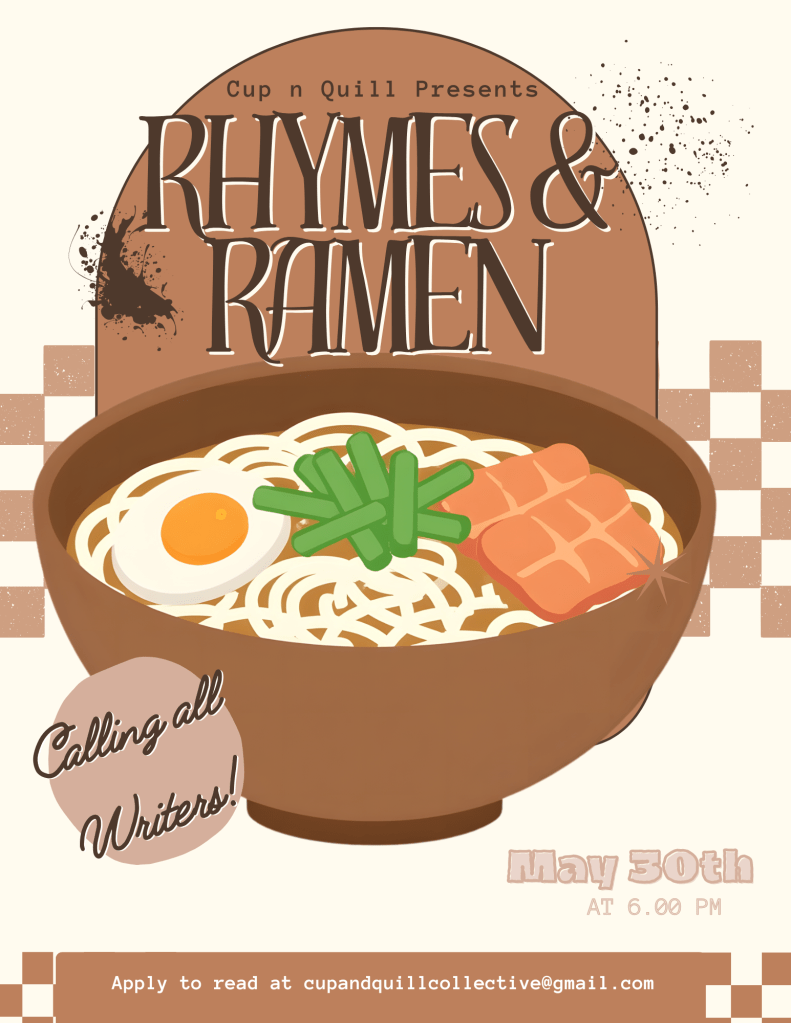
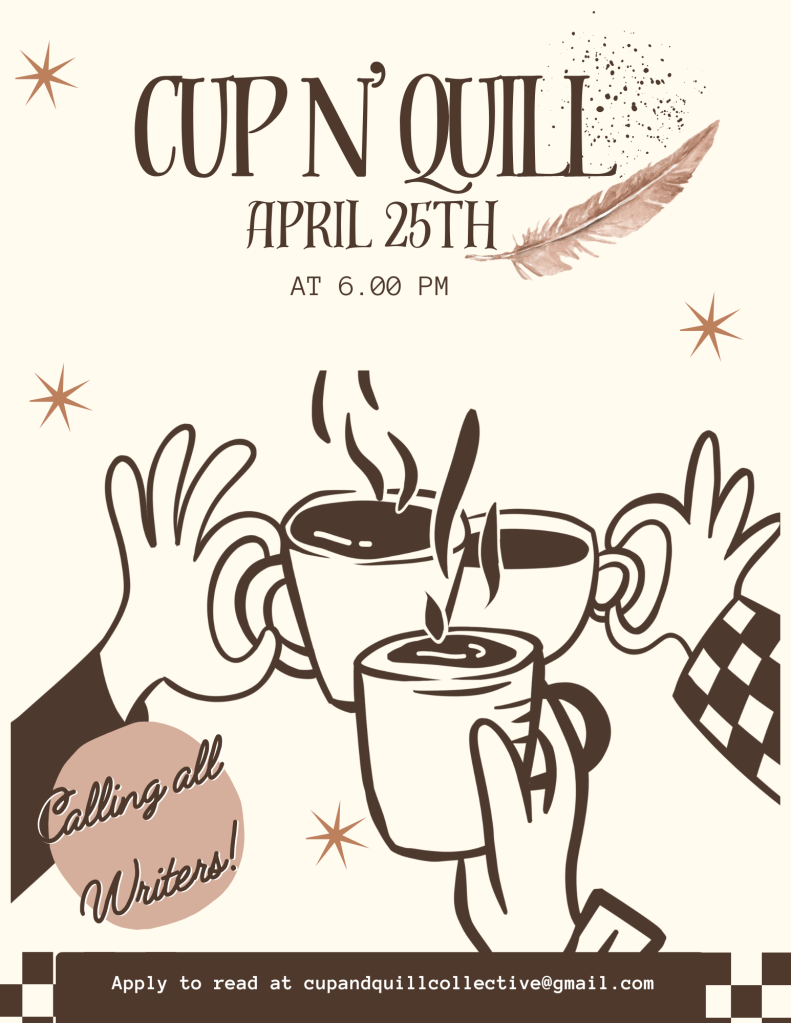
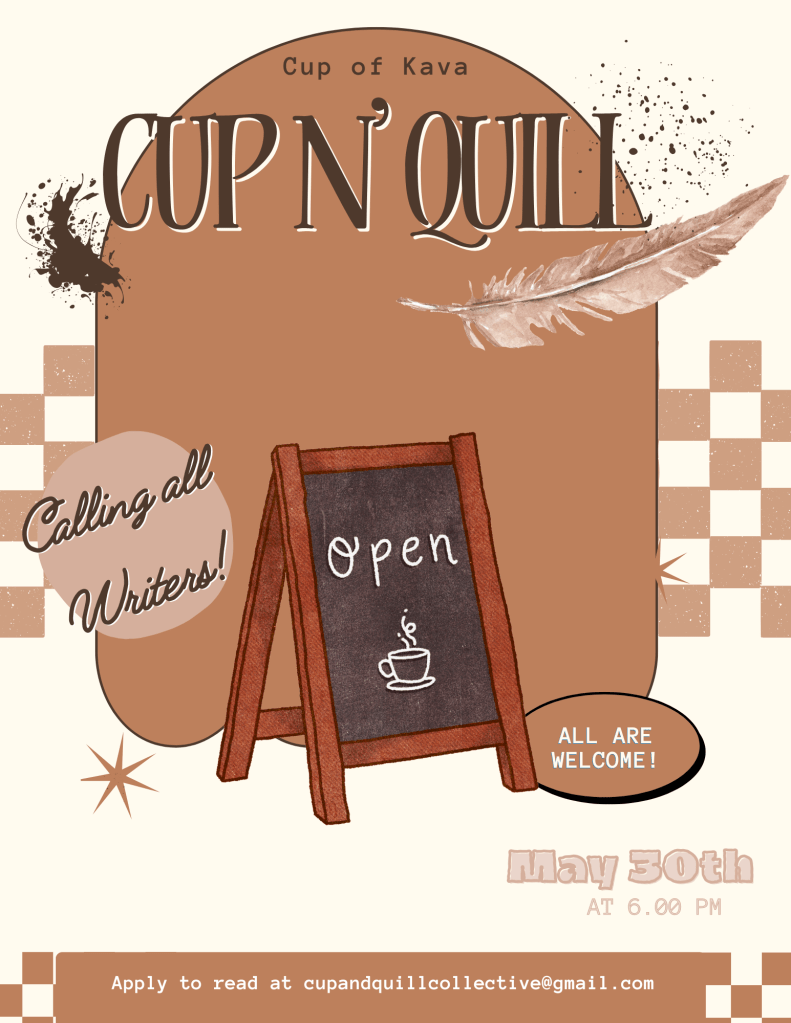
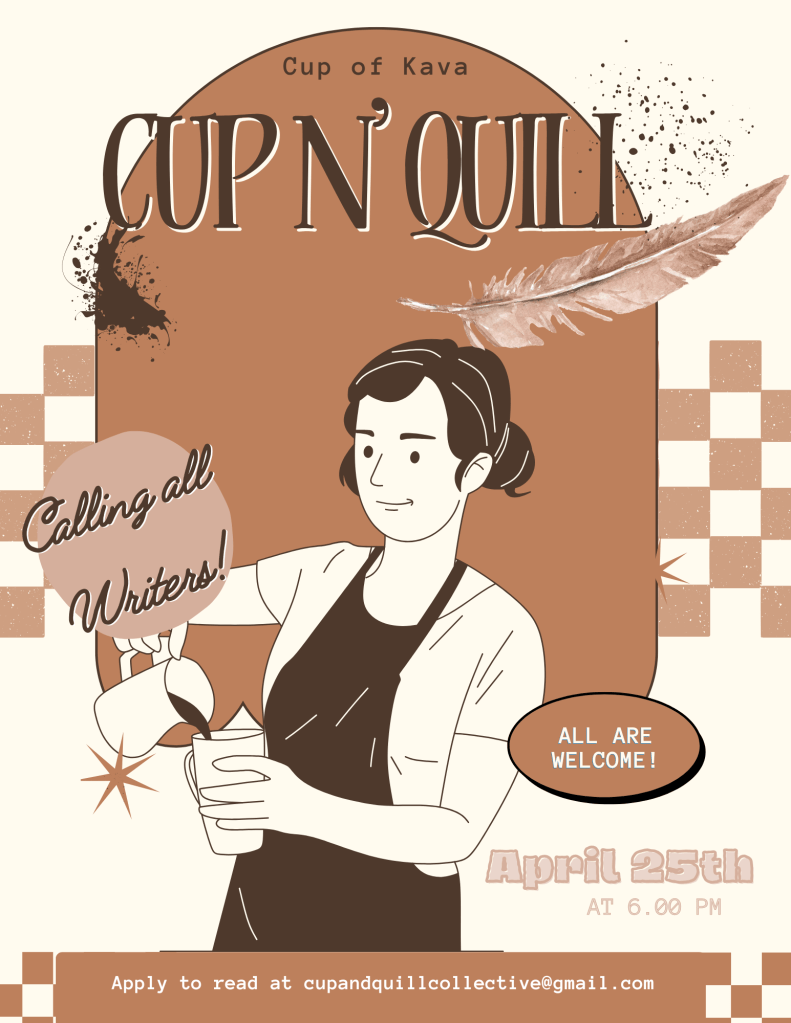
I started a writing event! I guess that isn’t a super big reveal since you read the title in big ‘ol letters. I think its pretty exciting though.

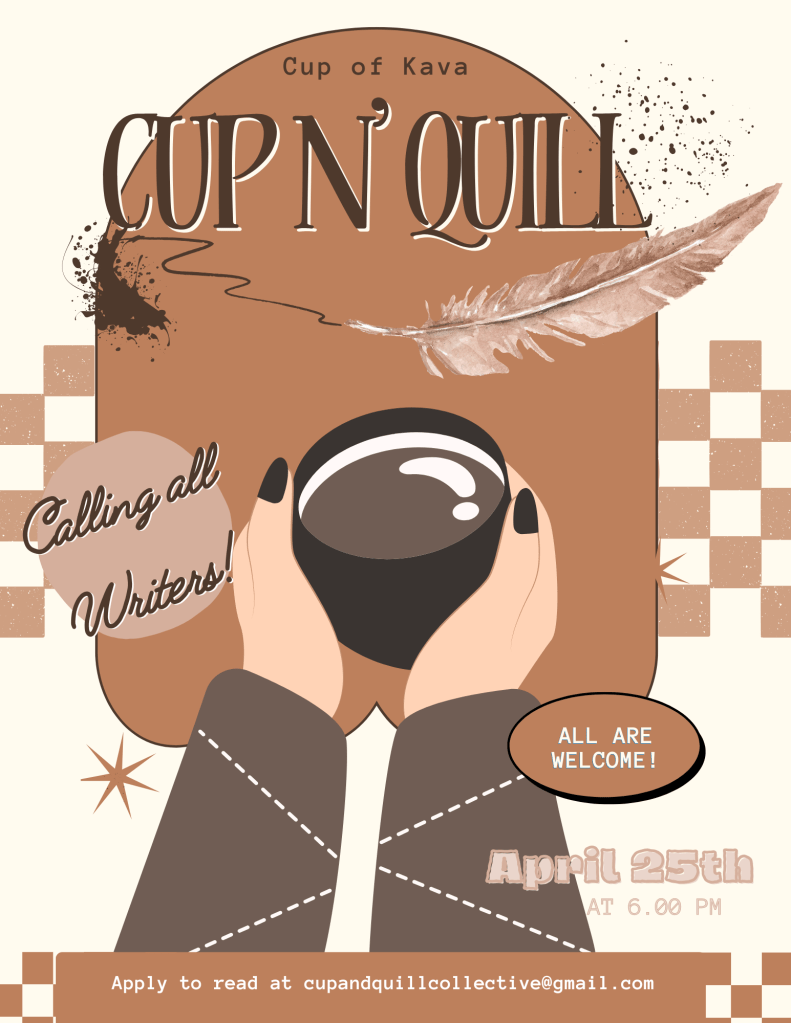
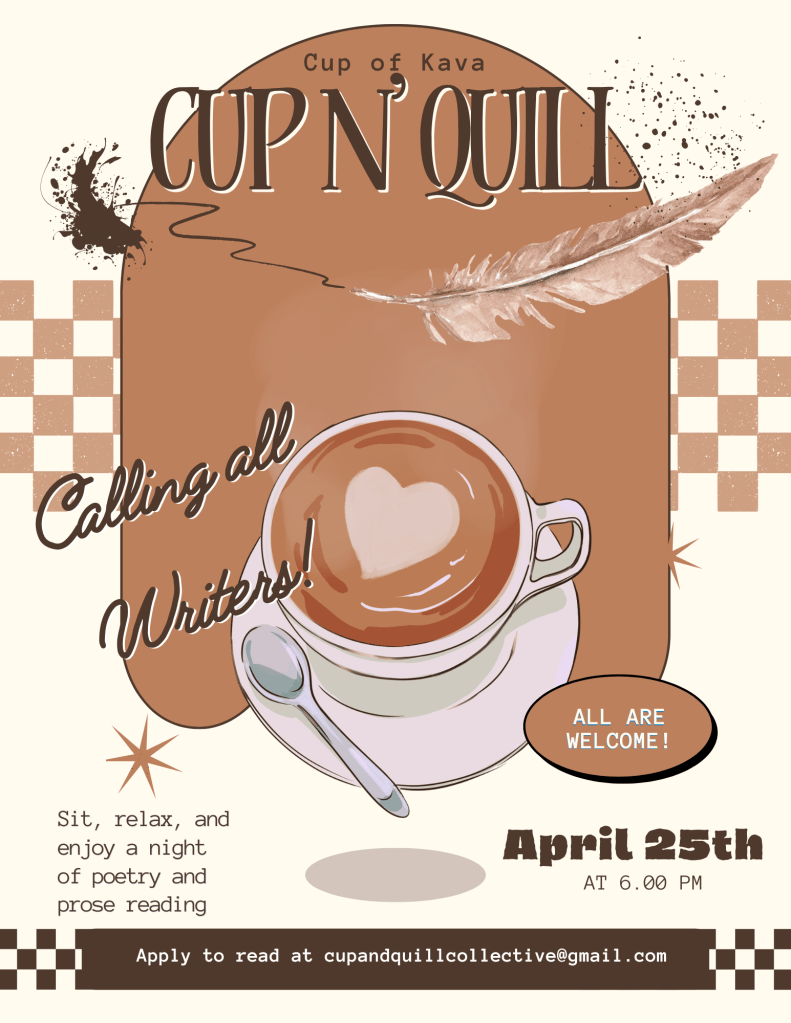
Instead, I’ve spent the last several months organizing a little community called Cup & Quill Collective.

It’s become one of the most rewarding creative things I’ve ever invested my energy into.

The idea started simple enough. I wanted a place where people could share their writing without the pressure of publication, social media algorithms, or trying to become the next literary sensation. I wanted a room where someone could read a poem they wrote last week, a chapter from a novel they’ve been working on for years, or even a resurrected long dead project that they just want to pay homage to before setting it aside.

I was also highly motivated by my own lack of creative community. After leaving college, that outlet was gone whereas before, I signed up for writing workshops and classes to fill that void. Even though they had NOTHING to do with my major (hello writing minor!)

Couple this with a SUPER supportive encouraging and amazing friend who also knew a person and the ball began rolling.

I reached out to a local coffee shop owner and their event manager and asked if they’d be interested in hosting a literature and poetry night.

To my surprise, they said yes.

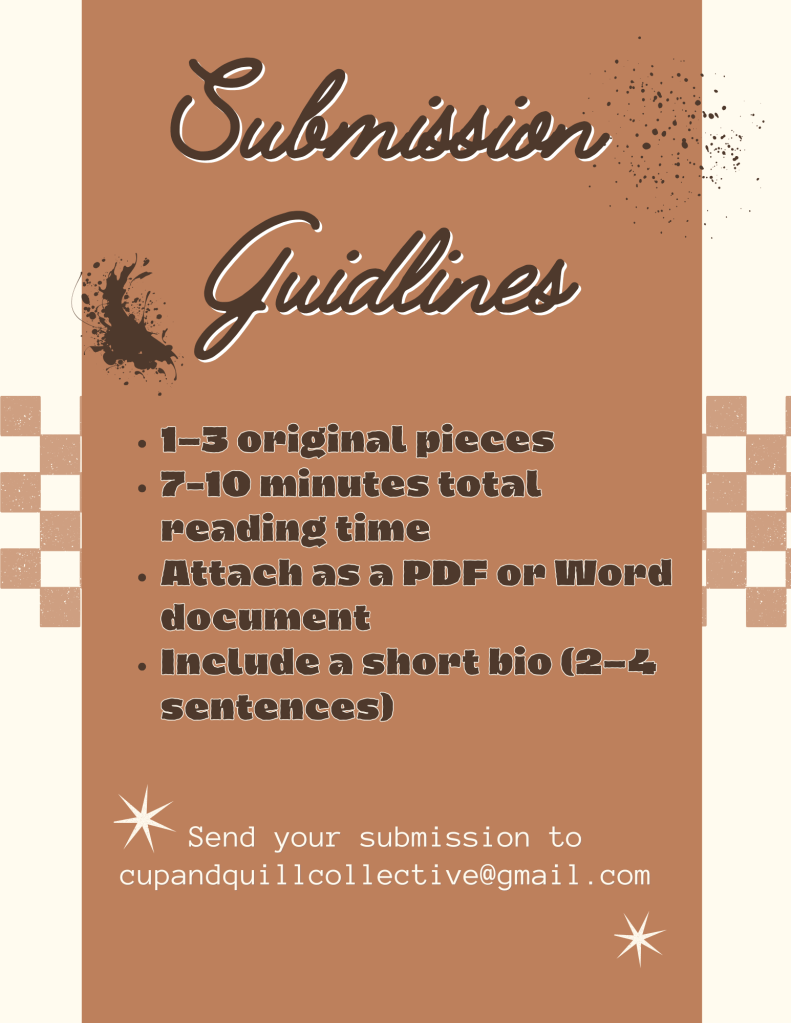
So it began! I started creating sign-up forms, answering emails, making flyers, posting on social media, coordinating readers, arranging themes, introducing speakers, and occasionally wondering if anyone would show up at all.

Fortunately, people did.

One of the biggest things I’ve learned is that there are far more writers around us than we realize. They’re sitting in coffee shops, working office jobs, attending church, raising families, and carrying notebooks filled with stories nobody has heard yet.

Many of them aren’t looking for that big publishing deal though that would be fabulous, admittedly. But, like me, I think they’re just looking for a few ears to listen.

Cup & Quill has given me the chance to meet people from all kinds of backgrounds who share one thing in common: they love words. Some are seasoned writers. Some are reading their work aloud for the first time. Some come just to listen and enjoy a cup of coffee while hearing local creativity.

All of them make the room feel a little more alive.

Ironically, while I haven’t been producing as much new writing lately, I feel more connected to writing than ever. AND THE MOTIVATION.

Nothing is more motivating than knowing that you have an outlet to share your work with. You don’t have to “sell” yourself. You just show up and read. Not to mention how incredibly inspiring the talent of the other readers is. I walk away feeling delighted every time. And I always walk away ready to write.

It reminds me how absolutely pivotal a writing community is for the average creative. At least that’s how its been for me. Burn-out is a lot more likely to stay away when you have others to vent and share your work with. It becomes a fulfilling cycle of creative inspiration. Reminder for myself and maybe you too: creativity does not exist in a vacuum. Make sure you’re consuming work, too!

Sometimes the most creative thing you can do isn’t write another page. Sometimes it’s inviting other people to share what they’ve been working on with you!

Final note: take a look at the flyers I so professionally designed with my free version of Canva! Take this as a sign that YOU too can make a cool event, make some cute posters, and people will attend!!

365 Days of being a Writer: Month 4

To recap, the last month was on observation! Hopefully, you found a variety of different inspirations from the day-to-day simple sitting and listening. Perhaps, in this month, you can put those observations to even more use as we shift the focus to dialogue. Observation month focused heavily on images and listening. This month, you can take what you heard and translate them into actual conversations between characters. Welcome to Dialogue Month!!

Also, a little sidenote- this month has less prompts to give you a bit of a break as we hit observation and character month pretty hard. The following months will have fewer and fewer prompts as we get into actual creative writing less creative journaling, and writing exercises. Let’s stay away from that ever-prevalent writer’s burnout!

Month 4 – Dialogue

  1. Write a conversation where someone hides the truth.
  2. Write a conversation with no dialogue tags.
  3. Write a conversation between siblings.
  4. Write a conversation between enemies.
  5. Write a conversation that happens over text messages.
  6. Write a phone call scene.
  7. Write a conversation interrupted by something unexpected.
  8. Write two characters arguing about something trivial.
  9. Write two characters apologizing.
  10. Write two characters flirting awkwardly.

Break:
94. Listen to people talking in public and jot down interesting phrases.

Side Quests I’ve been up to lately

Happy April afternoon, dear readers! It has been a minute since I’ve done a personal update so here we go!

Over on my tiktok, I have been posting about reframing activities in my personal life as “sidequests” and, let me tell you, this has increased my enjoyment in regards to the activities significantly. (Except for the taxes sidequest. That one will always suck. I hate it I hate it I hate it).

All that being said, I wanted to update ya’ll on a few “sidequests” I have been up to lately!

1. I watched the new Mario Galaxy Movie

    My review? It was cute and kind of chaotic. Like a Mario fever dream. I do wish they had gone a little deeper with some of their characterization, especially when you have Roslina, the absolute queen to write for but, alas, this is too much to ask for in kids’ movies these days. Don’t get me wrong, it was a fun watch, but I do think a lot of that was due to the fact that I am a Nintendo kid, and the references were NOT lost on me. Nothing crazy, it was just fun. Plus I went with friends and that always improves the viewing experience. Nothing like a bunch of adults giggling in the back row over Jack Black Bowser…

    2. I’ve started growing mushrooms in my basement

    So, for Christmas, my mother gifted me a mushroom growing kit, and I have been putting it to good use. It actually took me awhile to get started because I forgot about it on a random shelf in my laundry room (sorry mom) and it started growing OUT of the cardboard box without my permission, so I figured I had better set it up because those mushrooms were gonna grow, whether I liked it or not.

    Oyster mushrooms by the way. Quite yummy fried in a pan with butter.

    3. I’ve been making more Tiktoks lately…

    Forgive me, but I’ve been feeding the shortform content beast. Mostly, I’ve been experimenting with the many fun ways one can engage their audience with very specific opinions on dragon designs in media. TikTok has a very active and opinionated user base so, sometimes, it’s fun to tap into that. I’m having a fun time over there, what can I say. Plus it feels like a much more casual space to share things that I like or have been up to.

    4. I’ve started a war with the wasps on the porch

    I’m winning by the way.

    Spring has brought an onslaught of awful bugs, and wasps are at the top of that awful list. For some reason, my front porch is a piece of highly valued real estate in the wasp world. I took it upon myself to bring the property values down. Like way down.

    5. I’ve taken to a more intuitive approach when writing

    I do have writing goals I’d love to get to, but I’ve been a lot less likely to sit down and write on something when I don’t feel like it lately. My job has been picking up in busy-ness lately, so I have given myself permission to write a chapter or two on whatever project I feel like and not touch it for a week. This is NOT a great way to have an extensive writing output, let me make that clear. If you want to make writing progress, maybe don’t do this because I hasn’t proven productive for my many WIP’s HOWEVER I’m okay with that right now. I’m learning to be okay with Writing being a hobby and that I don’t have to set large, lofty goals with it. My goal should simply be to enjoy it, first and foremost, and in certain life phases that may look differently than in others.

    And that feels like a good note to leave on. I’ve been up to more, I’m sure if I’d sit down and think about it really hard, but I think this is a good place to leave it. If you want more details on what I’ve been up to, you can check out my aforementioned TikTok. Take care, friends! Hope you are treating yourselves kindly this spring!

    365 Days of being a Writer: Month 3

    This month is going to be focused on observing! Writers are at their best when they are paying close attention to their surroundings. Writers can be inspired by anything but it really helps if you can pull inspiration from your own life (“writing what you know”). In order to do this, one must be observant. So! The prompts for month 3 are designed to help you step out of your own head and take a look at your surroundings! What do you see?

    Month 3 – Observation

    1. Sit somewhere public and write what you see.
    2. Describe three strangers.
    3. Write about overheard conversation.
    4. Describe a shop window.
    5. Write about the weather like a character.
    6. Describe a tree in detail.
    7. Write about someone walking a dog.
    8. Describe the smell of a bakery.
    9. Write about the sound of traffic.
    10. Write about a quiet afternoon.
    11. Describe a cloudy sky.
    12. Write about a bird.
    13. Write about a river or creek.
    14. Describe the inside of a coffee shop.
    15. Write about someone reading a book.
    16. Write about someone on their phone.
    17. Write about a couple arguing quietly.
    18. Describe a cluttered desk.
    19. Write about something abandoned.
    20. Describe a bench in a park.

    Creative break:
    83. Take a walk and write down five things you noticed.

    365 Days of being a Writer: Month 2

    This month is character month! Last month was about getting started and building momentum, while this month will focus on building a character or characters plural and developing them one step at a time. Create one from scratch or work on a pre-existing one. These prompts are for you to do what you will.

    Month 2 – Character

    1. Invent a character and write their daily routine.
    2. Write your character’s worst habit.
    3. Write your character’s biggest fear.
    4. Write about something your character regrets.
    5. Write a scene where your character lies to someone they love.
    6. Write about your character’s childhood home.
    7. Write about something your character collects.
    8. Write about a childhood memory your character can’t forget.
    9. Write about your character’s favorite meal.
    10. Write a scene where your character gets unexpected news.
    11. Describe your character’s best friend.
    12. Write about a scar your character has.
    13. Write about your character losing something important.
    14. Write about a small victory.
    15. Write a scene where your character feels embarrassed.
    16. Write about something your character envies.
    17. Write your character’s inner monologue.
    18. Write a scene where your character forgives someone.
    19. Write a scene where your character refuses to forgive someone.
    20. Write your character’s morning thoughts.
    21. Write a dream your character had.
    22. Write about your character’s favorite place.
    23. Write your character’s greatest hope.
    24. Write your character’s greatest mistake.
    25. Write a scene where someone misunderstands your character.
    26. Write your character’s personal motto.
    27. Write a moment of jealousy.
    28. Write a quiet moment alone.
    29. Write a confession scene.

    Creative break:
    61. Make a playlist for your character.
    62. Describe the playlist in writing.

    365 Days of being a Writer: Month 1

    If you’ve ever wanted to write more but felt overwhelmed by huge projects, this challenge is for you.

    The goal: 365 small creative actions over one year.

    Some days you’ll write and some days you’ll observe. A mixing and matching of all sorts of creative outlets and exercises! So, without further ado, here is month 1.

    Month 1 – Start Small

    1. Write about the room you’re currently in.
    2. Describe your morning routine as if it were a sacred ritual.
    3. Write 100 words about a character who is running late.
    4. Write about the smell of rain.
    5. Write a paragraph using only short sentences.
    6. Write a paragraph using one long flowing sentence.
    7. Describe a place from childhood.
    8. Write a conversation between two strangers.
    9. Write about a broken object.
    10. Write from the perspective of your coffee mug.
    11. Describe the sky today.
    12. Write a short scene set at a bus stop.
    13. Write a letter that will never be sent.
    14. Write about a secret.
    15. Describe someone entering a room.
    16. Write about the quietest place you know.
    17. Write a scene where someone lies.
    18. Write about a forgotten object.
    19. Write a 50-word story.
    20. Write a character description in five sentences.
    21. Describe a street at night.
    22. Write about someone waiting for news.
    23. Write about a sound that annoys you.
    24. Write about a smell that comforts you.
    25. Write about the weather changing suddenly.
    26. Write a short argument scene.
    27. Write about a locked door.
    28. Write about a memory that feels dreamlike.
    29. Write about someone finding something unexpected.
    30. Write a story in exactly 200 words.
    31. Take a break: read a poem and write one sentence about how it made you feel.

    How to be a Writing Minimalist

    The other day (yesterday), I shared my general frustrations with the internet’s ability to emphasize aesthetics over substance and how this also extends to writing. So, to piggy back off THAT post, I’m going to share some general thoughts and tips I have for simplifying the writing process if you’ve found yourself like me, and overcomplicate EVERYTHING and maybe have begun focusing on the wrong thing when it comes to your creative process. So, let’s go.

    Mayhaps, skip the perfect playlist search…

    You don’t have to write in dead silence. HOWEVER, maybe consider spending less time picking the perfect ambience video or music and more time…writing…I’m calling myself out here too, I swear. This isn’t a direct attack. Just a thought. Also, silence isn’t the worst thing sometimes. Perhaps give it a try? Let your thoughts be the only thing going on in a room for once.

    Words First. Vibes Later.

    If you have 20 minutes to write, use 18 of them writing.

    Not 12 minutes building ambiance and 6 minutes staring at a blinking cursor.

    You do not need:

    • A fresh notebook.
    • A themed drink.
    • A perfect Instagram caption about “slow mornings.”

    You need words on a page. That is the only requirement here and we’re gonna HONE IN on that.

    Open the document first. Type one ugly or stupid sentence. Momentum is born from action, not aesthetic. I may have to get that tattooed to my forehead because the amount of times I’ve spent picking the perfect font….

    Embrace the Ugly Draft

    Aesthetic culture has tricked us into thinking even our process should look polished.

    But real writing is clunky. It repeats itself sometimes. It says “thing” because you can’t find the right word or whatever code word you put in to signal you don’t know quite what to say in this portion.
    It uses too many commas. (Guilty. So so so guilty).

    Minimalist writing means allowing your first draft to be deeply unimpressive.

    No one takes photos of a messy draft.

    Good.

    That means you’re probably doing it right.

    Set Constraints on Purpose

    Try:

    • Writing for 15 minutes without stopping.
    • Writing 300 words before you’re allowed to adjust your playlist.
    • No desk rearranging once you sit down.
    • No phone within arm’s reach. This one is so simple and yet, even while I’m writing this, my phone sits right beside me. Clearly I need to say it louder for myself.

    Stop Documenting the Process of Writing

    When you’re done, just close the laptop or let your computer screen go to sleep. And that’s it. Don’t tell anyone. Don’t take a picture of your space or your draft or ANYTHING. Leave it be. Be proud of yourself and then go take a nap or shower or something. Be happy with yourself. You wrote something, and you don’t have to prove it to anyone.

    When Did Everything Become a Photoshoot?

    Pre-warning: I am griping again

    Everything now has this pressure to be aesthetically pleasing all the time thanks to the internet.

    And listen, I get it. Trust me, ya’ll, I grew up during the golden age of Instagram. Pinterest is probably one of my MOST used apps, and yes, it is a problem sometimes.

    Romanticizing your life and making things “pretty” can be fun. It can even be motivating. Lighting a candle before you write. Making your desk space whimsical. Using the good pen. Brewing coffee in your favorite mug. I’ve even written blog posts about fun ways to romanticize your writing process, so, in a way you could say maybe I’m guilty as well.

    There is something lovely about being happy with your appearance and space.

    But, recently, I’ve come to a weird sort of realization…

    It feels like we’ve crossed from intentional beauty into constant performance.

    There’s an overemphasis on aesthetics in general. Not just in writing alone, but in life in general. (I know, I know, I sound like a harpy old lady but hear me out).

    Girls are expected to be pretty all the time. Self-growth is framed as “hot girl advice.” “Hot girls wake up at 5 a.m.” “Hot girls drink green juice.” “Hot girls don’t text first.” “Hot girls have spotless kitchens and perfect side profiles and somehow glowing skin while journaling about their boundaries.”

    Since when did personal growth become a rebranding campaign? And what is this weird obessesion with being a “hot girl who x”?

    It’s like the ultimate goal in life is to look amazing at ALL times. To have your life be this curated, aesthetically pleasing collage of neutral-toned items and sunlit corners. Your coffee has to look right. Your Bible has to be color-coded. Your gym outfit has to match. Even your healing has to be photogenic.

    It’s ridiculous.

    The internet is a highlight reel and we all know that. It captures moments in time. A split second. A perfectly framed sliver of someone’s day. We are not designed to line up and look exactly like these captured moments in time at all times. We are not still images.

    We are messy, moving, complicated beings.

    Now we are ebbing into looks over substance in every area of our lives. We spend way too long taking an aesthetically pleasing desk picture or finding the perfect angle to show off our cup of coffee beside our journal. And somewhere in that process, the coffee gets cold and the journaling becomes secondary.

    The writing — the actual writing — becomes less important than how it looks to be writing.

    And that’s where the fun starts to drain out.

    Because the substance is the point. Not the proof of it.

    There’s nothing wrong with beauty. There’s nothing wrong with liking nice things. There’s nothing wrong with enjoying an aesthetic. I am not anti-whimsy. But when aesthetics become the main goal instead of the byproduct, it begins to feel like everyone is now encapsulating the brand of being a writer. I feel like we’re losing a lot of authenticity in general. Again, I don’t want to sound like I’m grouching about everyone else, this is something I’m guilty of as well. My whole instagram page is color coordinated.

    Really, I’m just sort of ranting to the void and maybe myself. Maybe it’s time we get back to the basics.

    And if it happens to look pretty? That’s a bonus.

    Maybe it’s time to become a writing minimalist. No routine, no coffee, no pretty desk space. Just writing.