

Why You Need a “Second Brain” (And the Best Apps to Build One)

Look, my brain is a chaotic place. If I had to describe it, I’d say it’s like an overstuffed filing cabinet, but maybe one that got shook up in a move? Thoughts, ideas, grocery lists, and random existential crises. It’s all jumbled together, friends. I tried keeping track of everything in a planner, in my Notes app, and sometimes in an actual, physical notebook. Unsurprisingly, is still felt as if I was forgetting too much. Mostly writing ideas, maybe a grocery list item here and an appointment there.

That’s when I started doing some digging into the concept of a “second brain.” It’s basically a note-taking system where you offload all your thoughts, ideas, tasks (basically everything) into one organized digital space. The idea is to free up your actual brain for, you know, thinking, rather than frantically trying to remember where you wrote down that brilliant idea at 3 a.m.

I’ve only been looking into this for about a week and a half but here’s what I’ve found as far as notetaking/second brain apps go. I’ll give you a quick summary of each based off of my research and some quick clicking around and experimentation plus my personal opinion of each. Though, I WILL mention that I think each has it’s own strengths and may tailor itself to a different type of brain than mine. So, as cliche as it is, I’ll say to each their own.

Logseq: The Powerhouse for Outliners

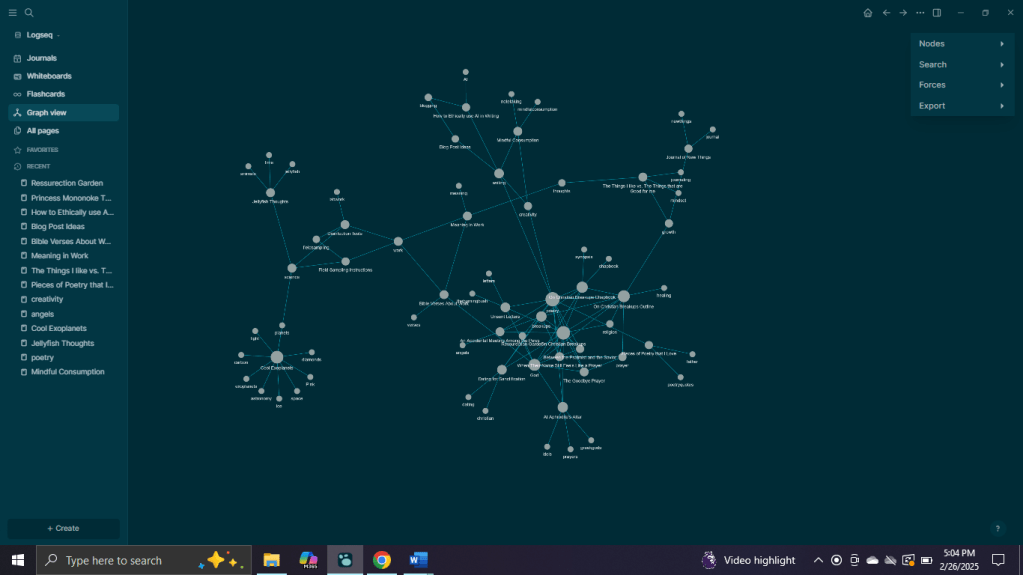
If you’re a fan of bullet points, outlines, and linking your thoughts like a digital spider web, Logseq is your new best friend. It’s a free (this is the word that convinced me), open-source app that lets you create daily notes, build outlines, and interlink ideas like crazy. I love it because it’s local-first (meaning my notes are stored on my device, not in the cloud), and it uses plain text files, so I never have to worry about losing my data. Plus, the bi-directional linking lets me see how my thoughts connect over time—perfect for writing projects and organizing ideas. It is a little bare bones I will say and in using it, I definitely wish they had an app so I could sync all my ideas that I take on my phone to my software on my computer. Oh well, can’t have everything.

Why I Love It:

  • Local storage and privacy.
  • Bi-directional linking (think digital mind maps).
  • Outlining is its superpower.
  • It’s free!

Who It’s For:
People who love structure, outlines, and organizing their thoughts in a non-linear way. Writers, researchers, and obsessive list-makers. And for those of us who don’t want to spend money but want something like Obsidian minus the subscription. Which, speaking of which…

Obsidian: The Mind Mapper

Obsidian is the cool kid on the block that everyone’s talking about. It’s all about connecting your ideas with backlinks and visualizing them as a network of thoughts. If you’ve ever wanted to see how your ideas relate to each other like a digital conspiracy board (red strings and all), this is your app (MUCH like Log Seq, like I said).

Why It’s Popular:

  • Graph view to visualize your notes and their connections.
  • Customizable with a ton of community-made plugins.
  • Markdown-based (plain text files for the win).
  • Has an app with across device syncing.

Who It’s For:
Visual thinkers who like seeing the bigger picture. Great for creative projects, research, and anyone who likes to link ideas together. But, as mentioned before, you have to subscribe for this service. If you’re okay with dropping some cash, this one definitely looks the cleanest of all the network based notetaking apps.

Evernote: The Veteran with All the Bells and Whistles

Ah, Evernote. It’s been around forever, and for good reason. It’s toolbox is incredibly diverse. You can save text notes, voice memos, images, web clippings, and even PDFs. It syncs across all devices, so you can access your notes anywhere. But there’s a catch: the free version is pretty limited, and the premium version isn’t cheap (sorry to keep mentioning money but if you’re something like me, you might not have money to burn).

What It’s Good At:

  • Capturing everything—text, voice, images, web clippings.
  • Powerful search features, including text within images.
  • Easy syncing across multiple devices.

Who It’s For:
People who need an all-in-one digital filing cabinet. If you’re constantly gathering information from different sources and want it all in one place, Evernote is your go-to. Just be okay with spending money.

Notion: The All-in-One Workspace

With Notion you can take notes, manage tasks, build databases, and even design a personal wiki. It’s visually appealing and highly customizable, but it can be overwhelming at first because of how much it can do. I tried it for a while, but it felt like using a sledgehammer to crack a nut (just a bit overkill). That said, some people absolutely swear by it for its flexibility and diversity.

What Makes It Stand Out:

  • Highly customizable pages and templates.
  • Collaborative features for team projects.
  • Can be used as a note-taking app, project manager, and even a personal wiki.

Who It’s For:
Power users who want everything in one place. Probably really awesome for someone who does a lot of computer work for their job. If you like customizing workflows and want your notes, tasks, and databases all in one app, Notion is your playground.


Which One’s Right for You?

Choosing a second brain is, as most things are, up to your own personal taste and what type of record keeping jives with your brain. If you love outlining and linking ideas, give Logseq or Obsidian a try. Want a digital Swiss Army knife? Notion’s your best bet. Need a reliable all-in-one solution with easy syncing? Go for Evernote. And if you want something simple, there is definitely no shame in using your phone notes.

Personally, Logseq has caught my eye and I will probably make a whole other post based off of my experience with it. But, if any of the other apps or programs have caught your fancy, why not give ’em a go?

Maybe it’s time to give your brain a break and get yourself a second one. Just a thought. Or maybe mine’s the only one that needs a breather. Either way, thanks for reading!

The Day Microsoft Word and I Broke Up (and How LibreOffice Became My Rebound)

Picture this: A snow day. A rare, magical off day gifted by the powers of winter. Naturally, I did what any introverted poet would do—I decided to spend my day cozied up, writing for my dearest poetry book draft. Dreams of metaphorical brilliance danced through my head as I opened my laptop and double-clicked on my Word document.

And then—BAM. A digital slap to the face.

I couldn’t access my own document. Why? Because my Microsoft Office license, previously covered by my college, had expired. Since I’m no longer a student (shoutout to adulthood and its many expenses), this wasn’t a complete shocker. But the nerve. I was at least a little offended.

Out of curiosity, I decided to see how much it would cost to renew. I figured it couldn’t be that bad. I mean, it’s just a word processor, right?

Y’all. Ten bucks a month. A hundred dollars a year.

FOR WORDS.

Now, I’d like to think I’m a reasonable person, but this was some highway robbery. And the kicker? I couldn’t even open my original document unless I coughed up the cash. Sure, I could access it through the online version of Word, but that interface looked like it had a midlife crisis. Crowded, clunky, and as intuitive as a brick wall. And syncing it? Ha. Not happening.

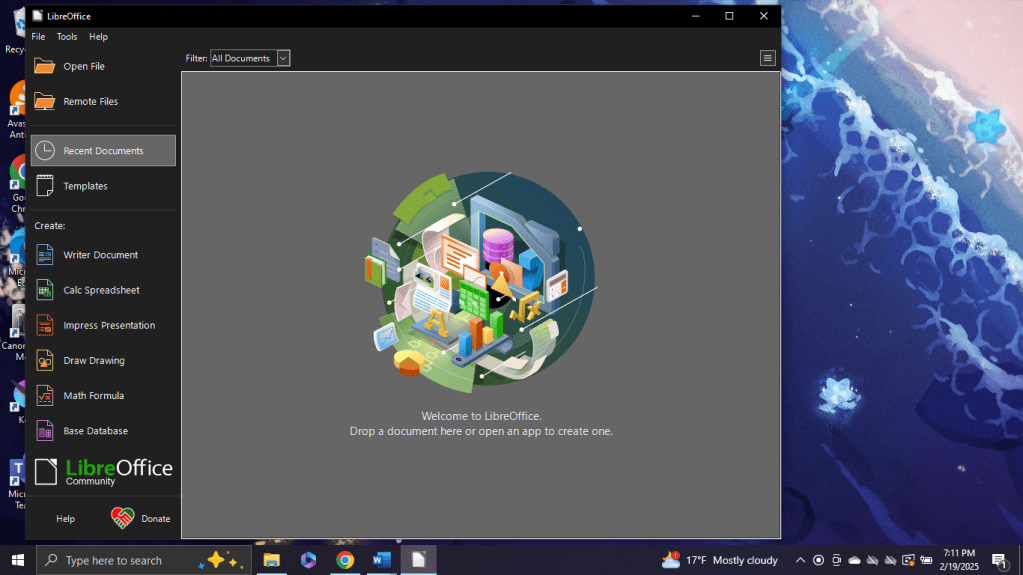
That’s when I hit my limit. I had a poetry book to write, snow day vibes to enjoy, and I wasn’t about to let corporate greed ruin my creative flow. Determined, I opened a new tab and searched for alternatives. That’s when I met my new best friend: LibreOffice.

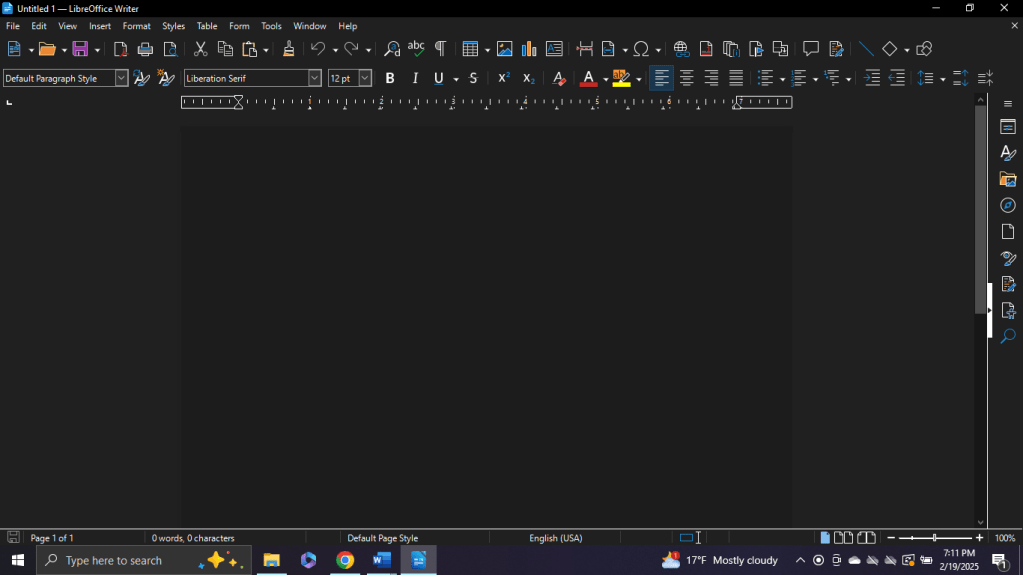
Let me tell you, LibreOffice is basically Microsoft Office but without the corporate handcuffs. It’s free, offline, and lets me open my own documents without asking for my credit card information. Revolutionary, right?

The best part? It felt just like old-school Word. Simple. Functional. No frills, no nonsense. And, most importantly, no monthly payments draining my bank account. I could write my poetry in peace, snow softly falling outside, without feeling like I had to sell a kidney just to access my own words.

So, here we are. Microsoft Word and I? We’re done. I’ve moved on. LibreOffice and I are getting along great, thank you very much. And the moral of the story? If a company tries to hold your words hostage for a hundred bucks a year, maybe it’s time to break up and find someone (or something) better.

LibreOffice, you’re the real MVP. And Microsoft? Yeah, we’re never, ever getting back together.

Trying Something New Every Day for a Week: A Mini Adventure

I’m a big believer in the idea that small adventures make life more interesting. So, I decided to challenge myself to try something new every day for a week. These would be little things that would shake up my routine and maybe introduce me to a new favorite. So, without further ado, here’s how it went:

Day 1: Sushi Exploration

I’ve had sushi before, but I wouldn’t call myself a sushi connoisseur. My local deli recently started making a variety of sushi rolls, so I figured, why not? I quickly learned that I do not like sour-tasting sauces (I wasn’t expecting it to be so….tangy?), but I loved the spicy shrimp roll. A new go-to? Possibly. The experience overall was a 3/5.

Day 2: A New Coffee Spot

I’m always down for a new coffee experience, so I visited a café called White Bison. Cozy vibes? Check. Good coffee? Absolutely. I ordered a toffee latte, which was perfectly sweet and nutty. The coffee shop also had a nice, homey atmosphere and even had an upper floor. I can imagine it would be a great study spot.

Day 3: Discovering a New Music Artist

Music discovery is one of my favorite low-effort, high-reward experiences. This time, I stumbled upon Sara Groves, a Christian songwriter and composer. Her lyricism is chef’s kiss, and my favorite song so far is Lay It Down. Highly recommend if you like thoughtful, faith-filled lyrics.

Day 4: Trying Matcha

I finally gave matcha a shot. It’s one of those things that everyone seems to love, so I had to see what the hype was about. Verdict? It’s good…but only if I drown it in vanilla cold foam and sweetener. Otherwise, it tastes a little too earthy for me. Something akin to mowing the lawn with your mouth open. I’d love to learn to make it my sweet way at home and maybe swap it up a bit so I’m not always consuming an ungodly amount of coffee.

Day 5: Testing a New Recipe

I decided to bake cheddar and ham muffins, and let me tell you, friend, they were way better than expected. Soft, cheesy, savory, and surprisingly filling. These might just be my new favorite breakfast meal prep. This was probably my 5/5 experience for the week.

Overall, this little experiment was a fun reminder that trying new things doesn’t have to be dramatic or life-changing. Even the smallest discoveries such as a new coffee order or a song that resonates—adds richness to everyday life. Who knows? Maybe I’ll keep this streak going! It’s been a fun little challenge to brighten up my now regular 9-5 work schedule. It’s easy to let time get away from you when you work a regular job I’m realizing. This little challenge felt like it helped me be more present and make better use of my time (be more experimental in small ways).

So! Now I’m going to turn the question to you, dear audience! What’s something new you’ve tried lately?

Choosing the Right Web Builder for Your Blog

Choosing the Right Web Builder for Your Blog: My Honest Thoughts on WIX, WordPress, Blogspot, and Tumblr

When it comes to starting a blog, one of the first and most important decisions you’ll make is choosing the right platform to build it on. As a writer who’s tinkered with several web builders, I’ve learned that not all platforms are created equal. Each one comes with its own quirks, benefits, and, of course, irritations. Here’s my take on four popular web builders: WIX, WordPress, Blogspot, and Tumblr. Below you will find my opinions of each web builder and what it’s rightful ranking is (by means of a 5 star-system).

Alright, I believe this should be fairly straight forward, so let’s get on with it, shall we?

1. WIX – 3 Stars

WIX is often marketed as a “drag-and-drop” dream. And I’ll admit, the platform is visually appealing with its sleek templates and easy customization options. If you want your blog to look like an art gallery, WIX might seem like the perfect choice.

But here’s the catch: unless you’re willing to pay for their premium plan, good luck showing up on any search engines. SEO (search engine optimization) isn’t exactly WIX’s strong suit without opening your wallet. Plus, while the interface is simple, it feels almost too simple, like it’s holding back features you might need for a more robust blog.

For casual bloggers who aren’t worried about visibility, WIX could work. But if you’re looking to grow an audience organically, I’d suggest looking elsewhere. You may have a lovely site but one that no one sees (unless you want to pay a fair bit of moolah).

2. WordPress – 4 Stars

WordPress is the overachiever of web builders, and honestly, I’m impressed. With its detailed customization options and extensive plugin library, WordPress has everything you need to make a blog that feels truly your own.

What really makes WordPress shine is that it (mostly) doesn’t penalize you for staying on the free plan. You can still drive traffic to your site and enjoy a surprising amount of creative freedom without feeling like you’re missing out. Personally, I’m not a premium user, and I’ve been more than happy with what the platform offers.

However, the learning curve can be a little steep for beginners. WordPress has so many options that it can feel overwhelming at first. But once you get the hang of it, the possibilities are endless. Unless you want to add plugins. In which case, you’re out of luck on that free plan. It loses at least a half of a star from this alone. But, overall, I really can’t complain too much. I mean, here I am!

3. Blogspot – 2.5 Stars

Blogspot, also known as Blogger, is like the plain vanilla of web builders. It’s fine. It’s functional. It does the job. But does it spark joy? Not really.

The platform is overly simple, which isn’t necessarily a bad thing if you’re looking for a no-frills blogging experience. However, it can feel limiting compared to other platforms. Also, unless you’re willing to pay for a custom domain, you’re stuck with a URL that looks like it was generated by a cat walking across a keyboard.

If you’re just dipping your toes into blogging and don’t want to overthink it, Blogspot might be worth a try. Just don’t expect it to wow you. It’s basic. It’s fine.

4. Tumblr – 3.5 Stars

Ah, Tumblr. The home of fandoms, memes, and chaotic energy. If you’re planning to use Tumblr as a blog builder, it’s important to understand the platform’s culture. Unlike other web builders, Tumblr relies heavily on its algorithm and community engagement to drive traffic.

This means you can’t just sit back and hope people will find your blog—you’ve got to get involved. Reblog posts, follow similar accounts, and interact with your followers. It’s a bit of a commitment, but it can be fun if you’re already familiar with Tumblr’s vibe.

The downside? Tumblr isn’t exactly a professional blogging platform. It’s more suited for casual, niche interests than for polished, professional blogs. That said, if you’re blogging for fun and want to connect with a specific community, Tumblr might surprise you.

Final Thoughts

Every platform has its pros and cons, and the right one for you depends on your goals. If you’re serious about growing your blog and don’t mind a bit of a learning curve, WordPress is the way to go. For those who value aesthetics and simplicity, WIX might be worth a shot (just keep SEO in mind). Blogspot is fine for beginners, and Tumblr is a unique option for those who want to blog within an existing community (works great if you have a very specific niche or media-based lean).

At the end of the day, blogging is about sharing your voice and connecting with readers. Choose the platform that feels right for you and start creating. After all, the best blog is the one you actually create.

New Year’s Mantras for a New Season

Every year, I’ve set goals, made resolutions, and tried to will myself into change. I will add that sometimes it works! (And sometimes it doesn’t.) But this year I wanna do something a tad bit different. Instead of adding more to-do lists and lofty goals, I am instead going to (attempt to) ground myself with a few simple mantras: words I can carry with me into this next chapter of my life.

1. Learn, Learn, Learn

I started my career as an environmental scientist this year, and let me tell you, it’s a humbling experience to realize how much I don’t know. There’s training to complete, processes to understand, and a whole world of knowledge to absorb. But instead of letting the learning curve overwhelm me, I’m going to try and embrace it.

“Learn, learn, learn” isn’t just about my job too. It’s also about staying curious in everything. It’s about asking questions, making mistakes, and knowing that growth doesn’t happen overnight. Additionally, I want it to serve as a gentle reminder that I don’t have to be perfect. The learning process involves failure and it is impossible to skate around. While this concept hurts my perfectionistic, failure-fearing soul, it is something I simply need to continue to work towards getting past.

2. Do the Thing

This one’s for my poetry and my perfectionism. For too long, I’ve held back. (Camera cut to me editing endlessly, second-guessing myself, and letting fear keep me from sharing my writing). But this year, I’m done waiting for the perfect moment or the perfect version of anything.

“Do the thing” is about action. It’s hitting “publish” on that blog post. It’s sharing a poem without worrying how it will be received. It’s letting creativity flow without overthinking it. Fear might still be there, but this year, it doesn’t get to win.

3. Enjoy the Life Phase

If there’s one habit I know I have, it’s looking forward into the future. I do this in every possible way. I look to the next step, the next milestone, and the next season of life. I’ve always been someone with one eye on the future, dreaming of what’s to come. But in doing so, I often miss what’s right in front of me.

“Enjoy the life phase” is my reminder to slow down. To appreciate the small joys of where I am: my new job, my cozy home, my two cats (who are as chaotic as ever). I don’t want to rush this time just because it feels like a stepping stone to something bigger. I want to look back and remember how full and good this season was—even with its growing pains.

4. Show Up for Yourself

This is a mantra I’m adding to the list because I think we all need it. “Show up for yourself” means being your own cheerleader when things get hard. It’s about taking care of your mind, your body, and your heart. Showing up looks different every day. Some days it might mean eating a real lunch instead of chips from the pantry, going for a walk, or saying no to something you don’t have energy for. Whatever it is, it’s a promise to treat yourself like someone worth showing up for.

5. Let Life Be Messy

I’m someone who loves a plan. I like knowing what comes next, how it’ll happen, and where it’s all leading. But if there’s one thing I’ve learned, it’s that life rarely fits neatly into plans.

“Let life be messy” is permission to let things unfold as they will. It’s accepting that some days will be chaotic, some dreams will take longer, and some journeys will twist and turn in unexpected ways (and, again, that’s okay!). The messy parts are often where the magic happens, right?

These mantras are my anchors for the year ahead. They’re reminders to take things one step at a time, to be brave, to be present, and to let life happen as it comes.

If you’re feeling inspired, I’d love to hear what mantras you’re carrying into the new year. What words or phrases will guide you through this next season? Share them in the comments!

xoxo,

Brooke F.

A Review of Lex AI Writer

I have historically have had a really forgiving view of AI. I think it’s here to stay and that much is true, but as time has gone on, I have gravitated to a more critical view of AI content, specifically AI writing. I think it’s great for brainstorming when you’re on square 1 or perhaps outlining a blogpost (here is where I reveal that it is not uncommon for me to ask chatgpt for help with organizing blog posts, titling, and other such small tasks that allow me to focus on my blog post’s actual content). Heck, I think it’s maybe even good for writing filler text that allows you to move your story forward until you can return and fill it with something better and far more creative. But over the past year, I’ve really seen the quality of writing content being replaced with quantity and this is no doubt due to the rise of AI.

AI garbage books flood KDP and many so-called-writers are making tutorials on how you can shortcut the process of creating a story and avoid *gasp* writing! I think someday I’ll make a post on this in the future about how these pretend writers must not really enjoy the craft if they’re continuing to engineer ways to NOT write but now is not that time. Today, I’m here to talk about a specific AI writing platform known as LEX.

Lex AI Writing Platform: A Powerful Tool with a Hidden Catch

Lex is one of the most intriguing AI writing tools I’ve explored. With a wide array of functions, it offers a startlingly diverse set of tools. I could see Lex catering to writers across various disciplines due to this diversity, whether you’re drafting blog posts, brainstorming story ideas, or simply fighting off writer’s block. However, as with any tool of this caliber, its strengths come with a critical caveat. But we’ll get there shortly. First, an introduction to Lex’s toolbox is in order.

A Brief Overview of Lex’s Tools

One of the few positives I will say is Lex impresses with its thoughtful organization and user-friendly interface. The platform boasts features designed to streamline the writing process. Maybe a little too streamlined, but again, I’m getting ahead of myself. The tools and functions are as follows:

  • Idea Generation: It helps writers overcome blank-page syndrome with prompts and suggestions.
  • Continuity Tools: Lex can pick up where you left off, offering full paragraphs based on the context you provide it.
  • Editing Suggestions: It attempts to analyze tone, grammar, and structure to help refine your writing.
  • Customization: You can tweak Lex’s settings to better fit your style or project goals. Probably the most impressive and useful tool in my opinion.

For writers seeking an all-in-one productivity aid, Lex delivers. It’s particularly helpful for outlining or fleshing out ideas quickly. I could see Lex being a useful tool in brainstorming or drafting stages when used wisely. However, we’re going to move on to my main concern with Lex and most Ai writing assistants as a whole.

RIP Individuality

While Lex offers remarkable utility, my primary concern lies in what tools like this mean for the art of writing itself being the erosion of individual style.

When used sparingly, Lex is a fantastic collaborator. Keyword being “sparingly”. How many people will use it sparingly? The temptation to rely on AI for large swaths of text is undeniable, but in doing so, we risk losing the unique voices that define good writing.

To illustrate this concern, I experimented with Lex by beginning a short story:

My opening line:
“Deep in the recesses of an experimental laboratory, rows of cages can be found.”

Lex’s continuation:
“Within these cages, a colony of felines reside. These are no ordinary cats, however. They are the subjects of a groundbreaking experiment, where scientists seek to unravel the mysteries of genetic manipulation. With each passing day, the cats undergo a series of tests and procedures, their DNA meticulously analyzed and altered. The researchers are driven by a singular goal: to create a new breed of cat, one that possesses enhanced abilities and traits beyond the scope of their natural counterparts.”

On the surface, this continuation isn’t bad—it’s clear, grammatically sound, and flows logically. However, it’s unmistakably AI-generated. The tendency to “tell rather than show” is glaring. Instead of inviting readers into the story through evocative imagery or nuance, Lex provides a clinical summary, flattening the narrative.

This paragraph reads more like a report than an actual story, and, while serviceable, it lacks the depth and personality of human storytelling. Such patterns, if adopted uncritically, could homogenize creative writing, sacrificing artistry for efficiency. I have yet to see any AI writer tackle this concern successfully. Everything a computer spits out tends to sound the same or very similar to each other: bland, uncreative, and report-y. AI tends to be trained on articles and educational resources after all so no surprise there.

Conclusion

Lex is a powerful tool that can be a game-changer for writers, offering diverse features and has a great organization and presentation of said tools. For brainstorming, outlining, and rough drafting, perhaps it’s worth a try. But the ability to write large sections of text quickly can also be its biggest drawback and churn up a lot of concern.

Overall, I think as we incorporate AI into the writing process, we must remain vigilant and oh-so-cautious. Writing is more than putting words on a page despite what school might have taught us. It’s about crafting a voice, an atmosphere, and an experience for readers. Tools like Lex should be wielded with care, enhancing human creativity rather than replacing it. For now, Lex is an impressive companion but ABSOLUTELY not a replacement for the writer’s pen.

Thanks for taking the time read and take care, friends!

Unique Gift Ideas for the Writer in Your Life

Finding the perfect gift for the writer in your life can be as complex… annoying. I say this as a writer. It is very common that someone doesn’t know what to get me so I somehow end up with a tower of empty journals and an overflowing desk cup filled with new pens. I understand, it can be annoying to buy for us and sometimes one doesn’t know where to start when getting something thoughtful for the word-weaver in their family or friend group. Writers are often particular about their tools and tastes, but there’s a world of thoughtful, creative gifts beyond the basics that will make them feel truly understood. Here’s a guide to inspire your holiday shopping for the wordsmith you adore.


The Basics (But Make Them Fancy)

  1. Pens:
    Writers love pens, but gifting them a luxury pen—like a Lamy fountain pen or a weighted rollerball—can elevate their note-taking experience. Bonus points if you include a refill set in their favorite ink color!
  2. Journals:
    A writer can never have too many journals. Opt for a unique twist, such as leather-bound notebooks, journals with prompts, or eco-friendly options made from recycled materials.
  3. Books on Writing:
    Classics like On Writing by Stephen King or The Artist’s Way by Julia Cameron are staples, but consider books on niche writing topics or even beautiful annotated versions of their favorite novels.

Step It Up: Gifts That Show You Truly Get Them

  1. Subscription Boxes for Writers:
    There are subscription services like Scribbler or The Writer’s Box that deliver curated goodies, writing prompts, and insider tips from published authors every month.
  2. Customized Writer’s Toolkit:
    Assemble a personalized kit with items like sticky notes, page flags, highlighters, and correction tape. Include a pouch or box engraved with their name or a quote about writing.
  3. Noise-Canceling Headphones or White Noise Machine:
    Whether they thrive in silence or need the soothing sound of rain, a tool to manage their audio environment can be invaluable for focused writing sessions.
  4. Specialty Coffee or Tea:
    Many writers are fueled by caffeine. Look for unique blends or quirky mugs (a typewriter-themed one, perhaps?). Add in a high-quality milk frother for the latte-loving wordsmith.
  5. Bookends or Shelf Accents:
    Help them organize their beloved writing books or display their work-in-progress stack with quirky bookends shaped like typewriters, quills, or punctuation marks.

Truly Unique Ideas for the Writer Who Has It All

  1. Custom-Made Book Cover Art:
    Writers with published or soon-to-be-published works will swoon over framed custom cover art of their book or even a faux cover design for their work-in-progress.
  2. A Writing Retreat Voucher:
    Gifting a weekend at a cozy cabin or a spot in a writing retreat program can give them the solitude and inspiration they need.
  3. Quirky Desk Accessories:
    Think vintage typewriter-inspired keyboards, literary-themed calendars, or even a tiny desktop hourglass to time writing sprints.
  4. Personalized Word Necklace or Bracelet:
    Have their favorite word, their own name, or the title of their book engraved on a piece of jewelry.
  5. A Masterclass Subscription:
    Access to workshops by renowned authors like Neil Gaiman or Margaret Atwood can be an incredible resource and a dream come true for many writers.
  6. Unique Inspiration Tools:
    Try something like the Rory’s Story Cubes or a deck of writing prompt cards to help spark creativity.
  7. Gift a Domain Name:
    If they don’t already have one, buying them a domain for their writing blog or portfolio is an incredibly thoughtful and practical gift.
  8. Customized Wax Seal Kit:
    For writers who enjoy a touch of old-world charm, a wax seal kit with their initials or a literary-themed emblem adds a personal touch to letters or notes.

Stocking Stuffers for the Literary-Minded

  1. Literary-themed socks, tote bags, or pins
  2. Magnetic poetry kits
  3. Tiny pocket dictionaries or thesauruses
  4. Bookplates with their name on them
  5. Candles inspired by books or writing (like “Library” or “Freshly Sharpened Pencils” scents)

Of course, these gifts and their usefulness will vary from person to person. However, I think this list is a great starting point or sparking inspiration for that special writer in your life. Whether they’re a poet, novelist, or someone just discovering their voice, there’s something here for every writer to inspire them and remind them that their craft is worth celebrating.

What’s the most creative gift you’ve ever given (or received) as a writer? Let me know in the comments!

Embracing the Cringe: Why Creating Is Worth the Risk

Why do I care what some strangers think???

I’ve been there, friends. Far too many times in fact. Staring at a piece of writing I’ve poured my heart into, hovering over the “Post” button, my stomach twisting. The thought runs rampant: What if people think this is weird? What if I’m awkward? What if this is…cringe?

Social media has given us a strange gift: the ability to share our creativity with a potentially massive audience. But alongside that gift comes the shadow of The Fear. The fear of being judged, of being misunderstood, or, quite possibly, being dismissed as “cringe.”

“Cringe” is potentially the ultimate insult in internet culture (at least as I see it as a creative). It implies that you’re trying too hard, caring too much, or daring to be earnest in a world that values ironic detachment. And when you create something as personal as a poem, a story, or a piece of art, putting it out there can feel like standing naked in a spotlight. There you are, lain bare. You want to be seen, but what if the crowd points and laughs?

I know this fear well because it’s held me back from sharing my own poetry. I love writing. It’s how I process life’s more difficult moments, capture fleeting emotions, and just overall express myself. But when it comes to posting a poem online, I freeze up. What if they think I’m pretentious? What if someone mocks me for using certain metaphors or for feeling something too deeply?

Here’s what I’ve realized, though: creating art isn’t about avoiding cringe. It is about embracing it.

Much of great art has, at some point, been considered cringe-worthy or at least wasn’t super appreciated in its time. Van Gogh’s bold, swirling strokes? Art of a talentless, crazy hack. The Beatles’ early love songs? Cheesy and dare I say, corny? Writing poetry and sharing it with the world takes guts because it’s vulnerable. It’s deeply personal. But that’s what makes it real.

If you spend your life avoiding the risk of being cringe, you also avoid the chance to connect with people. Because here’s the thing: for every person who might snicker at your poem or scroll past it, there’s another person out there who will feel seen. Your words and art could be exactly what they needed in that moment.

And, let’s be real, the alternative is even cringier. It’s cringy to hold back your creativity, to stifle your voice, to live in fear of what a bunch of strangers online might think. It’s cringy to not make something, to let fear make you boring and scared and silent.

So here’s my advice (to you and to me): Post the poem. Share the art. Write the awkward, heartfelt, overly-metaphorical thing and let it out into the world. Someone will cringe, sure. But someone else will care. And in the end, the world needs more people who dare to care.

I Used TikTok as a Slightly Out-of-Touch 20-Something, and Here’s What I Found

If you haven’t joined TikTok yet, you might be wondering: Should I? Maybe you’re feeling FOMO, or maybe your curiosity is piqued by all the buzz. Allow me to satisfy that curiosity and save you the download—it’s not worth it.

Don’t get me wrong, TikTok might’ve been a fun app in its heyday (circa two years ago). Back then, it seemed like a magical place where trends, humor, and creativity collided in glorious harmony. However, as of now, TikTok has become a shadow of its former self, buried under an avalanche of TikTok Shop promotions. Imagine scrolling through your feed, only to be hit with an endless parade of “must-have” items you didn’t ask for. No thanks.

Honestly? I’d rather wait for TikToks to trickle their way over to Instagram Reels, where I can actually enjoy them without feeling like I’m trapped in an infomercial. That’s the beauty of Instagram—it’s like the highlight reel of TikTok, minus the ads.

The (Few) Positives

I will admit, there’s one thing TikTok does better than Instagram: content creation. I found that TikTok’s video editing system is surprisingly intuitive and far superior to Instagram’s. Adding text, syncing to music, and playing with effects felt seamless. I actually enjoyed making videos, which is saying something for someone who only opens the app sporadically.

Speaking of sporadic use, my TikTok “routine” looks something like this:

  1. Open the app once in a blue moon.
  2. Film something fun or quirky (because why not?).
  3. Watch all the TikToks my sister or friends have sent me.
  4. Close the app and forget about it for another week (or two).

Why TikTok Isn’t My Thing

It’s not that TikTok isn’t fun. It’s just that it isn’t fun enough to outweigh the downsides. The sheer volume of ads, coupled with the temptation to waste hours scrolling, made the app feel more like a chore than a source of entertainment. Sure, I could see how it might become a massive time suck, but I never got there because the experience was too frustrating to stick around.

If you’re someone who’s already on TikTok and loves it, more power to you! But if you’re on the fence, take my advice: skip it. You’re not missing much.

Stick to Instagram Reels or good ol’ YouTube, where the best of TikTok inevitably ends up anyway. And if you ever get that itch to try TikTok for yourself? Just remember—your curiosity doesn’t need to be fed that badly.

But in the event you’re already addicted to the app, feel free to drop me a follow here.

Alrighty! Byeeee!

Would You Join a Cozy Writing Forum?

Hello, lovely readers!

I’ve been thinking a lot about how writers connect with each other online. Over the years, platforms like WordPress have been an amazing way to share thoughts, stories, and tips. Most of you drop by to read, and every now and then, someone leaves a comment that warms my heart. Honestly, I love this dynamic, and it’s perfectly fine if reading and moving on is your vibe.

But lately, I’ve been wondering: is there interest in something more community-oriented?

I’ve scrolled through countless writing forums, and while some are thriving, they tend to have huge memberships. That’s awesome for activity, but for me (and maybe for you?), it’s easy to feel lost in the crowd. I started thinking about what it would be like to build a smaller, more personal writing space—something cozy where everyone has a seat at the table.

Since I’m not ready to spend $300 a year upgrading my WordPress just to test this idea, I did a little digging and found freeforums.net, a platform that lets you create forums for free. It was so easy to set up (seriously, 10/10 recommend if you’ve ever thought about this yourself), and now… I have a forum ready to go! Here’s a quick preview:

I’ll introduce you to the spaces I’ve set up so far:

🪑 The Coffee Shop
This is the general hangout spot. Think casual chats, checking in on how everyone’s doing, and sipping virtual lattes while talking about anything and everything.

✍️ The Writing Lab
For technical discussions about writing. Need feedback on sentence structure? Want to debate the merits of first vs. third person? This is the place.

📚 The Library
Here, we’ll share what we’re reading or watching—whether it’s the latest bestseller, a nostalgic TV show, or an indie book you can’t stop thinking about.

🛍️ The Bookstore
A space to celebrate writing achievements, share self-published works, and recommend tools, resources, or books you love.

🏛️ The Town Hall
Where announcements, updates, and fun events (think writing challenges or contests) will live.

📌 The Bulletin Board
Looking for beta readers? Want to collaborate on a project? This is where networking happens.

🌳 The Park
A lighthearted zone for creative writing games, prompts, or exercises to spark inspiration. Also For those tough days when writer’s block hits or imposter syndrome creeps in. A safe place to vent, seek support, and remind yourself you’re not alone.

I’m genuinely curious—does this sound like a space you’d want to join? Or do you prefer to keep your writing life separate from structured communities? Either way, there’s no pressure!

I’ll include a poll below to get a feel for interest, but feel free to drop a comment, too. I’d love to hear your thoughts.

Poll: Would you join a cozy writing forum?

Whether the forum takes off or not, I’m just happy to keep connecting with you all here. Thank you for always making this space feel so welcoming.

Cheers!