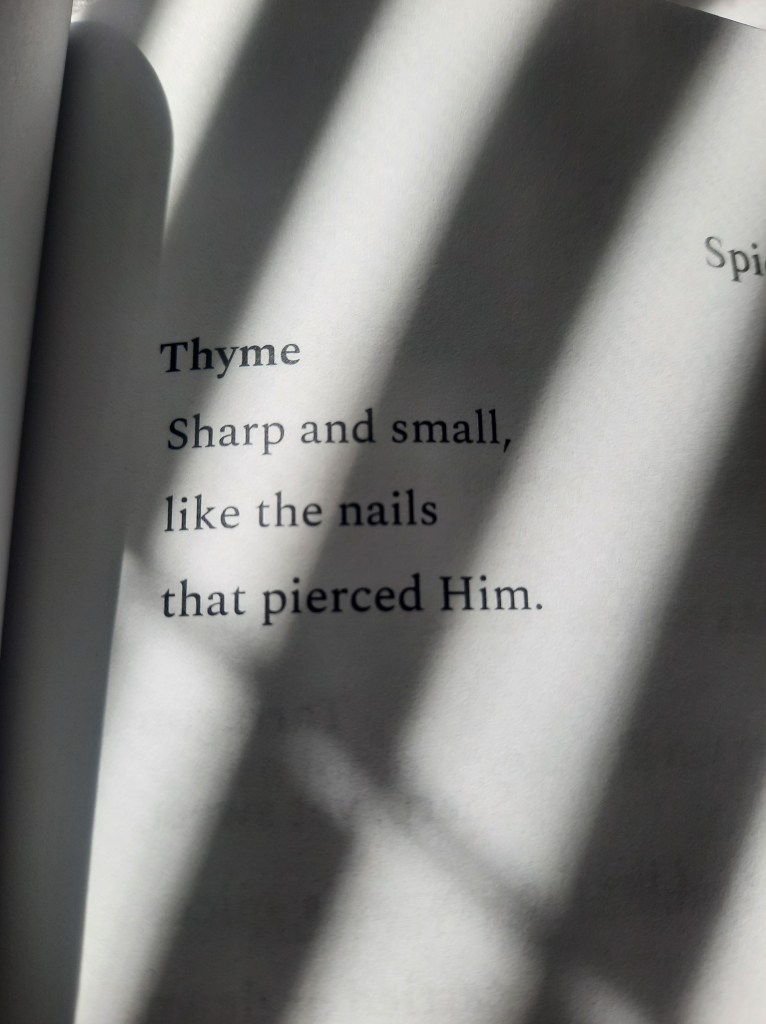
I don’t talk about my faith a ton on the blog. Not that I am ashamed of it but it’s something I usually I don’t delve too deep into as most people are probably here for writing tips and random writing experiments. BUT when I write poetry, it tends to spill out in all its honest glory. My next poetry book is all about love lost and God. The heartbreak stuff, the deep stuff, the wrestling-through-questions kind of stuff. It’s the most vulnerable I’ve been with my writing in a while, admittedly.
I wanted to give you a little sneak peek. If this sounds like your cup of tea at all, feel free to keep reading. If not, see ya in the next post, I’ll not hold it against you 😉
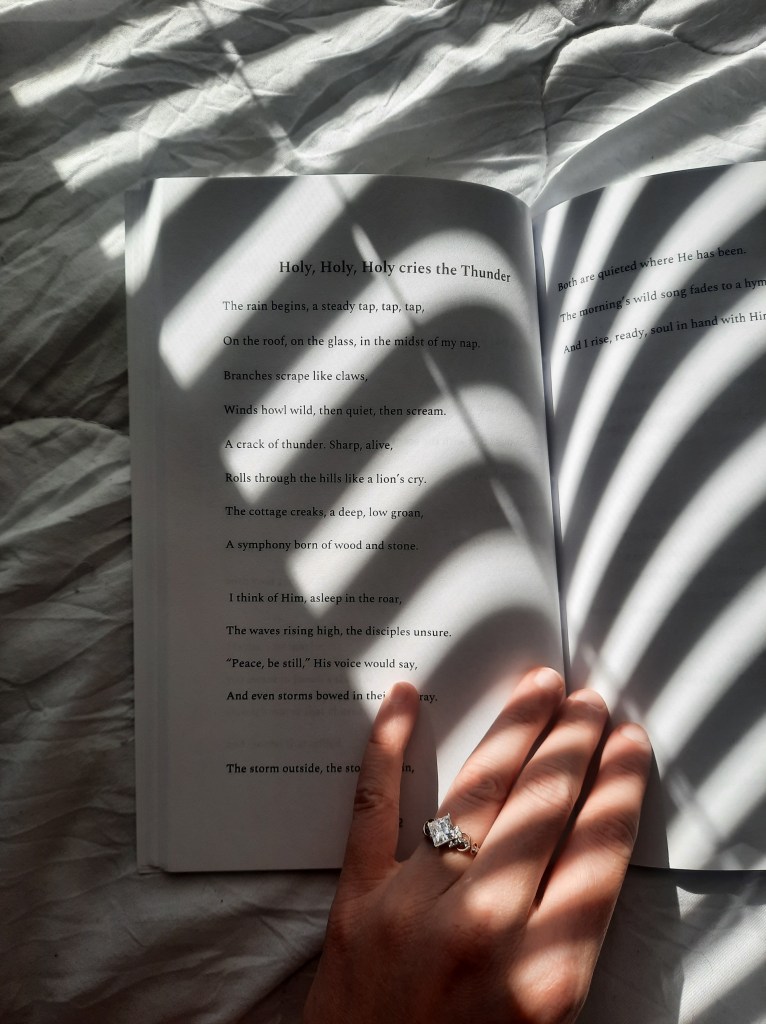
This poem came from one of those thoughts that just wrecks you in the best way: Do you think Jesus, when He prayed in the garden, thought about Adam and Eve? About walking with them in the cool of the day? And did He already know that His sacrifice would reach all the way back to redeem even them?
I had never considered that before and when I did, the parallel seemed interesting. So, naturally, I wrote a poem about it.
Here it is: The Tale of Two Gardens
The Tale of Two Gardens
Do you think, when Christ knelt in the garden all alone,
That He thought of the first breath, or the first bone?
Of footsteps that walked on soil in the cool of the day
Two souls unashamed, then two led astray.
Did He think of the fruit, the reaching of hands,
Yearning beyond what he commands.
Of fig leaves stitched with a shiver of dread,
Of paradise lost, and the very first tears ever shed?
Did he think of their conversations with his first own,
As He whispered His prayer in that garden of stone?
Did He see not just thorns but a tree once denied,
Where mercy was given, but they were not yet justified.
He sweat drops of blood where they once walked free,
But even then, grace reached backward, far beyond what we see.
Redemption is deeper than we understand.
It touches the first folly of humans, the Savior’s extended hand.
And Father, perhaps, when night turned to day,
And the stone rolled back from where Love chose to stay,
The echo of Eden rang sweet through the skies,
For even the first ones were brought back to life.
Look, I thought self-publishing my book would feel like presenting the world a piece of my soul and everyone would instantly clap at my literary genius *dramatic hair flip*. But let’s get back to reality and discuss it because while I’m not a genius with a masterpiece to produce, the whole process had moments where it felt a sort of like cyclical hell of reformatting the same script over and over again…just to reupload it and see A new problem had been invented by my means of fixing the previous problem. Lovely.
So here, dear reader, are a few poems chronicling my deeply emotional, slightly ridiculous (and mundane) journey with Kindle Direct Publishing. May they bring you laughter, healing, and maybe a slight eye twitch in solidarity.
The Upload Spiral
(A sonnet, sort of. Shakespeare is not impressed.)
I clicked “Upload”—how easy!—with coffee in hand, A hopeful young writer with dreams so grand. But lo! My margins were not flush, my gutter misbehaved, And half of my poem was tragically shaved.
“Bleed error,” it screamed, “Fix your trim size, you doof!” My table of contents went straight up through the roof…(of the page.) I resized and reformatted, cursed Kindle’s name, Then tried a new layout… with results just the same.
I whispered to Canva, “Make me a cover!” She laughed, “Sure thing… but your title’s hungover.” So I rage-ate some chips and prayed to the onedrive cloud, My PDF won’t open. I screamed… out loud.
Formatting Hell: A Memoir in Free Verse
I thought importing a Word doc would be simple. Just CTRL + C, CTRL + V. Easy. Peasy.
Even…lemon squeasy.
Then Kindle turned my paragraph breaks into a n spattered s p a c e d
mess My images migrated to the top of the page like penguins heading north for winter. The title page had opinions, That differed from mine.
rebellion.
Page numbers? They exist in my mind only.
Cover Designer’s Lament
(A limerick)
A gal thought her cover was sleek, ‘Til Kindle said, “Nope. Fix. Then tweak.” The spine was too thick, “This was supposed to be quick,“ Now she cries into Canva each week.
The Final Click
(A motivational spoken-word poem performed under a single spotlight)
I did it. I hit “Publish.” Tears in my eyes,
Will it sell? Will it flop? Will I check the dashboard twice a day for three weeks and then forget I even wrote it?
Yes. Yes, I will. And I’ll do it again, because I’m a KDP author. And I thrive on chaos.
(Or so I tell myself)
In Conclusion…
If you’re about to upload your first book to Kindle Direct Publishing, just know you’re not alone. Your margins may be askew and cause you to weep. Your soul may briefly exit your body when the previewer crashes for the fifth time. But you’ll live to publish again.
And hey, once you’ve cried it out and your book is live, you get to do the most magical thing of all: click “View on Amazon” and text your friends, “Look, I’m famous.”
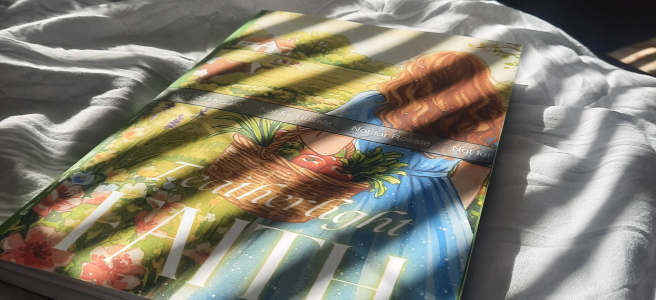
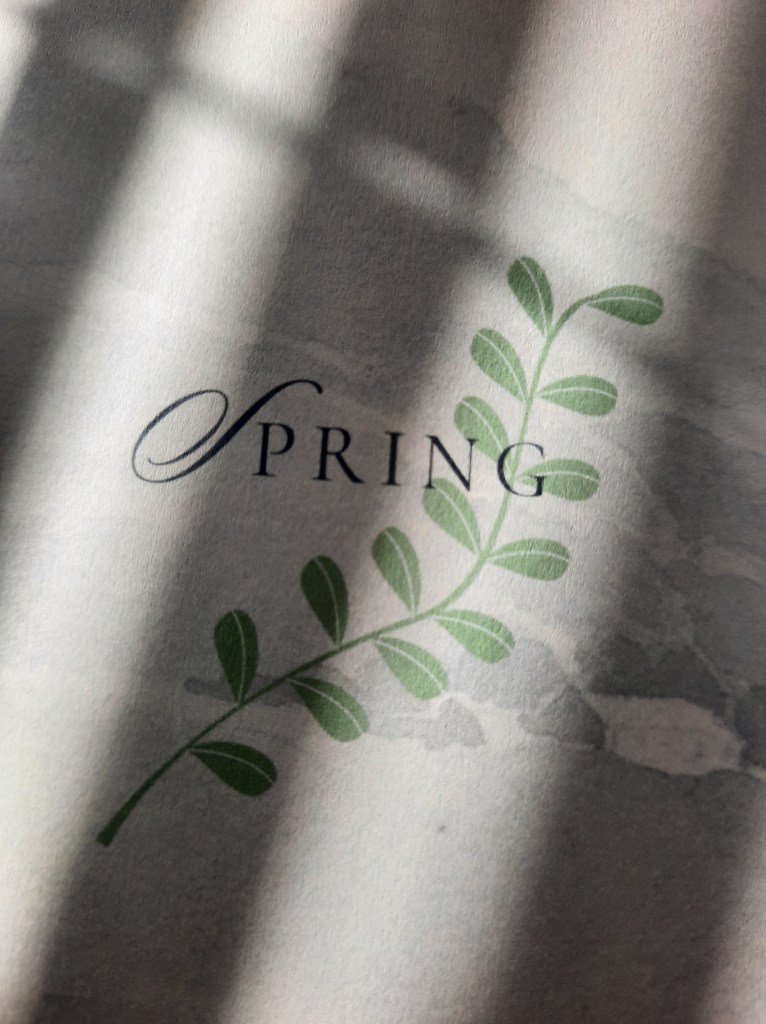
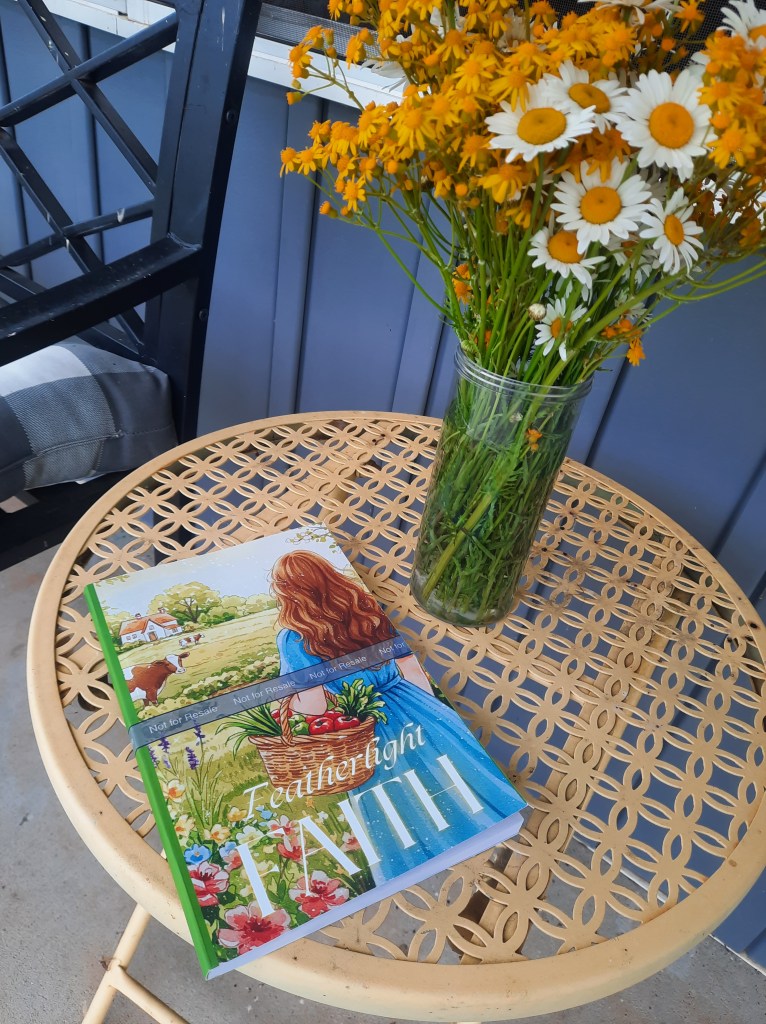
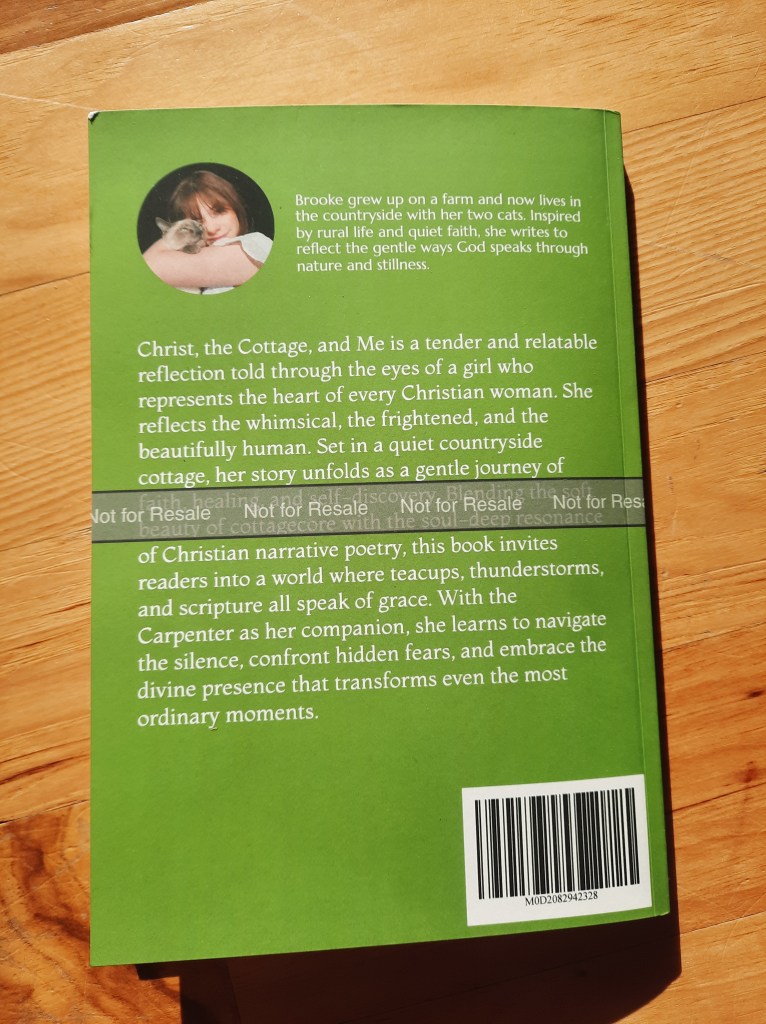
Cover reveal!Notes I’ve already made of things that need to be added and fixed.The book’s poems are separated by seasons. Back bio!
Aaaand I’m officially in the thick of the ongoing battle that is trying to get it published through KDP. If you’ve never wrestled with Kindle’s formatting system, let me just say: it’s an extreme sport. This time around, my main enemy has been margin sizing. (Margins! The most boring yet somehow most powerful force known to man.) A few of my poems that originally played around with white space had to be rearranged, which was honestly heartbreaking. There’s nothing like fighting for your artistic vision against a stubborn little “your margins are off” warning box.
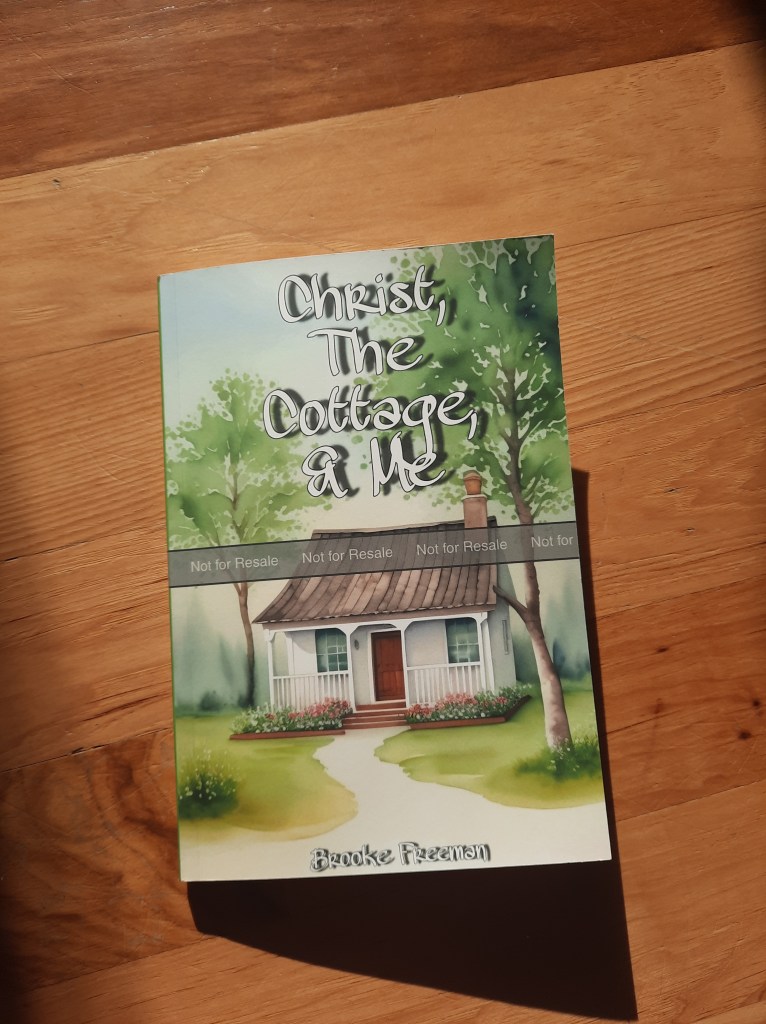
But!! After many rounds of staring at my laptop, dramatically sighing, and reworking layouts, I finally got my proof copy in the mail today! For those who don’t know, a proof copy is basically the version you get to lovingly (or not-so-lovingly) scribble edits all over before you fix everything and upload your final manuscript. I immediately busted out my pen and started making notes because, of course, the second you see your book in print, all your little mistakes jump out like “SURPRISE! You missed me!”
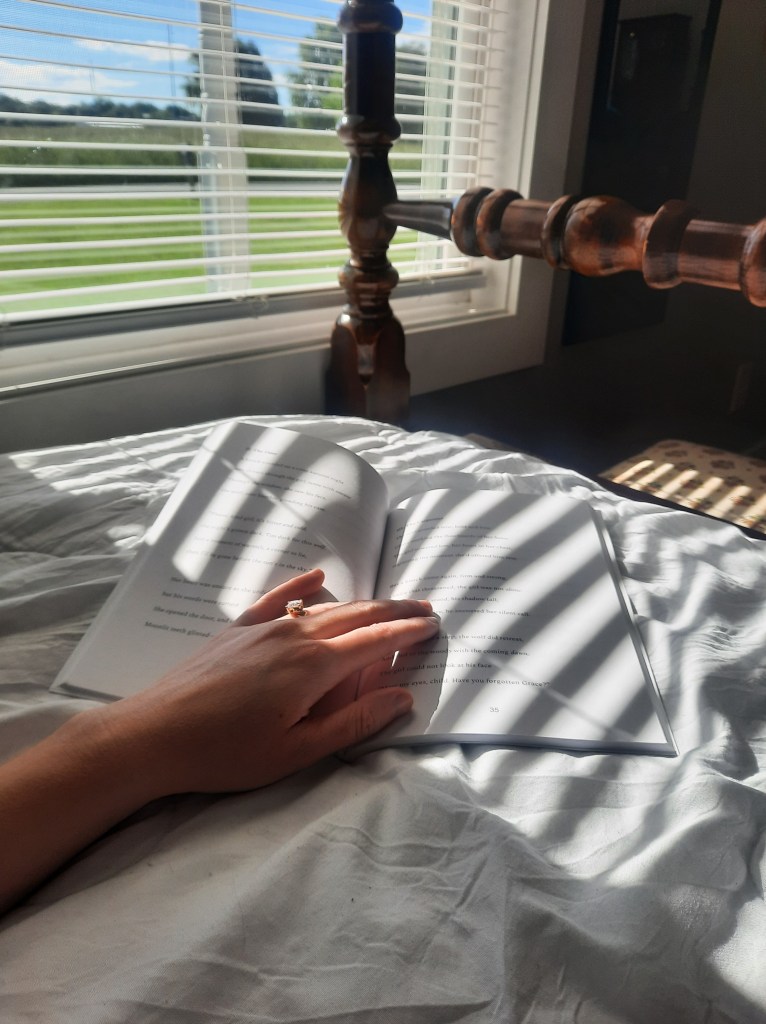
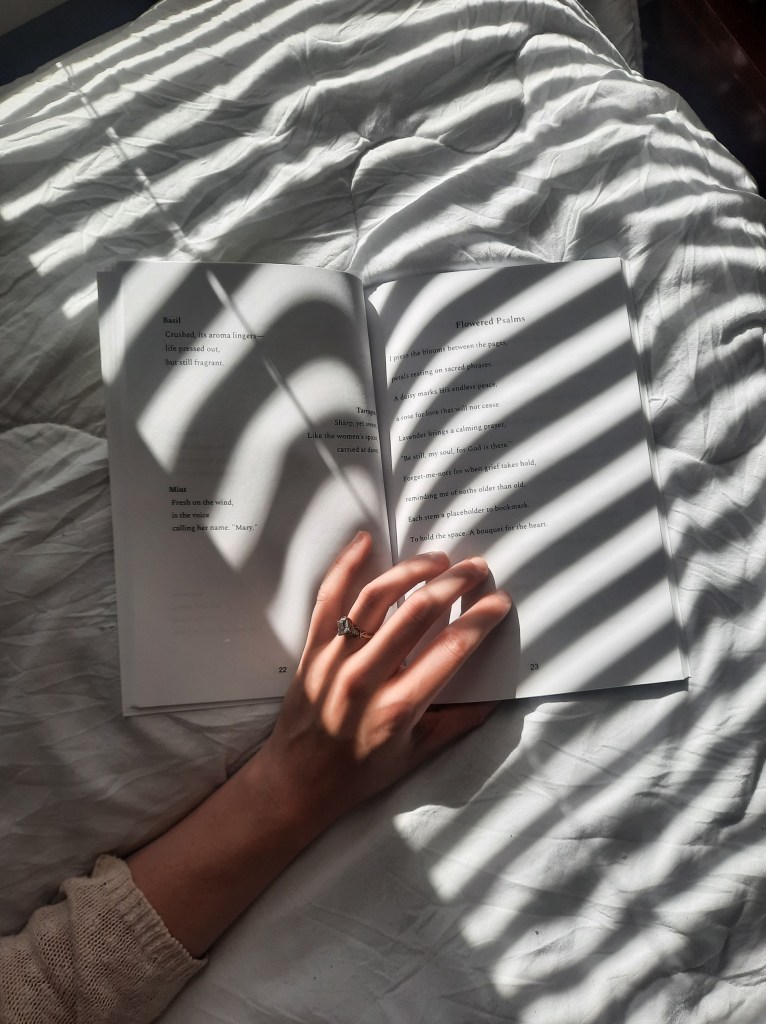
The book ended up being about 100 pages of narrative poetry, telling the story of a girl who lives in a cottage and her various adventures and conversations with the Carpenter (a stand-in for Christ). It’s cozy and intimate and feels like sitting on a creaky wooden porch, sharing life with someone who knows you inside and out. There are poems about baking bread, going on little walks, asking hard questions, sitting quietly, making things by hand…all the small, sacred moments that make up a life of faith.
I’m honestly so excited (and so nervous) to share it when it’s ready. It’s one thing to write poems privately; it’s a whole other thing to send them out into the world and hope they land softly somewhere. Either way, just holding a physical copy of something I made…even a messy, needs-edits version…feels surreal and really, really special.
Thanks for cheering me on through all the margins, the formatting fails, and the many, many sighs. I can’t wait to show you more soon! 💛
I gave TikTok a shot. I really did. I have a WIP poetry book, and frankly, poetry is coming out of my ears at this point. Why not see if TikTok could help me get some eyes on my work? A little poetic clout, perhaps? I have seen so many creators get a nice little audience boost from tik tok but that led me to ask a few questions: First off, how long does this take? Second, how luck based is it? And third, is it something I could even remotely pull off? The only sure-fire way to figure this out for myself was to try. For about 2 weeks. (Ok, ok, it’s not that long of a time frame but I just wanted to give it a quick little go, alright?)
TikTok is an interesting creature when it comes to promoting writing. It moves fast. I soon found out that it moved so fast that most users are like ships passing in the night. They’ll comment something like “Wow, love this!” and then vanish, never to be seen again. Which is nice in the moment, but also? Not super helpful when you’re trying to build a consistent audience.
It seems like the only way to really win at TikTok is to post every single day (consistently for more than two weeks), possibly even multiple times a day, for an extended period of time. And I don’t know about you, but I have a full-time job. I have a life. I have two cats who expect me to provide them with a high standard of living. I cannot be out here churning out viral poetry videos while also making sure I have clean laundry.
Oh, and the algorithm is super punishing if you miss a day or two. When I built what felt like momentum towards the middle of the first week, it was great. My videos were consistently getting around 600-900 views. Then I missed a day and it felt like I was starting on square one all over again.
By the end of the experiment, I ended up with around 49 followers and 1,421 likes. A little disappointing especially given my account had around 40 posts one it. So, I gained like a follower per post I guess? No wonder people have to post a lot to gain traction with that kind of math!
So, for now, my TikTok writing experiment is on pause. But maybe one day, when I have the time (or when my poetry royalties pay my rent—ha!), I’ll give it another go.
Until then, I’ll just be over here, writing poetry and thinking about posting it on TikTok. I hope you’ve found this post insightful and maybe even…helpful? Perhaps I have squelched your curiosity when it comes to sharing your writing on tik tok or at least answered a question or two.
Picture this: A snow day. A rare, magical off day gifted by the powers of winter. Naturally, I did what any introverted poet would do—I decided to spend my day cozied up, writing for my dearest poetry book draft. Dreams of metaphorical brilliance danced through my head as I opened my laptop and double-clicked on my Word document.
And then—BAM. A digital slap to the face.
I couldn’t access my own document. Why? Because my Microsoft Office license, previously covered by my college, had expired. Since I’m no longer a student (shoutout to adulthood and its many expenses), this wasn’t a complete shocker. But the nerve. I was at least a little offended.
Out of curiosity, I decided to see how much it would cost to renew. I figured it couldn’t be that bad. I mean, it’s just a word processor, right?
Y’all. Ten bucks a month. A hundred dollars a year.
FOR WORDS.
Now, I’d like to think I’m a reasonable person, but this was some highway robbery. And the kicker? I couldn’t even open my original document unless I coughed up the cash. Sure, I could access it through the online version of Word, but that interface looked like it had a midlife crisis. Crowded, clunky, and as intuitive as a brick wall. And syncing it? Ha. Not happening.
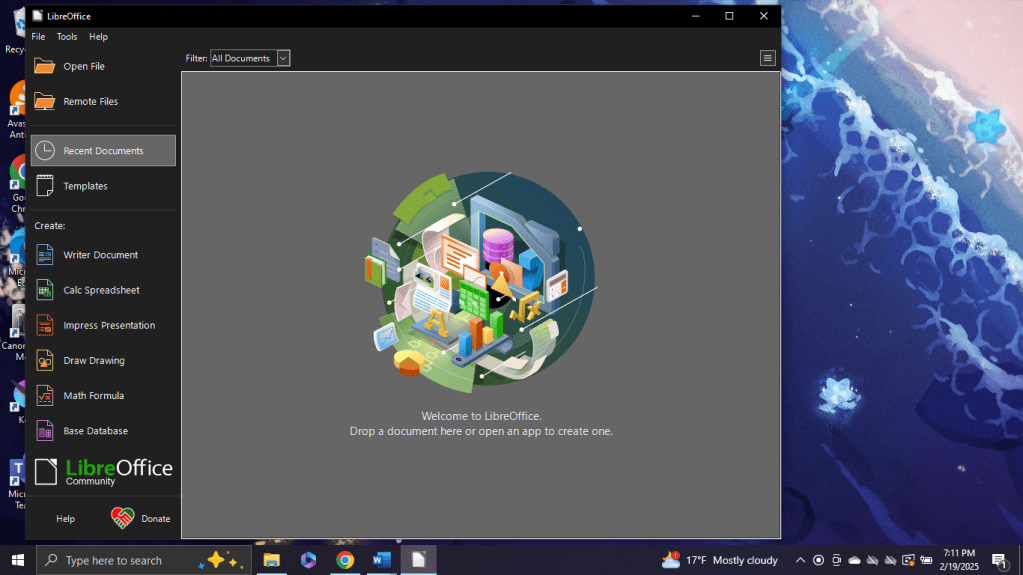
That’s when I hit my limit. I had a poetry book to write, snow day vibes to enjoy, and I wasn’t about to let corporate greed ruin my creative flow. Determined, I opened a new tab and searched for alternatives. That’s when I met my new best friend: LibreOffice.
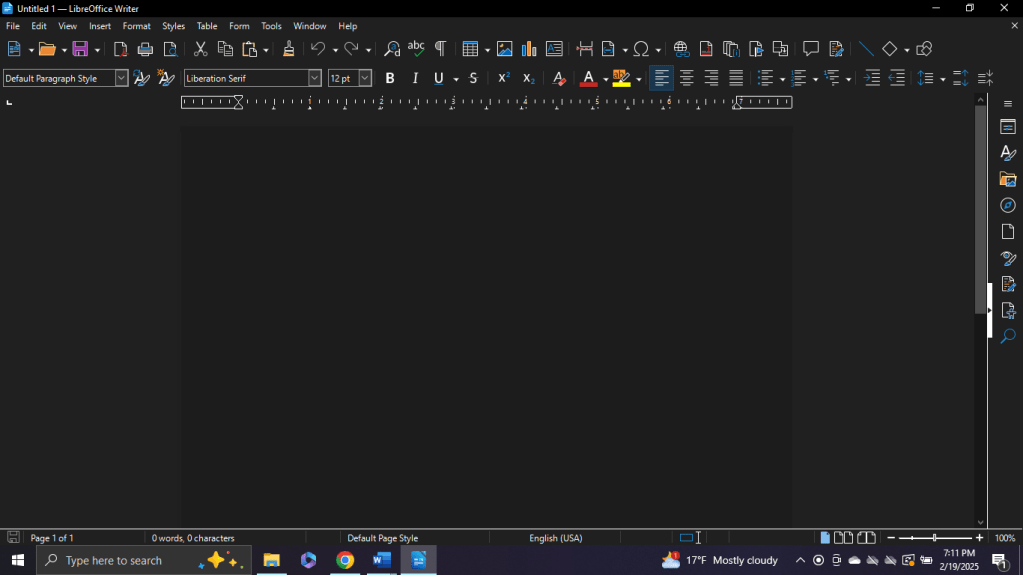
Let me tell you, LibreOffice is basically Microsoft Office but without the corporate handcuffs. It’s free, offline, and lets me open my own documents without asking for my credit card information. Revolutionary, right?
The best part? It felt just like old-school Word. Simple. Functional. No frills, no nonsense. And, most importantly, no monthly payments draining my bank account. I could write my poetry in peace, snow softly falling outside, without feeling like I had to sell a kidney just to access my own words.
So, here we are. Microsoft Word and I? We’re done. I’ve moved on. LibreOffice and I are getting along great, thank you very much. And the moral of the story? If a company tries to hold your words hostage for a hundred bucks a year, maybe it’s time to break up and find someone (or something) better.
LibreOffice, you’re the real MVP. And Microsoft? Yeah, we’re never, ever getting back together.
I’ve been there, friends. Far too many times in fact. Staring at a piece of writing I’ve poured my heart into, hovering over the “Post” button, my stomach twisting. The thought runs rampant: What if people think this is weird? What if I’m awkward? What if this is…cringe?
Social media has given us a strange gift: the ability to share our creativity with a potentially massive audience. But alongside that gift comes the shadow of The Fear. The fear of being judged, of being misunderstood, or, quite possibly, being dismissed as “cringe.”
“Cringe” is potentially the ultimate insult in internet culture (at least as I see it as a creative). It implies that you’re trying too hard, caring too much, or daring to be earnest in a world that values ironic detachment. And when you create something as personal as a poem, a story, or a piece of art, putting it out there can feel like standing naked in a spotlight. There you are, lain bare. You want to be seen, but what if the crowd points and laughs?
I know this fear well because it’s held me back from sharing my own poetry. I love writing. It’s how I process life’s more difficult moments, capture fleeting emotions, and just overall express myself. But when it comes to posting a poem online, I freeze up. What if they think I’m pretentious? What if someone mocks me for using certain metaphors or for feeling something too deeply?
Here’s what I’ve realized, though: creating art isn’t about avoiding cringe. It is about embracing it.
Much of great art has, at some point, been considered cringe-worthy or at least wasn’t super appreciated in its time. Van Gogh’s bold, swirling strokes? Art of a talentless, crazy hack. The Beatles’ early love songs? Cheesy and dare I say, corny? Writing poetry and sharing it with the world takes guts because it’s vulnerable. It’s deeply personal. But that’s what makes it real.
If you spend your life avoiding the risk of being cringe, you also avoid the chance to connect with people. Because here’s the thing: for every person who might snicker at your poem or scroll past it, there’s another person out there who will feel seen. Your words and art could be exactly what they needed in that moment.
And, let’s be real, the alternative is even cringier. It’s cringy to hold back your creativity, to stifle your voice, to live in fear of what a bunch of strangers online might think. It’s cringy to not make something, to let fear make you boring and scared and silent.
So here’s my advice (to you and to me): Post the poem. Share the art. Write the awkward, heartfelt, overly-metaphorical thing and let it out into the world. Someone will cringe, sure. But someone else will care. And in the end, the world needs more people who dare to care.
Minimalist poetry is a curious art form. On one hand, its simplicity can be breathtaking, distilling complex emotions into a few perfectly chosen words. On the other, it can sometimes feel like it crosses the line from evocative to, well, lazy. The debate on whether minimalist poetry is inspired or just minimal effort has only grown with the rise of social media.
One of the most famous examples of minimalist storytelling is often attributed to Ernest Hemingway, though its authorship is debated:
“For sale: baby shoes, never worn.”
Six words. That’s it. And yet those six words pack an emotional punch that lingers far longer than some novels. The story leaves gaps, but in a deliberate way. We, as readers, fill those gaps, and in doing so, we become co-creators of the story’s meaning. The economy of language isn’t a flaw here; it’s the whole point.
This, in my opinion, is minimalist poetry at its best. It’s clever, intentional, and layered. The writer has done their job by crafting a framework that invites you into its world, offering just enough to ignite your imagination.
But then there’s the other side of minimalist poetry, the kind that’s been popularized by Instagram and TikTok poets. These poems, while often beautifully packaged in neat fonts and pretty backdrops, sometimes feel hollow. They can be so sparse that they rely almost entirely on the reader to find meaning where there may not have been much intention.
I’ll admit, I’ve spent far too long scrolling through Instagram poets’ pages, trying to glean the mass appeal of their work, but more often than not, I just don’t get the hype. Atticus, one of the most well-known Instagram poets, is a prime example. His work is often beautifully presented—each poem feels like it’s been carefully curated for aesthetic appeal. But when I read the actual words, I sometimes find myself wondering: Is this it?
Take this Atticus poem, for instance:
“She conquered her demons and wore her scars like wings.”
Now, this isn’t necessarily a bad poem. It’s empowering, and I’m sure it resonates deeply with many people. But does it feel crafted? To me, it’s a nice sentiment wrapped in poetic phrasing, but it lacks the depth and precision that truly memorable poetry offers. It’s easy to read, easy to share, and looks great on a Pinterest board—but does it challenge or linger in the reader’s mind?
Or take a hypothetical minimalist poem like:
“The sky is blue. I feel, too.”
Is it poetry? Sure. Is it meaningful? It could be, depending on how the reader interprets it. But at some point, I think the burden of creating meaning needs to be shared more evenly between the poet and the reader.
So, is that a problem?
I think it depends on how much work you believe the reader should put into the process of poetry. In some ways, all poetry is a collaboration between the writer and the reader. Even a densely worded, highly descriptive poem leaves room for interpretation—it’s part of what makes poetry so powerful. But minimalist poetry amplifies that collaborative element, sometimes to the point where the writer’s role feels diminished.
At its best, minimalist poetry uses its sparseness to make every word essential. The space between the words isn’t empty; it’s charged with meaning. At its worst, it can feel like the poet handed you a blank page and said, “Figure it out.”
Social media has undoubtedly democratized poetry, which is a beautiful thing. But it has also encouraged a kind of fast-food poetry, where pieces are churned out quickly for likes and shares. Some of these poems are deeply moving, proving that a few well-placed words can touch hearts around the globe. Others feel more like placeholders, banking on the reader’s goodwill to imbue them with meaning.
Ultimately, whether minimalist poetry is lazy or inspired comes down to intention and execution. If the poet has truly worked to make each word count, the results can be stunning. If they’ve used minimalism as a shortcut, it shows.
For readers and writers alike, the challenge is to discern the difference. Everyone’s answers are going to be different of course. That is the fun (and sometimes irritation) when it comes to art.
Welp, I think that’s all my thoughts on the matter. Thanks for listening and feel free to continue the dialogue in the comments. Do you enjoy minimalist poetry? Are you perhaps more brilliant than me and understand the hype? Or do you have similar concerns with lazy, (and often) formulaic art appearing more and more mainstream? Am I actually just a pompous jerk who is overly critical (also perhaps).
So, I did a thing: I self-published a poetry book! Cue the happy tears, celebratory confetti, and… me furiously googling “how to fix image formatting errors.” However, that latter part could be my own hubris. Spoiler alert: my poetry book isn’t just any old text—it’s packed with images. Yep, we’re talking multimedia poetry, so my struggles might have been amped up a notch because I decided to get fancy with visuals. What can I say? I am a wee bit too extra for my own good but I’m committed so here we are.
The Interesting Journey of Formatting
Now, Kindle Direct Publishing (KDP) has its own formatting tool, which requires you to download an app to your computer. It’s manageable…in the way that driving a stick shift for the first time is “manageable.” Since my book was 90% images, the Word document transfer option wasn’t exactly reassuring—KDP’s warning about “potential formatting errors” didn’t sound like a good time. So, I went with their Kindle app and got straight to work.
After a few afternoons of playing around in KDP’s software, I figured out how to get my images where I wanted them and things looked halfway decent. Not bad for my first try at book formatting. HOWEVER that doesn’t mean it didn’t have its annoying moments. Every single time I updated one image, I’d have to double-check the rest, because it seemed like one change would throw off the entire balance of the layout. I felt like I was doing an elaborate game of digital Jenga.
Would I recommend Kindle Direct Publishing to anyone looking to self-publish a poetry book with multimedia elements? Yes. But… let’s just say, expect a little struggle. If you’re like me, and you want to mix poetry with visual elements, just know that formatting is a time-sucking beast you’ll need to tame.
The Great Cover Design Showdown: KDP vs. Canva
KDP does offer a cover design tool, which is fine if you’re going for something simple, but simple ended up looking like a high school PowerPoint. So, I migrated to Canva, where I could actually add flair, colors, and fonts that suited the vibe of a multimedia poetry book. Canva: 1, Kindle Cover Tool: 0.
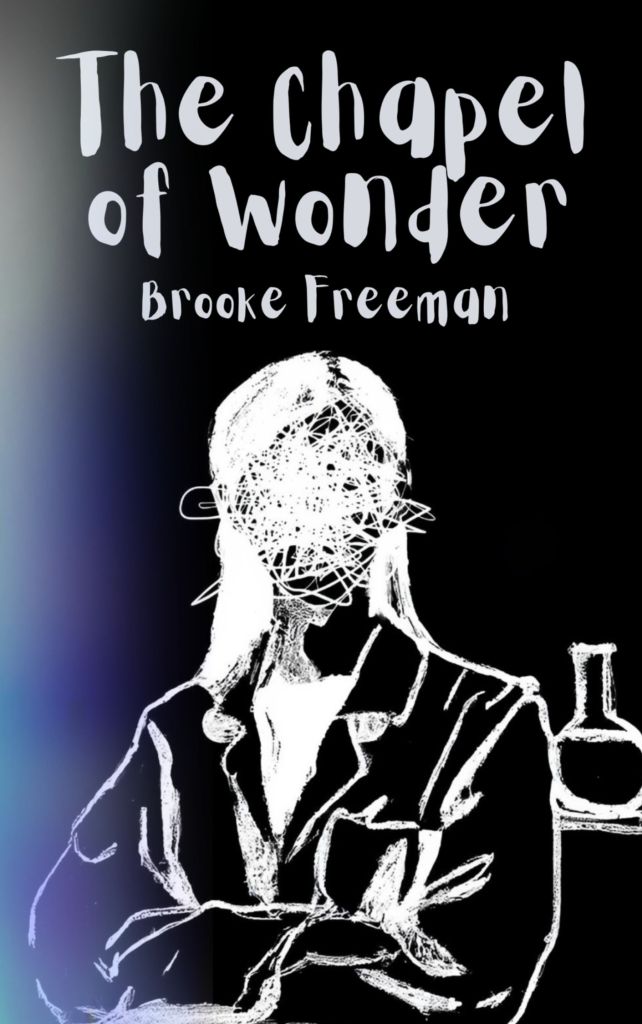
(Psst. Cover design pictured below):
The End Result
Overall, the process was worth it—I loved bringing my poems and images together in one project. Sure, it was a little clunky, but hey, seeing my work all shiny and official was worth every “Oh, not again” moment. So, if you’re thinking about self-publishing, especially with multimedia, I say go for it! Just don’t forget Canva—and maybe take a few deep breaths (And a cup of coffee) before tackling the formatting.
All that being said, my tiny little science inspired multimedia poetry book has been sent out into the world! I can’t really complain to be honest. It was a fun little venture I must say. I also think it was the perfect introduction for me for the world of Kindle Direct Publishing. My book was small (what’s known as a chapbook) so while the formatting felt like it took awhile, I can’t imagine how much longer it would have taken if I published a full-scale poetry book.. which reminds me.
I’d love to do this again.
Probably with a full length poetry. But don’t worry! I probably won’t go the multimedia route (at least for now anyways). Personally, I would love to try my hand at some more traditional poetry but we’ll just have to see where the creative winds take me from here. Thanks for reading and if your morbid curiosity gets the best of you and you have a few bucks to burn, here’s a link to my little project.
Tennessee weather is so unpredictable. Last week there was a chance of snow, this week it feels mid fall. Not that I’m complaining about the 60-70-ish degree weather. It’s a rather nice break from the grey I’ve been dealing with most of January.
It’s weird to think that it’s already almost March. 2023 felt like it ended just yesterday and suddenly we’re almost 3 months in. I hear that’s a sign you’re getting old but if that’s true, then please don’t tell me and allow me to live in blissful, timeless ignorance.
Hope you all have been doing well and that 2024 (that year still doesn’t feel real) is treating you well! I just thought it would be fun to do a nice little writerly life update seeing as I have a few matters to discuss and update the wide web on. I know you’re all waiting with baited breath.
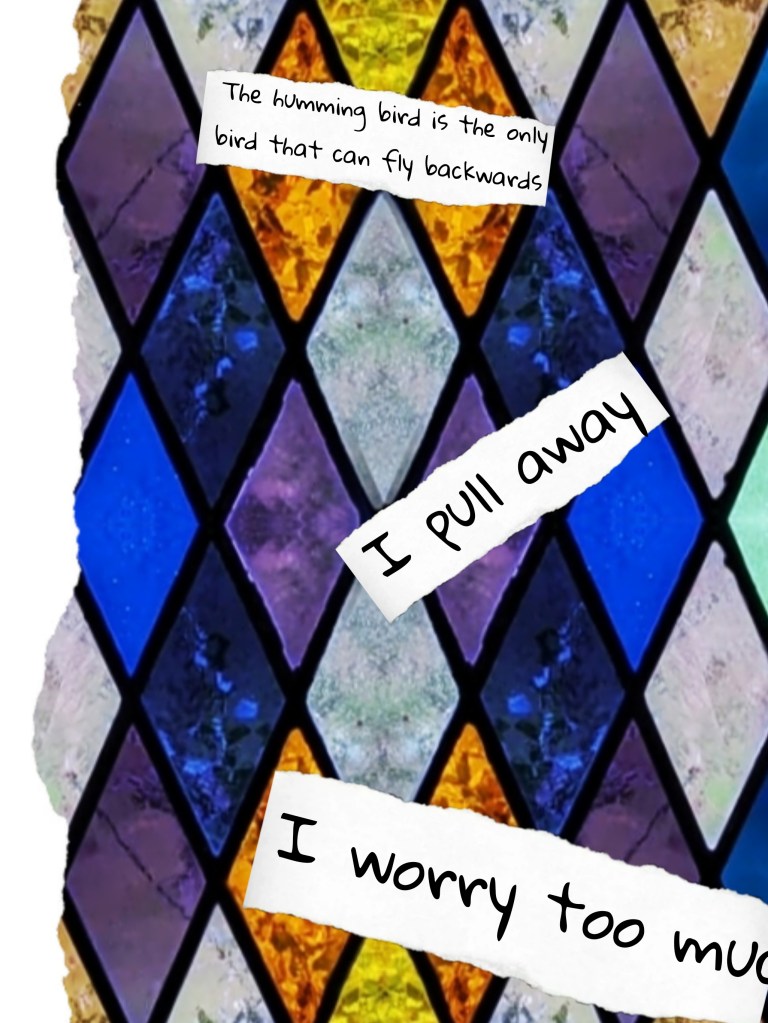
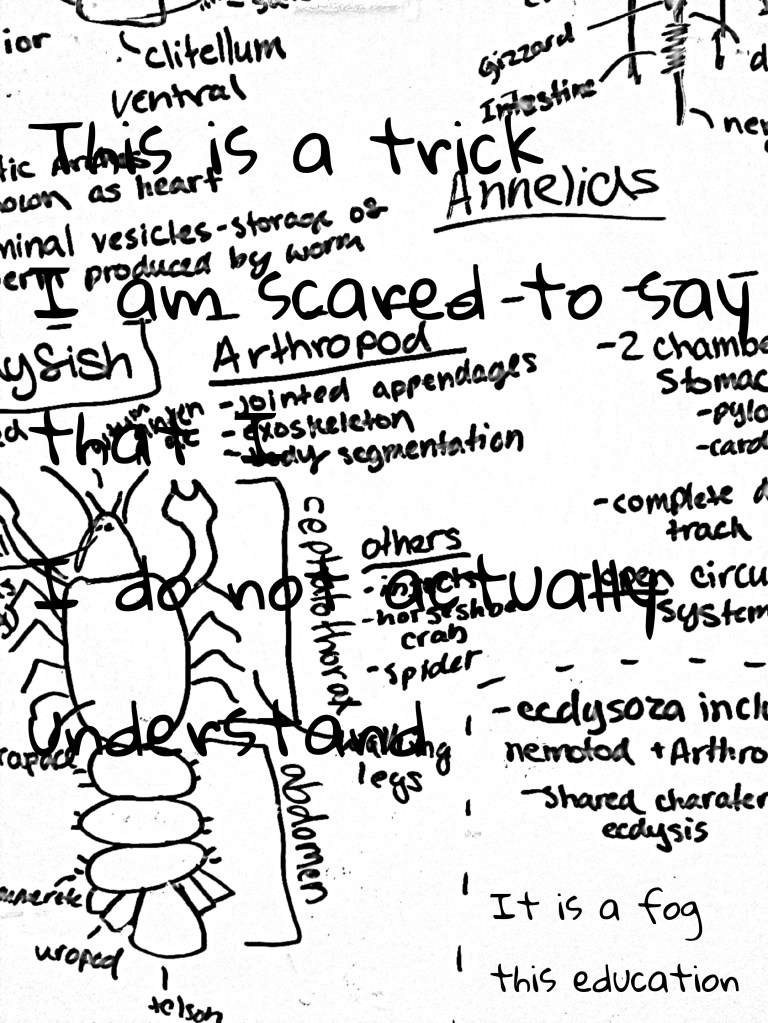
First order of business, I’ve been working on a chapbook! It’s been in the making since last fall semester of 2023 and I finally am pulling all the pieces together. It’s a combination of everything I enjoy- poetry, science, stainglass windows, and angsty little musings about how I’ve poured money into an education and yet, on the cusp of my senior year, I still feel clueless. Yaknow. The standard stuff. A little sneak peak page can be seen below:
I hope to enter a chapbook contest and submit it for online publishing but we’ll see where this little project takes me. It was loads of fun to work on and I can’t wait to see what I end up doing with it whether its publish it or set it on fire. What matters is I am essentially done!
Second order of business, I am taking all writing classes this semester! I just need to finish up my silly little writing minor so I’m taking The Creative Market Place as well as Short stories and Fiction. Oh, and walking. Yes, I am taking a walking class. I needed the credit.
The Creative Market Place is a cool class where I get a little bit more insight on the business side of being a writer. We recently finished up a peer review workshop where we critiqued each other’s papers and reviewed books. Generally workshops can be a source of stress because I want to sit down and write a thorough and extensive feedback paper for each piece but, alas, time is not always on my side. Not to mention the fun of sharing your work to a class room. I was surprised to find that, ironically, sharing my overly angsty, corny poems doesn’t bother me in a class room setting but writing something semi-professional is. I think I just have to try extra hard to be professional and the poetry thing is just kind of fun. So when my professional review sucks, that’s a little more of a blow to my writer ego (something’s gotta keep it in check).
Short stories in fiction is both wonderful and awful. I’m having to fight against my long-winded tendency to describe everything in a room and what every single skin cell looks like on a character. I blame my consumption of Tolkien literature I think.
Final order of business, I am figuring out what I am doing with my life. This has proved to be a most arduous task and I still haven’t quite completed it. Most days I find myself torn between the two moods of “Yay! I’m almost done with school!” and “Oh no, I’m almost done with school!”. I’m not entirely sure what the future has in store for me with a bio degree and a creative writing minor. I am not entirely certain whether this writing thing will just be a brainless little hobby that I do when come home from a long day working at a lab or if it will actually be a part of my professional life. I guess it’s just whatever doors God chooses to open. So, with this in mind, I’m trying not to spontaneously melt from the stress. I know it’ll all turn out alright. All my college seniors out there know the feeling I’m sure.
And that’s it! Or all the important stuff at any rate. Thanks for taking the time to read my existential crisis about my quickly approaching future. Feel free to share any anxiety tips in the comments below and take care!




 By the Brooke