I don’t talk about my faith a ton on the blog. Not that I am ashamed of it but it’s something I usually I don’t delve too deep into as most people are probably here for writing tips and random writing experiments. BUT when I write poetry, it tends to spill out in all its honest glory. My next poetry book is all about love lost and God. The heartbreak stuff, the deep stuff, the wrestling-through-questions kind of stuff. It’s the most vulnerable I’ve been with my writing in a while, admittedly.
I wanted to give you a little sneak peek. If this sounds like your cup of tea at all, feel free to keep reading. If not, see ya in the next post, I’ll not hold it against you 😉
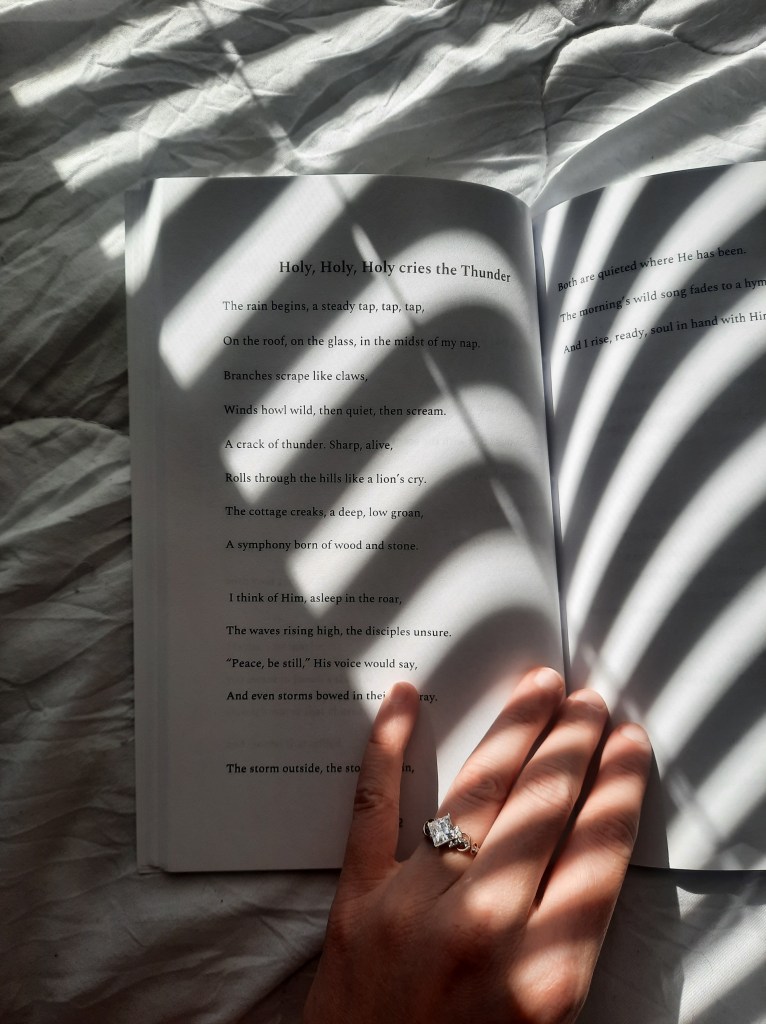
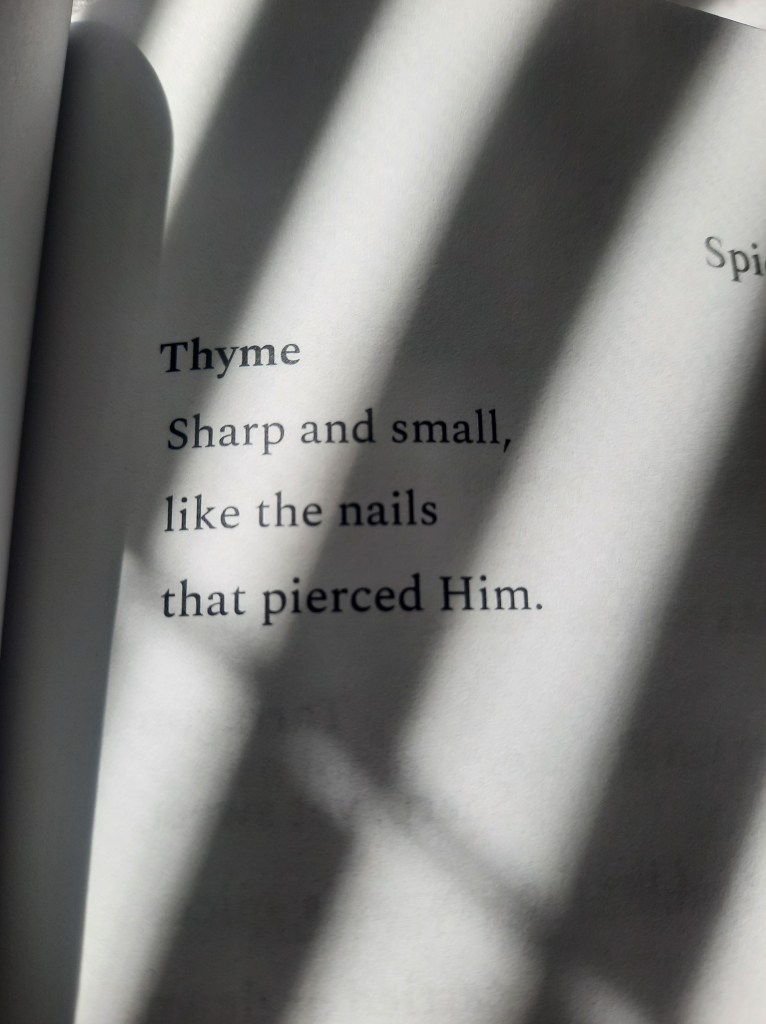
This poem came from one of those thoughts that just wrecks you in the best way: Do you think Jesus, when He prayed in the garden, thought about Adam and Eve? About walking with them in the cool of the day? And did He already know that His sacrifice would reach all the way back to redeem even them?
I had never considered that before and when I did, the parallel seemed interesting. So, naturally, I wrote a poem about it.
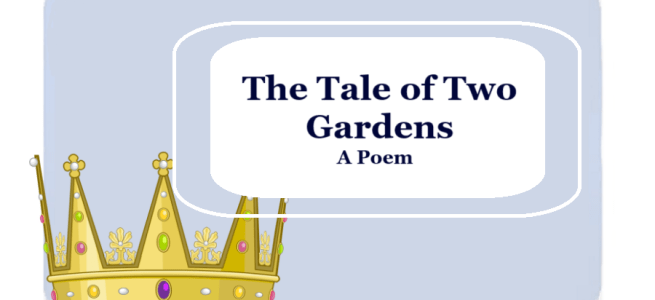
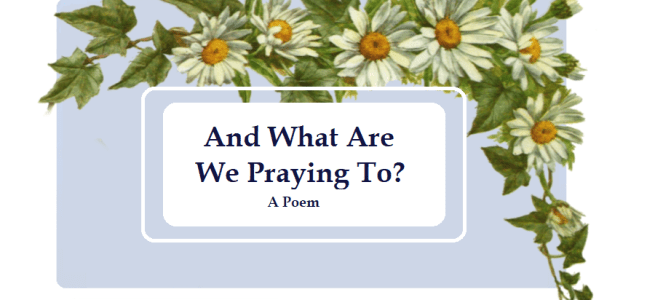
Here it is: The Tale of Two Gardens
The Tale of Two Gardens
Do you think, when Christ knelt in the garden all alone,
That He thought of the first breath, or the first bone?
Of footsteps that walked on soil in the cool of the day
Two souls unashamed, then two led astray.
Did He think of the fruit, the reaching of hands,
Yearning beyond what he commands.
Of fig leaves stitched with a shiver of dread,
Of paradise lost, and the very first tears ever shed?
Did he think of their conversations with his first own,
As He whispered His prayer in that garden of stone?
Did He see not just thorns but a tree once denied,
Where mercy was given, but they were not yet justified.
He sweat drops of blood where they once walked free,
But even then, grace reached backward, far beyond what we see.
Redemption is deeper than we understand.
It touches the first folly of humans, the Savior’s extended hand.
And Father, perhaps, when night turned to day,
And the stone rolled back from where Love chose to stay,
The echo of Eden rang sweet through the skies,
For even the first ones were brought back to life.
Look, I thought self-publishing my book would feel like presenting the world a piece of my soul and everyone would instantly clap at my literary genius *dramatic hair flip*. But let’s get back to reality and discuss it because while I’m not a genius with a masterpiece to produce, the whole process had moments where it felt a sort of like cyclical hell of reformatting the same script over and over again…just to reupload it and see A new problem had been invented by my means of fixing the previous problem. Lovely.
So here, dear reader, are a few poems chronicling my deeply emotional, slightly ridiculous (and mundane) journey with Kindle Direct Publishing. May they bring you laughter, healing, and maybe a slight eye twitch in solidarity.
The Upload Spiral
(A sonnet, sort of. Shakespeare is not impressed.)
I clicked “Upload”—how easy!—with coffee in hand, A hopeful young writer with dreams so grand. But lo! My margins were not flush, my gutter misbehaved, And half of my poem was tragically shaved.
“Bleed error,” it screamed, “Fix your trim size, you doof!” My table of contents went straight up through the roof…(of the page.) I resized and reformatted, cursed Kindle’s name, Then tried a new layout… with results just the same.
I whispered to Canva, “Make me a cover!” She laughed, “Sure thing… but your title’s hungover.” So I rage-ate some chips and prayed to the onedrive cloud, My PDF won’t open. I screamed… out loud.
Formatting Hell: A Memoir in Free Verse
I thought importing a Word doc would be simple. Just CTRL + C, CTRL + V. Easy. Peasy.
Even…lemon squeasy.
Then Kindle turned my paragraph breaks into a n spattered s p a c e d
mess My images migrated to the top of the page like penguins heading north for winter. The title page had opinions, That differed from mine.
rebellion.
Page numbers? They exist in my mind only.
Cover Designer’s Lament
(A limerick)
A gal thought her cover was sleek, ‘Til Kindle said, “Nope. Fix. Then tweak.” The spine was too thick, “This was supposed to be quick,“ Now she cries into Canva each week.
The Final Click
(A motivational spoken-word poem performed under a single spotlight)
I did it. I hit “Publish.” Tears in my eyes,
Will it sell? Will it flop? Will I check the dashboard twice a day for three weeks and then forget I even wrote it?
Yes. Yes, I will. And I’ll do it again, because I’m a KDP author. And I thrive on chaos.
(Or so I tell myself)
In Conclusion…
If you’re about to upload your first book to Kindle Direct Publishing, just know you’re not alone. Your margins may be askew and cause you to weep. Your soul may briefly exit your body when the previewer crashes for the fifth time. But you’ll live to publish again.
And hey, once you’ve cried it out and your book is live, you get to do the most magical thing of all: click “View on Amazon” and text your friends, “Look, I’m famous.”
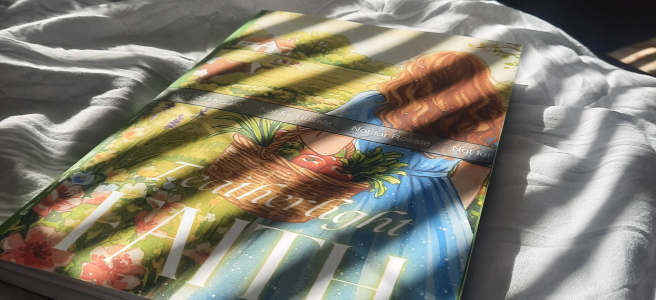
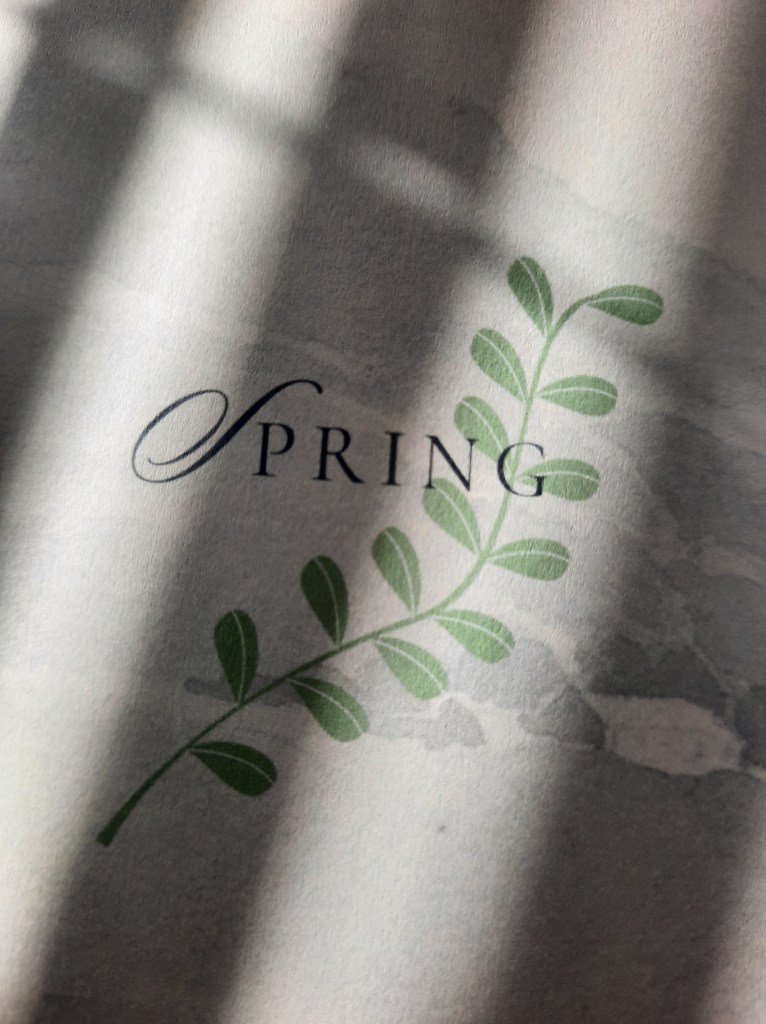
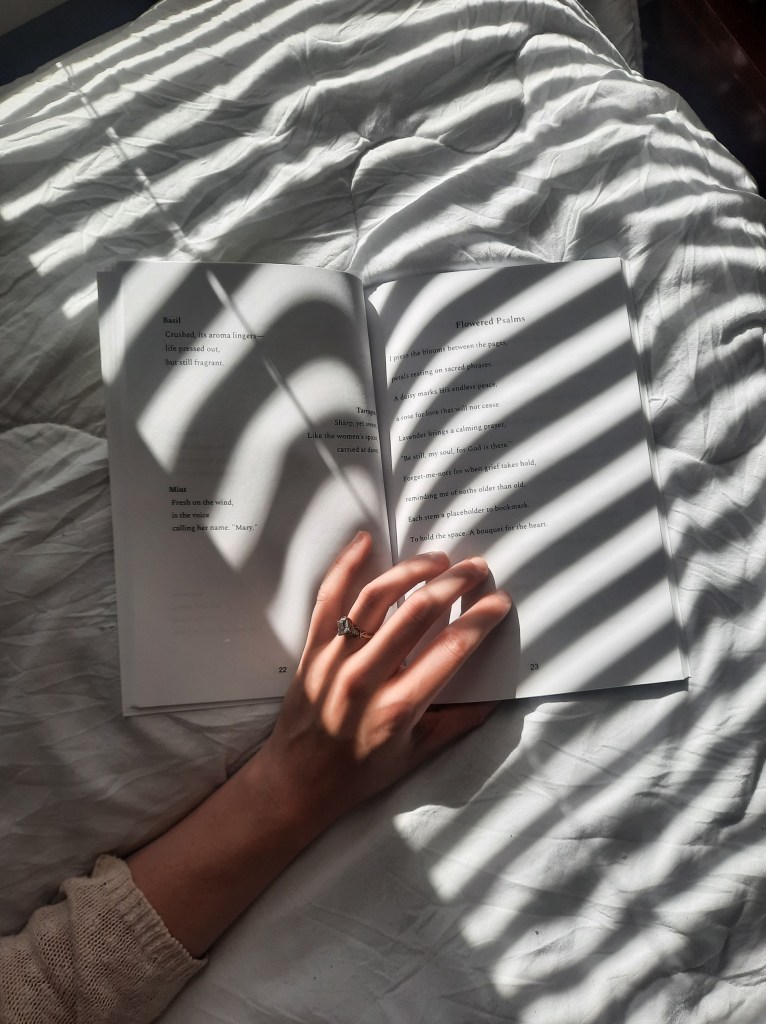
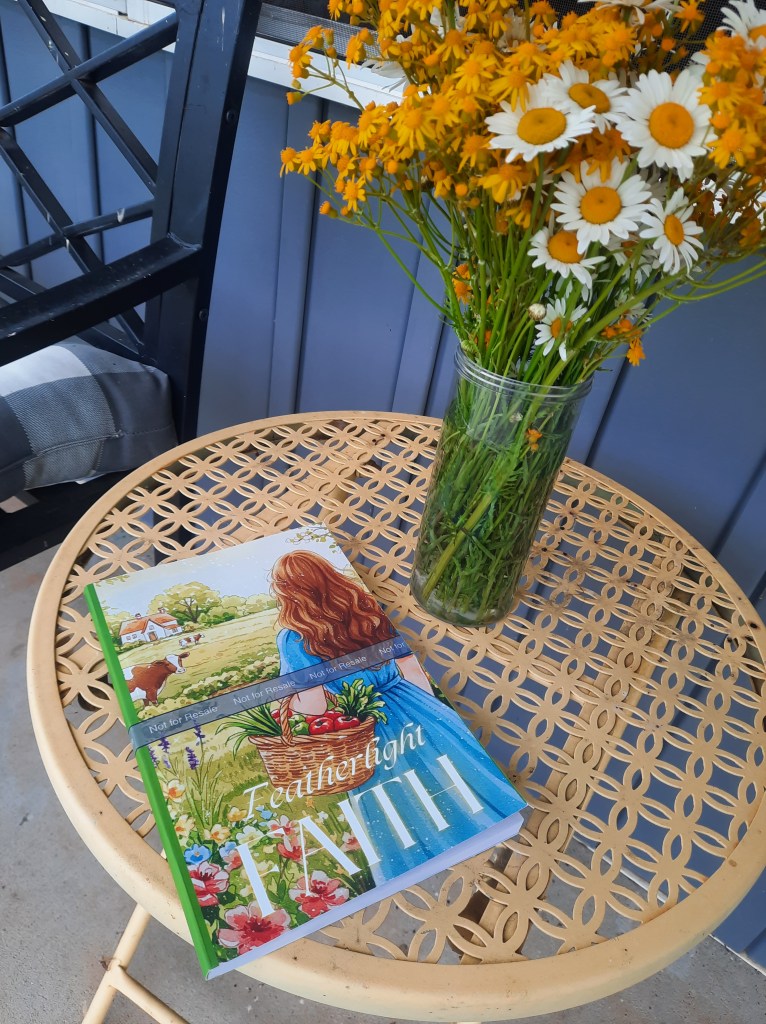
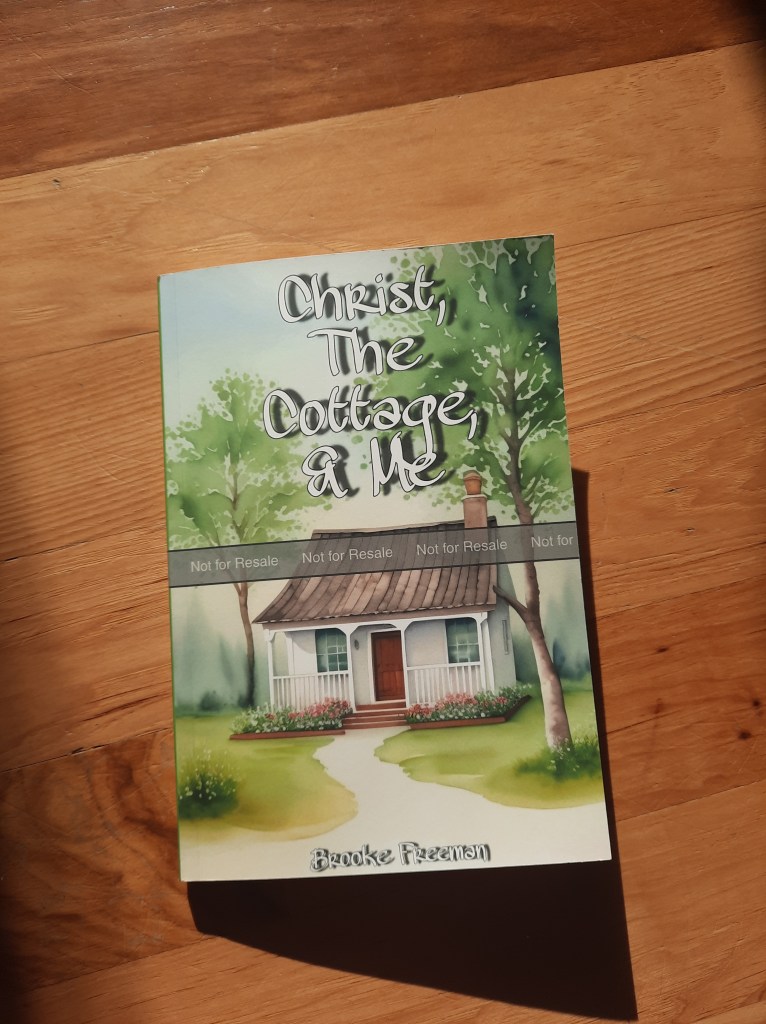
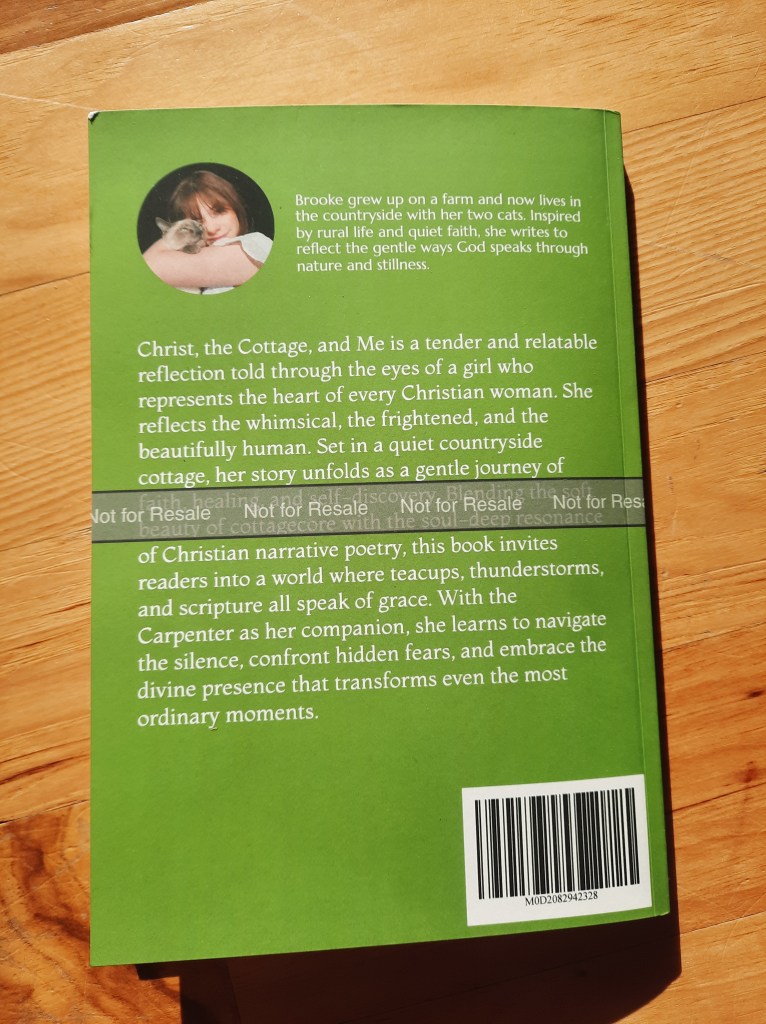
Cover reveal!Notes I’ve already made of things that need to be added and fixed.The book’s poems are separated by seasons. Back bio!
Aaaand I’m officially in the thick of the ongoing battle that is trying to get it published through KDP. If you’ve never wrestled with Kindle’s formatting system, let me just say: it’s an extreme sport. This time around, my main enemy has been margin sizing. (Margins! The most boring yet somehow most powerful force known to man.) A few of my poems that originally played around with white space had to be rearranged, which was honestly heartbreaking. There’s nothing like fighting for your artistic vision against a stubborn little “your margins are off” warning box.
But!! After many rounds of staring at my laptop, dramatically sighing, and reworking layouts, I finally got my proof copy in the mail today! For those who don’t know, a proof copy is basically the version you get to lovingly (or not-so-lovingly) scribble edits all over before you fix everything and upload your final manuscript. I immediately busted out my pen and started making notes because, of course, the second you see your book in print, all your little mistakes jump out like “SURPRISE! You missed me!”
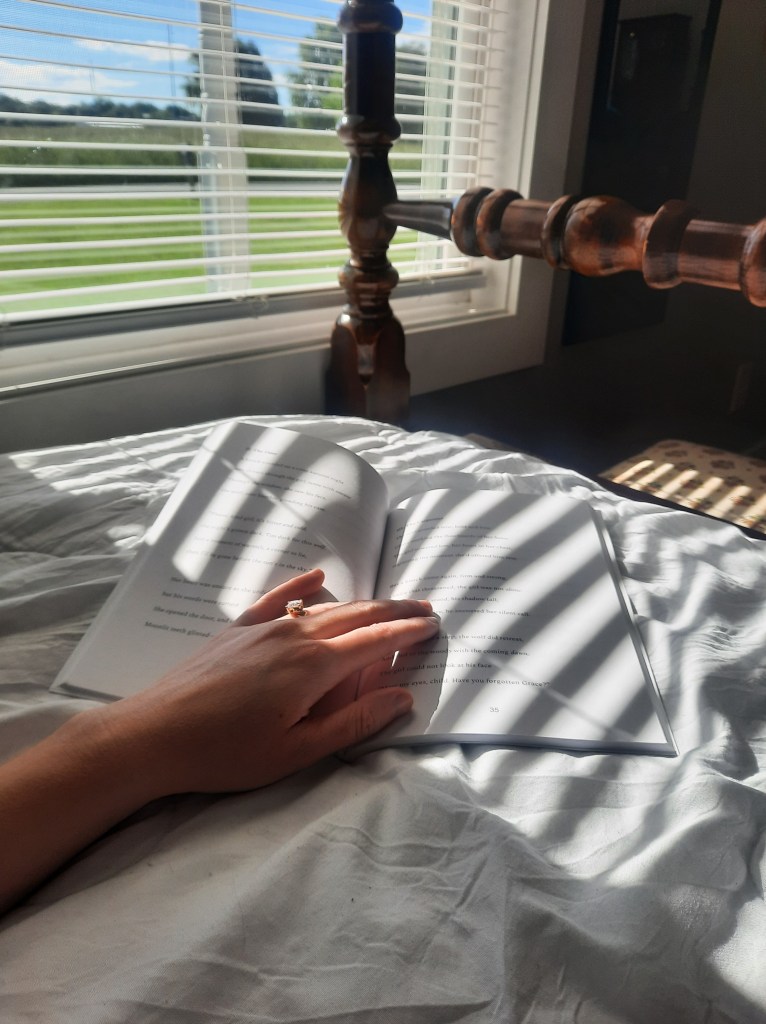
The book ended up being about 100 pages of narrative poetry, telling the story of a girl who lives in a cottage and her various adventures and conversations with the Carpenter (a stand-in for Christ). It’s cozy and intimate and feels like sitting on a creaky wooden porch, sharing life with someone who knows you inside and out. There are poems about baking bread, going on little walks, asking hard questions, sitting quietly, making things by hand…all the small, sacred moments that make up a life of faith.
I’m honestly so excited (and so nervous) to share it when it’s ready. It’s one thing to write poems privately; it’s a whole other thing to send them out into the world and hope they land softly somewhere. Either way, just holding a physical copy of something I made…even a messy, needs-edits version…feels surreal and really, really special.
Thanks for cheering me on through all the margins, the formatting fails, and the many, many sighs. I can’t wait to show you more soon! 💛
I’ve been there, friends. Far too many times in fact. Staring at a piece of writing I’ve poured my heart into, hovering over the “Post” button, my stomach twisting. The thought runs rampant: What if people think this is weird? What if I’m awkward? What if this is…cringe?
Social media has given us a strange gift: the ability to share our creativity with a potentially massive audience. But alongside that gift comes the shadow of The Fear. The fear of being judged, of being misunderstood, or, quite possibly, being dismissed as “cringe.”
“Cringe” is potentially the ultimate insult in internet culture (at least as I see it as a creative). It implies that you’re trying too hard, caring too much, or daring to be earnest in a world that values ironic detachment. And when you create something as personal as a poem, a story, or a piece of art, putting it out there can feel like standing naked in a spotlight. There you are, lain bare. You want to be seen, but what if the crowd points and laughs?
I know this fear well because it’s held me back from sharing my own poetry. I love writing. It’s how I process life’s more difficult moments, capture fleeting emotions, and just overall express myself. But when it comes to posting a poem online, I freeze up. What if they think I’m pretentious? What if someone mocks me for using certain metaphors or for feeling something too deeply?
Here’s what I’ve realized, though: creating art isn’t about avoiding cringe. It is about embracing it.
Much of great art has, at some point, been considered cringe-worthy or at least wasn’t super appreciated in its time. Van Gogh’s bold, swirling strokes? Art of a talentless, crazy hack. The Beatles’ early love songs? Cheesy and dare I say, corny? Writing poetry and sharing it with the world takes guts because it’s vulnerable. It’s deeply personal. But that’s what makes it real.
If you spend your life avoiding the risk of being cringe, you also avoid the chance to connect with people. Because here’s the thing: for every person who might snicker at your poem or scroll past it, there’s another person out there who will feel seen. Your words and art could be exactly what they needed in that moment.
And, let’s be real, the alternative is even cringier. It’s cringy to hold back your creativity, to stifle your voice, to live in fear of what a bunch of strangers online might think. It’s cringy to not make something, to let fear make you boring and scared and silent.
So here’s my advice (to you and to me): Post the poem. Share the art. Write the awkward, heartfelt, overly-metaphorical thing and let it out into the world. Someone will cringe, sure. But someone else will care. And in the end, the world needs more people who dare to care.
Minimalist poetry is a curious art form. On one hand, its simplicity can be breathtaking, distilling complex emotions into a few perfectly chosen words. On the other, it can sometimes feel like it crosses the line from evocative to, well, lazy. The debate on whether minimalist poetry is inspired or just minimal effort has only grown with the rise of social media.
One of the most famous examples of minimalist storytelling is often attributed to Ernest Hemingway, though its authorship is debated:
“For sale: baby shoes, never worn.”
Six words. That’s it. And yet those six words pack an emotional punch that lingers far longer than some novels. The story leaves gaps, but in a deliberate way. We, as readers, fill those gaps, and in doing so, we become co-creators of the story’s meaning. The economy of language isn’t a flaw here; it’s the whole point.
This, in my opinion, is minimalist poetry at its best. It’s clever, intentional, and layered. The writer has done their job by crafting a framework that invites you into its world, offering just enough to ignite your imagination.
But then there’s the other side of minimalist poetry, the kind that’s been popularized by Instagram and TikTok poets. These poems, while often beautifully packaged in neat fonts and pretty backdrops, sometimes feel hollow. They can be so sparse that they rely almost entirely on the reader to find meaning where there may not have been much intention.
I’ll admit, I’ve spent far too long scrolling through Instagram poets’ pages, trying to glean the mass appeal of their work, but more often than not, I just don’t get the hype. Atticus, one of the most well-known Instagram poets, is a prime example. His work is often beautifully presented—each poem feels like it’s been carefully curated for aesthetic appeal. But when I read the actual words, I sometimes find myself wondering: Is this it?
Take this Atticus poem, for instance:
“She conquered her demons and wore her scars like wings.”
Now, this isn’t necessarily a bad poem. It’s empowering, and I’m sure it resonates deeply with many people. But does it feel crafted? To me, it’s a nice sentiment wrapped in poetic phrasing, but it lacks the depth and precision that truly memorable poetry offers. It’s easy to read, easy to share, and looks great on a Pinterest board—but does it challenge or linger in the reader’s mind?
Or take a hypothetical minimalist poem like:
“The sky is blue. I feel, too.”
Is it poetry? Sure. Is it meaningful? It could be, depending on how the reader interprets it. But at some point, I think the burden of creating meaning needs to be shared more evenly between the poet and the reader.
So, is that a problem?
I think it depends on how much work you believe the reader should put into the process of poetry. In some ways, all poetry is a collaboration between the writer and the reader. Even a densely worded, highly descriptive poem leaves room for interpretation—it’s part of what makes poetry so powerful. But minimalist poetry amplifies that collaborative element, sometimes to the point where the writer’s role feels diminished.
At its best, minimalist poetry uses its sparseness to make every word essential. The space between the words isn’t empty; it’s charged with meaning. At its worst, it can feel like the poet handed you a blank page and said, “Figure it out.”
Social media has undoubtedly democratized poetry, which is a beautiful thing. But it has also encouraged a kind of fast-food poetry, where pieces are churned out quickly for likes and shares. Some of these poems are deeply moving, proving that a few well-placed words can touch hearts around the globe. Others feel more like placeholders, banking on the reader’s goodwill to imbue them with meaning.
Ultimately, whether minimalist poetry is lazy or inspired comes down to intention and execution. If the poet has truly worked to make each word count, the results can be stunning. If they’ve used minimalism as a shortcut, it shows.
For readers and writers alike, the challenge is to discern the difference. Everyone’s answers are going to be different of course. That is the fun (and sometimes irritation) when it comes to art.
Welp, I think that’s all my thoughts on the matter. Thanks for listening and feel free to continue the dialogue in the comments. Do you enjoy minimalist poetry? Are you perhaps more brilliant than me and understand the hype? Or do you have similar concerns with lazy, (and often) formulaic art appearing more and more mainstream? Am I actually just a pompous jerk who is overly critical (also perhaps).
Childhood. It is something that is near all our hearts. I am sure many of us can recall summers spent outdoors. Bare are feet skimming the soft grass. The scent of freshly cut grass. The distant hum of cicadas. Fireflies blinking and winking at us from the dark. Fresh air that zips past us as we run and play and enjoy nature and childhood freedom.
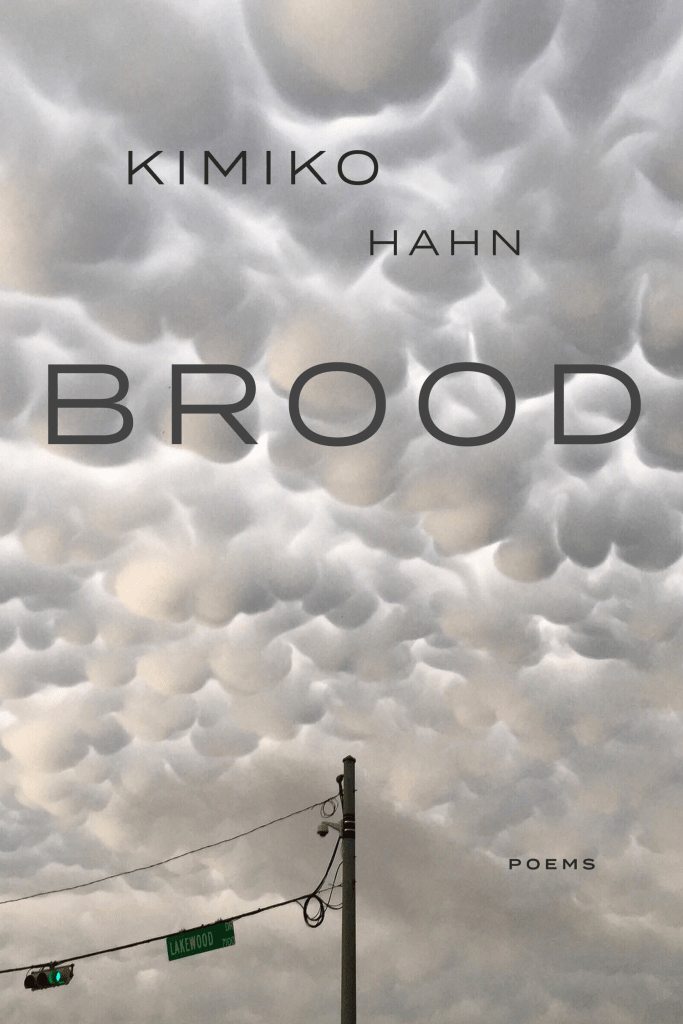
Nature and childhood is often something that is connected in our minds, whether we realize it or not. It is this connection that Kimiko Hahn taps into in her chapbook titled “Brood”. She explores this connection through a series of poems giving us a full sense of her childhood and nostalgia.
Hahn is a seasoned poet who is the author of a whopping 10 poetry books. This includes but it not limited to Foreign Bodies (W. W. Norton, 2020), Brain Fever (Norton, 2014), Toxic Flora (Norton, 2010), The Unbearable Heart (Kaya, 1996) which was the winner of the American Book Award, and Earshot (Hanging Loose Press, 1992), winner of the Theodore Roethke Memorial Poetry Prize and an Association of Asian American Studies Literature Award. Science and nature are common themes in her work and this chapbook is no exception when it comes to this.
Hahn grew up in New York and Tokyo. It makes one wonder if these urban backdrops caused her mind to wonder to what little nature there was in her childhood. Her chapbook “Brood” even opens with a little snapshot of a Damselfly caught in a web.
“When you spot a damselfly
Caught in a spider’s thread
Blow gently…”
Early on, Hahn draws our attention to the delicate and intricacies of nature. But, these pictures are also contrasted with humanity and the modern. One such poem titled “Folding Fan Advertising Kikkoman Soy Sauce” exemplifies this while also introducing us to a memory and a person who has passed.
“My kindergarten handprint in clay! Pearls! But you never belonged to me. I’m not sure I care, odd ephemera in the debris of my father’s home.”
She does the same in the following poem titled “Noise”.
“The neighbors teething baby wails, a grating cranks shut, a woman calls out, a man shouts back, the sanitation truck pulls to the curb with engine, men, and suction…”
Overall, this contrast between nature and the modern creates a well-rounded experience as Hahn delves into feelings of loss, nostalgia, and family. Hahn masterfully weaves these thoughts and ideas together to give us a colorful picture of childhood and her specific upraising. It is just a small peak as the works are often brief, but they are rich with vivid imagery and beautiful scenes that pull us in from the first sentence.
Pssst! Hey! Thanks for reading! This post is a bit different from my usual blog posts but I read this chapbook and did a review on it for school so I wanted to share. I not only got to pick the book but I found it was fun to share my thoughts. If you’re into poetry, definitely check out Kimiko’s work!
“Stop worshipping answers,” the wise ones declare, In the quiet of wisdom, breathe the open air. For truth is a river, winding, untamed, In the dance of questions, knowledge is named.
In the hush of the cosmos, where mysteries reside, The seeker finds solace, on truth’s gentle tide. Not in rigid doctrines or dogmas confined, But in the ebb and flow of the curious mind.
Let queries unfurl like petals at dawn, In the garden of wonder, where wisdom is drawn. Each puzzle, a thread in the fabric of thought, A tapestry woven, in questions, we’re taught.
The stars in their silence, the oceans profound, Whisper the secrets that answers can’t sound. For the essence of knowing is not in the end, But the journey through questions, a lifelong friend.
So cease the relentless pursuit of the final, Embrace the uncertainty, the enigma, the primal. In the chapel of wonder, let questions be sung, The hymn of the curious, forever young.
I’m afraid we’re reaching that point in the semester! Winter break is right around the corner and I’m very ready to welcome it with open arms. Until then, however, enjoy a collection of a few choice haikus that I have written over the past couple of weeks. I generally recover from semester burn out after Thanksgiving as I can just see the light at the end of the tunnel. Finals are oh-so-close but regardless, maybe a few tired adults (or even teens) out there can relate as to my mood in recent days.






 By the Brooke