Everything now has this pressure to be aesthetically pleasing all the time thanks to the internet.
And listen, I get it. Trust me, ya’ll, I grew up during the golden age of Instagram. Pinterest is probably one of my MOST used apps, and yes, it is a problem sometimes.
Romanticizing your life and making things “pretty” can be fun. It can even be motivating. Lighting a candle before you write. Making your desk space whimsical. Using the good pen. Brewing coffee in your favorite mug. I’ve even written blog posts about fun ways to romanticize your writing process.
There is something lovely about being happy with your appearance and space.
But lately?
It feels like we’ve crossed from intentional beauty into constant performance.
There’s an overemphasis on aesthetics in general. Not just in writing alone, but in life in general. (I know, I know, I sound like a harpy old lady but hear me out).
Girls are expected to be pretty all the time. Self-growth is framed as “hot girl advice.” “Hot girls wake up at 5 a.m.” “Hot girls drink green juice.” “Hot girls don’t text first.” “Hot girls have spotless kitchens and perfect side profiles and somehow glowing skin while journaling about their boundaries.”
Since when did personal growth become a rebranding campaign?
It’s like the ultimate goal in life is to look amazing at ALL times. To have your life be this curated, aesthetically pleasing collage of neutral-toned items and sunlit corners. Your coffee has to look right. Your Bible has to be color-coded. Your gym outfit has to match. Even your healing has to be photogenic.
It’s ridiculous.
The internet is a highlight reel and we all know that. It captures moments in time. A split second. A perfectly framed sliver of someone’s day. We are not designed to line up and look exactly like these captured moments in time at all times. We are not still images.
We are messy, moving, complicated beings.
Now we are ebbing into looks over substance in every area of our lives. We spend way too long taking an aesthetically pleasing desk picture or finding the perfect angle to show off our cup of coffee beside our journal. And somewhere in that process, the coffee gets cold and the journaling becomes secondary.
The writing — the actual writing — becomes less important than how it looks to be writing.
And that’s where the fun starts to drain out.
Because the substance is the point. Not the proof of it.
There’s nothing wrong with beauty. There’s nothing wrong with liking nice things. There’s nothing wrong with enjoying an aesthetic. I am not anti-whimsy. But when aesthetics become the main goal instead of the byproduct, it begins to feel like everyone is now encapsulating the brand of being a writer. I feel like we’re losing a lot of authenticity in general. Again, I don’t want to sound like I’m grouching about everyone else, this is something I’m guilty of as well. My whole instagram page is color coordinated.
Really, I’m just sort of ranting to the void and maybe myself. Maybe it’s time we get back to the basics.
And if it happens to look pretty? That’s a bonus.
Maybe it’s time to become a writing minimalist. No routine, no coffee, no pretty desk space. Just writing.
Recently, a certain topic has been occupying my thoughts more and more. I have read a few books and listened to a handful of podcasts on it, yet I still feel like it is not discussed nearly enough. I am, of course, talking about friendship. Female friendship specifically.
Right now, we live in a time where dating advice is everywhere. Dating coaches dominate social media feeds, and the internet is overflowing with content about how to attract, keep, or heal from “the one.” Meanwhile, friendship, and the role it plays in shaping our lives, often feels like an afterthought. It is treated as something secondary or assumed, rather than something that also requires intention, care, and understanding.
My interest in this topic has only grown as I have moved through different stages of life. There are particular growing pains that surface when you and your friends make the leap from high school to college. Things become complicated, but not in the dramatic, obvious ways we expect. Instead, the complications are quieter, slower, and often harder to name.
High school friendships are already known for their turbulence. There are obvious highs and lows, and plenty of material there for discussion. Lately, though, what draws my attention most are articles and podcasts that focus on adult friendship. These are conversations led by people who are trying to put language to experiences many of us share, especially those that feel unique to this moment in history. How do you transition from high school to college without losing everyone you care about? Why does it suddenly feel like people are drifting away or ignoring you? Why do your friends start changing in ways that make you wonder whether the friendship can survive at all?
There are also new complications that previous generations did not have to navigate in quite the same way. I have a friend who is a terrible texter, and our friendship has suffered because of long distance. Before the age of phones, this kind of constant but uneven communication was barely possible. Now, silence can feel personal, even when it is not meant to be. We find ourselves living in a unique era for adult friendship, one shaped by technology, mobility, and shifting expectations. That reality fascinates me.
These nuances still feel under-discussed, so I want to share a few of the voices I have been reading and listening to lately that have really fueled my interest in this topic.
First, and easily my favorite, is Alexandra Hayes Robinson. She is a YouTuber who runs an advice column, and she gives friendship the kind of thoughtful attention it deserves. One of her most well-known ideas is the “six besties” theory, which I love so much that I want to briefly recap it here.
The core idea is that different friends play different roles in your life, with varying levels of closeness and responsibility. She talks about a Good-Time Bestie, someone you genuinely enjoy spending time with and can have fun with, but who may not be the person you call during a crisis. She also introduces the North Star Bestie, the friend who plays an active, steady role in your life and who feels safe knowing the deepest parts of you. She goes on to describe coworker besties, people you genuinely like and enjoy within a work environment, even if you rarely see each other outside of professional settings, along with other friendship categories that reflect real adult dynamics.
I appreciate this theory because it helps make sense of how messy adult friendships can look once you leave the structured world of school. Not every friendship has to be all-consuming or lifelong to be meaningful. This framework allows for friendships to shift without immediately jumping to the conclusion that they have failed or must be ended entirely.
I also think this approach helps manage expectations. Not every friend can, or should, meet the same emotional needs. This theory simply gives language to a truth many of us already feel but struggle to articulate. For that reason alone, I highly recommend checking her work out.
Next up is Charlotte Morabito. While I do not watch her content quite as regularly, she has a strong catalog of thoughtful videos on friendship, particularly on the unhealthy mindsets we often cling to that end up creating unnecessary conflict in our relationships.
Just this morning, I watched an excellent video of hers titled “Why You Always Care More Than Your Friends.” What I appreciated most is what the video does not do. She does not default to the familiar narrative of telling you that you are “just such a giver,” while everyone else is lazy, selfish, or simply not worthy of your time. There is no rush to villainize your friends or to encourage cutting people off at the first sign of imbalance.
Instead, she approaches the topic with a more critical and grounded lens, walking through a variety of dynamics that could realistically be at play. One possibility she explores is the idea that you might be trying to prove your friendship to someone by immediately showering them with praise, favors, and attention. While this often comes from a good place, it can quickly become overwhelming and even unhealthy, especially when it is rooted in insecurity or fear of being abandoned.
She also talks about how mismatched expectations can quietly erode friendships. It is possible that you have never clearly communicated what you need from your friends. Maybe they genuinely believe you enjoy planning every outing or initiating every conversation and do not want to step on your toes. In that case, what feels like neglect to you may simply be a misunderstanding on their end.
I really appreciate this framework for discussion because it steers away from accusation and instead encourages self-reflection. It asks people to consider how their own patterns, assumptions, and unspoken expectations might be contributing to the situation or even creating it entirely. If there is one thing that feels universally true, it is that people can get very lost inside their own heads.
Anyway, I have linked the video below if you are interested in checking it out for yourself.
Third up is Psychology with Dr. Ana. She is a licensed psychologist, which brings a slightly different and more scientific perspective to many of the scenarios she discusses, and that is especially true when it comes to her conversations about friendship.
Much of her content centers on the expectations we carry in our heads but never actually communicate to the people around us. She talks about boundaries, the importance of naming your needs, and the thinking patterns that can quietly cause us to get in our own way without us realizing it. Rather than framing these issues as personal failures, she presents them as habits that can be examined and adjusted with awareness and practice.
What I appreciate most is that she manages to cover these topics without slipping into overly polished, holier-than-thou therapy language. Her approach feels accessible and practical, which makes her insights easier to absorb and apply to real-life friendships rather than leaving them stuck in the abstract.
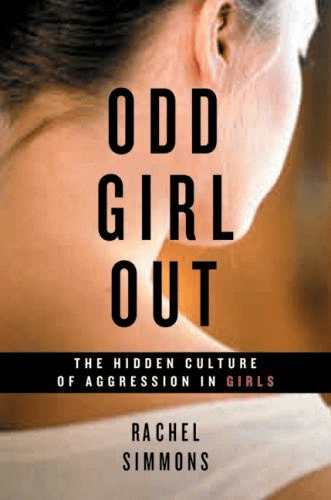
Finally, I read a book. Yes, everyone, I am now an expert.
That said, I will admit it is not as directly related to adult friendship as my previous recommendations. The book focuses specifically on female friendship during middle school and high school. Even so, I found it incredibly relevant. It explores how, as women, our friends often have the ability to wound us more deeply than almost anyone else in our lives, all while leaving us questioning whether we are imagining the hurt in the first place.
A large portion of the book examines female aggression and the subtle ways it tends to be expressed. Rather than overt conflict, it looks at exclusion, silence, passive behavior, and emotional manipulation, patterns that are often dismissed or minimized. While the book is not explicitly about adult friendship, I still think it is an excellent resource for anyone who carries a lot of baggage from past female friendships, or honestly, for anyone at all.
I do not have to tell you that some people do not outgrow the behaviors described in this book. Those patterns can easily follow us into adulthood if they are never named or challenged. Because of that, I also think this book can be useful as a mirror. It gives us the opportunity to check ourselves, to make sure we are saying what we mean, communicating clearly, and having necessary conversations instead of letting resentment quietly build. (See said book below)
IN CONCLUSION…
Friendship is not a static thing we master once and carry effortlessly through life. It changes as we change, shaped by distance, time, technology, and the quiet evolution of who we are becoming. The transition from adolescent friendship to adult friendship can feel disorienting precisely because there are so few clear scripts for it. We are often left trying to interpret silence, shifting priorities, and unmet expectations on our own.
What these books, videos, and conversations have helped me realize is that many of the tensions we experience in friendship are not signs of failure, but signs of growth happening in real time. Adult friendship asks us to be more self-aware, more communicative, and more honest than we were ever required to be before. It challenges us to examine our expectations, our insecurities, and the roles we unconsciously assign to the people we love and probably want to keep around!
If nothing else, I hope this encourages more open conversation around friendship, especially female friendship. It deserves the same thought, care, and nuance we so readily give to romantic relationships. I think this post is probably the beginning of many, as I delve deeper into this topic, so there is likely more to come! Stay tuned!
Look, I’m not saying I’m a trend forecaster or anything, but I am saying I have a lot of feelings about things right now. Spring has me in a refresh-and-renew mood. Think open windows, iced drinks, and a chaotic urge to either completely change my life or do absolutely nothing. There’s no in-between. I live in a world of extremes…
So here it is: a completely arbitrary and highly personal list of what I’m loving lately and what I’m politely (or not so politely) retiring. No real logic. Just vibes.
🌸 What’s IN (aka bringing me unreasonable joy lately)
Cream soda – I don’t know why this tastes like childhood nostalgia and magic at the same time, but it does. Bonus points if it’s pink.
Cute coffee shops – I’m talking mismatched mugs, plants in every corner, and baristas who remember your name. We’re romanticizing our lives this year.
Taking walks everywhere – Walking as a personality trait? Absolutely yes. Give me sunshine, a good playlist, and no real destination.
Impressionistic art – Big yes to blurry florals and soft, moody landscapes. If it looks like a daydream, I’m into it.
Gas station snacks – High-end cuisine? No thanks. Give me peach rings and a questionable corn dog.
Retro games – N64, pixelated chaos, that clunky PS1 startup sound. Inject that straight into my bloodstream please.
Pasta – Any kind. All kinds. Pasta is self-care now.
Formal gowns for no reason – Go ahead, wear that dramatic dress to buy toilet paper. I support you.
Saying “no” to protect your mental space – Revolutionary, honestly. I feel like I have to remind myself to do this at some point every year. Gotta keep that FOMO in check.
Giving people the benefit of the doubt – Life’s weird for everyone. Let’s chillout for a second and maybe stop making character assessments of everyone on the interstate just because they didn’t use a turn signal once. Draining honestly and yet I indulge.
Microwave popcorn – The perfect snack for every situation. Salty, satisfying, and takes two minutes. Iconic.
Herb gardens – Even if it’s just one sad basil plant on a windowsill. We’re farming now.
Petting as many cats as possible – If there’s a cat, I’m stopping. Priorities.
Body spray – Strong 2006 mall energy.
Changing your bedding regularly – Like hitting a mental reset button. Plus clean smelling sheets are *chef’s kiss*,
🧼 What’s OUT (aka, I’m over it)
Buying ingredients but never cooking – If I have to throw out one more wilted bunch of cilantro…
Cheap soap – We are grown. Our hands deserve better.
Grudges – Too heavy to carry. Let it go, Elsa-style.
Cruddy socks that need to be replaced – Why do I still have socks with holes in them?? And why does it feel illegal to just throw them away?????
Plain coffee – I want cinnamon. I want foamed milk. I want joy.
Falling asleep to your phone/TV – No more scrolling into the void. Let’s reclaim bedtime.
Minimalism – Bring back cluttercore. Give me trinkets. Give me personality.
6am alarms – Unless it’s for something exciting or airport-related, no thank you.
Self guilt – You don’t have to earn rest or joy or snacks. Be nice to yourself.
Hanging in groups that make you feel bad – Nope. Friendship should feel like sunshine, not stomach knots.
Not complimenting people but still thinking it – Just say it! Give strangers their flowers!
The color grey – It’s giving “dentist office.” Let’s inject some color into our lives.
Monochrome stuff – Matchy-matchy is out. Chaos layering is in.
Anyway, that’s where I’m at right now. Spring is the time to throw open the windows, eat snacks that make no sense, and maybe (just maybe) give yourself a break.
Tell me what’s on your in-and-out list. I love knowing what little things are making people happy lately.
Once upon a time, there lived a man who lost his heart. He lost it to a woman with eyes like honey and a voice like silk. He handed it over to her without hesitation not thinking he would see her run away with it in less than a month. But she did. And the man was left alone and with a hole in his chest. Determined to fill it with something, he set out to craft a new one. A new heart that could be even better than the one he had lost. So he gathered his crafting tools together and went out into the land in search of materials. He came upon a city that sat upon a high mountain. There in its streets, he found a girl with a cart who sold colored ribbon. It was so beautiful, the man decided to make a heart of silk. He bought red silk from the girl and returned where he when about sewing his silk heart. But when he had finished, he found the heart much too light in his hands and entirely too vulnerable. So he set out again this time into the woods. This time he came upon a woodcutter who told him of a kind of wood that could withstand anything. The man decided he would buy some of this wood and fashion his new heart from that. He carved this new heart carefully with his tools and when he had finished, he found himself quite proud of his handy work. But another problem arose when the heart had been set on a table in front of an open window and clouds overtook the sky as it began to rain. The man returned to find his wooden heart, rotted and black on the table. Frustrated and discouraged, the man traveled once again, determined to find the perfect material from which to craft his heart. It was on his travels once again that he met a witch upon the road who listened to his problem. She then offered the man a solution (for a price of course which he ignorantly paid). “Take this stone,” she said after she pocketed his gold, “and carve yourself a heart that shall never break. Nothing shall penetrate its shell.” And so the man agreed, returning to his home to carve the stone into a new heart. He found the stone quite heavy but surprisingly this did not deter him, determined not to possess a vulnerable heart ever again. The man fashioned the heart and hid it away in his house. The man began staying home more as well, for fear someone might break in and steal his heart of stone. Soon, his paranoia grew so much to where he never left his home. And so he lived. Just him and his heart of stone. Until one day a woman happened by his house. He was suspicious of her at first, afraid she had come to steal the stone heart. But he was slowly won over by her politeness and allowed her in. Once inside the home, the woman remarked that the house felt cold, opening a window to allow the sun in. The man couldn’t remember the last time he had allowed the sun inside. The woman also noticed quite a few cobwebs hanging around the place. So she began clearing those away. Grateful, the man offered her a meal for her troubles. She heartily agreed. Over warm food, the man asked the woman why she had come in the first place, thoroughly perplexed at her arrival. He was no longer in the habit of inviting anyone over. She set her leather satchel on the dinner table. “I found this discarded on the side of a road months ago. I have been searching far and wide for its owner. Finally, I was led to you.” The woman drew out the man’s old heart from the bag, offering it to him freely. It was that day that the man decided he had very little use for a heart of stone. He then found himself inviting the woman to a meal the next evening if she so wished. Delighted at the gesture, she accepted. It wasn’t before long that the two courted and were engaged, then married. And they lived happily ever after in a cottage where cobwebs never hung, and sunlight filled its rooms, for it was now a house of two hearts.
Love is like a trust fall Where someone is allowed to let you fall For if they dont wanna catch you You dont want them catching you at all. You lean into the air And land upon your back Too late to back out now Even though they’ve taken two steps back. So little surprise-you get the Wind knocked out You Roll over on your side, Your Heart is full of doubt But you close your eyes And then breath in Nothing left to do but Dust yourself off To get up And try again.
How to feel magical for all my fellow princesses and fairies out there…
Take baths with rose petals and moonlight
Use enchanted lotion
Aquire books
Gather flowers
Treasure keys and trinkets
Light candles
Paint
Write your favorite things in your journal and on your arms
Collect cool looking glass bottles
Learn languages of all kinds, especially Latin.
Eat different things and try new foods on a regular.
Go on walks often
Admire nature
Stargaze
Do your hair with sparkling things
Stretch
Give yourself time to think
Explore music
Draw in dark ink
Record the stars and how they move
Read stories and collect them like treasure only to share them with others.
Makes wishes. Whether it be blowing the fluff off of a dandelion, throwing a penny into a well, or spotting a shooting star, don’t be afraid to make one.


 By the Brooke