Everything now has this pressure to be aesthetically pleasing all the time thanks to the internet.
And listen, I get it. Trust me, ya’ll, I grew up during the golden age of Instagram. Pinterest is probably one of my MOST used apps, and yes, it is a problem sometimes.
Romanticizing your life and making things “pretty” can be fun. It can even be motivating. Lighting a candle before you write. Making your desk space whimsical. Using the good pen. Brewing coffee in your favorite mug. I’ve even written blog posts about fun ways to romanticize your writing process.
There is something lovely about being happy with your appearance and space.
But lately?
It feels like we’ve crossed from intentional beauty into constant performance.
There’s an overemphasis on aesthetics in general. Not just in writing alone, but in life in general. (I know, I know, I sound like a harpy old lady but hear me out).
Girls are expected to be pretty all the time. Self-growth is framed as “hot girl advice.” “Hot girls wake up at 5 a.m.” “Hot girls drink green juice.” “Hot girls don’t text first.” “Hot girls have spotless kitchens and perfect side profiles and somehow glowing skin while journaling about their boundaries.”
Since when did personal growth become a rebranding campaign?
It’s like the ultimate goal in life is to look amazing at ALL times. To have your life be this curated, aesthetically pleasing collage of neutral-toned items and sunlit corners. Your coffee has to look right. Your Bible has to be color-coded. Your gym outfit has to match. Even your healing has to be photogenic.
It’s ridiculous.
The internet is a highlight reel and we all know that. It captures moments in time. A split second. A perfectly framed sliver of someone’s day. We are not designed to line up and look exactly like these captured moments in time at all times. We are not still images.
We are messy, moving, complicated beings.
Now we are ebbing into looks over substance in every area of our lives. We spend way too long taking an aesthetically pleasing desk picture or finding the perfect angle to show off our cup of coffee beside our journal. And somewhere in that process, the coffee gets cold and the journaling becomes secondary.
The writing — the actual writing — becomes less important than how it looks to be writing.
And that’s where the fun starts to drain out.
Because the substance is the point. Not the proof of it.
There’s nothing wrong with beauty. There’s nothing wrong with liking nice things. There’s nothing wrong with enjoying an aesthetic. I am not anti-whimsy. But when aesthetics become the main goal instead of the byproduct, it begins to feel like everyone is now encapsulating the brand of being a writer. I feel like we’re losing a lot of authenticity in general. Again, I don’t want to sound like I’m grouching about everyone else, this is something I’m guilty of as well. My whole instagram page is color coordinated.
Really, I’m just sort of ranting to the void and maybe myself. Maybe it’s time we get back to the basics.
And if it happens to look pretty? That’s a bonus.
Maybe it’s time to become a writing minimalist. No routine, no coffee, no pretty desk space. Just writing.
This is something I’m half writing for myself. Let me set the stage for you real quick.
It’s January. I’m snowed in. The Holidays are done and over with, and I am more than a little antsy. My weekend has left me bored and stagnant, as I’ve been trapped at home for far too long. While some might think this would be a WONDERFUL time to catch up on the long-dead hobbies and creative endeavors that I’ve left at the wayside of life due to busy-ness, I have found this time not so…constructive nor productive. Why, you might ask? It’s simple… I’ve got a case of Winter Yuck.
I am so so so ready for spring. It gets dark early. It’s nasty outside. When I get home from work, I just want to eat, watch tv, and hit the hay early. I am anything but motivated. Perhaps it’s the perpetually gray sky? Or perhaps it’s the inability to go outside for a refreshing walk, but regardless, the result is the same. I am doing a whole lot of nothing.
So, I’ve written a little guide for myself to follow as spring slowly creeps ever closer. Maybe you need it too?
First, bullet point number one….
Don’t go to bed immediately. Try to stay up and enjoy something. This could be reading a mere 5 pages of a book or popping popcorn and watching a new movie. Just do something that you can tell your friends that you did with your evening. One redeeming thing is all it takes. Then you can go to bed.
Bullet point number two is in regards to your writing…
If you find yourself absolutely hollow creatively, maybe put a pause on the self-induced guilt trip, and try consuming writing instead. This still contributes to your growth as a writer. It is so so important that you read and engage with other creative voices, and it’s a little more pasisve and requires less energy than creating the work itself.
My other tip in regards to your winter writing slump, is to do something ELSE creative. Not writing related but still creative. Writing is creativity + words. When you read, you’re still developing the WORDS part of that equation. When you’re doing another creative hobby, you’re developing the CREATIVE part. Still progress, friends. It still counts.
Bullet point number three…
If it’s miserable outside, try to get up and move around your house. You can do this by cleaning or taking a quick shower. Sometimes this is all it takes to get you out of hibernation mode. If not, then at least you or your house its clean. Time to go to bed,
And Finally…
Be easy on yourself. Winter sucks. I get it. It’s my least favorite season, too. I’m a plant at heart. I need sunshine. But spring will come again soon, just hang in there.
It’s at the point that I’m going to insert a master list of winter-friendly creative tasks, divided into low-energy to medium-energy. Maybe give it a skim if you find yourself at a loss for what to do with your life right now. Some of these are even winter-unique so perhaps you can find a bright spot in all this gray!
Please note, I tried to make these activities have a bit more of a whimsical spin. You can scroll Pinterest for your more generic “learn to crochet” type activities. I am by no means going to preach the benefits of scrapbooking either. Here are just some out-of-left-field but fun things you can do to try and prevent yourself from succumbing to winter-induced brain rot. Take what you want and leave what you want.
Low-Energy (Bed, Couch, or Chair by a Window Activities)
Re-title your life as if it were a novel Write five alternative titles. Bonus points if one sounds vaguely Victorian or mildly tragic. The modern version of this is title your life like it’s a show and divide your life into “seasons”. Who would the characters be?
Make a “things that felt important this winter” inventory Include tiny things: a mug, a song you played on repeat, a phrase you overheard. This can help you try and find some creative meaning in the midst of a not-so-fun or colorful season.
Annotate your own memories Pick one small memory and write footnotes explaining what you didn’t realize at the time. Kind of like journaling but shorter and more focused.
Create a winter alter ego Give her a name, a coat, a favorite hot drink, and one quirky habit or interest.
Transcribe comfort Handwrite a poem, passage of scripture, recipe, or letter that steadies you. No analysis. Just copying as a means to meditate or collect.
Design a room you’ll never have Describe it in words only. Light, textures, where the chair sits. No Pinterest allowed.
Write extremely short letters you will never send To: the moon, your childhood bedroom, the version of you who thought 2020 was the year (oof. Sorry, girl).
Make a list called “Things Winter Is Good At” Keep it humble. Dusk. Soup. Long shadows at 4:30 pm.
Rename the months like an old folklore calendar January becomes “The Month of Locked Doors,” and so forth. You can make them cute or ominous or fantastical or something entirely different.
Curate a personal winter museum Five objects on your desk. Write one sentence about why each deserves a placard.
Low-to-Medium Energy (Tabletop, Floor, or Soft Music Required)
Create a survival guide for your specific winter Include rules like: “No big decisions after sunset” or “Always light a candle before you shower”.
Make a tiny ritual out of something you already do Tea, skincare, feeding the cat. Give it a beginning, middle, and end. Then write it down for yourself down the road. Collect these winter rituals in a book. Maybe even ask your friends if they have some of their own?
Rewrite a fairytale as Southern gossip or local legend Not a full story—just the tone and rumor version that you’d imagine your local church-going gossips reaccounting.
Assemble a “cold-weather soundtrack” for a fictional character Or even yourself. But this can also be a character development exercise.
Practice intentional loitering Sit near a window or porch and observe one thing for a little while.
Write a poem that never mentions winter but is clearly about winter Focus on restraint. Omission is the point.
Create a recipe that exists only in theory Name it. Describe when and how it would be served. You do not have to cook it.
Sort your photos like an archivist Create albums that are separated by color, adventure, life phase, or even time of day.
Draft a one-page “field guide” Examples: Field Guide to People Who Disappear in Winter, Field Guide to Indoor Light, Field Guide to Quiet Evenings.
Medium-Energy (Still Gentle, Still Cozy, But Upright)
Rearrange one small space like you’re preparing for a long stay A drawer, a shelf, a nightstand. Be prepared, yaknow?
Write a winter letter to yourself to read in spring I’d recommend to keep it observational, not aspirational. No goals. Just telling your future self how excited you are for sunshine to come back.
Create something meant to be used up by the season A candle plan, a soup rotation, a nightly reading list.
Host a solo “slow afternoon” One album, one warm drink, one creative task. No multitasking allowed.
Make a map of your hometown or neighborhood. Make it winter-specific if you’d like. This can be real or imagined. Perhaps you map all the hibernation spots of the fairies and goblins or maybe you make a map that shows you the best place to get a hot chocolate.
I hope these tips have been useful to you. Hang in there, and stay alive!
Let’s clear something up first and straight out of the gate. Please note that being “boring” has very little to do with how exciting your life looks online and everything to do with how engaged you are with your own existence. I am not at ALL talking about performative “interesting” that hounds us online. That, very honestly, could be a blog post of its own. This isn’t about appearances.
You can live in a small town, work a normal job, go to bed at a reasonable hour, and still be deeply interesting and have a remarkable personal life. Conversely, you can travel constantly, attend trendy events, and still be painfully dull if you move through life on autopilot and without engaging with those experiences.
The difference is passion (In my humble opinion at least). And not the loud, capital-P, quit-your-job kind that also seems to be making its rounds regularly on the internet. Capital P passion is usally used to sell you lifestyle coach or course that supposedly will fix your life. I’m talking about quiet attentiveness. Curiosity. The ability to take the mundane and tilt it just enough that it becomes intentional and…well, interesting!
If you want to not be boring, you don’t need to overhaul your life. I think the secret lies in reframing your perspective.
My authority to speak on this matter comes entirely from me having the audacity to write this and the fact that I KNOW I’ve been boring in certain phases of my life but interesting in others. That’s another note I guess, that is also worth mentioning here: You can become interesting if you find yourself falling into the lull of being a boring person. The vice versa can also be true. You can be interesting and then slip into monotony. Let’s not pretend these are permanent labels.
Alright! I think that’s all the disclaimers. Let’s dive into what I think makes an interesting person interesting…
The Core Rule: Care About Something (Preferably Many Things)
The most boring people I’ve met all share one trait: they don’t care. They scroll, they consume, they comment vaguely, but they don’t engage. No strong opinions. No private obsessions. No enthusiasm. OR their whole personality depends on whatever is trending that month. It doesn’t go deeper than that.
Passion is what gives life texture. You don’t have to be the best at something to love it. Nor do you have to know everything about everything. You just need to care.
Care deeply about your morning coffee and the perfect way to fix it. Care about how your body feels when you walk, and how nice those birds are singing today, and how red that mailbox is. Care about learning one strange, specific thing really well.
Boredom is less about what you do and more about how absent you are while doing it.
Moving Around: Make It a Game, Not a Chore
Movement is one of the easiest places to inject interest, because it already asks something of you physically. The trick is to stop framing it as productivity.
Instead of:
“I need to go on a run.”
Try:
“I won’t stop running until I’ve spotted ten blue things.”
“I’m walking until I notice three houses with weird door knockers.”
“I’m stretching while imagining I’m a medieval scribe trying not to get scoliosis.”
“I’m running to collect five weird rocks. I will not stop until I have collected five weird rocks.”
Movement becomes interesting when it has a focus, not a finish line.
You don’t need a fitness goal (though those are totally fine too!). You probably just need something to notice. Something to collect. Something slightly ridiculous. Everything doesn’t have to be a to-do list, including movement. I think, in part, this is why it was so easy to move around as a kid. I wasn’t “going for a walk to walk off my dinner”. I was going on an adventure. I was going to collect dragon eggs (which involved finding the roundest rocks in the area and then bringing them home and painting them a variety of colors). Try and tap into the whimsy.
Mind-Building Activities: Give Your Brain Something to Chew On
A bored mind is usually an underfed one.
This doesn’t mean you need to be constantly “learning” in a grindset way. It means you should regularly do things that require sustained attention and mild effort.
Examples:
Reading books that challenge your worldview or introduce unfamiliar ideas.
Listening to long-form podcasts instead of endless short clips.
Memorizing poetry, facts, or historical oddities for no reason other than delight.
Thinking deeply about one question and letting it bother you.
Oh! And write down what you discover. What’s the point if you don’t retain anything or can’t look back on it?
If all your thoughts are borrowed from the internet, you will sound like the internet. And the internet is, frankly, exhausting and irksome at times. It’s also ever-changing and ever enraged. You need to ground yourself in something that isn’t in a screen.
Life Skills: Competence Is Interesting
There is something deeply un-boring about a person who knows how to do things. And helpful. Dear Goodness, so helpful. Your friends will thank you.
Learn how to:
Cook one meal really well.
Sew a button.
Fix something small instead of replacing it.
Write a clear email.
Host people comfortably.
Life skills ground you in the physical world. They give you stories as well as some confidence. They make you less dependent on convenience, which automatically makes you more interesting. In fact, I would go as far to say that competence is downright attractive. Curiosity about competence is even better. Don’t be a damsel in your own life, waiting for people to save you from whatever “dragon” crosses your path. While I give the internet a lot of crap, I do think it is amazing for cracking down on lame excuses to not learn how to do something.
Hobbies: Be Bad at Something on Purpose
You don’t need a monetizable hobby. You need a hobby that absorbs you. The internet will try to tell you that hobbies and interests are “cringe” (Not always, but I’ve seen it). Try, friend! You don’t have broadcast it. Just try the thing and feel good inside.
Paint badly.
Play guitar poorly.
Dance badly.
Garden with reckless optimism.
Collect something niche and inexplicable.
Hobbies are where passion is allowed to exist without justification. They remind you that joy doesn’t need an audience. And, sometimes, eventually, if you stick with something long enough, you might even get good???
If you can talk excitedly about something no one else cares about, congratulations. You’re not boring. You’re doing something right.
The Necessities (Yes, These Are Non-Negotiable)
Read
You simply cannot be interesting if you don’t read.
Reading gives you language and Perspective. It introduces you to thoughts you didn’t know you could have. There is not escaping its importance.
Read fiction. Read essays. Read things that annoy you a little. Read slowly. Read often. Read magazines. Read articles. (Maybe take a break from reading tweets, though).
Journal
Not because it’s aesthetic and definitely not because it’s trendy. Do it because if you don’t record your life, it might disappear from your memory.
Journaling turns experiences into a narrative. It helps you notice patterns and preserves the small, strange moments that would otherwise evaporate into a fine mist that is gone before you even realize.
Interesting people remember their lives (or most of it anyway). Journaling helps with that.
Get Off Your Phone (Sometimes)
Your phone is a boredom amplifier masquerading as entertainment.
Being constantly online flattens experience and trains your brain to be in a million places at once, but NEVER the present. Everything starts to feel the same. You stop noticing where you are because your attention is always elsewhere.
Boredom, ironically, is often the doorway to creativity. Put the phone down long enough to let your mind wander. Something will eventually happen. A spark will replace that boredom eventually, but you have to let it happen. You’re also training your brain to be lazy and never come up with ideas on its own. This is why our first instinct when we’re bored or uncomfortable is to seek solace and direction from our devices.
Final Thought: Pay Attention
Not being boring is not about doing more. It’s about noticing more. Build a life you are actively paying attention to, and boredom won’t stand a chance.
Passion is being present. That is the takeaway here, I think.
But Idk, man. These are just my opinions. It’s your life.
Recently, a certain topic has been occupying my thoughts more and more. I have read a few books and listened to a handful of podcasts on it, yet I still feel like it is not discussed nearly enough. I am, of course, talking about friendship. Female friendship specifically.
Right now, we live in a time where dating advice is everywhere. Dating coaches dominate social media feeds, and the internet is overflowing with content about how to attract, keep, or heal from “the one.” Meanwhile, friendship, and the role it plays in shaping our lives, often feels like an afterthought. It is treated as something secondary or assumed, rather than something that also requires intention, care, and understanding.
My interest in this topic has only grown as I have moved through different stages of life. There are particular growing pains that surface when you and your friends make the leap from high school to college. Things become complicated, but not in the dramatic, obvious ways we expect. Instead, the complications are quieter, slower, and often harder to name.
High school friendships are already known for their turbulence. There are obvious highs and lows, and plenty of material there for discussion. Lately, though, what draws my attention most are articles and podcasts that focus on adult friendship. These are conversations led by people who are trying to put language to experiences many of us share, especially those that feel unique to this moment in history. How do you transition from high school to college without losing everyone you care about? Why does it suddenly feel like people are drifting away or ignoring you? Why do your friends start changing in ways that make you wonder whether the friendship can survive at all?
There are also new complications that previous generations did not have to navigate in quite the same way. I have a friend who is a terrible texter, and our friendship has suffered because of long distance. Before the age of phones, this kind of constant but uneven communication was barely possible. Now, silence can feel personal, even when it is not meant to be. We find ourselves living in a unique era for adult friendship, one shaped by technology, mobility, and shifting expectations. That reality fascinates me.
These nuances still feel under-discussed, so I want to share a few of the voices I have been reading and listening to lately that have really fueled my interest in this topic.
First, and easily my favorite, is Alexandra Hayes Robinson. She is a YouTuber who runs an advice column, and she gives friendship the kind of thoughtful attention it deserves. One of her most well-known ideas is the “six besties” theory, which I love so much that I want to briefly recap it here.
The core idea is that different friends play different roles in your life, with varying levels of closeness and responsibility. She talks about a Good-Time Bestie, someone you genuinely enjoy spending time with and can have fun with, but who may not be the person you call during a crisis. She also introduces the North Star Bestie, the friend who plays an active, steady role in your life and who feels safe knowing the deepest parts of you. She goes on to describe coworker besties, people you genuinely like and enjoy within a work environment, even if you rarely see each other outside of professional settings, along with other friendship categories that reflect real adult dynamics.
I appreciate this theory because it helps make sense of how messy adult friendships can look once you leave the structured world of school. Not every friendship has to be all-consuming or lifelong to be meaningful. This framework allows for friendships to shift without immediately jumping to the conclusion that they have failed or must be ended entirely.
I also think this approach helps manage expectations. Not every friend can, or should, meet the same emotional needs. This theory simply gives language to a truth many of us already feel but struggle to articulate. For that reason alone, I highly recommend checking her work out.
Next up is Charlotte Morabito. While I do not watch her content quite as regularly, she has a strong catalog of thoughtful videos on friendship, particularly on the unhealthy mindsets we often cling to that end up creating unnecessary conflict in our relationships.
Just this morning, I watched an excellent video of hers titled “Why You Always Care More Than Your Friends.” What I appreciated most is what the video does not do. She does not default to the familiar narrative of telling you that you are “just such a giver,” while everyone else is lazy, selfish, or simply not worthy of your time. There is no rush to villainize your friends or to encourage cutting people off at the first sign of imbalance.
Instead, she approaches the topic with a more critical and grounded lens, walking through a variety of dynamics that could realistically be at play. One possibility she explores is the idea that you might be trying to prove your friendship to someone by immediately showering them with praise, favors, and attention. While this often comes from a good place, it can quickly become overwhelming and even unhealthy, especially when it is rooted in insecurity or fear of being abandoned.
She also talks about how mismatched expectations can quietly erode friendships. It is possible that you have never clearly communicated what you need from your friends. Maybe they genuinely believe you enjoy planning every outing or initiating every conversation and do not want to step on your toes. In that case, what feels like neglect to you may simply be a misunderstanding on their end.
I really appreciate this framework for discussion because it steers away from accusation and instead encourages self-reflection. It asks people to consider how their own patterns, assumptions, and unspoken expectations might be contributing to the situation or even creating it entirely. If there is one thing that feels universally true, it is that people can get very lost inside their own heads.
Anyway, I have linked the video below if you are interested in checking it out for yourself.
Third up is Psychology with Dr. Ana. She is a licensed psychologist, which brings a slightly different and more scientific perspective to many of the scenarios she discusses, and that is especially true when it comes to her conversations about friendship.
Much of her content centers on the expectations we carry in our heads but never actually communicate to the people around us. She talks about boundaries, the importance of naming your needs, and the thinking patterns that can quietly cause us to get in our own way without us realizing it. Rather than framing these issues as personal failures, she presents them as habits that can be examined and adjusted with awareness and practice.
What I appreciate most is that she manages to cover these topics without slipping into overly polished, holier-than-thou therapy language. Her approach feels accessible and practical, which makes her insights easier to absorb and apply to real-life friendships rather than leaving them stuck in the abstract.
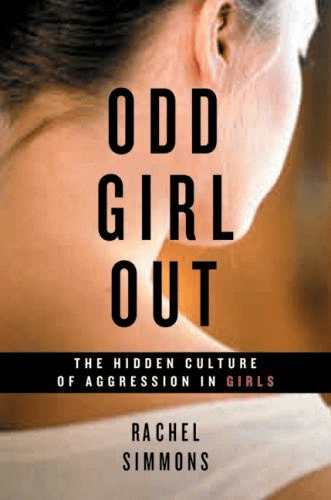
Finally, I read a book. Yes, everyone, I am now an expert.
That said, I will admit it is not as directly related to adult friendship as my previous recommendations. The book focuses specifically on female friendship during middle school and high school. Even so, I found it incredibly relevant. It explores how, as women, our friends often have the ability to wound us more deeply than almost anyone else in our lives, all while leaving us questioning whether we are imagining the hurt in the first place.
A large portion of the book examines female aggression and the subtle ways it tends to be expressed. Rather than overt conflict, it looks at exclusion, silence, passive behavior, and emotional manipulation, patterns that are often dismissed or minimized. While the book is not explicitly about adult friendship, I still think it is an excellent resource for anyone who carries a lot of baggage from past female friendships, or honestly, for anyone at all.
I do not have to tell you that some people do not outgrow the behaviors described in this book. Those patterns can easily follow us into adulthood if they are never named or challenged. Because of that, I also think this book can be useful as a mirror. It gives us the opportunity to check ourselves, to make sure we are saying what we mean, communicating clearly, and having necessary conversations instead of letting resentment quietly build. (See said book below)
IN CONCLUSION…
Friendship is not a static thing we master once and carry effortlessly through life. It changes as we change, shaped by distance, time, technology, and the quiet evolution of who we are becoming. The transition from adolescent friendship to adult friendship can feel disorienting precisely because there are so few clear scripts for it. We are often left trying to interpret silence, shifting priorities, and unmet expectations on our own.
What these books, videos, and conversations have helped me realize is that many of the tensions we experience in friendship are not signs of failure, but signs of growth happening in real time. Adult friendship asks us to be more self-aware, more communicative, and more honest than we were ever required to be before. It challenges us to examine our expectations, our insecurities, and the roles we unconsciously assign to the people we love and probably want to keep around!
If nothing else, I hope this encourages more open conversation around friendship, especially female friendship. It deserves the same thought, care, and nuance we so readily give to romantic relationships. I think this post is probably the beginning of many, as I delve deeper into this topic, so there is likely more to come! Stay tuned!
Please excuse the obvious titling. In truth, it’s not just TikTok specifically, though, that has been the newest catalyst for this problem I’m experiencing regarding social media and its relationship to the creative process. You might be wondering: what problem exactly am I referring to? What is there to be said on this topic that hasn’t already been reiterated numerous times online? Social media is distracting and, therefore, we become too distracted to create. Duh. We all know this.
And yes, this much is true. Social media is horrible for our attention spans, but I’m going to take a break from railing against this specific issue and focus on another one that I have personally experienced this month. This is the issue of inspiration overload and the resulting creative paralysis that ensues.
I love a good Pinterest scroll. This was my first social media of choice as a teen. I felt like it helped me get started on a project by getting my brain churning with endless inspiration. It had it all! Writing prompts, concept art, writing playlists, tips, life hacks—everything!!!
For the most part, I walked away from my Pinterest scrolls feeling positive at this time. I’d scroll with a specific goal in mind, further develop an idea, pin a few pins (or even create a new board for this one idea), and then walk away within 10–15 minutes. Done!
I don’t know where I went wrong… well, I have a guess, so let’s discuss.
There came a point where my social media habits became less orderly. As an adult, school took up less time, I got on additional social media, and simultaneously, those platforms became more attention-grabbing and endless. I remember a time when you could scroll Instagram and it would eventually give you a message like, “That’s it! You’ve seen everything new that there is to see! Now go do something else!”
It definitely no longer does this.
You can scroll and scroll and scroll. This is true of every social media platform right now. “It’s for inspiration!” I’d say. After all, it was writing-related content that I was consuming. After a point, however (whether due to the nature of the content or the sheer amount of it), I found it very easy to slip into the role of consumer as opposed to creator. Ideally, you should be able to do both, but that does require a certain level of balance that feels nearly impossible to obtain. What is that magic amount of time to scroll BookTok or Pinterest concept art before the very practice itself becomes a creativity-eating monster?
What I found was that after consuming copious amounts of writing content, I was hit with this intense feeling of creative paralysis. I recalled the gazillions of writing tips and do’s and don’ts. I recalled all that I should be doing. Show, don’t tell. Use metaphors. Don’t use metaphors. Use them sparingly. Adverbs are evil. Adjectives are evil. Passive voice is okay. Passive voice is evil. Develop your world entirely before writing. It will develop as you write, and then you have to rewrite it all. Put your character development above worldbuilding. Worldbuilding is key. And blah, blah, blah, blah.
I can’t write and I suck. That’s the conclusion of today’s writing session.
You see, we weren’t made to have this many voices speaking into our lives, much less our creative process.
At some point, inspiration stops being fuel and starts being noise. And while social media loves to market itself as a wellspring of creativity, it rarely tells us when to stop drinking. Creativity, at least for me, doesn’t thrive in a crowded room full of opinions shouting over one another. It needs quiet. It needs boredom. It needs the uncomfortable stretch of sitting with an idea long enough for it to become something mine.
So maybe the solution isn’t cutting out inspiration entirely, but treating it with a little more intention and a lot more restraint. Fewer voices. Fewer rules. More trust. Because the work doesn’t happen in the scroll. It happens when you finally close the app, sit down, and let yourself write badly, imperfectly, and freely again.
So happy late new year! Let’s make stuff again and give it a rest. The mantra I want to embody this year is Less is more. No more drinking out of a fire hose. Let’s try to think of it more as taking a sip from a well. Slow and steady.
Or, at least mine is, come to find out. But before I dive into today’s blog post, I just wanted to say hi and recap my last post. I gave you readers a little life update about how I want to commit more time to writing and continue to fight this nasty habit of mine: doomscrolling instead of doing something that actually makes me feel fulfilled. I’ve made numerous posts about this little struggle, which I’m sure is becoming almost universal at this point. Who isn’t trying to lower their screen time these days? Especially when we all know there are tons of more fulfilling things to do.
So that leads me into today’s post, which comes from a few random thoughts I had when I realized that I’d actually managed to lower my screen time lately. To a whole two hours a day! (Cue the round of applause.)
Okay… so maybe it could still be better, but as a self-proclaimed YouTube essay addict, cut me some slack. This is better. But I began to wonder how I managed this over the past month. I’ve made a variety of attempts to lower my screen time with varying degrees of success, so it felt important to pinpoint what strategy finally worked for my life. Why exactly was I able to reduce my screen time this time around? What changed?
The conclusion I arrived at was simple: I needed a hobby.
In my previous blog posts, I’ve described my distant desire to reduce screentime, but I didn’t elaborate much on my strategy for doing so because I assumed it would be as simple as that. I’d decide to be on my phone less, and therefore, I would be. Alas, it doesn’t always pan out that way (hence those varying degrees of success I mentioned).
Turns out sheer willpower is a tough thing to rely on when it comes to breaking a bad habit. You need to fill that empty space with something else. You, or at least I, need something else to occupy your time. I feel a little sheepish typing that out. The conclusion seems obvious, but it wasn’t so obvious to me at first. Certain months, I was terrible about filling my evenings after work, and lo and behold, those were the nights I was most likely to do something… screen-y.
This last month, however, was different. I didn’t plan for it to be different. It just sort of happened. I wanted a book from the library. I wanted to spend more time writing. So I invested time in both. My focus was less on reducing screen time and more on simply doing something else. But it seems that the lack of doomscrolling was a delightful byproduct. And so, my conclusion was made: I need to stop focusing so much on not getting on my phone and instead focus on what hobby sounds fun to dive into on a random weeknight.
This is probably obvious to everyone reading and hardly a novel discovery, but, fool that I am, I didn’t realize until recently that I need more than willpower to kick an overindulging screen habit. I need a hobby. Actually, a few of them.
But if you happen to be in my shoes and are possibly just as dense as me, maybe this post helped you realize that you’re not a weak-willed weenie. You just need to direct your attention toward something else you enjoy. Focus less on not doing something, and more on doing something better for you.
So here’s your gentle reminder for the week: put the phone down, pick something up, and let your hands and mind get busy with life again.
I’ll probably keep making these posts until I die. Yaknow, the obligatory “I haven’t posted in X months but! I’m not dead!” posts. All that being said, wow! I haven’t posted in about 2 months, and yes! I am indeed not dead. I think ya’ll are used to this song and dance by now.
So! What have I been up to, two or maybe even THREE of you may be wondering. In short: not writing. But before you bring out the tomatoes and fruit to throw at me (as I literally wrote a post about not procrastinating writing like three posts ago), I will say, it’s been a busy past couple of weeks. This was less of me blobbing around and doing anything but writing and more of me rushing around and doing anything but writing. Big difference.
(Relevant instagram post inserted above because I actually have no pictures on my computer yet).
So yeah! It’s been busy. Making room in your house for another human is also an arduous task, especially if you find yourself a collector of a wide array of trinkets and are used to being utterly selfish with your use of space. It has been accomplished, however (if you ignore the study/office space), and we find ourselves finally lapsing into a semblance of routine that we now call normal.
The aftermath is very real though. I am a routine person by nature. When this routine is messed with, I find myself collecting a nice little bouquet of bad habits before I try to get my crap together and shed them again. And that pretty much sums up where I’m at currently.
Living with a lovely man, now known as my husband, and learning to share my life. I have also, as of late, found myself struggling to manage my time (namely, overusing my phone, a constant frenemy of mine), struggling to read, and struggling to eat actual meals, not just a weird variety of snacks and junk food. And then I got sick.
I write this post sitting at home during regular business hours with a cup of mint coffee in a mug beside me (which I’m quite proud of actually, because another bad habit that has been wriggling its way into my life is my over-eagerness to spend $7 on a fancy but delicious coffee. Great treat, but not an everyday purchase.). I caught an annoying cold, which required me to call out sick for probably the rest of the week. Irksome, but I have decided to use the time to do a few dishes and reflect on my life.
This reflecting has yielded a few conclusions: One, I need to get back on track with both my caffeine and time management. Second, I need to work on a new writing project. Now, figuring out what this creative project is, is a whole other problem of its own.
I love thinking up writing ideas, but I think it’s an entirely separate hobby from writing them. I am overflowing with concepts and projects I would love to see brought to life, but I often find myself grasping to find the motivation and time management skills to produce something (ugh, there it is again. Time management. Ick).
Creating an actual end product writing-wise just takes so darn long, and, possibly, linking me back to the whole time management thing, I don’t like taking that time. I often find myself spending that time making a Pinterest board for it and nothing more. This, unsurprisingly, leaves me entirely dissatisfied. And I’m tired of being dissatisfied.
(After all, it’s been a few months since my latest poetry book release and I’m getting ANTSY)
So! The anthem for the next month or so is to work on SOMETHING. It doesn’t matter if it’s a singular huge project or a bunch of tiny little ones. I just need to get back into the creative mindset of making something and letting it suck. And perhaps, in all this project bouncing around, I’ll find out what I want to set my eyes and attention on consistently, and that elusive next project will make itself known.
So stick around, there’ll hopefully be more to come as I’m getting back into the swing of things. And if not, I give you permission to throw the fruit this time. Throw a few “boos” in there too if you’d like.
Sometimes life feels like a never-ending list of emails and meal-prepping and remembering your passwords. And while that’s all very adult and responsible of us, sometimes you just want to inject a little whimsy into the day. I’m not talking wearing a tutu to work of course (unless you’re into that? Idk where you work). I mean tiny, delightful oddities that make life feel like a storybook for a second.
So here are some specific ways to be more whimsical. Even if you’re a practical person with bills to pay and a Google Calendar that rules your life. Aright, here we gooo:
Start carrying around one overly specific item for no clear reason. A vintage skeleton key. A feather quill. A deck of cards. Let people ask questions. Refuse to explain. Mystery is 30% of whimsy.
Host a “mismatched tea moment” once a week. No guests needed. Just you, an oddly paired mug and saucer, maybe a cookie, maybe a journal. Bonus points if you wear a shawl like you’re some mysterious wizard woman.
Leave secret messages for your future self. Tuck tiny notes into your coat pocket or inside a book you’ll eventually re-read. “You are loved. Also, buy ice cream.” It’s like time-traveling kindness.
Assign your day a genre. Decide that today is a romantic comedy, or a slow-burn fantasy epic, or a chaotic detective story. Suddenly your coffee run is a plot point, and your bus ride has cinematic tension.
Make a “soundtrack” for your day. Start your morning with French café jazz, switch to dramatic classical when you do emails, then blast 2000s bops while you make dinner. Be the main character in the most eccentric indie film ever made.
Pick a word of the week and use it dramatically. Not a normal word. Something like “bewildered” or “henceforth.” Use it in casual conversation.
Choose a random object as your daily talisman. A marble, a mini pinecone, a button. Carry it like it has secret powers.
Add a secret ingredient to something you cook just because it feels magical. Nutmeg in your eggs. Rose water in your lemonade. Not because it’s gourmet, but because it feels like a potion. Say “a dash of enchantment” while doing it.
Tell the time like you’re in a fantasy novel. “It is the second hour past dawn, and I have yet to answer my emails.” “It is nearly the witching hour—I must fetch snacks.”
Hide something for a stranger to find. A doodle. A quote. A “congratulations, you found this” note under a library chair or taped to the back of a street sign. It’s low-stakes mischief. Good for the soul.
Rename your calendar events. Instead of “Dentist Appointment,” call it “Royal Council with the Tooth Kingdom.” Instead of “Grocery Store,” try “Foraging Quest.” Suddenly errands are… thrilling?
Go out dressed like a book character. Not full cosplay. Just a little nod. A scarf like Miss Marple. Overalls like Anne of Green Gables. Boots like a pirate.
Hopefully these will add a bit of sparkle to your routine!
Look, I’m not saying I’m a trend forecaster or anything, but I am saying I have a lot of feelings about things right now. Spring has me in a refresh-and-renew mood. Think open windows, iced drinks, and a chaotic urge to either completely change my life or do absolutely nothing. There’s no in-between. I live in a world of extremes…
So here it is: a completely arbitrary and highly personal list of what I’m loving lately and what I’m politely (or not so politely) retiring. No real logic. Just vibes.
🌸 What’s IN (aka bringing me unreasonable joy lately)
Cream soda – I don’t know why this tastes like childhood nostalgia and magic at the same time, but it does. Bonus points if it’s pink.
Cute coffee shops – I’m talking mismatched mugs, plants in every corner, and baristas who remember your name. We’re romanticizing our lives this year.
Taking walks everywhere – Walking as a personality trait? Absolutely yes. Give me sunshine, a good playlist, and no real destination.
Impressionistic art – Big yes to blurry florals and soft, moody landscapes. If it looks like a daydream, I’m into it.
Gas station snacks – High-end cuisine? No thanks. Give me peach rings and a questionable corn dog.
Retro games – N64, pixelated chaos, that clunky PS1 startup sound. Inject that straight into my bloodstream please.
Pasta – Any kind. All kinds. Pasta is self-care now.
Formal gowns for no reason – Go ahead, wear that dramatic dress to buy toilet paper. I support you.
Saying “no” to protect your mental space – Revolutionary, honestly. I feel like I have to remind myself to do this at some point every year. Gotta keep that FOMO in check.
Giving people the benefit of the doubt – Life’s weird for everyone. Let’s chillout for a second and maybe stop making character assessments of everyone on the interstate just because they didn’t use a turn signal once. Draining honestly and yet I indulge.
Microwave popcorn – The perfect snack for every situation. Salty, satisfying, and takes two minutes. Iconic.
Herb gardens – Even if it’s just one sad basil plant on a windowsill. We’re farming now.
Petting as many cats as possible – If there’s a cat, I’m stopping. Priorities.
Body spray – Strong 2006 mall energy.
Changing your bedding regularly – Like hitting a mental reset button. Plus clean smelling sheets are *chef’s kiss*,
🧼 What’s OUT (aka, I’m over it)
Buying ingredients but never cooking – If I have to throw out one more wilted bunch of cilantro…
Cheap soap – We are grown. Our hands deserve better.
Grudges – Too heavy to carry. Let it go, Elsa-style.
Cruddy socks that need to be replaced – Why do I still have socks with holes in them?? And why does it feel illegal to just throw them away?????
Plain coffee – I want cinnamon. I want foamed milk. I want joy.
Falling asleep to your phone/TV – No more scrolling into the void. Let’s reclaim bedtime.
Minimalism – Bring back cluttercore. Give me trinkets. Give me personality.
6am alarms – Unless it’s for something exciting or airport-related, no thank you.
Self guilt – You don’t have to earn rest or joy or snacks. Be nice to yourself.
Hanging in groups that make you feel bad – Nope. Friendship should feel like sunshine, not stomach knots.
Not complimenting people but still thinking it – Just say it! Give strangers their flowers!
The color grey – It’s giving “dentist office.” Let’s inject some color into our lives.
Monochrome stuff – Matchy-matchy is out. Chaos layering is in.
Anyway, that’s where I’m at right now. Spring is the time to throw open the windows, eat snacks that make no sense, and maybe (just maybe) give yourself a break.
Tell me what’s on your in-and-out list. I love knowing what little things are making people happy lately.
First off, a big thank you to Diamond for tagging me in this super fun music blog tag! I had the best time reflecting on the songs that have been with me through different seasons of life. Whether it’s a soundtrack/instrumental piece in the background or a lyric that punches you in the gut (in a good way), music is such a personal part of how we process and celebrate life. So here’s a little peek into my playlist!
And now… to the questions:
Your favorite song right now Right now, I’m obsessed with a piece from The Wild Robot soundtrack called “I Could Use a Boost.” It’s cinematic, slightly whimsical, and hits that perfect sweet spot for a soundtrack lover like me. If you’re into instrumental pieces that tug at the heartstrings and make you feel like you’re on an adventure, give it a listen. You’re life or drive will feel like a coming of age movie.
Favorite Christian song For a modern Christian track, “I Need You” by Gable Price and Friends has been on repeat in my car. It’s raw and real and feels like a journal entry to God when you’re burnt out. Plus bonus points for the Screwtapes Letters reference. But if we’re going classic, nothing beats “Be Thou My Vision.” That hymn just has a staying power. It feels like stepping into something ancient and deeply rooted every time I hear it.
Your favorite song five years ago Back in college, I was loving “Ultralife” by Oh Wonder. It’s just so bright and energizing. Also had “You Already Know” by JJ Heller on my heavy rotation. There’s something about her voice and lyrics that always feels like a deep breath and quietly talking to God about what’s honestly on my mind and heart.
Your favorite lullaby/soothing song Scripture Lullabies’ “Be Still and Know” is the definition of calming. It’s soft, peaceful, and reassuring in a way that always helps me unwind when life feels too loud. The piano intro is my favorite. Kind of reminds of me of the Princess Diaries Soundtrack in a weird way???
A song that made you cry “Dear Mum” by Cassa Jackson. Oh my goodness. It’s tender and heartbreaking in the most beautiful way. The lyrics carry such a gentle ache. Definitely one for the “feel your feelings” playlist.
A song that makes you dance “Sunroof” by Nicky Youre is bubbly and fun. It’s perfect for spontaneous dance sessions in your kitchen in the summer when the windows are open. And for a totally different vibe, “Harpy Hare” by Yaelokre makes me want to swirl around like I’m at a medieval faire. I’m not saying I’ve danced around in a circle skirt to it… but I’m also not not saying that.
A song you covered/performed I’m not much of a performer, so I’m skipping this one. Unless you count car concerts or singing to my cats….
Favorite movie song Is it dramatic? Yes. But “The Rohirrim Charge” from Lord of the Rings gets me every time. Epic, powerful, and goosebump-inducing. Instant motivation. Just wanna draw my sword every time I hear it.
Favorite song from a new album Confession: I’m way behind on new music. I mostly live in my soundtracks and favorite artist bubble. So… if you have album recs, I’m all ears.
A song that makes you sentimental “Birthday Cake” by Dylan Conrique is like a gentle punch to the gut. So melancholy and nostalgic. It makes me reflect on time passing and all the bittersweet little moments that go with it. The epitome of losing someone before you’re ready.
A song you’ve heard a lot lately I don’t really do radio, so I don’t have a specific answer here. I tend to get obsessed with a few songs and loop them forever until I emotionally retire them.
A song you’d do at karaoke Any cringe-worthy 2000s pop hit. Something the whole crowd knows and secretly loves. I want maximum nostalgia and minimum vocal expectations.
A good road trip song “Driving Myself Home” by Rose Betts is just the right mix of fun, bounce, and sing-along potential. Great for windows-down cruising.
A cute love song “Ordinary” by Alex Wallen gives me all the cozy love story feels. Simple, sweet, and a little dreamy. I’m not trying to be basic, but I am trying to be honest.
Favorite country song “Dooley” by The Dillards. Please tell me someone else knows this gem. It’s a classic. Bluegrassy, catchy, and full of charm.
A song you love but cannot sing Literally any song sung by a male artist in that awkward mid-range that’s too low and too high depending on how you try to adjust. My vocal range just gives up and goes home.
And that’s a wrap on this musical journey! I’d love to hear your answers—consider yourself tagged if you’re reading this and feel inspired. But specifically, I’m tagging:



 By the Brooke