The Creative Magic Theory: What Kind of Creative Are You? ✨

You know it’s serious when I have a sparkle in the title… 😛

I have a little theory about creativity, because I think the way we create is just as interesting as what we create. Some people are inspired by other artists, some get random bursts of inspiration at two in the morning, and others slowly nurture an idea for months until it becomes something wonderful.

So what if creativity worked a little like magic? What if we all had different creative powers that influenced how we approach our ideas, find inspiration, and bring things into the world?

Welcome to the Creative Magic Theory!

Here’s the line of logic and reasoning…each creative type represents a different approach to creating. These types aren’t tied to a specific medium by the way. So you can be a writer, painter, musician, crafter, or content creator and still identify with any of them. You can also have a primary type, a secondary type, and even a third type that influences your creative process because, as always, people aren’t static.

So, there’s the intro. Now let’s meet our eleven creative types! Let’s go! No more dilly dallying in this introduction…

The Eleven Creative Magics

💡 The Lightbringer

Lightbringers create by revealing, explaining, and illuminating. They enjoy making complicated things understandable, highlighting overlooked details, or putting difficult feelings into words. Their creativity helps others see something they might have missed. If you lean toward writing self-help or write to explain, you may find yourself identifying with this creative type. Or maybe you paint to convey a complicated and highly specific feeling. Both of these are examples of lightbringers.

🔥 The Firestarter

Firestarters create in bursts of passion and inspiration. When an idea catches fire, they can pour enormous amounts of energy into it. They might go from barely creating anything to producing an entire collection in a weekend. Their challenge is learning how to keep going when the initial spark fades. This is a very common type of creative (I fall into this category!). It is both a blessing and a curse.

🌊 The Riverborn

Riverborns create by following the flow. They often prefer to explore an idea intuitively rather than plan every detail in advance (no outlines for these guys). They might begin a story without knowing how it ends or start a painting and discover what it wants to become along the way. Their challenge is learning when to follow the current and when to swim against it. Structure is important sometimes. Riverborns can struggle with writing themselves into a corner or getting halfway through a project and realizing that they wished they had done things just a bit differently.

🌬️ The Windrider

Windriders create through curiosity and exploration. They love trying new things, experimenting with different mediums, and following interesting ideas wherever they lead. They might have a dozen hobbies and a notebook full of possibilities. Their challenge is giving some of those ideas enough time to develop before chasing the next exciting thing. Windriders tend to collect hobbies and feel more creative when they are doing lots of things! Their mind is always racing.

🌱 The Earthkeeper

Earthkeepers create by cultivating. They enjoy nurturing ideas, developing skills, and patiently building something meaningful over time. They might spend years perfecting a craft or months developing a single project. Their challenge is knowing when to let something change, when to stop refining it, and when to move on. These are the “Tolkiens” of the creative world. They are persistant.

⚡ The Stormsmith

Stormsmiths create through sudden insights and unexpected connections. They are the people who think, “Wait, what if these two completely unrelated things actually belong together?” They enjoy brainstorming, inventing concepts, developing theories, and turning flashes of inspiration into something new. Their challenge is sorting through all those sparks and deciding which ones are worth pursuing. They can sometimes get lost in their own sauce or “system”.

🌌 The Stargazer

Stargazers find inspiration in other creatives and the world around them. Other people’s art, conversations, books, music, and creative communities can fuel their own imagination. They often thrive when surrounded by people who encourage them to create. Their challenge is learning to keep their own creative light shining even when they’re temporarily disconnected from their community. This is something that becomes especially difficult as creatives mature into adulthood and friendships are harder to maintain.

🌙 The Nightweaver

Nightweavers are drawn to the hidden, strange, mysterious, emotional, and unconventional. They enjoy exploring ideas that might be overlooked or difficult to explain. Their work might involve eerie stories, complicated emotions, surreal art, or unusual perspectives. Their challenge is making their ideas accessible and not overly vague without losing the mystery that makes them interesting.

🌈 The Prismsmith

Prismsmiths turn internal feelings and ideas into expressive experiences. They might communicate through color, imagery, music, aesthetics, symbolism, or atmosphere. They’re often interested in how something feels just as much as what it means. Their challenge is making sure the expression serves the idea rather than getting lost in the pursuit of the perfect mood or aesthetic. These are the emotional creatives.

❄️ The Iceweaver

Iceweavers create through refinement, precision, and careful arrangement. They enjoy editing, polishing, simplifying, and finding the exact right way to express an idea. They might revise a poem until every word matters or perfect a design by removing everything unnecessary. Their challenge is knowing when to stop refining and allow something to be finished.

🌀 The Illusionist

Illusionists change how people perceive things. They take the ordinary and make it feel magical, strange, funny, beautiful, or unexpected. They might turn a coffee shop into a fantasy tavern, transform a mundane experience into a whimsical story, or use humor to make people see something differently.

Combining Your Creative Magics

Your primary magic represents your most natural creative instinct, while your secondary magic adds another layer to your process. A third magic can influence you too, even if it isn’t as prominent.

For example:

🌌 Stargazer + 🔥 Firestarter: You’re inspired by other creatives, then suddenly produce a ton of work when something sparks your imagination.

🌬️ Windrider + 🌊 Riverborn: You love exploring new possibilities and following ideas wherever they take you. You thrive on freedom and experimentation.

💡 Lightbringer + ❄️ Iceweaver: You love understanding things and then refining that understanding into something clear, precise, and elegant.

⚡ Stormsmith + 🌈 Prismsmith: You make unexpected connections between ideas and find expressive, imaginative ways to bring those concepts to life.

🌙 Nightweaver + 🌀 Illusionist: You explore strange or hidden subjects and transform them into something that challenges how people see the world.

There are so many possible combinations, and none of them are inherently better than the others!

Working With Your Creative Magic

One of the most important things about this theory is that every creative strength has a potential weakness.

For example, Firestarters might need to learn how to sustain their energy. Windriders might need to practice finishing projects. Stargazers might need to find ways to create independently. Iceweavers might need to learn when something is good enough.

The goal isn’t to change your natural creative instincts or force yourself to work like someone else. It’s to understand what helps you create and what tends to get in your way. Which, more often then not, is ourselves.

If you’re a Firestarter, perhaps you can use your bursts of inspiration while keeping a list of projects to revisit when the fire quiets down. If you’re an Earthkeeper, perhaps you can give yourself permission to experiment without needing every project to become something substantial. If you’re a Stargazer, perhaps you can build an inspiration library to return to when your creative community isn’t readily available.

Your magic is something to understand and develop, not a box to trap yourself in.

So, What’s Your Creative Magic?

I love the idea that creativity can look so different from one person to another. We don’t all need the same routines, inspirations, or approaches to make something wonderful and it’s definitely not a one-size fits all type of scenario.

So, which creative magic feels most like yours? ✨
365 Days of Being a Writer: Month 5

This month is going to have two halves- one half is “Story Sparks”. These are things or items that you can take and run with to build your own story around. The second half is focused on Settings.

In summary, the first half of the month you’re writing about the “what”. What object or event kicked off this story? Second half of the month is going to focus on the “where” and you can go from there! Best of luck, dear readers!

Month 5 pt. 1– Story Sparks

  1. Write about a mysterious key.
  2. Write about a letter arriving late.
  3. Write about a lost pet.
  4. Write about a strange visitor.
  5. Write about an unexpected storm.
  6. Write about a rumor spreading through town.
  7. Write about someone returning home.
  8. Write about a hidden room.
  9. Write about a missing person.
  10. Write about a midnight phone call.

Break:
105. Make a Pinterest board or moodboard for a story.

Month 5 pt.2 – Setting

  1. Describe a cottage.
  2. Describe an abandoned house.
  3. Describe a castle.
  4. Describe a farm.
  5. Describe a library.
  6. Describe a train station.
  7. Describe a market.
  8. Describe a forest path.
  9. Describe a snowy street.
  10. Describe a summer evening.

Break:
116. Look at a photo online and write 5 sentences about it.

When Did Everything Become a Photoshoot?

Pre-warning: I am griping again

Everything now has this pressure to be aesthetically pleasing all the time thanks to the internet.

And listen, I get it. Trust me, ya’ll, I grew up during the golden age of Instagram. Pinterest is probably one of my MOST used apps, and yes, it is a problem sometimes.

Romanticizing your life and making things “pretty” can be fun. It can even be motivating. Lighting a candle before you write. Making your desk space whimsical. Using the good pen. Brewing coffee in your favorite mug. I’ve even written blog posts about fun ways to romanticize your writing process, so, in a way you could say maybe I’m guilty as well.

There is something lovely about being happy with your appearance and space.

But, recently, I’ve come to a weird sort of realization…

It feels like we’ve crossed from intentional beauty into constant performance.

There’s an overemphasis on aesthetics in general. Not just in writing alone, but in life in general. (I know, I know, I sound like a harpy old lady but hear me out).

Girls are expected to be pretty all the time. Self-growth is framed as “hot girl advice.” “Hot girls wake up at 5 a.m.” “Hot girls drink green juice.” “Hot girls don’t text first.” “Hot girls have spotless kitchens and perfect side profiles and somehow glowing skin while journaling about their boundaries.”

Since when did personal growth become a rebranding campaign? And what is this weird obessesion with being a “hot girl who x”?

It’s like the ultimate goal in life is to look amazing at ALL times. To have your life be this curated, aesthetically pleasing collage of neutral-toned items and sunlit corners. Your coffee has to look right. Your Bible has to be color-coded. Your gym outfit has to match. Even your healing has to be photogenic.

It’s ridiculous.

The internet is a highlight reel and we all know that. It captures moments in time. A split second. A perfectly framed sliver of someone’s day. We are not designed to line up and look exactly like these captured moments in time at all times. We are not still images.

We are messy, moving, complicated beings.

Now we are ebbing into looks over substance in every area of our lives. We spend way too long taking an aesthetically pleasing desk picture or finding the perfect angle to show off our cup of coffee beside our journal. And somewhere in that process, the coffee gets cold and the journaling becomes secondary.

The writing — the actual writing — becomes less important than how it looks to be writing.

And that’s where the fun starts to drain out.

Because the substance is the point. Not the proof of it.

There’s nothing wrong with beauty. There’s nothing wrong with liking nice things. There’s nothing wrong with enjoying an aesthetic. I am not anti-whimsy. But when aesthetics become the main goal instead of the byproduct, it begins to feel like everyone is now encapsulating the brand of being a writer. I feel like we’re losing a lot of authenticity in general. Again, I don’t want to sound like I’m grouching about everyone else, this is something I’m guilty of as well. My whole instagram page is color coordinated.

Really, I’m just sort of ranting to the void and maybe myself. Maybe it’s time we get back to the basics.

And if it happens to look pretty? That’s a bonus.

Maybe it’s time to become a writing minimalist. No routine, no coffee, no pretty desk space. Just writing.

If I were to write a romantasy novel…

This is my way of announcing that I’ve begun writing on a new project. Will I finish it? Who knows? Is it fun though? Absolutely. So I’m going to share it with you guys against your will! The door is locked and the powerpoint-er, I mean the synposis is prepared! Read along, and you may just get a sneak peak of what I’ve written so far…

The Synopsis:

To end a generations-long war, a marriage is arranged between a charmingly naive prince and a dreamy but equally oblivious princess. Neither is thrilled, both long for true love, but duty comes first. Behind the scenes, however, the true powers are at play: the prince’s brilliant and calculating gentleman-in-waiting, and the princess’s cunning and fiercely loyal lady-in-waiting. Each is the secret strategist behind their monarch’s success, and each is deeply committed to their own kingdom. When tradition demands that they too be wed, to symbolize the uniting of the households, they are less than thrilled. But strategy has a funny way of turning into something else when hearts get involved.

Meanwhile, in the shadows of court, two rival assassins, one from each kingdom, are given a single directive: kill the monarch of the enemy side. As their deadly missions cross again and again, a reluctant chemistry sparks between them, even as they try to finish the job and stay alive. The lady and gentleman-in-waiting, ever alert, play a high-stakes game of wits to keep their monarchs alive, all while navigating their own slow-burning, inconvenient romance.

As alliances shift and true affections deepen, three love stories unfold: between the idealistic prince and princess who unexpectedly fall for each other, the wary advisors who find love in the midst of rivalry, and the assassin enemies whose mutual respect may just turn to something more.

As this all unfolds, will the true enemy come to light?

The Preview:

Chapter 1: The Lady-in-Waiting

The throne room was suffocating. Courtiers pressed close in their jeweled silks, whispering beneath the vaulted ceiling as the King rose from his throne. Sage held her breath, watching every movement. A hush finally fell over the crowd. His voice carried like a trumpet blast, proud and commanding:

“Today, I announce a union that will bind two kingdoms. My daughter, Princess Lotus, shall be wed to His Grace, the Scarlet Prince.”

A ripple spread throughout the court. Some gasped, others exchanged quick, calculating glances. Sage, standing a respectful pace behind her mistress, felt her stomach twist and drop. She wanted to look at Lotus with the unspoken question, Did you know?

She dared not. She was the Lady-in-waiting. She was to be still, respectful, and quiet. So she stared ahead, focusing instead on the fountains lining the throne room perimeter, willing herself to focus on the way the light shimmered through the spray of water and the refractions that danced along the wall.

Still, from the corner of her eyes, she could see the princess keeping her chin lifted, her face calm as carved marble. Sage’s heart ached.

The King sat again, dismissing the assembly with a wave of his hand. This evening, his glittering silver crown set with sapphires seemed uncomfortably heavy upon his head. Sage noted the red around his eyes. He had spoken with such regality, and yet, up close, Sage could see him clearly: a tired, older man, with silver beginning to show. A weary man who had seen years of war and felt his only ploy for peace was to marry his own daughter off to a monster.

Courtiers bowed low, murmuring congratulations as they filed out. Sage remained rigid until the chamber emptied, then hurried to Lotus’s side. From there, Lotus and Sage bowed low to the King and Queen before they were dismissed as well.

As they did so, Sage tried to sneak a peak at the Queen. What were her thoughts on all this? Had she also known? Did she even support this mad decree?

But Lotus had learned her steely face from the best, and the Queen’s expression revealed nothing. She only inclined her head ever so slightly before turning with to take her husband’s arm, silks rippling around her like an ocean.

~*~

“You knew?” Sage whispered, unable to keep the edge from her voice.

Lotus finally exhaled, the careful mask slipping. Her eyes were watery but no tears fell. “Only last night. When we were having tea after dinner. My father told me as though he were announcing the weather.”

Lotus moved to sit on her bed, head shaking. Beads braided into her raven hair clicked and clacked as she did so, but she said nothing more, shoulders sagging in resigned defeat.

Sage’s throat tightened with shame, cheeks hot. I should have seen this coming. I should have anticipated.

“It isn’t your fault,” Lotus said gently, as if reading her mind. She motioned her friend closer to lay a comforting hand on Sage’s arm. “None of us could have predicted it. Father has been playing his cards close to his chest lately. He is a King at the end of it all.”

But he is also a father, Sage thought but refrained. Guilt did not rest solely on his shoulders.

Sage could not forgive herself. It was her duty to see every threat before it arrived, every storm on the horizon. And for the first time in her many years at the Azure Palace, she had failed.

Her mind spiraled backward, to the day she had been bound to this role. The day she made an oath. A promise never to be broken.

~*~

Sage was fourteen when the Queen summoned her. She recalled it all as if it were yesterday. She remembered the long path through the garden to reach the pavilion where the Queen sat, enjoying the golden summer sun. And though it was a beautiful afternoon, Sage remembered that the guards’ silence brought a chill upon her, faces gray in the midday.

The Queen sat on a blue velvet chair, appearing to be deep in thought. Her crown rested on a small side table beside her, though her gaze was sharp as a blade.

“My daughter,” the Queen began without preamble, “is good of heart. She loves our people, and she is beloved in turn. But she is…not made for the rigors of politics. She has little taste for diplomacy, little head for stratagems.”

Sage, young as she was, lowered her eyes. She had known this truth too, though she never dared voice it. She could see it every day during the Princess’s tutoring sessions. The girl could never quite recall the sequence of battles, or who had signed which treaty, or why it mattered in the first place. She would wrinkle her nose in confusion, or laugh lightly at her own mistakes, as if history were nothing more than a jumble of names tumbled together in her head. Dates slipped away like water through her fingers, and more often than not she confused one monarch with another, sometimes even her own ancestors. The tutors would grow red with frustration, but the Princess only smiled, unbothered, certain that someone else would always be there to remember what she could not.

Mathematics fared no better. Columns of numbers left her wide-eyed and blinking, as if they were written in some foreign tongue. She counted on her fingers long past the age when most had stopped, and when asked to recite her tables, she would hum under her breath to buy time, cheeks pink with embarrassment.

It was at the age of nine when Sage began to do Lotus’s homework for her. At first, she attempted to teach the Princess herself, certain that, someday, it would all come together and click into place. It never did. So, Sage kept up with her Lady’s work while she tended to less “boring” matters.

The Queen rose and crossed the room. Her hand came to rest firmly on Sage’s shoulder.

“You, however,” the Queen said, “have always been clever. I have seen how you watch. How you notice. I’ve seen you poring over her books and lessons far more than she ever has.” The Queen began to smile, but it quickly faded as she continued. “The world will try to outwit her, to corner her. I will not let that happen.”

Her voice softened. “So I charge you, Sage of Rosehall, to be her mind when her own fails her. To stand beside her when I no longer can. She will be the heart of this kingdom, and you must be her reason.”

Sage’s knees nearly buckled under the enormity of it. But she bowed her head and whispered the vow that had bound her ever since:

“I swear it, Your Majesty. My loyalty is hers. My life is hers. I will not fail her.”

~*~

The echo of that oath still rang in Sage’s mind as she looked at Lotus now, her eyes burning.

She was sleeping now. She always did so easily. She had lain down on her bed only for a moment before she was snoring quietly. Even in the face of such an announcement that sealed her fate, she slept.

Sage beheld her with pale skin and blushed cheeks. Her sleek dark hair was half done now, the style not arranged for rest. Her sky-colored gown was rumpled and wrinkled. She was small, and gentle, and perfect. A lamb of the Azure court.

Sage’s fingers curled into fists. The King might throw his daughter to the wolves of politics. The Scarlet Prince might come to devour her. To devour her future kingdom, but Sage would not accept her friend’s fate. She would sharpen her mind as to a blade. She had sworn once that she would not fail Lotus, and she meant to keep it. By her life, she would keep it.

TikTok is Bad for your Writing

And in other news, water is wet!

Please excuse the obvious titling. In truth, it’s not just TikTok specifically, though, that has been the newest catalyst for this problem I’m experiencing regarding social media and its relationship to the creative process. You might be wondering: what problem exactly am I referring to? What is there to be said on this topic that hasn’t already been reiterated numerous times online? Social media is distracting and, therefore, we become too distracted to create. Duh. We all know this.

And yes, this much is true. Social media is horrible for our attention spans, but I’m going to take a break from railing against this specific issue and focus on another one that I have personally experienced this month. This is the issue of inspiration overload and the resulting creative paralysis that ensues.

I love a good Pinterest scroll. This was my first social media of choice as a teen. I felt like it helped me get started on a project by getting my brain churning with endless inspiration. It had it all! Writing prompts, concept art, writing playlists, tips, life hacks—everything!!!

For the most part, I walked away from my Pinterest scrolls feeling positive at this time. I’d scroll with a specific goal in mind, further develop an idea, pin a few pins (or even create a new board for this one idea), and then walk away within 10–15 minutes. Done!

I don’t know where I went wrong… well, I have a guess, so let’s discuss.

There came a point where my social media habits became less orderly. As an adult, school took up less time, I got on additional social media, and simultaneously, those platforms became more attention-grabbing and endless. I remember a time when you could scroll Instagram and it would eventually give you a message like, “That’s it! You’ve seen everything new that there is to see! Now go do something else!”

It definitely no longer does this.

You can scroll and scroll and scroll. This is true of every social media platform right now.
“It’s for inspiration!” I’d say. After all, it was writing-related content that I was consuming. After a point, however (whether due to the nature of the content or the sheer amount of it), I found it very easy to slip into the role of consumer as opposed to creator. Ideally, you should be able to do both, but that does require a certain level of balance that feels nearly impossible to obtain. What is that magic amount of time to scroll BookTok or Pinterest concept art before the very practice itself becomes a creativity-eating monster?

What I found was that after consuming copious amounts of writing content, I was hit with this intense feeling of creative paralysis. I recalled the gazillions of writing tips and do’s and don’ts. I recalled all that I should be doing. Show, don’t tell. Use metaphors. Don’t use metaphors. Use them sparingly. Adverbs are evil. Adjectives are evil. Passive voice is okay. Passive voice is evil. Develop your world entirely before writing. It will develop as you write, and then you have to rewrite it all. Put your character development above worldbuilding. Worldbuilding is key. And blah, blah, blah, blah.

I can’t write and I suck. That’s the conclusion of today’s writing session.

You see, we weren’t made to have this many voices speaking into our lives, much less our creative process.

At some point, inspiration stops being fuel and starts being noise. And while social media loves to market itself as a wellspring of creativity, it rarely tells us when to stop drinking. Creativity, at least for me, doesn’t thrive in a crowded room full of opinions shouting over one another. It needs quiet. It needs boredom. It needs the uncomfortable stretch of sitting with an idea long enough for it to become something mine.

So maybe the solution isn’t cutting out inspiration entirely, but treating it with a little more intention and a lot more restraint. Fewer voices. Fewer rules. More trust. Because the work doesn’t happen in the scroll. It happens when you finally close the app, sit down, and let yourself write badly, imperfectly, and freely again.

So happy late new year! Let’s make stuff again and give it a rest. The mantra I want to embody this year is Less is more. No more drinking out of a fire hose. Let’s try to think of it more as taking a sip from a well. Slow and steady.

How to Generate Stories from a Deck of Cards

🃏Deck of Tales: Turn a Deck of Cards into a Storytelling Game

Did you know your old deck of playing cards is secretly a novel generator?

If you were the kind of kid who made your barbies have backstories or invented entire kingdoms on notebook paper, Deck of Tales is for you.

This game turns a plain old 52-card deck into a whimsical, dramatic, slightly chaotic storytelling machine. It’s part improv, part intuition, and all creativity. Great for writers, kids, bored adults, or anyone who wants to escape into a made-up world for a bit. It’s a game I invented as a middle schooler, and I hope you’ll get as much joy out of it as I have. But, enough backstory, on to the rules!

🎲 What You Need:

  • A regular ol’ deck of cards
  • Your imagination (and maybe a notebook if you’re a writer-type)

🧙‍♀️ The Magic of the Cards:

Face Cards = Characters
These are your story’s stars.

  • Kings are leaders, wise or power-hungry
  • Queens are love interests, schemers, warriors, or socialites
  • Jacks are dreamers, rogues, or loyal sidekicks

Aces = Fate
These cards shake things up.

  • Ace of Spades = The villain appears
  • Ace of Hearts = Love is declared
  • Ace of Clubs = A major battle or victory
  • Ace of Diamonds = Treasure or opportunity

Number Cards = Events
Each number is a kind of scene. Each suit gives it a flavor.

Suits = Story Themes

  • ♥ = Emotions, relationships
  • ♠ = Conflict, mystery, death
  • ♣ = Action, battle, adventure
  • ♦ = Wealth, ambition, discovery

Numbers = Action Prompts

  • 2 = A new encounter
  • 3 = A choice must be made
  • 4 = A new place
  • 5 = An obstacle appears
  • 6 = Bonding or betrayal
  • 7 = A clue or item is found
  • 8 = A fight or competition
  • 9 = A shocking reveal
  • 10 = A major turning point

Jokers (if you want to get wild): Plot twist! Magic! Prophecy! Sudden death! Dream sequence!

🧩 How to Play: The 7-Card Spread

  1. Shuffle your deck.
  2. Lay out 7 cards in a row. These are your story beats:
    1. Setting
    2. Main character appears
    3. Conflict begins
    4. Rising action
    5. Twist!
    6. Climax
    7. Resolution
  3. Interpret each card using the guide above.
  4. Tie it all together into one juicy little tale.

✨ Bonus Ways to Play:

  • Genre Remix: Assign each suit a genre. (♥ = Romance, ♠ = Mystery, ♣ = Fantasy, ♦ = Sci-Fi)
  • Free Write Oracle: Pull cards one at a time and just write what comes to mind. No rules.
  • Group Mode: Each person draws a card and becomes that character. Let the drama unfold.

💡 Example:

You draw:

  • 4♦ (a new city)
  • Q♥ (a charming love interest)
  • 6♠ (a betrayal)
  • J♣ (a loyal bestie)
  • A♠ (the villain arrives!)
  • 8♣ (a showdown)
  • 10♥ (a love confession that changes everything)

Story Summary:
A traveler stumbles into a glittering city. They fall for a mysterious woman. Just when things heat up, betrayal! With help from a scrappy sidekick, they escape. But then, the villain strikes. After a fight in the rain, love wins the day. Cue dramatic music.

If you’ve ever wanted to write a novel without actually writing a novel, this might be your new favorite game.

Let me know if you try it! I’d love to hear the wild tales your deck delivers.

Everyday Writing Tips: How to Write an Email

So here’s the deal: writing is kind of my big/main hobby. But even though I love crafting poems and playing with metaphors, sometimes the most stressful kind of writing is the everyday stuff. Emails. Cover letters. Thank-you notes. That weird blur of casual-but-still-professional communication that no one really teaches you how to do (at least in my experience. Maybe your parents really did you a solid and helped you out here).

Hence: this new blog series. I’m calling it “Everyday Writing Tips”. Today’s topic is email writing. Yaknow, “How to Sound Like a Functioning Adult Without Using “thank you” 47 Times in an Email.”

These posts are for anyone who’s ever stared at a blank screen thinking, “How do I start this? Am I being too awkward? Too formal? Do I need to say ‘hope you’re doing well’ or has that too over the top??”

Like I mentioned, we’re starting off with how to write an email. It’s something we all do, but somehow still overthink. I’ll break down a basic email structure, give you some go-to phrases (and a few to maybe retire), and help you send that message with a little more confidence and a little less spiraling and overthinking.

Let’s get into it and move along…

The Anatomy of a Non-Awkward Email

1. Subject Line:
Make it clear. Make it useful. Think “Question about Thursday’s Meeting” or “Follow-Up on Resume Submission” not “Hi!” or “Quick Thing :)” (vague and unhelpful) (unless you’re emailing your best friend or your mom or something).

2. The Opening Line:
Ah yes, the dreaded start (often the hardest part). If you’re unsure, “Hi [Name],” is a safe bet. Or a quaint little “Good afternoon [Person]”
Depending on the vibe, you can go:

  • Professional: “I hope this message finds you well.”
  • Casual: “Hope you’re having a good week so far!”
  • Direct (but not cold): “I wanted to reach out about…”

If you’re overusing “just,” take this as your sign to delete it. You probably don’t just want to ask them something, you want to ask them something. Be bold.

3. The Body:
Get to the point, kindly. If you’re making a request, say it clearly. If you’re giving info, organize it so it’s easy to skim. Don’t bury your important info. Use short paragraphs and bullet points if needed.

Example:
“I’m reaching out to confirm a few details for Thursday’s meeting:

  • Time
  • Location
  • Any materials you’d like me to bring”

Clear, kind, human. Boom, you’re done! Great job! Sound the applause! Now you can stop feeling like you’re going to throw up with professional anxiety.

4. The Closing:
Don’t overthink it. A few go-to sign-offs:

  • “Best” (simple and safe)
  • “Thanks” (if you’re asking for something)
  • “Take care” (friendly)
  • “Talk soon” (casual but not too casual)
  • My go-to is a simple “Kind regards”

And unless you’re a scammer, phisher, or hacker, please sign your name.

A Few Bonus Tips

  • Tone check: Read it out loud. If it sounds like you’re a robot or someone who’s about to cry, you might want to tweak it.
  • Be concise: Respect people’s time. Say what you need to say, and let them get back to their inbox abyss. Chances are they have a lot to weed through on this fine Monday morning.

K, I think that’s it??

But to conclude…The goal isn’t to be perfect. It’s to be clear, respectful, and gracious. But, that’s it for Email 101. Feel free to drop any suggestions below for this series. ‘Til then, happy emailing.

The Fairytale We All Live: A Poem

I.

The chandeliers drip with crystal

tonight, the kingdom spins.

The ballroom a lake of glass and reflections,

Filled with perfume and possibility.

She wears a gown of wishes,

And a veil of desire, longing.

A crown, though lovely, sits heavy.

II.

First comes Sorrow,

cloaked in deep blue,

his fingers cold.

He was like dancing with a fine mist,

Wrapping round then gone.

speaks in poems and sighs.
“Stay with me,” he whispers. “I’ll understand you better than most.”

III.

Next is Riches

gold threaded through a wide smile,

he smells of coins,

conquest is his game.

He spins her fast,

so fast she forgets her own name.

“I can give you everything,” he hums. “You’ll never need again.”

IV.

Then Pride,
in a tailored suit that sounds like applause

when ruffled.

Mirrors in his eyes he says to her,

“With me…You’ll be seen. You’ll be known.”

They waltz among the envious glances and the Princess

is tempted.

But she is dizzy from the asking.

Her feet ache from the circling.

V.

Then

a quiet man,

Silent as the night,

simple coat,

scars in his palms.

Crown of vines…or even barbs?

no entourage.

“May I?”

They dance.

No promises.

No bargains.

Just the hush of a heartbeat

in time with her own.

When the music slows,

And the night comes to a close,

he does not ask for her hand.

He only thanks her for the dance.

She watches him leave the floor,

A hush over her spirit,

And she wonders

if she might choose him.

Confessions of a KDP Survivor: A Tragedy writ in Poetry

Look, I thought self-publishing my book would feel like presenting the world a piece of my soul and everyone would instantly clap at my literary genius *dramatic hair flip*. But let’s get back to reality and discuss it because while I’m not a genius with a masterpiece to produce, the whole process had moments where it felt a sort of like cyclical hell of reformatting the same script over and over again…just to reupload it and see A new problem had been invented by my means of fixing the previous problem. Lovely.

So here, dear reader, are a few poems chronicling my deeply emotional, slightly ridiculous (and mundane) journey with Kindle Direct Publishing. May they bring you laughter, healing, and maybe a slight eye twitch in solidarity.

The Upload Spiral

(A sonnet, sort of. Shakespeare is not impressed.)

I clicked “Upload”—how easy!—with coffee in hand,
A hopeful young writer with dreams so grand.
But lo! My margins were not flush, my gutter misbehaved,
And half of my poem was tragically shaved.

“Bleed error,” it screamed, “Fix your trim size, you doof!”
My table of contents went straight up through the roof…(of the page.)
I resized and reformatted, cursed Kindle’s name,
Then tried a new layout… with results just the same.

I whispered to Canva, “Make me a cover!”
She laughed, “Sure thing… but your title’s hungover.”
So I rage-ate some chips and prayed to the onedrive cloud,
My PDF won’t open. I screamed… out loud.

Formatting Hell: A Memoir in Free Verse

I thought importing a Word doc
would be simple.
Just CTRL + C, CTRL + V.
Easy. Peasy.

Even…lemon squeasy.

Then Kindle
turned my paragraph breaks
into a n spattered s p a c e d

mess
My images
migrated to the top of the page
like penguins heading north for winter.
The title page
had opinions,
That differed from mine.

rebellion.

Page numbers?
They exist in my mind only.

Cover Designer’s Lament

(A limerick)

A gal thought her cover was sleek,
‘Til Kindle said, “Nope. Fix. Then tweak.”
The spine was too thick,
“This was supposed to be quick,“
Now she cries into Canva each week.

The Final Click

(A motivational spoken-word poem performed under a single spotlight)

I did it.
I hit “Publish.”
Tears in my eyes,

Will it sell?
Will it flop?
Will I check the dashboard
twice a day
for three weeks
and then forget I even wrote it?

Yes.
Yes, I will.
And I’ll do it again,
because I’m a KDP author.
And I thrive
on chaos.

(Or so I tell myself)

In Conclusion…

If you’re about to upload your first book to Kindle Direct Publishing, just know you’re not alone. Your margins may be askew and cause you to weep. Your soul may briefly exit your body when the previewer crashes for the fifth time. But you’ll live to publish again.

And hey, once you’ve cried it out and your book is live, you get to do the most magical thing of all: click “View on Amazon” and text your friends, “Look, I’m famous.”

You earned this, you formatting fighter, you.

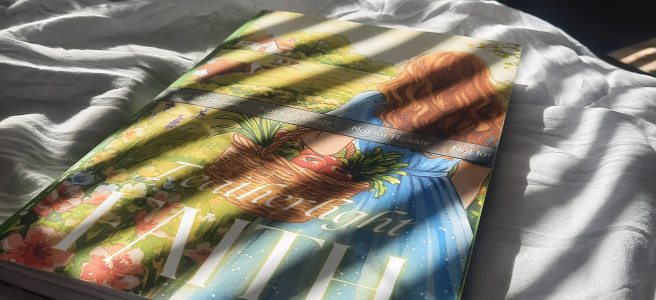
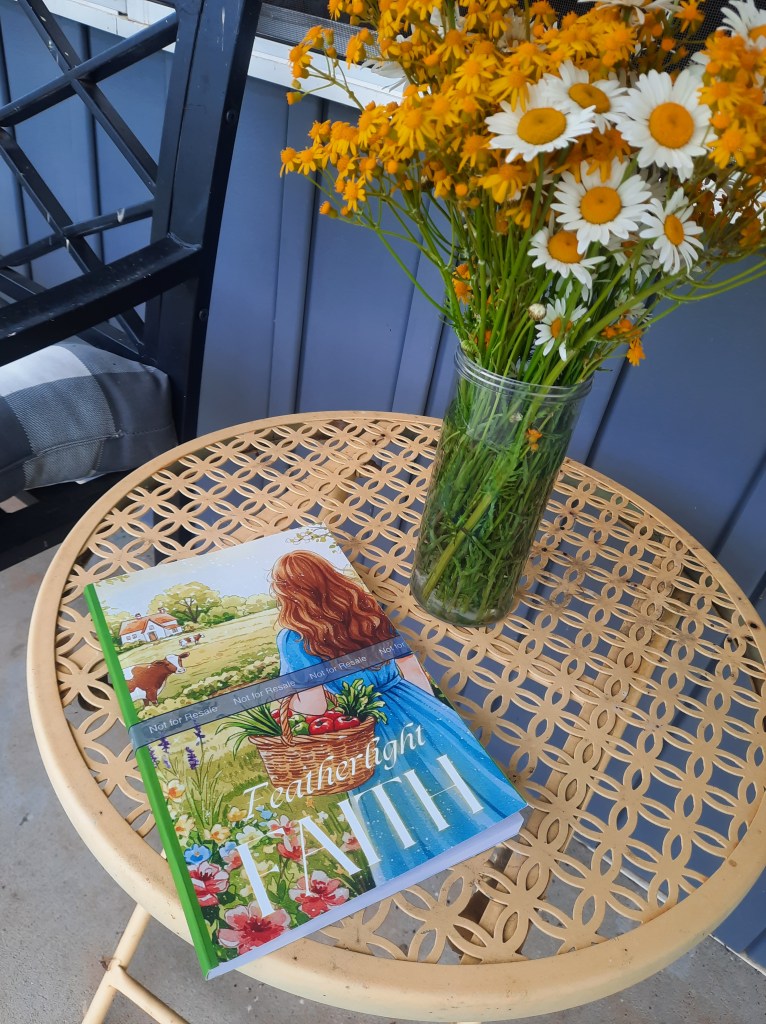
Oh and my book is live now!

A note- the title was changed in the second to last draft. From The Cottage, Christ, & Me, to Featherlight Faith.

Alright! That’s it! Thanks for reading!

Worldbuilding Mad Libs: Create a Fantasy Kingdom on the Spot

🏰 Create a Kingdom on the Spot

Welcome to the silliest way to build a fantasy kingdom: where you fill in the blanks and accidentally come up with a setting you might actually want to use.

Grab a pen, your imagination, and maybe a snack if you want to stay for awhile. You’re about to crown a ruler, start a minor rebellion, and possibly invent a highly controversial cheese.

✍️ Step 1: Fill in These Blanks

Before you scroll down, jot down the following:

  1. A color
  2. An adjective that sounds kind of insulting
  3. A made-up material (e.g., moonstone, ghostwood, breadite)
  4. A verb ending in “ing”
  5. Something you’d find in a kitchen
  6. A natural disaster
  7. A food that’s controversial
  8. A weird hobby
  9. A job title that sounds fake
  10. A very serious animal
  11. Something you’d shout in a moment of triumph
  12. A number
  13. A random bodily function

👑 Step 2: Insert into This Kingdom Description

Welcome to the Kingdom of [1]ia, a proud land known for its [2] traditions and abundant [3] deposits. The locals can often be found [4] while balancing [5] on their heads — a sacred rite passed down for generations.

The kingdom was founded shortly after the Great [6] of Year [12], when the ancient warlords of the land finally agreed on one thing: their shared love of [7]. This delicacy is now considered a national treasure, although it’s banned in all neighboring realms due to “moral reasons.”

At the heart of the capital city stands the Royal Spire, home to the ruling monarch — High [9] [10] the Third, who ascended the throne after defeating a rival in a fierce competition of [8].

Each year, citizens gather for the Grand Festival of [13], where the streets overflow with song, dance, and slightly confused livestock. The celebration ends with the ceremonial shout of “[11]!” echoing through the valley.

Come for the [3], stay for the [7], and beware the roaming bands of [10]s that guard the border with alarming enthusiasm.

🧠 Step 3: Reflect on the Chaos that has taken place on your page (In other words, Brainstorm)

Now that you’ve got your kingdom… ask yourself:

  • Could this be expanded into a full country or region?
  • What kind of people would live here?
  • Why is [7] banned in neighboring kingdoms?
  • Who would want to overthrow High [9] [10] the Third?
  • What actually happens at the Festival of [13]?

Silly beginnings can turn into rich, layered stories. Humor lowers the stakes and sparks your creativity — so let yourself go off the rails and see what sticks!

🗺️ Bonus Challenge:

Draw a quick, scribbly map of [1]ia. Label:

  • A mountain made of [3]
  • A cursed forest full of [10]s
  • A border town famous for [5]-juggling

And there you have it, friends! Feel free to share your creations in the comments and let me know if you’d like more writer mad libs! Take care!