The Winter Yuck and How to Not Rot Entirely during Winter

This is something I’m half writing for myself. Let me set the stage for you real quick.

It’s January. I’m snowed in. The Holidays are done and over with, and I am more than a little antsy. My weekend has left me bored and stagnant, as I’ve been trapped at home for far too long. While some might think this would be a WONDERFUL time to catch up on the long-dead hobbies and creative endeavors that I’ve left at the wayside of life due to busy-ness, I have found this time not so…constructive nor productive. Why, you might ask? It’s simple… I’ve got a case of Winter Yuck.

I am so so so ready for spring. It gets dark early. It’s nasty outside. When I get home from work, I just want to eat, watch tv, and hit the hay early. I am anything but motivated. Perhaps it’s the perpetually gray sky? Or perhaps it’s the inability to go outside for a refreshing walk, but regardless, the result is the same. I am doing a whole lot of nothing.

So, I’ve written a little guide for myself to follow as spring slowly creeps ever closer. Maybe you need it too?

First, bullet point number one….

Don’t go to bed immediately. Try to stay up and enjoy something. This could be reading a mere 5 pages of a book or popping popcorn and watching a new movie. Just do something that you can tell your friends that you did with your evening. One redeeming thing is all it takes. Then you can go to bed.

Bullet point number two is in regards to your writing…

If you find yourself absolutely hollow creatively, maybe put a pause on the self-induced guilt trip, and try consuming writing instead. This still contributes to your growth as a writer. It is so so important that you read and engage with other creative voices, and it’s a little more pasisve and requires less energy than creating the work itself.

My other tip in regards to your winter writing slump, is to do something ELSE creative. Not writing related but still creative. Writing is creativity + words. When you read, you’re still developing the WORDS part of that equation. When you’re doing another creative hobby, you’re developing the CREATIVE part. Still progress, friends. It still counts.

Bullet point number three…

If it’s miserable outside, try to get up and move around your house. You can do this by cleaning or taking a quick shower. Sometimes this is all it takes to get you out of hibernation mode. If not, then at least you or your house its clean. Time to go to bed,

And Finally…

Be easy on yourself. Winter sucks. I get it. It’s my least favorite season, too. I’m a plant at heart. I need sunshine. But spring will come again soon, just hang in there.

It’s at the point that I’m going to insert a master list of winter-friendly creative tasks, divided into low-energy to medium-energy. Maybe give it a skim if you find yourself at a loss for what to do with your life right now. Some of these are even winter-unique so perhaps you can find a bright spot in all this gray!

Please note, I tried to make these activities have a bit more of a whimsical spin. You can scroll Pinterest for your more generic “learn to crochet” type activities. I am by no means going to preach the benefits of scrapbooking either. Here are just some out-of-left-field but fun things you can do to try and prevent yourself from succumbing to winter-induced brain rot. Take what you want and leave what you want.

Low-Energy (Bed, Couch, or Chair by a Window Activities)

  • Re-title your life as if it were a novel
    Write five alternative titles. Bonus points if one sounds vaguely Victorian or mildly tragic. The modern version of this is title your life like it’s a show and divide your life into “seasons”. Who would the characters be?
  • Make a “things that felt important this winter” inventory
    Include tiny things: a mug, a song you played on repeat, a phrase you overheard. This can help you try and find some creative meaning in the midst of a not-so-fun or colorful season.
  • Annotate your own memories
    Pick one small memory and write footnotes explaining what you didn’t realize at the time. Kind of like journaling but shorter and more focused.
  • Create a winter alter ego
    Give her a name, a coat, a favorite hot drink, and one quirky habit or interest.
  • Transcribe comfort
    Handwrite a poem, passage of scripture, recipe, or letter that steadies you. No analysis. Just copying as a means to meditate or collect.
  • Design a room you’ll never have
    Describe it in words only. Light, textures, where the chair sits. No Pinterest allowed.
  • Write extremely short letters you will never send
    To: the moon, your childhood bedroom, the version of you who thought 2020 was the year (oof. Sorry, girl).
  • Make a list called “Things Winter Is Good At”
    Keep it humble. Dusk. Soup. Long shadows at 4:30 pm.
  • Rename the months like an old folklore calendar
    January becomes “The Month of Locked Doors,” and so forth. You can make them cute or ominous or fantastical or something entirely different.
  • Curate a personal winter museum
    Five objects on your desk. Write one sentence about why each deserves a placard.

Low-to-Medium Energy (Tabletop, Floor, or Soft Music Required)

  • Create a survival guide for your specific winter
    Include rules like: “No big decisions after sunset” or “Always light a candle before you shower”.
  • Make a tiny ritual out of something you already do
    Tea, skincare, feeding the cat. Give it a beginning, middle, and end. Then write it down for yourself down the road. Collect these winter rituals in a book. Maybe even ask your friends if they have some of their own?
  • Rewrite a fairytale as Southern gossip or local legend
    Not a full story—just the tone and rumor version that you’d imagine your local church-going gossips reaccounting.
  • Assemble a “cold-weather soundtrack” for a fictional character
    Or even yourself. But this can also be a character development exercise.
  • Practice intentional loitering
    Sit near a window or porch and observe one thing for a little while.
  • Write a poem that never mentions winter but is clearly about winter
    Focus on restraint. Omission is the point.
  • Create a recipe that exists only in theory
    Name it. Describe when and how it would be served. You do not have to cook it.
  • Sort your photos like an archivist
    Create albums that are separated by color, adventure, life phase, or even time of day.
  • Draft a one-page “field guide”
    Examples: Field Guide to People Who Disappear in Winter, Field Guide to Indoor Light, Field Guide to Quiet Evenings.

Medium-Energy (Still Gentle, Still Cozy, But Upright)

  • Rearrange one small space like you’re preparing for a long stay
    A drawer, a shelf, a nightstand. Be prepared, yaknow?
  • Write a winter letter to yourself to read in spring
    I’d recommend to keep it observational, not aspirational. No goals. Just telling your future self how excited you are for sunshine to come back.
  • Create something meant to be used up by the season
    A candle plan, a soup rotation, a nightly reading list.
  • Host a solo “slow afternoon”
    One album, one warm drink, one creative task. No multitasking allowed.
  • Make a map of your hometown or neighborhood. Make it winter-specific if you’d like.
    This can be real or imagined. Perhaps you map all the hibernation spots of the fairies and goblins or maybe you make a map that shows you the best place to get a hot chocolate.

I hope these tips have been useful to you. Hang in there, and stay alive!
How not to be Boring

Let’s clear something up first and straight out of the gate. Please note that being “boring” has very little to do with how exciting your life looks online and everything to do with how engaged you are with your own existence. I am not at ALL talking about performative “interesting” that hounds us online. That, very honestly, could be a blog post of its own. This isn’t about appearances.

You can live in a small town, work a normal job, go to bed at a reasonable hour, and still be deeply interesting and have a remarkable personal life. Conversely, you can travel constantly, attend trendy events, and still be painfully dull if you move through life on autopilot and without engaging with those experiences.

The difference is passion (In my humble opinion at least).
And not the loud, capital-P, quit-your-job kind that also seems to be making its rounds regularly on the internet. Capital P passion is usally used to sell you lifestyle coach or course that supposedly will fix your life. I’m talking about quiet attentiveness. Curiosity. The ability to take the mundane and tilt it just enough that it becomes intentional and…well, interesting!

If you want to not be boring, you don’t need to overhaul your life. I think the secret lies in reframing your perspective.

My authority to speak on this matter comes entirely from me having the audacity to write this and the fact that I KNOW I’ve been boring in certain phases of my life but interesting in others. That’s another note I guess, that is also worth mentioning here: You can become interesting if you find yourself falling into the lull of being a boring person. The vice versa can also be true. You can be interesting and then slip into monotony. Let’s not pretend these are permanent labels.

Alright! I think that’s all the disclaimers. Let’s dive into what I think makes an interesting person interesting…

The Core Rule: Care About Something (Preferably Many Things)

The most boring people I’ve met all share one trait: they don’t care. They scroll, they consume, they comment vaguely, but they don’t engage. No strong opinions. No private obsessions. No enthusiasm. OR their whole personality depends on whatever is trending that month. It doesn’t go deeper than that.

Passion is what gives life texture. You don’t have to be the best at something to love it. Nor do you have to know everything about everything. You just need to care.

Care deeply about your morning coffee and the perfect way to fix it.
Care about how your body feels when you walk, and how nice those birds are singing today, and how red that mailbox is.
Care about learning one strange, specific thing really well.

Boredom is less about what you do and more about how absent you are while doing it.

Moving Around: Make It a Game, Not a Chore

Movement is one of the easiest places to inject interest, because it already asks something of you physically. The trick is to stop framing it as productivity.

Instead of:

  • “I need to go on a run.”

Try:

  • “I won’t stop running until I’ve spotted ten blue things.”
  • “I’m walking until I notice three houses with weird door knockers.”
  • “I’m stretching while imagining I’m a medieval scribe trying not to get scoliosis.”
  • “I’m running to collect five weird rocks. I will not stop until I have collected five weird rocks.”

Movement becomes interesting when it has a focus, not a finish line.

You don’t need a fitness goal (though those are totally fine too!). You probably just need something to notice. Something to collect. Something slightly ridiculous. Everything doesn’t have to be a to-do list, including movement. I think, in part, this is why it was so easy to move around as a kid. I wasn’t “going for a walk to walk off my dinner”. I was going on an adventure. I was going to collect dragon eggs (which involved finding the roundest rocks in the area and then bringing them home and painting them a variety of colors). Try and tap into the whimsy.

Mind-Building Activities: Give Your Brain Something to Chew On

A bored mind is usually an underfed one.

This doesn’t mean you need to be constantly “learning” in a grindset way. It means you should regularly do things that require sustained attention and mild effort.

Examples:

  • Reading books that challenge your worldview or introduce unfamiliar ideas.
  • Listening to long-form podcasts instead of endless short clips.
  • Memorizing poetry, facts, or historical oddities for no reason other than delight.
  • Thinking deeply about one question and letting it bother you.
  • Oh! And write down what you discover. What’s the point if you don’t retain anything or can’t look back on it?

If all your thoughts are borrowed from the internet, you will sound like the internet. And the internet is, frankly, exhausting and irksome at times. It’s also ever-changing and ever enraged. You need to ground yourself in something that isn’t in a screen.

Life Skills: Competence Is Interesting

There is something deeply un-boring about a person who knows how to do things. And helpful. Dear Goodness, so helpful. Your friends will thank you.

Learn how to:

  • Cook one meal really well.
  • Sew a button.
  • Fix something small instead of replacing it.
  • Write a clear email.
  • Host people comfortably.

Life skills ground you in the physical world. They give you stories as well as some confidence. They make you less dependent on convenience, which automatically makes you more interesting. In fact, I would go as far to say that competence is downright attractive. Curiosity about competence is even better. Don’t be a damsel in your own life, waiting for people to save you from whatever “dragon” crosses your path. While I give the internet a lot of crap, I do think it is amazing for cracking down on lame excuses to not learn how to do something.

Hobbies: Be Bad at Something on Purpose

You don’t need a monetizable hobby. You need a hobby that absorbs you. The internet will try to tell you that hobbies and interests are “cringe” (Not always, but I’ve seen it). Try, friend! You don’t have broadcast it. Just try the thing and feel good inside.

  • Paint badly.
  • Play guitar poorly.
  • Dance badly.
  • Garden with reckless optimism.
  • Collect something niche and inexplicable.

Hobbies are where passion is allowed to exist without justification. They remind you that joy doesn’t need an audience. And, sometimes, eventually, if you stick with something long enough, you might even get good???

If you can talk excitedly about something no one else cares about, congratulations. You’re not boring. You’re doing something right.

The Necessities (Yes, These Are Non-Negotiable)

Read

You simply cannot be interesting if you don’t read.

Reading gives you language and Perspective. It introduces you to thoughts you didn’t know you could have. There is not escaping its importance.

Read fiction. Read essays. Read things that annoy you a little. Read slowly. Read often. Read magazines. Read articles. (Maybe take a break from reading tweets, though).

Journal

Not because it’s aesthetic and definitely not because it’s trendy. Do it because if you don’t record your life, it might disappear from your memory.

Journaling turns experiences into a narrative. It helps you notice patterns and preserves the small, strange moments that would otherwise evaporate into a fine mist that is gone before you even realize.

Interesting people remember their lives (or most of it anyway). Journaling helps with that.

Get Off Your Phone (Sometimes)

Your phone is a boredom amplifier masquerading as entertainment.

Being constantly online flattens experience and trains your brain to be in a million places at once, but NEVER the present. Everything starts to feel the same. You stop noticing where you are because your attention is always elsewhere.

Boredom, ironically, is often the doorway to creativity. Put the phone down long enough to let your mind wander. Something will eventually happen. A spark will replace that boredom eventually, but you have to let it happen. You’re also training your brain to be lazy and never come up with ideas on its own. This is why our first instinct when we’re bored or uncomfortable is to seek solace and direction from our devices.

Final Thought: Pay Attention

Not being boring is not about doing more. It’s about noticing more. Build a life you are actively paying attention to, and boredom won’t stand a chance.

Passion is being present. That is the takeaway here, I think.

But Idk, man. These are just my opinions. It’s your life.

The “Don’t Save the Sticker” Theory: There’ll never be a perfect time for anything

This concept is not novel, but I was thinking about it in specific terms the other day. When you were a kid, did you have save stickers to wait for the perfect time and perfect surface to use them on? But, surprise, surprise, that perfect moment never came? Circumstances were never quite right enough.

I logically know that life is imperfect by nature and most things are hard to begin but the seriousness of decision paralysis hit me in a special way when I considered this childhood lens. Those stickers I hoarded? I have no CLUE where they are now. The window for using them ended at some point, unbeknownst to me. A theory very similar to this one that I’ve dubbed the “don’t save the sticker” theory (so official sounding, I’m really breaking new ground over here) is the Fig Tree analogy. The idea is that in life, you are presented with a branch of figs which represent opportunities. These figs tend to serve as a metaphor for different careers and life paths one could pursue BUT you only have so much time to choose your figs as they will eventually rot. You have to choose one or you essentially choose none.

This theory is a bit hyper-focused in career paths and “roles” one could play in life so, to a degree, I disagree with it. I think you can be a successful artist who is also a horse-back rider. An accountant can go home and write novels. We are limited by time, yes, but I don’t think it’s quite so dire that we can only choose one singular fig. I think we can be many things in life and it’s never too late to try pivoting.

That’s why I like the concept of the “Don’t save the sticker”. It really emphasizes simply taking what opportunities you can, even if they’re not what you perceive as “perfect” circumstances. This is theory is in line with the saying of “do it tired” or “do it scared”. Just do it. (Oh look, I’m Nike now).

I think the real tragedy of saving the sticker isn’t that we might use it “wrong,” but that we quietly accept inaction as neutrality when it’s actually a choice. Not choosing is still choosing. I have to remember that not making a decision is often me choosing comfort, familiarity, or the illusion that I’ll be more ready later. And later is SUCH a slippery concept. It feels infinite right up until it isn’t.

Maybe the goal isn’t to use every sticker wisely, but to use them at all. To slap them onto notebooks that get scuffed, water bottles that eventually crack, or moments that aren’t Instagram-worthy but are real and lived-in. A sticker on a scratched surface still did its job: it existed.

I don’t want a life where everything stays pristine because I was too afraid to commit. Let things be temporary, flawed, and unfinished if that’s the cost of letting them exist at all.

After all, unused stickers don’t become more valuable with time. They just disappear.

TikTok is Bad for your Writing

And in other news, water is wet!

Please excuse the obvious titling. In truth, it’s not just TikTok specifically, though, that has been the newest catalyst for this problem I’m experiencing regarding social media and its relationship to the creative process. You might be wondering: what problem exactly am I referring to? What is there to be said on this topic that hasn’t already been reiterated numerous times online? Social media is distracting and, therefore, we become too distracted to create. Duh. We all know this.

And yes, this much is true. Social media is horrible for our attention spans, but I’m going to take a break from railing against this specific issue and focus on another one that I have personally experienced this month. This is the issue of inspiration overload and the resulting creative paralysis that ensues.

I love a good Pinterest scroll. This was my first social media of choice as a teen. I felt like it helped me get started on a project by getting my brain churning with endless inspiration. It had it all! Writing prompts, concept art, writing playlists, tips, life hacks—everything!!!

For the most part, I walked away from my Pinterest scrolls feeling positive at this time. I’d scroll with a specific goal in mind, further develop an idea, pin a few pins (or even create a new board for this one idea), and then walk away within 10–15 minutes. Done!

I don’t know where I went wrong… well, I have a guess, so let’s discuss.

There came a point where my social media habits became less orderly. As an adult, school took up less time, I got on additional social media, and simultaneously, those platforms became more attention-grabbing and endless. I remember a time when you could scroll Instagram and it would eventually give you a message like, “That’s it! You’ve seen everything new that there is to see! Now go do something else!”

It definitely no longer does this.

You can scroll and scroll and scroll. This is true of every social media platform right now.
“It’s for inspiration!” I’d say. After all, it was writing-related content that I was consuming. After a point, however (whether due to the nature of the content or the sheer amount of it), I found it very easy to slip into the role of consumer as opposed to creator. Ideally, you should be able to do both, but that does require a certain level of balance that feels nearly impossible to obtain. What is that magic amount of time to scroll BookTok or Pinterest concept art before the very practice itself becomes a creativity-eating monster?

What I found was that after consuming copious amounts of writing content, I was hit with this intense feeling of creative paralysis. I recalled the gazillions of writing tips and do’s and don’ts. I recalled all that I should be doing. Show, don’t tell. Use metaphors. Don’t use metaphors. Use them sparingly. Adverbs are evil. Adjectives are evil. Passive voice is okay. Passive voice is evil. Develop your world entirely before writing. It will develop as you write, and then you have to rewrite it all. Put your character development above worldbuilding. Worldbuilding is key. And blah, blah, blah, blah.

I can’t write and I suck. That’s the conclusion of today’s writing session.

You see, we weren’t made to have this many voices speaking into our lives, much less our creative process.

At some point, inspiration stops being fuel and starts being noise. And while social media loves to market itself as a wellspring of creativity, it rarely tells us when to stop drinking. Creativity, at least for me, doesn’t thrive in a crowded room full of opinions shouting over one another. It needs quiet. It needs boredom. It needs the uncomfortable stretch of sitting with an idea long enough for it to become something mine.

So maybe the solution isn’t cutting out inspiration entirely, but treating it with a little more intention and a lot more restraint. Fewer voices. Fewer rules. More trust. Because the work doesn’t happen in the scroll. It happens when you finally close the app, sit down, and let yourself write badly, imperfectly, and freely again.

So happy late new year! Let’s make stuff again and give it a rest. The mantra I want to embody this year is Less is more. No more drinking out of a fire hose. Let’s try to think of it more as taking a sip from a well. Slow and steady.

What Time of Day Should I Write?

Finding My Writing Rhythm: What Time of Day Works Best?

I’ve spent a lot of time (maybe too much!) figuring out the best time of day for me to write. It turns out, it’s a bit of a Goldilocks situation: not too early, not too late, but just right…

Let me explain.

Mornings? Not for me.
I admire the people who can spring out of bed, brew a strong cup of coffee, and dive straight into creative flow. But I am not one of those people. Before 7am, my brain feels like it’s running on fumes. I can barely make sense of my to-do list, let alone string together creative sentences. Morning writing is a no-go. I must wait until I am coherent.

Afternoons are appealing… but tricky.
There’s something lovely about the afternoon: the day has settled in, you’re warmed up mentally, and it feels like a natural pause point. But if you work a regular job, afternoon writing is basically impossible. Unless you’re on a break or you have an unusual schedule, it’s hard to carve out that time consistently. Afternoons are awesome but ENTIRELY unrealistic.

Nights are magical… but a slippery slope for sure.
I will say, writing at night has a certain charm. There’s this quiet energy in the evening hours, when the world slows down and distractions fade. But wow, does time fly. I’ve sat down to write at 9pm, blinked, and suddenly it’s midnight. If I’m not careful, I end up sacrificing sleep in the name of creativity (not ideal for someone who needs to be functional the next day and rather early I might add).

So what works best? Right after work.
For me, the sweet spot is around 6pm. I like spending the day letting ideas simmer in the back of my mind while I’m doing other things like going about my job or doing chores. Then, when I get home, I’m ready to go. It’s like my brain has been preheating all day, and by the time I sit down to write, everything’s at the right temperature. I still have enough energy, but the workday is done and I can shift into my creative zone.

Of course, everyone’s rhythm is different. Some people thrive in the early hours, others love the late-night quiet. The trick is to experiment and pay attention to when you feel most creative and not just when you think you should be writing. For me, writing after work feels natural and sustainable, especially with a full-time job. Maybe it will for you, too.

What’s your favorite time of day to write? I’d love to hear!

Aesthete Blogging Award: My first award!!

Hello, everyone! Hope you are doing well this fine morning (or whatever time you happen to be reading this)! I have joyous news! I have been tagged for my first award! It is known as the Aesthete Blogging Award which is described best by the creator, Asmita.

“This award is to honor every creative person, irrespective of their number of followers and views. Because, as long as you create, that is all that matters. This award is for those bloggers who put an insane amount of thought in each of their posts and for those who spread creativity like wildfire! Just wow!”

Many thanks to Devangi over at Just Penning Down My Thoughts for tagging me! Go check out her blog and send her some love and support as she has some real interesting stuff over there that may interest you readers!

So, without further ado, onto the tag!

The Rules:

  • Use the official logo/graphic of the award and display it on your blog.
  • List the rules.
  • Show some love to the one who nominated you!
  • Mention the creator (Asmita@ the Fictional Journal) and link it back to the original post.
  • Tell me a something about this world that you admire.
  • What is your favourite form of creativity?
  • Nominate 7 lovely people and notify them by commenting on their posts; spread some love!
  • Ask your nominees 4 questions.
  • Share something you created. (can be anything!)
  • And lastly, just so you know: I LOVE YOUR CREATIONS!

What I Admire about this World

As a sort of cynic, I think I sometimes spend too much time looking at the flaws of the world so I think this is a lovely question to ponder. I really do love the kindness and gentleness you can find in the little corners of this planet where you least expect it. Despite this world feeling difficult and torn apart in so many ways, don’t let that make you believe that there isn’t some good to be find. There are still good people. There are still honest people. There are still kind people.

“I wish it need not have happened in my time,” said Frodo.

“So do I,” said Gandalf, “and so do all who live to see such times. But that is not for them to decide. All we have to decide is what to do with the time that is given us. There are other forces at work in this world, Frodo, besides that of evil.”

Oh, did I sneak another Tolkien quote into one of my posts? Hmm, well, anyways-

What my favorite form of Creativity is

100% writing. Although I love to draw, paint, and play guitar every now and then, I think writing reigns supreme in my mental list of favorite creative forms. I love the images we can paint with words and the various themes and ideas we can convey through little symbols strung together in a specific order. It is a very fascinating concept.

Devangi’s Questions

  • What incredibly strong opinion do you have that is completely unimportant in the grand scheme of things?

That sweet tea isn’t that great and that you can be pretty southern and still hate the stuff. I’ve lived in the Southern part of the US my entire life and I have never understood what people like about it?? It’s just sort of gross and has a very tangy taste.

  • What’s on your bucket list this year?

Quite a few things are on the bucket list for this year, but I one of them is to see the Ocean for the first time in my life. I’ve somehow made it to my twenties and have never walked on a beach before. This fact has made me quite sad but this year I have had an opportunity that will result in me finally laying eyes on the Ocean.

  • What’s the last book/activity you gave up on and stopped reading/doing? Why?

I could not finish the Star Wars Solo movie. I am a big Star Wars fan having grown up in a house hold where we watched the originals on a pretty regular basis. I have a fond memory of The Prequels even though they’re pretty corny. I am, however, not that big of a fan of the Disney releases with the exception of Rogue One and the shows that are coming out on Disney+.

I wanted to like Solo, but no one beats Harrison Ford’s portrayal, not to mention after Han and Chewbacca meet, there felt to be very little reason to keep watching. I got less than half way through before realizing I really didn’t care or could predict what would happen next. I hypothesized that the girl would die because she wasn’t in the following movies and we all know that Han ends up with his ship and he and Chewie go on to be smugglers. There aren’t really many stakes because you kind of know what’s already going to happen if you’ve seen all the other releases up to this point in the franchise.

Wow. That was a long, drawn out mini movie review. Kind of had a geek moment there for a second, sorry.

  • What was the best compliment you’ve ever received?

Any compliments concerning my writing or skill that I’ve worked to hone. Those tend to stick with me because it feels to gratifying to be recognized for something you love but also work hard at.

Creations I’d Like to Share

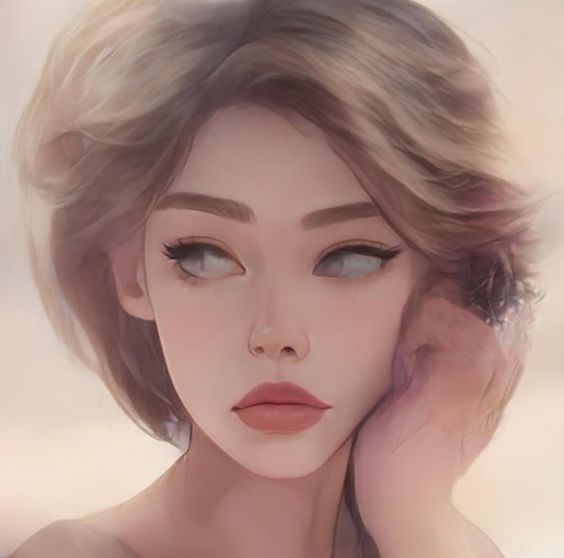
A Digital Art Piece I did a few weeks ago on my ipad.

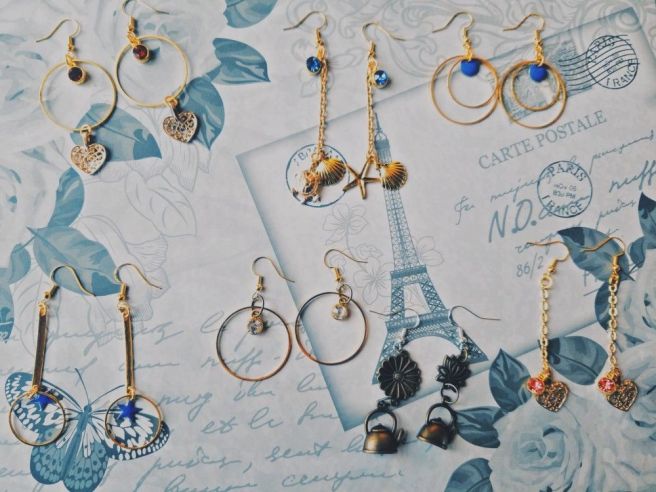
An Earring Set I made this week!

My Questions

  1. What’s your favorite work of art you’ve ever made?
  2. What’s your spirit animal?
  3. What’s a bad habit you have?
  4. Do you tend to procrastinate? Why or why not?

Now it’s time to tag people! I tag…

  1. The Texas Lass
  2. Suhani
  3. Rain Alchemist
  4. Stara
  5. Megan
  6. Wryter Worldsworst
  7. An Ordinary Pen

Have a wonderful day, lovelies!