Alternatives to AI (In Writing that is)

Hey, everyone! Hope you’re doing well and this winter is treating you kindly. Just thought I’d hop on here and make a quick post about something that has been on my mind recently…

We’ve talked to AI a bit on this blog. We’ve mostly stayed away from the environmental impact (that gets a little too complicated for me) and have mostly just discussed the concerns with the increase of AI “slop” that is flooding the writing world. AI books are now prevalent on Amazon and are overshadowing real writers in an already oversaturated market, where it’s challenging to make any money, let alone earn a living. It’s concerning, you all know it.

But another concern on the horizon is its impact on your brain and creativity. In short, it is making us mentally LAZY. Can you imagine that? Science shows that creativity (or more accurately, our brains) arer muscle that needs to be worked out periodically in order to stay sharp. What do you think happens to this muscle when the only writing you do is typing in a badly worded prompt into chat gpt?

AI is becoming a crutch for modern writers. Whether you believe the statement that “AI is destroying the environment” or you’re more open-minded to the robots taking over (A smarter grammarly would be nice…), this effect shouldn’t be ignored or pushed aside. This is a very real concern that doesn’t have to be overly political in any sense. Our brains can get lazy. If we don’t use them enough, they turn to mush. Simple.

So what’s the alternative then? In short, your brain, but that wouldn’t make for a very short blog post if I just stopped at that. I’ve compiled a list below of various ways you can come up with your own ideas organically, without involving the use of any chatbot. Protect your brain, dear writer! It’s your greatest resource. Use it.

1. The Word Jar Method
Write nouns, verbs, adjectives, settings, emotions, and random objects on slips of paper. Toss them in a jar (or several jars, if you’re feeling Type A). Pull 3–5 at random and make it work.
Example pull: porch swing, jealousy, February, apology, river.
Your brain now has a job. Let it complain and then get to work.

2. The Frankenprompt
Create columns on a page:

  • Character archetypes
  • Locations
  • Conflicts
  • Objects
  • Constraints (must take place at night, must include a lie, must end unresolved)

Close your eyes, point at one from each column, and stitch them together. No optimizing. No rerolling until it’s “good.”

3. Alphabet Abuse
Pick a random letter and force yourself to generate:

  • 10 nouns
  • 10 verbs
  • 10 adjectives
    All starting with that letter.
    Then write something using at least five of them. This is shockingly effective and slightly infuriating, which means it’s working.

4. The Bad Idea Generator
Set a timer for five minutes and intentionally come up with the worst possible story ideas. Lean into cliché. Lean into melodrama. Lean into nonsense.
Then circle one thing in the list that secretly has potential. That’s usually where the gold is hiding.

5. Sentence Autopsy
Open a book you love. Pick one random sentence.
Now:

  • Rewrite it in a different genre
  • Rewrite it from another POV
  • Rewrite it with the emotional tone flipped
    You’re not stealing. You’re studying how sentences breathe.

6. The Overheard Thought Exercise
Write down fragments of thoughts you have throughout the day. Not polished ideas. Just scraps. String them together into a coherent tale.

7. Constraint Dice
Assign constraints to numbers (you can use real dice, a random number generator, or scraps of paper).
Examples:

  • POV
  • Time period
  • Emotional tone
  • Length limit
  • One forbidden word
    Roll and obey. Creativity thrives when it’s boxed in.

8. The Mundane Remix
Take an ordinary task (making coffee, folding laundry, driving to work) and write about it as if it’s:

  • Sacred
  • Sinister
  • Mythic
  • Absurd
    This trains your brain to reframe, which is one of the most valuable creative skills there is.

9. Sensory Isolation Prompts
Write a scene where you remove one sense entirely.

  • No sight
  • No sound
  • No touch
    Your brain has to compensate, and in doing so, it stretches. Conversely, you can write a story only employing the use of a SINGLE sense.

10. The Question Pile
Instead of prompts, write questions.

  • What does this character want but refuse to admit?
  • What would ruin this ending?
  • What’s the most inconvenient truth here?
    Questions keep your brain engaged longer than answers ever will.

11. Use a generator Website

Springhole.net, fantasy name generator.com, etc. They don’t use AI, they just randomly jumble stuff up. Nothing complicated. OR you can visit my generators tab on this very blog. 😉

Ok, rapid fire round…

  • Tarot Pull Prompt
    Pull one card for character, one for conflict, one for outcome. Ignore the “official” meanings if you want. Let the imagery do the heavy lifting.
  • Pinterest Roulette
    Search one vague word like “world,” “winter,” “kitchen,” or “blue.” Use the first image that appears as your setting. No scrolling. No refining.
  • Bookstore Spine Stare
    Stand in front of a shelf, read titles only, and mash two together into a new premise. Bonus points if they absolutely shouldn’t coexist.
  • Dictionary Dare
    Open a dictionary to a random page. First word is the theme. Second word is the tone. Third word must appear verbatim in the piece.
  • Song Title Alchemy
    Shuffle a playlist, pause randomly, and use the song title as your opening line or emotional arc. Do not listen to the song fully. Fill in the blanks where you lack knowledge.
  • Weather Report Writing
    Write a scene that emotionally mirrors today’s weather. Not literally. Vibes only.
  • Object With a Past
    Pick up the nearest object and write its backstory like it has lived three different lives before you.
  • First Line Theft (Ethically)
    Take the first line of a public-domain book and write a completely unrelated story from it.
  • Constraint Countdown
    Give yourself ten minutes, 250 words, and one absolute rule (no adjectives, no dialogue, no first person). Stop when the timer ends.
  • Google Autocomplete Confessional
    Start typing “why do I” or “I’m afraid of” into Google and use the suggestions as poem or essay titles.

The “Don’t Save the Sticker” Theory: There’ll never be a perfect time for anything

This concept is not novel, but I was thinking about it in specific terms the other day. When you were a kid, did you have save stickers to wait for the perfect time and perfect surface to use them on? But, surprise, surprise, that perfect moment never came? Circumstances were never quite right enough.

I logically know that life is imperfect by nature and most things are hard to begin but the seriousness of decision paralysis hit me in a special way when I considered this childhood lens. Those stickers I hoarded? I have no CLUE where they are now. The window for using them ended at some point, unbeknownst to me. A theory very similar to this one that I’ve dubbed the “don’t save the sticker” theory (so official sounding, I’m really breaking new ground over here) is the Fig Tree analogy. The idea is that in life, you are presented with a branch of figs which represent opportunities. These figs tend to serve as a metaphor for different careers and life paths one could pursue BUT you only have so much time to choose your figs as they will eventually rot. You have to choose one or you essentially choose none.

This theory is a bit hyper-focused in career paths and “roles” one could play in life so, to a degree, I disagree with it. I think you can be a successful artist who is also a horse-back rider. An accountant can go home and write novels. We are limited by time, yes, but I don’t think it’s quite so dire that we can only choose one singular fig. I think we can be many things in life and it’s never too late to try pivoting.

That’s why I like the concept of the “Don’t save the sticker”. It really emphasizes simply taking what opportunities you can, even if they’re not what you perceive as “perfect” circumstances. This is theory is in line with the saying of “do it tired” or “do it scared”. Just do it. (Oh look, I’m Nike now).

I think the real tragedy of saving the sticker isn’t that we might use it “wrong,” but that we quietly accept inaction as neutrality when it’s actually a choice. Not choosing is still choosing. I have to remember that not making a decision is often me choosing comfort, familiarity, or the illusion that I’ll be more ready later. And later is SUCH a slippery concept. It feels infinite right up until it isn’t.

Maybe the goal isn’t to use every sticker wisely, but to use them at all. To slap them onto notebooks that get scuffed, water bottles that eventually crack, or moments that aren’t Instagram-worthy but are real and lived-in. A sticker on a scratched surface still did its job: it existed.

I don’t want a life where everything stays pristine because I was too afraid to commit. Let things be temporary, flawed, and unfinished if that’s the cost of letting them exist at all.

After all, unused stickers don’t become more valuable with time. They just disappear.

That time I started writing a Self-Help Book

Did you guys know that I started a self-help book at one point in time? It sounds goofy, but it was on a topic I had become passionate about as it personally affected me. This, of course, as this title suggests, was the art of living alone. Guys, when I tell you I struggled

I grew up a fairly introverted person (at least I thought anyways). I liked playing alone. I didn’t have tons of friends in middle school, which generally didn’t bother me too much. I liked having my own space and keeping it nice and neat. I thought moving out would be a cinch.

After a brief stint with a roommate, I was living alone. Which was amazing! Until it wasn’t. And then I started writing this book and got 5 chapters in before abandoning it. I was actually revisiting it recently as I was cleaning some files off my computer and started rereading. While there are already some edits I think I would make (gosh, I was melodramatic at this time), I did enjoy the trip back in time especialy now that I’m married and definitely NOT living alone. So I thought I’d share the first chapter with you here. Let me know what you guys think and if I should bother resurrecting this long-dead project! So here we have it! Chapter one of…

How to not go Crazy (And other notes on living alone)

Introduction

The windchime outside my window is a reminder that there’s a world beyond these four walls, but some days, it’s hard to remember that I’m part of it. Inside my apartment, the air hangs heavy with the kind of silence that amplifies every creak, every hum, and every thought with nowhere else to go. The fridge drones away in the kitchen. The coffee machine sighs and grumbles like a mechanical beast awakening from slumber as my coffee drips into the mug. This is my life as a woman in her 20s, living alone.

In my newly found sanctuary, I find myself night after night, wrestling with thoughts that only seem to show their ugly face when the house is still. They whisper about the coming future, taunting me with the “what ifs” that I am far too familiar with. The apartment that is filled with the laughter of friends and family during the day sighs with the weight of my loneliness when everyone eventually parts ways.

It was on one of these nights that I started a list. I can see it clearly: me, lying in bed, the phone’s glow illuminating the darkened room, fingers poised over the keyboard. The title was simple and direct. I just want to be good at being Alone. It was a declaration of intent, a manifesto, a silent shout into the void that was my apartment. I’d uttered it out loud many times, often to myself, sometimes to close friends, my mother, and my sisters. Truth be told, they’re probably tired of hearing it. I feared that if I didn’t get better at this, they’d stop asking me how I was.

But they didn’t, and they haven’t. They still care. They still ask. They still listen. It’s a testament to the most important lesson I’ve learned in my solitary living: I am alone, but I am also not alone. Nights may be long, but, as corny as it sounds, morning always comes.

Chapter 1: Learn to Cook for One

I began jotting.

Learn to Cook. Have a Crock Pot. Collect Recipes.

Then underneath:

This is not only a practical skill to learn but a point I want to prove. People often equate companionship with a shared meal. I just want to show myself that I can be satisfied. I want to show myself that I can take care of her.

Cooking for one is an art form. It is one that requires patience, foresight and even a bit of creativity. It’s about finding joy in those little victories. The comforting warmth of a meal prepared with care as well as the knowledge that you’ve provided for yourself. It’s not just about feeding your body; it’s also about feeding your soul. It’s about telling oneself that you deserve to invest time into your meals even if they’re just for you and you alone.

In the beginning, it was hard. I found myself standing in the grocery store, staring at the aisles of food that seemed designed for families or couples. Bulk packaging, family-sized portions were my biggest opposition at first. Nothing seemed to fit my life. But I quickly realized that cooking for one is about more than just cutting recipes in half. It’s about learning to see the kitchen as a place of possibility rather than yet another area of life that highlights my loneliness.

The first dish I mastered was a simple one—beef stew. There is something deeply comforting about a bowl of homemade stew, especially on those days when the world feels too big and scary. I made it in my trusty crock pot, the slow cooker that has become my closest ally in this solo culinary journey. The process was meditative, and I loved every bit of it from The slow chopping of vegetables, to the seasoning of the broth, to the slow simmering that filled my apartment. It made my humble abode actually feel like a home.

As I stirred the stew, I realized that cooking for one shouldn’t’ be a chore. It’s should be about savoring the moment, taking the time to care for yourself in a way that’s both practical and deeply loving. It should be about being present. There’s a satisfaction that comes from knowing that you can sustain yourself, that you can create something yummy (even if its only for you!)

I began to experiment more in the kitchen by trying new recipes and adapting them to fit my needs. I learned how to freeze portions for later and how to make a meal that would last for days without losing its appeal. I found joy in the ritual of cooking and in the simple pleasure of feeding myself well.

Over time, I elaborated on this list item even more.

  • See grocery shopping as a little solo adventure and not a chore.
  • Invest in good ingredients sometimes; don’t be afraid to spend a little $$$ on yourself sometimes
  • Don’t be afraid to try something new.

Cooking for one became a way to reclaim my independence and to remind myself that I am enough, just as I am. It was no longer a task to be dreaded, but a skill to be honed. It was a form of self-care that nourished not just my body, but my spirit.

And so, I encourage you to do the same. Find your favorite recipes, experiment with new ones, and most importantly, savor the experience. This is your space, your life. Take the time to make it delicious.

Have a Crock Pot.

Of all the kitchen appliances you could own, the humble crock pot might just be the most useful when living alone. At first glance, it’s easy to overlook. I historically disliked it when I lived at home. It was a bit bulky as well as a bit old-fashioned (very reminiscent of my grandmother’s kitchen). But don’t let appearances fool you. This unassuming appliance is your secret weapon in the art of solo living.

Why a crock pot? Because of its simplicity, convenience, and the power to transform basic ingredients into something that feels like coming home. When you’re living alone, time can either stretch or shrink depending on the day, and a crock pot gives you the flexibility to feed yourself without being tethered to the stove or forced to babysit a dish all day.

Imagine this: you wake up in the morning, knowing it’s going to be one of those long, exhausting days. The last thing you want to do when you get home is cook. We’ve all been there. But the good news is, with a crock pot, all you need is a few minutes of preparation. Throw in your ingredients—maybe some chicken, vegetables, broth, and spices. Then set it, and forget it, sister. As you go about your day, your meal is quietly simmering away, filling your home with the comforting aroma of something cozy and yummy. By the time you return, dinner is ready, and you’ve already put all the work in at the front end of the process and even then it wasn’t that much.

Having a crock pot isn’t just about convenience (though that is an enormous plus). It’s also about consistency. When you’re cooking for one, it’s easy to fall into the habit of eating quick, unhealthy meals or skipping dinner altogether. I know the latter was a trap I found myself falling into far too often. It came to a point where I had to tell myself that no, chips and salsa don’t count for an entire meal. My eating habits were bad and all over the place. Another plus of the crock pot is that encourages you to take the time to plan ahead as well as create meals that will carry you through the week. It’s a tool that helps you establish a routine and a rhythm in your life that grounds you when everything else feels uncertain. It helped add a certain level of dependency to my meal plan.

Next, let’s talk about versatility. Whether you’re in the mood for a rich beef stew, tender pulled pork, or even a comforting mac and cheese, the crock pot can do it all. It’s particularly great for making meals in batches, which means you can cook it once and eat multiple meals. This is a lifesaver for those days when you simply don’t have the energy to prepare anything but still want something home-cooked. It isn’t just limited to soups and stews.

Another benefit of using a crock pot is that it’s incredibly forgiving. Unlike other cooking methods that require precise timing and constant attention, the crock pot is more laid back. You can experiment with different ingredients and spices without worrying too much about getting it wrong. The long cooking process melds flavors together in a way that makes even the simplest of ingredients taste like you’ve been slaving over the stove for hours.

And let’s not forget the cleanup. As you may be all too aware of, cleaning up is up to you and you alone. The last thing you want is a sink full of dishes to deal with after work. With a crock pot, you can often make your entire meal in one pot, saving you both time and effort. A quick wash and rinse and it’s ready to go!

In the end, I view my crock pot as more than an appliance. It’s a companion on my journey of living alone. It is a simple but amazing tool that makes the everyday task of meal prep feel a little less daunting. Please take this as a reminder that you deserve to eat well, even if you’re the only one at the table. So, invest in a good one, and let it become a reliable, old friend.

Collect Recipes.

In learning to cook, recipes can serve as more than just instructions for making food—they can be threads that connect you to the people and places you love. When you’re standing in your kitchen, cooking a meal from a recipe handwritten by your mother, it’s as if she’s right there with you, sharing a moment that transcends the physical distance between you.

Collecting recipes isn’t just about building a repertoire of dishes; it’s about creating a personal archive of memories, stories, and connections. Each recipe you gather is a piece of your history, a way to carry the warmth of loved ones into your daily life. Your mother’s handwriting on a worn recipe card, the smudges of flour and sauce, the little notes in the margins—they all tell a story. They speak of her care, her love, and the countless meals she prepared with you in mind.

When you cook from these recipes, you’re not just feeding yourself; you’re participating in a ritual that spans generations. It’s a way of saying, “I’m here, and so are they.” In a way, your kitchen becomes a meeting place for the people who’ve shaped you, even if they’re miles away or are no longer with us.

It’s not just family recipes that carry this power either. Recipes from friends should also hold a special place in your collection. Each one is a token of friendship, a shared experience that lives on long after the meal has ended. When a friend shares their favorite recipe with you, they’re offering a piece of themselves, a gesture of affection. And when you cook that recipe, you’re reminded of the times you’ve spent together along with the bond you share.

Just think about it! How cute is it that humans not only developed unique ways to prepare their food and nutrients to please their palette but also feel a sense of identity with these aforementioned methods? We record these processes and share them with those close to us. Sharing recipes is an innately human experience so please take part of it!

Building a recipe collection is also a way to create new connections, to expand your culinary horizons. You might come across a recipe online or in a cookbook that intrigues you, something you’ve never tried before. As you experiment with it, tweak it, make it your own. Who knows? Maybe it’ll become one of your regular meals and something you can one day pass on to others.

In this way, your recipe collection becomes a living, evolving document of your life. It’s a mix of the old and the new, the familiar and the adventurous. It can become a reflection of who you’ve known and where you’ve been. I’d like to think that as I add to my growing collection of recipes, I am also collecting memories, experiences and a sense of community.

When I’m feeling particularly alone, pulling out one of these cherished recipes can be a huge comfort. It’s a way of reaching out to the people who care about me, even when they’re not physically present in my small one-bedroom apartment. The act of cooking becomes a way of reconnecting with my roots, of grounding myself in the love that surrounds me, even in the quiet moments of solitude.

So, take the time to gather these recipes, to write them down, to keep them close. Whether it’s your mother’s famous apple pie, your friend’s go-to pork recipe, or a killer casserole recipe that you discovered on your own, each one is a reminder that you are never truly alone. Allow your recipe collection to be more than just a list of meals. Let it be a physical testament of the enduring power of community and the connections that sustain us, even when we’re cooking for one.
Romanticizing being an Author over actually Writing: A Discussion of Age of Scorpius

Tiktok being in my life has brought me very little positives if I’m being real. A time suck at worst, most days, an overwhelming source of writing tips and information I can barely process at best. That being said, it did make me aware of an interesting situation that was unfolding on the booktok side of the app. I’m going to give you a quick recap if you’re not aware of what has been going down, maybe because you are spending your time actually being productive and are NOT chronically online. Sooooo…. let’s get started.

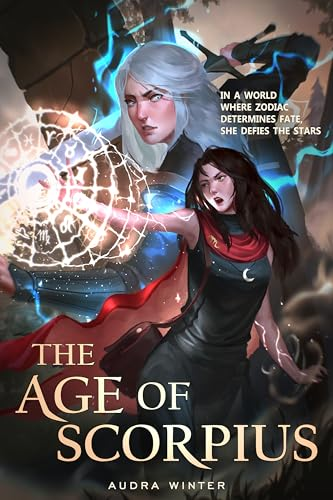
Ok. So. Our story begins with Audra Winter, an aspiring author who through her various tik toks promoting her book, amassed an audience eagerly awaiting the release of her first book, Age of Scorpius. Her world was based on a magic zodiac system that I will not be delving into at this time, but just know, people were excited. I think naturally, people love to sort stuff, especially when it comes to book factions. I think that’s one of the secrets behind the Hunger Games or Harry Potter success so perhaps the same thing was occurring here. It also didn’t hurt that she had an amazing team of artists on her side. She commissioned character artwork, helping people visualize the characters and the world and, as someone who has seen this artwork, it is GOOD.

So the stage is set. Everyone is pumped and she announces she’s going to be publishing her book. Pre-orders come flooding in. It’s a success before it has even found its way into the hands of readers. But then it did…

Age of Scorpius received overwhelmingly negative reviews for poor writing, plot, and editing, despite its viral marketing. Due to the backlash, Audra is reportedly re-editing the book for a new edition, as the first version is no longer available. Wow. Yeah.

So, what happened here exactly? Is the book that bad? According to the overwhelming majority of reviews, yes. And from the passages I have read, also yes. The book reads as a first, unedited draft. I’m not going to pretend I have not produced work similar to Audra. No one is really taking issue really with the work she has produced here, except for the fact that she chose to publish it, expected people to pay for this work, and then had a rather defensive reaction when negative reviews came flooding in. Honestly, her continual reaction to criticism seems to be single-handedly keeping the discussion surrounding this debacle going.

People got what they had paid money for, true, but as paying customers who were dissatisfied with the product, they had the right to leave their review, bad or good. End of story. I don’t think many people would disagree on this point so I’m not really interested in pursuing it further.

What I am interested in in this scenario is what Audra seems to represent here. Their social media illustrates someone very proud of their entrepreneurship and a desire to assemble a whole team and multimedia studio based around their work. All before their book actually came out, mind you. It seemed Audra had built in her head this idea of what her author status would lead to. That everyone would love her book and she would continue to see success… clearly she was getting to ahead of herself, though, because step 1 of the plan was fumbled. Step 1 being writing a good book!

Age of Scorpius read as rushed. It did not get the time, care, or attention the story truly needed. It seemed Audra’s eyes were so set on appearing to be a successful author that they forgot that in order to get there, they needed to make something worth reading. They liked the idea of having a end product more than actually writing. They lost sight of the craft. I think that’s something we can all learn from.

Social media commodifies everything. Everything gets reduced to an aesthetic and/or brand. This process can apply to our hobbies, and then suddenly we are “performing” our hobby and not actually DOING the hobby or enjoying it for that matter. In a world that is filled with terms like “hustle” and a “be your own boss” mindset, it’s easy to see any hobby as a business or a means to an end. We should not be focusing on this when it comes to true craft. Our main goal should simply be to get better. Improve our writing and maybe, at the end of it all, produce something worth other people’s time to read.

If you are interested in further deep dives on the Audra Winter controversy, I’m sure you can find plenty of videos on it on youtube (I should know, I’ve listened to multiple). Mostly the point I want to get across in this post is simple: We are all capable of this. Social media makes this mistake easier and even encourages it. Don’t give in. Get good. Get better. Slowly and steady wins the race.

TikTok is Bad for your Writing

And in other news, water is wet!

Please excuse the obvious titling. In truth, it’s not just TikTok specifically, though, that has been the newest catalyst for this problem I’m experiencing regarding social media and its relationship to the creative process. You might be wondering: what problem exactly am I referring to? What is there to be said on this topic that hasn’t already been reiterated numerous times online? Social media is distracting and, therefore, we become too distracted to create. Duh. We all know this.

And yes, this much is true. Social media is horrible for our attention spans, but I’m going to take a break from railing against this specific issue and focus on another one that I have personally experienced this month. This is the issue of inspiration overload and the resulting creative paralysis that ensues.

I love a good Pinterest scroll. This was my first social media of choice as a teen. I felt like it helped me get started on a project by getting my brain churning with endless inspiration. It had it all! Writing prompts, concept art, writing playlists, tips, life hacks—everything!!!

For the most part, I walked away from my Pinterest scrolls feeling positive at this time. I’d scroll with a specific goal in mind, further develop an idea, pin a few pins (or even create a new board for this one idea), and then walk away within 10–15 minutes. Done!

I don’t know where I went wrong… well, I have a guess, so let’s discuss.

There came a point where my social media habits became less orderly. As an adult, school took up less time, I got on additional social media, and simultaneously, those platforms became more attention-grabbing and endless. I remember a time when you could scroll Instagram and it would eventually give you a message like, “That’s it! You’ve seen everything new that there is to see! Now go do something else!”

It definitely no longer does this.

You can scroll and scroll and scroll. This is true of every social media platform right now.
“It’s for inspiration!” I’d say. After all, it was writing-related content that I was consuming. After a point, however (whether due to the nature of the content or the sheer amount of it), I found it very easy to slip into the role of consumer as opposed to creator. Ideally, you should be able to do both, but that does require a certain level of balance that feels nearly impossible to obtain. What is that magic amount of time to scroll BookTok or Pinterest concept art before the very practice itself becomes a creativity-eating monster?

What I found was that after consuming copious amounts of writing content, I was hit with this intense feeling of creative paralysis. I recalled the gazillions of writing tips and do’s and don’ts. I recalled all that I should be doing. Show, don’t tell. Use metaphors. Don’t use metaphors. Use them sparingly. Adverbs are evil. Adjectives are evil. Passive voice is okay. Passive voice is evil. Develop your world entirely before writing. It will develop as you write, and then you have to rewrite it all. Put your character development above worldbuilding. Worldbuilding is key. And blah, blah, blah, blah.

I can’t write and I suck. That’s the conclusion of today’s writing session.

You see, we weren’t made to have this many voices speaking into our lives, much less our creative process.

At some point, inspiration stops being fuel and starts being noise. And while social media loves to market itself as a wellspring of creativity, it rarely tells us when to stop drinking. Creativity, at least for me, doesn’t thrive in a crowded room full of opinions shouting over one another. It needs quiet. It needs boredom. It needs the uncomfortable stretch of sitting with an idea long enough for it to become something mine.

So maybe the solution isn’t cutting out inspiration entirely, but treating it with a little more intention and a lot more restraint. Fewer voices. Fewer rules. More trust. Because the work doesn’t happen in the scroll. It happens when you finally close the app, sit down, and let yourself write badly, imperfectly, and freely again.

So happy late new year! Let’s make stuff again and give it a rest. The mantra I want to embody this year is Less is more. No more drinking out of a fire hose. Let’s try to think of it more as taking a sip from a well. Slow and steady.

Book Trends I’m Low-Key Hating Right Now

Look, I know reading is supposed to be fun. And if you love any of these tropes, that’s great. Truly. I’m not judging you. I promise, dear, reader. I’m directing my judgment towards the industry that keeps churning out the same lukewarm leftovers and calling it gourmet fiction. I know these tropes have a place in fiction somewhere but I have a few gripes as they become widespread…

So buckle up while I gently roast some beloved tropes. If I hit your comfort trope… I’m sorry. (I’m not sorry.)

Enemies to Lovers (I’m begging… please stop)

Look, I know this trope is BookTok’s golden child. But at this point, it’s been done so much that authors are scrambling to manufacture hostility out of absolutely nothing. Or worse…they’re romanticizing behaviors that go way beyond a mild red flag.

I’m tired. I want conflict with substance, not passive-aggressive banter and emotional constipation that magically becomes love in chapter 17.

Morally Grey / Redeemed Villain (Rarely Done Well)

It’s either:

legitimately abusive people who get a redemption arc because they’re hot

or

villains who are “morally grey,” except their actions are… actually just evil?

There’s a difference between “tragic complexity” and “this man kills entire villages but has one soft scene with a kitten so we swoon.”

BookTok, release him. I’m begging.

Every Brooding Love Interest, Ever

I’ve reached my broody quota for the decade. If has “shadows behind his eyes” one more time, I’m throwing the book.

Can we get more emotionally balanced romantic leads??? Men who communicate??? Men who don’t describe themselves as a monster but just… deal with it in other ways? They don’t even always have to be healthy, I just need a break from the “I treat X main character like crap because of the tragedy.” What if he deals with his feelings by cracking jokes all time? Trying to be liked and loved by everyone? A greed for money or power because it would have prevented his personal tragedy? Idk, I’ll even take a shopping addiction at this point. Please, just change it up sometimes.

Mythological Retellings

I’ve my breaking point. Every Greek myth, Roman myth, Celtic myth, minor footnote of a myth has been rewritten, gender-swapped, aestheticized, and thrown into a love triangle. You name it, its been done but with a twist!

I used to love these, but the market is so flooded I feel like I need a snorkel. Give the myths a nap. Let them rest.

Underdeveloped Magic Systems

I’m tired of magic that’s basically:

✨ vibes ✨

and zero rules.

Magic doesn’t need to be hard sci-fi level, but if plot problems are solved with “because the magic suddenly works this time,” then I’m checking out. I need a little structure here. Develop. Elaborate. Establish. Please.

Fantasy Formula Fatigue

A much more broader complaint but the BookTok effect is real. Something goes viral, sells 10 billion copies, and suddenly we get:

the same cover,

the same “aesthetic”,

the same plot beats,

the same protagonist with “fire in her veins” or whatever.

It feels like copy-paste culture. I want fresh stories, not reskinned bestsellers.

Childhood Friends Who End Up Together

This one is personal: I just don’t care for it.

Also applies to “the leads always end up together” no matter how incompatible, underdeveloped, or generically pleasant they are. Sometimes characters should just… not date? Sometimes the chemistry isn’t there?

And that’s okay!

Let them end the book with growth, not forced romance. Ghibli has been doing this right since forever.

Tragic Backstories (Especially the Last-Minute Ones)

Not everyone needs a traumatic fifteen-page flashback to be interesting.

And oh my goodness, can we PLEASE have more stories where the characters have loving, functional families? Actual parents? Actual siblings? Families that aren’t evil, dead, or conveniently absent so the protagonist can be “strong and independent”?

There is so much narrative potential in healthy, intact families.

Imagine:

an adventuring party that’s literally a family business

siblings questing together and bickering the whole time

a fantasy inn run by a chaotic family who’ve seen every hero, villain, and bard in the realm

a family cracking a mystery together and following clues

Tell me that wouldn’t slap.

Broody Mentors

Sorry if I’m repeating myself but this combo of tropes specifically gets under my skin. If the mentor is mysterious, brooding, evasive, emotionally stunted, and 500 years old… no thank you.

There is something inherently weird about that dynamic, and adding brooding on top of it makes my skin crawl. Give me wise, funny mentors. Give me competent, happy mentors. Give me mentors who aren’t one bad day away from a villain arc.

The Chosen One (I Don’t Hate It, But Please Cool It)

It started as a classic but hasn’t evolved much since.

I’d love to see more stories about the supporting character who never becomes the star, who chooses loyalty over destiny, who stays in the background and is okay with it.

There’s beauty in being the one who helps and not the one who saves the world.

Aaaand I think that about wraps it up! I could probably go on but that’s enough venting and negativity for the day. Hopefully you got some mild enjoyment from this post or at least related a little to some of my reading icks.

Hopefully see you in the next post, reader!

The Ultimate Guide to Using AI to Write a Novel

Hello, readers! I’ve got a useful “writing” guide for you today. I realize that I’ve dedicated this blog to writing tips on how to better one’s craft, so what’s more on theme with that mission than making a guide on how to use AI to accelerate your “writing” process! No, not editing. Writing. The writing itself. You read that right. Read on to figure out how you can craft a best seller without typing a single paragraph of prose and bothering with the whole pesky process of… actually thinking up original ideas and how to effectively communicate that to your readers.

In short, in today’s rapidly accelerating digital age, writers have unprecedented tools at their disposal. With the rise of artificial intelligence, crafting an entire manuscript has never been easier. Why rely on your own voice, perspective, or hard-earned life experience when a silicon parrot can spit back something resembling prose?

Step 1: Pick Your Genre

Choose a genre you love deeply. Something personal. Something meaningful. Then immediately ignore all of that and ask AI to brainstorm “10 hot book ideas in any genre that sells.” Even try “trending book themes” if you’re at a loss for what moral you should convey in this piece. Morality should be determined by mas market, which is what your AI companion will reflect.

Step 2: Prompt the AI… a Lot.

Type a prompt. Then rewrite it fourteen times because the AI keeps misunderstanding your “tone.”
(It’s almost like… writing? Except somehow worse.)

“Make it more whimsical.”
“But also somber.”
“But also funny, but not too funny.”
“And can it sound like me even though I haven’t written a word?”

Step 3: Marvel at How Fast the Words Appear

After all, this is the age of INSTANT gratification. Our writing process should evolve to follow suit. Books should be written in the time it takes to make instant oatmeal. That’s how you get a meaningful piece of work worth sharing with the world.

Step 4: Experience the Sudden Realization That This… Is Mediocre

Realize that this work is nothing but a Frankenstein of everything that has come before it. With extra emphasis on what’s been trending in writing in the last 5 years. As everyone knows, literature peaked when Romantasy Slop started being churned out and hitting shelves. These books are all so similar, you can’t quite remember if you’ve read them before or not, but that’s alright, the indulgent story beats are comforting if not entirely formulaic and overdone… right? We read for comfort. Comfort should always be a priority in literature at all times. At. All. Times. Do NOT present anything discomforting or something that could be perceived as causing your reader to THINK.

Wait, what we’re we talking about again.

Step 5: Denial or Rewrite

You’re at a crossroads at this step. You can continue to tell yourself it’s fine and send it off for publishing anyway, or you can attempt to salvage your AI slop by editing. A lot. Please, by all means, continue editing. Realize every sentence feels like it was handcrafted by someone who has never tasted food, felt sunlight, or endured a junior-high breakup. Rewrite one paragraph. Then two.

Suddenly, you’ve rewritten the entire chapter.

Suddenly, you’re rewriting the entire book.

Congratulations! You have now done the exact amount of work you were trying to avoid in the first place. You’ll tell yourself this is simply “refining your AI-assisted draft,” but really you’ve rewritten 90% of it because your actual human brain finally woke up and said, “No. This is wrong. It sounds wrong and it’s not good.”

Step 6: Face the Existential Crisis

Ask yourself why you thought skipping the workout would get you stronger.
Then look at AI and realize it’s not your writing partner. It can’t write for you in the same way it can go on a run for you, make a call to your mother for you, can’t eat healthy for you, can’t laugh for you, can’t love people for you, can’t, can’t, can’t.

The shortcut is so tempting, and AI companies will lead you to believe that the possibilities of AI are endless. Sure, there are uses to be explored, but AI is not endless, nor should it be. AI will never write a novel for you. AI will never be a human for you. It is in its name. It is against its very nature. You are human. Writing is in YOUR nature.

Author’s note:

This is not an ultimate condemnation of AI. More so a thought exercise to make sure we’re not using it irresponsibly. I’m quite curious how AI can function as an editing assistant or writing prompt generator. But the sudden flood of AI slop books on Amazon, where not a single word was penned by a being with a brain, has me clutching my pearls a bit. Feel free to leave your thoughts in the comments below, AI in writing has become a common topic on this blog as it invades the writing world, for better worse, and I’m always happy to hear others’ thoughts on these changes.

k byeeee! Thanks for reading!

Writing When You Don’t Believe in the Ending (Yet)

When I was in middle school, I had no qualms about just opening a Word doc and shooting from the hip. Who cares, right?? I’m in middle school. But as an adult, I can tell you a completely different story…

My tune has definitely since changed. As self-doubt and perfectionism have become a more prevalent issue in my writing life, I have found that writing when you know where you’re headed is not always easy. Even when you’ve got the finish line in sight, writing WITH a plan is hard enough.

But writing when you don’t believe in the ending? When you’re not even sure if the ending is good, or if the whole thing is worth finishing? That can be a little petrifying or even a slog depending on your personality. That’s like trudging through fog with no map and hoping you’re still on track.

And honestly, that’s where a lot of us live, I think.

We start a project full of enthusiasm, picturing readers crying or laughing at the perfect final scene. Then somewhere around the middle, the plot feels flat, the characters stop talking to us, and we start wondering if we’ve just wasted months of our life. Or maybe we planned the ending and Oh Shoot! It doesn’t feel like it fits anymore! What now???

My advice?

1. Remind yourself you don’t have to believe in it to keep going

You can keep typing even while thinking, This is probably terrible. You can finish a chapter while doubting whether it will all make sense in the end. Doubt doesn’t have to be a stop sign. Resign it to some annoying background noise, and you may even forget about it. Try and loosen up a bit and actually enjoy this whole writing ordeal; otherwise, it may be worth abandoning altogether if you cannot find a shred of enjoyment in it. Just don’t be so hard on yourself, and maybe attempt to write through the doubt.

2. Lower the bar when you’re in the fog

If you can’t see the grand, perfect ending right now, fine. Just write the next part. You’re not committing to keeping it forever. You’re committing to getting it down on the freaking page. Sometimes a clunky placeholder scene is the bridge to the better one you’ll write later. This is the whole “one foot in front of the other” tactic and it works rather nice in my opinion.

3. Let the ending find you

The pressure to “have it all figured out” before you get there will kill your momentum. Sometimes you only discover the right ending after you’ve written the wrong one. Keep moving forward and trust that clarity comes from progress. I have often found that the right ending can come to me when I see how these characters have progressed and grown. I am better equipped by the end of the story to say “ahhh this feels right.”

4. Remember: every story feels worse in the middle

Middles are messy. You’re too close to see what’s working, and your brain is wired to spot flaws. But a finished draft, even a shaky one, can be fixed. An abandoned draft can’t. At the end, you can always edit but you cannot edit what isn’t even there!

5. Have something else that carries you through

Chances are, some redeeming elements about this story that made you start it in the first place, even if it wasn’t the ending itself. What are those elements? The characters? Your interesting or complex MC? The side romance you want to write? That scene in the middle where you reveal that plot twist? Maybe focus on that instead of the hazy or non-existent light at the end of the tunnel

In conclusion, I shall restate my hypothesis (just as my science teachers HAMMERED in my head): Write the next sentence. Then the next. Then keep going until you stumble right into the ending you didn’t see coming but are actually quite delighted with because it’s one that feels RIGHT.

How to Generate Stories from a Deck of Cards

🃏Deck of Tales: Turn a Deck of Cards into a Storytelling Game

Did you know your old deck of playing cards is secretly a novel generator?

If you were the kind of kid who made your barbies have backstories or invented entire kingdoms on notebook paper, Deck of Tales is for you.

This game turns a plain old 52-card deck into a whimsical, dramatic, slightly chaotic storytelling machine. It’s part improv, part intuition, and all creativity. Great for writers, kids, bored adults, or anyone who wants to escape into a made-up world for a bit. It’s a game I invented as a middle schooler, and I hope you’ll get as much joy out of it as I have. But, enough backstory, on to the rules!

🎲 What You Need:

  • A regular ol’ deck of cards
  • Your imagination (and maybe a notebook if you’re a writer-type)

🧙‍♀️ The Magic of the Cards:

Face Cards = Characters
These are your story’s stars.

  • Kings are leaders, wise or power-hungry
  • Queens are love interests, schemers, warriors, or socialites
  • Jacks are dreamers, rogues, or loyal sidekicks

Aces = Fate
These cards shake things up.

  • Ace of Spades = The villain appears
  • Ace of Hearts = Love is declared
  • Ace of Clubs = A major battle or victory
  • Ace of Diamonds = Treasure or opportunity

Number Cards = Events
Each number is a kind of scene. Each suit gives it a flavor.

Suits = Story Themes

  • ♥ = Emotions, relationships
  • ♠ = Conflict, mystery, death
  • ♣ = Action, battle, adventure
  • ♦ = Wealth, ambition, discovery

Numbers = Action Prompts

  • 2 = A new encounter
  • 3 = A choice must be made
  • 4 = A new place
  • 5 = An obstacle appears
  • 6 = Bonding or betrayal
  • 7 = A clue or item is found
  • 8 = A fight or competition
  • 9 = A shocking reveal
  • 10 = A major turning point

Jokers (if you want to get wild): Plot twist! Magic! Prophecy! Sudden death! Dream sequence!

🧩 How to Play: The 7-Card Spread

  1. Shuffle your deck.
  2. Lay out 7 cards in a row. These are your story beats:
    1. Setting
    2. Main character appears
    3. Conflict begins
    4. Rising action
    5. Twist!
    6. Climax
    7. Resolution
  3. Interpret each card using the guide above.
  4. Tie it all together into one juicy little tale.

✨ Bonus Ways to Play:

  • Genre Remix: Assign each suit a genre. (♥ = Romance, ♠ = Mystery, ♣ = Fantasy, ♦ = Sci-Fi)
  • Free Write Oracle: Pull cards one at a time and just write what comes to mind. No rules.
  • Group Mode: Each person draws a card and becomes that character. Let the drama unfold.

💡 Example:

You draw:

  • 4♦ (a new city)
  • Q♥ (a charming love interest)
  • 6♠ (a betrayal)
  • J♣ (a loyal bestie)
  • A♠ (the villain arrives!)
  • 8♣ (a showdown)
  • 10♥ (a love confession that changes everything)

Story Summary:
A traveler stumbles into a glittering city. They fall for a mysterious woman. Just when things heat up, betrayal! With help from a scrappy sidekick, they escape. But then, the villain strikes. After a fight in the rain, love wins the day. Cue dramatic music.

If you’ve ever wanted to write a novel without actually writing a novel, this might be your new favorite game.

Let me know if you try it! I’d love to hear the wild tales your deck delivers.

How to Be More Whimsical (Without Moving to a Forest)

Sometimes life feels like a never-ending list of emails and meal-prepping and remembering your passwords. And while that’s all very adult and responsible of us, sometimes you just want to inject a little whimsy into the day. I’m not talking wearing a tutu to work of course (unless you’re into that? Idk where you work). I mean tiny, delightful oddities that make life feel like a storybook for a second.

So here are some specific ways to be more whimsical. Even if you’re a practical person with bills to pay and a Google Calendar that rules your life. Aright, here we gooo:

Start carrying around one overly specific item for no clear reason.
A vintage skeleton key. A feather quill. A deck of cards. Let people ask questions. Refuse to explain. Mystery is 30% of whimsy.

Host a “mismatched tea moment” once a week.
No guests needed. Just you, an oddly paired mug and saucer, maybe a cookie, maybe a journal. Bonus points if you wear a shawl like you’re some mysterious wizard woman.

Leave secret messages for your future self.
Tuck tiny notes into your coat pocket or inside a book you’ll eventually re-read. “You are loved. Also, buy ice cream.” It’s like time-traveling kindness.

Assign your day a genre.
Decide that today is a romantic comedy, or a slow-burn fantasy epic, or a chaotic detective story. Suddenly your coffee run is a plot point, and your bus ride has cinematic tension.

Make a “soundtrack” for your day.
Start your morning with French café jazz, switch to dramatic classical when you do emails, then blast 2000s bops while you make dinner. Be the main character in the most eccentric indie film ever made.

Pick a word of the week and use it dramatically.
Not a normal word. Something like “bewildered” or “henceforth.” Use it in casual conversation.

Choose a random object as your daily talisman.
A marble, a mini pinecone, a button. Carry it like it has secret powers.

Add a secret ingredient to something you cook just because it feels magical.
Nutmeg in your eggs. Rose water in your lemonade. Not because it’s gourmet, but because it feels like a potion. Say “a dash of enchantment” while doing it.

Tell the time like you’re in a fantasy novel.
“It is the second hour past dawn, and I have yet to answer my emails.”
“It is nearly the witching hour—I must fetch snacks.”

Hide something for a stranger to find.
A doodle. A quote. A “congratulations, you found this” note under a library chair or taped to the back of a street sign. It’s low-stakes mischief. Good for the soul.

Rename your calendar events.
Instead of “Dentist Appointment,” call it “Royal Council with the Tooth Kingdom.” Instead of “Grocery Store,” try “Foraging Quest.” Suddenly errands are… thrilling?

Go out dressed like a book character.
Not full cosplay. Just a little nod. A scarf like Miss Marple. Overalls like Anne of Green Gables. Boots like a pirate.

Hopefully these will add a bit of sparkle to your routine!