My Dream Life as an Author (Manifesting This Immediately) ✨📖

Some people dream of red carpets and bestseller lists and their characters being played by Blake Lively (okay so maybe only a few people dream of this…). My dream however is that of a quiet cottage tucked deep in pine woods, where the only sounds are the clack of my typewriter, the occasional whinny of my horses (yes, I am a horse girl), and the soft rustle of the wind through the trees. The city? Overrated. New York? Absolutely not. Los Angeles? I shudder at the thought. No, I’m staying right here in the South, where the sweet tea flows (yuck. I actually can’t stand the stuff), the humidity ruins my hair, and the locals know how to tell a good story, true or not.

The Books: Where Agatha Christie Meets Dungeons & Dragons

If I could write anything, it would be the perfect blend of mystery and fantasy. Imagine a classic Agatha Christie whodunit, but with wizards, cursed artifacts, and a detective who might have to cast Detect Magic before finding the culprit. A world where taverns replace tea parlors, the suspects might be elves or shapeshifters, and the murderer was possibly a necromancer all along. Murder mysteries, but make them magical.

The Library: My Own Personal Wonderland

Now, my home wouldn’t just be any cottage. It would be the ultimate book lover’s retreat. It would be a place where the walls are lined with shelves, and books climb all the way up to the ceiling. A rolling ladder would be a necessity, obviously. There would be nooks for reading, armchairs worn in just the right way, and maybe even a secret passageway hidden behind one of the bookshelves… (see my previous post on my dream book nook.)

The Writing Process: Typewriters and Total Control

No laptops for me! Just the click-clack of a typewriter, because I’m dramatic like that. Would it be practical? Probably not. But would it make me feel like an eccentric genius author? Absolutely. My editor would have to deal with getting actual, physical pages, and I’d refuse to change my methods even as the world moved into holographic AI writing or whatever the future holds.

The Movies: Only Under My Watchful Eye 👀

Now, let’s be realistic here; eventually, someone would want to turn my books into movies. I would allow it… BUT ONLY IF I SUPERVISE. No sloppy adaptations, no weird modernized versions that miss the heart of the story. I’d be the author in the back of the studio, wrapped in my elegant trench coat, sipping coffee, and glaring at the scriptwriters over my glasses. My books, my rules.

The Style: Classy, Retro, Timeless

(And the delusion continues!)

Speaking of trench coats, my author persona would be expertly curated so maintain an air of mystery (to match my books). I’d dress like I stepped out of a vintage detective novel. Something Nancy Drew would approve of. Think elegant dresses, stylish coats, maybe a brooch or two. A little bit of film noir meets Southern charm, effortlessly timeless and full of mystique. When people met me, they’d instantly assume I had secrets because, honestly, what’s the fun in being an author if you don’t cultivate a little mystery?

The Travel: A World of Inspiration

Of course, I wouldn’t just stay in my little pinewood haven forever. I’d take grand trips around the world, collecting stories like a dragon hoarding treasure. A week in an old Scottish castle for ghost story inspiration? Done. A summer in Italy writing in a café? Yes, please. My passport would be well-used, but I’d always return home to my cottage, my books, and my horses.

This, my friends, is the dream. The author life I was meant to live. A life of stories, mystery, and just the right amount of eccentricity. One day, it’ll be real (or so I like to tell myself). Until then, I’ll keep writing (and waiting for Hollywood to beg me for adaptation rights). 😉

Your Turn! Share Your Dream Author Life ✨

Copy and paste this template, fill in your own answers, and let’s all daydream together!

🌲 Where do you live? (City penthouse? Cozy forest cabin? Haunted Victorian mansion?)

📚 What kind of books do you write? (Fantasy romance? Sci-fi thrillers? Poetry collections about moody cats?)

🖋 How do you write? (Typewriter? Quill pen by candlelight? Voice memos while pacing dramatically?)

🎬 Would you let Hollywood adapt your books? (If yes, under what conditions? If no, why the distrust? 👀)

🕶 What’s your author aesthetic? (Trench coats and mystery? Cozy sweaters and tea? Gothic elegance?)

✈️ Do you travel for inspiration? (Where are you going, and what stories will you bring back?)

Drop your answers in the comments or post your own version! 💫📖

My Dream Writing/Book Nook ✨📖

Listen, I could technically write anywhere…a coffee shop, my bed, the floor of my apartment while my cat watch me intently (probably waiting for a snack). But in a perfect world? Oh, I’d have the writing nook of my dreams. A little slice of literary heaven. A cozy, magical hideaway where inspiration flows as easily as my third cup of coffee.

First things first: secret entrance. My nook is not just a regular room—it’s hidden behind a bookcase door, because if I’m going to be a writer, I at least want to feel like a mysterious, reclusive novelist with an air of intrigue. (Or like I live in a Nancy Drew novel, either works.)

Inside, there’s a bed nook built into the wall, because everyone knows that half of writing is dramatic thinking sessions where I just stare into space. I’ll curl up with a notebook, wrapped in a big blanket like a Victorian woman lamenting her tragic love story.

And when I’m feeling extra lazy? There’s also a giant bean bag, perfect for flopping into after writing three sentences and deciding I deserve a break. A very well needed break

The desk situation you may be asking (nobody is asking)? Oh, it’s vintage and aesthetic, covered in scattered notes, coffee stains, and probably a half-eaten cookie. Sitting on top is a typewriter because if I’m going to write, I might as well be romantic about it. But don’t worry, I also have my laptop for when my fingers get tired of clacking away. Very loudly I might add.

There’s a big window, because I need to stare outside while contemplating my life choices, and on rainy days, I can pretend I’m in a moody indie film while writing. At night, the whole room glows with twinkling fairy lights, making it feel like a secret storytelling cave.

And the vibes? Immaculate. Soft indie folk, lo-fi beats, maybe the sound of a crackling fireplace. Some days I might put on instrumental music and pretend I’m a tortured 18th-century poet. Other days? Just cozy silence, with the occasional interruption of my cat knocking something over.

This is where I’d write my best stories, fueled by too much caffeine and unrealistic levels of coziness. One day, I’ll make it happen. Until then, I’ll keep daydreaming (and procrastinating). ✨

Now it’s your turn!

Describe your dream writing nook using the template below and share it!

🖋 What is your method of writing? (Typewriter, laptop, quill pen, enchanted scroll?)
🕯 What is your means of lighting? (Candlelight, fairy lights, a single moody lamp?)
📚 What is the centerpiece of your nook? (A big desk, a window seat, a mini library?)
🎶 What music is playing while you write? (Lo-fi, classical, the sound of your own existential crisis?)
📍 Where is your nook located? (A hidden attic, a treehouse, a bookshop corner?)
☕️ What’s on your writing desk? (A coffee cup, an open notebook, a cat that refuses to move?)

Tag me if you share—I need to know what kind of dreamy, bookish spaces we’re all manifesting. 📖✨

k, bye all!

TikTok and Promoting your Writing: My-not-so-Scientific Findings

I gave TikTok a shot. I really did. I have a WIP poetry book, and frankly, poetry is coming out of my ears at this point. Why not see if TikTok could help me get some eyes on my work? A little poetic clout, perhaps? I have seen so many creators get a nice little audience boost from tik tok but that led me to ask a few questions: First off, how long does this take? Second, how luck based is it? And third, is it something I could even remotely pull off? The only sure-fire way to figure this out for myself was to try. For about 2 weeks. (Ok, ok, it’s not that long of a time frame but I just wanted to give it a quick little go, alright?)

TikTok is an interesting creature when it comes to promoting writing. It moves fast. I soon found out that it moved so fast that most users are like ships passing in the night. They’ll comment something like “Wow, love this!” and then vanish, never to be seen again. Which is nice in the moment, but also? Not super helpful when you’re trying to build a consistent audience.

It seems like the only way to really win at TikTok is to post every single day (consistently for more than two weeks), possibly even multiple times a day, for an extended period of time. And I don’t know about you, but I have a full-time job. I have a life. I have two cats who expect me to provide them with a high standard of living. I cannot be out here churning out viral poetry videos while also making sure I have clean laundry.

Oh, and the algorithm is super punishing if you miss a day or two. When I built what felt like momentum towards the middle of the first week, it was great. My videos were consistently getting around 600-900 views. Then I missed a day and it felt like I was starting on square one all over again.

By the end of the experiment, I ended up with around 49 followers and 1,421 likes. A little disappointing especially given my account had around 40 posts one it. So, I gained like a follower per post I guess? No wonder people have to post a lot to gain traction with that kind of math!

So, for now, my TikTok writing experiment is on pause. But maybe one day, when I have the time (or when my poetry royalties pay my rent—ha!), I’ll give it another go.

Until then, I’ll just be over here, writing poetry and thinking about posting it on TikTok. I hope you’ve found this post insightful and maybe even…helpful? Perhaps I have squelched your curiosity when it comes to sharing your writing on tik tok or at least answered a question or two.

The Day Microsoft Word and I Broke Up (and How LibreOffice Became My Rebound)

Picture this: A snow day. A rare, magical off day gifted by the powers of winter. Naturally, I did what any introverted poet would do—I decided to spend my day cozied up, writing for my dearest poetry book draft. Dreams of metaphorical brilliance danced through my head as I opened my laptop and double-clicked on my Word document.

And then—BAM. A digital slap to the face.

I couldn’t access my own document. Why? Because my Microsoft Office license, previously covered by my college, had expired. Since I’m no longer a student (shoutout to adulthood and its many expenses), this wasn’t a complete shocker. But the nerve. I was at least a little offended.

Out of curiosity, I decided to see how much it would cost to renew. I figured it couldn’t be that bad. I mean, it’s just a word processor, right?

Y’all. Ten bucks a month. A hundred dollars a year.

FOR WORDS.

Now, I’d like to think I’m a reasonable person, but this was some highway robbery. And the kicker? I couldn’t even open my original document unless I coughed up the cash. Sure, I could access it through the online version of Word, but that interface looked like it had a midlife crisis. Crowded, clunky, and as intuitive as a brick wall. And syncing it? Ha. Not happening.

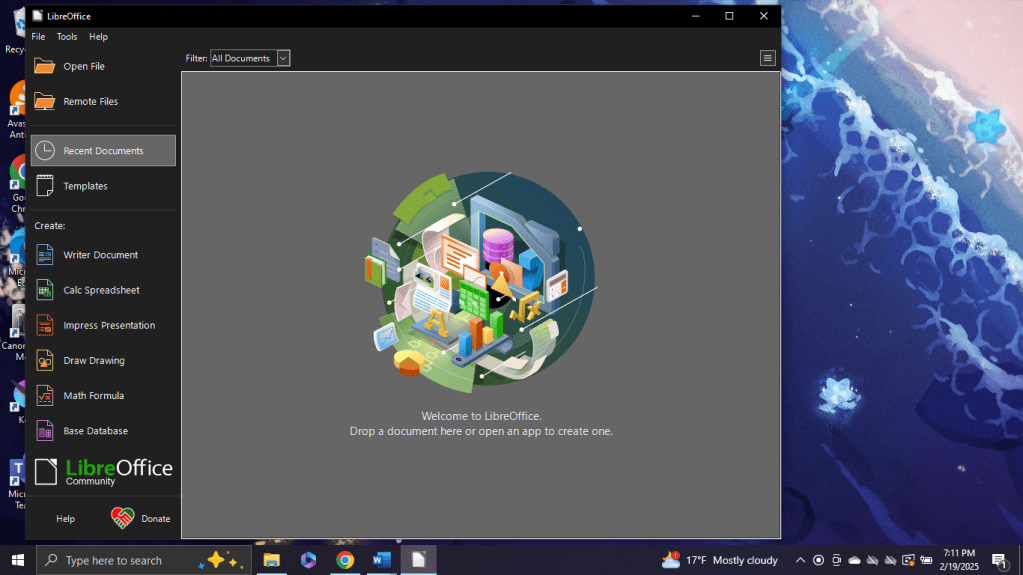
That’s when I hit my limit. I had a poetry book to write, snow day vibes to enjoy, and I wasn’t about to let corporate greed ruin my creative flow. Determined, I opened a new tab and searched for alternatives. That’s when I met my new best friend: LibreOffice.

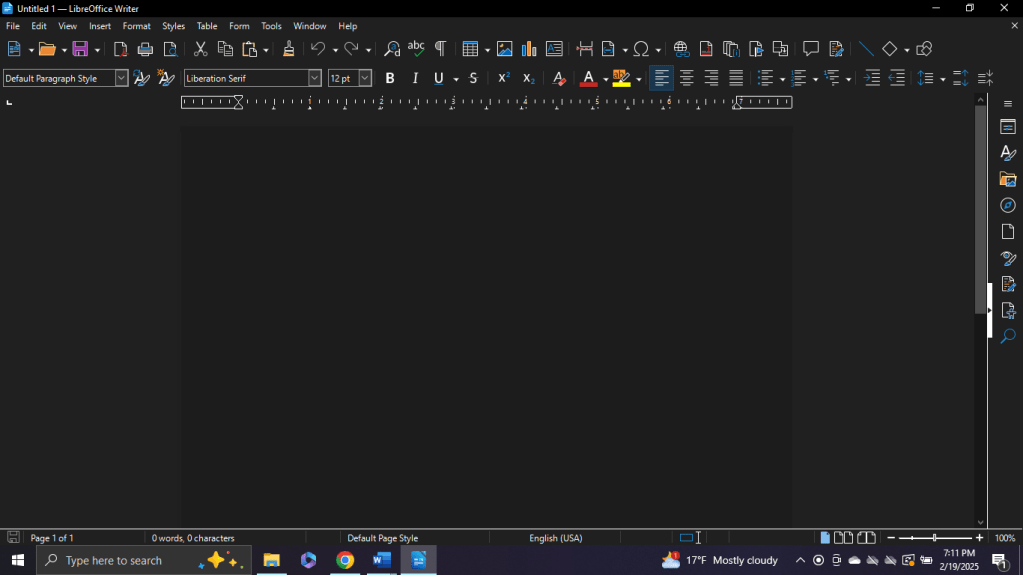
Let me tell you, LibreOffice is basically Microsoft Office but without the corporate handcuffs. It’s free, offline, and lets me open my own documents without asking for my credit card information. Revolutionary, right?

The best part? It felt just like old-school Word. Simple. Functional. No frills, no nonsense. And, most importantly, no monthly payments draining my bank account. I could write my poetry in peace, snow softly falling outside, without feeling like I had to sell a kidney just to access my own words.

So, here we are. Microsoft Word and I? We’re done. I’ve moved on. LibreOffice and I are getting along great, thank you very much. And the moral of the story? If a company tries to hold your words hostage for a hundred bucks a year, maybe it’s time to break up and find someone (or something) better.

LibreOffice, you’re the real MVP. And Microsoft? Yeah, we’re never, ever getting back together.

Unique Gift Ideas for the Writer in Your Life

Finding the perfect gift for the writer in your life can be as complex… annoying. I say this as a writer. It is very common that someone doesn’t know what to get me so I somehow end up with a tower of empty journals and an overflowing desk cup filled with new pens. I understand, it can be annoying to buy for us and sometimes one doesn’t know where to start when getting something thoughtful for the word-weaver in their family or friend group. Writers are often particular about their tools and tastes, but there’s a world of thoughtful, creative gifts beyond the basics that will make them feel truly understood. Here’s a guide to inspire your holiday shopping for the wordsmith you adore.


The Basics (But Make Them Fancy)

  1. Pens:
    Writers love pens, but gifting them a luxury pen—like a Lamy fountain pen or a weighted rollerball—can elevate their note-taking experience. Bonus points if you include a refill set in their favorite ink color!
  2. Journals:
    A writer can never have too many journals. Opt for a unique twist, such as leather-bound notebooks, journals with prompts, or eco-friendly options made from recycled materials.
  3. Books on Writing:
    Classics like On Writing by Stephen King or The Artist’s Way by Julia Cameron are staples, but consider books on niche writing topics or even beautiful annotated versions of their favorite novels.

Step It Up: Gifts That Show You Truly Get Them

  1. Subscription Boxes for Writers:
    There are subscription services like Scribbler or The Writer’s Box that deliver curated goodies, writing prompts, and insider tips from published authors every month.
  2. Customized Writer’s Toolkit:
    Assemble a personalized kit with items like sticky notes, page flags, highlighters, and correction tape. Include a pouch or box engraved with their name or a quote about writing.
  3. Noise-Canceling Headphones or White Noise Machine:
    Whether they thrive in silence or need the soothing sound of rain, a tool to manage their audio environment can be invaluable for focused writing sessions.
  4. Specialty Coffee or Tea:
    Many writers are fueled by caffeine. Look for unique blends or quirky mugs (a typewriter-themed one, perhaps?). Add in a high-quality milk frother for the latte-loving wordsmith.
  5. Bookends or Shelf Accents:
    Help them organize their beloved writing books or display their work-in-progress stack with quirky bookends shaped like typewriters, quills, or punctuation marks.

Truly Unique Ideas for the Writer Who Has It All

  1. Custom-Made Book Cover Art:
    Writers with published or soon-to-be-published works will swoon over framed custom cover art of their book or even a faux cover design for their work-in-progress.
  2. A Writing Retreat Voucher:
    Gifting a weekend at a cozy cabin or a spot in a writing retreat program can give them the solitude and inspiration they need.
  3. Quirky Desk Accessories:
    Think vintage typewriter-inspired keyboards, literary-themed calendars, or even a tiny desktop hourglass to time writing sprints.
  4. Personalized Word Necklace or Bracelet:
    Have their favorite word, their own name, or the title of their book engraved on a piece of jewelry.
  5. A Masterclass Subscription:
    Access to workshops by renowned authors like Neil Gaiman or Margaret Atwood can be an incredible resource and a dream come true for many writers.
  6. Unique Inspiration Tools:
    Try something like the Rory’s Story Cubes or a deck of writing prompt cards to help spark creativity.
  7. Gift a Domain Name:
    If they don’t already have one, buying them a domain for their writing blog or portfolio is an incredibly thoughtful and practical gift.
  8. Customized Wax Seal Kit:
    For writers who enjoy a touch of old-world charm, a wax seal kit with their initials or a literary-themed emblem adds a personal touch to letters or notes.

Stocking Stuffers for the Literary-Minded

  1. Literary-themed socks, tote bags, or pins
  2. Magnetic poetry kits
  3. Tiny pocket dictionaries or thesauruses
  4. Bookplates with their name on them
  5. Candles inspired by books or writing (like “Library” or “Freshly Sharpened Pencils” scents)

Of course, these gifts and their usefulness will vary from person to person. However, I think this list is a great starting point or sparking inspiration for that special writer in your life. Whether they’re a poet, novelist, or someone just discovering their voice, there’s something here for every writer to inspire them and remind them that their craft is worth celebrating.

What’s the most creative gift you’ve ever given (or received) as a writer? Let me know in the comments!

Would You Join a Cozy Writing Forum?

Hello, lovely readers!

I’ve been thinking a lot about how writers connect with each other online. Over the years, platforms like WordPress have been an amazing way to share thoughts, stories, and tips. Most of you drop by to read, and every now and then, someone leaves a comment that warms my heart. Honestly, I love this dynamic, and it’s perfectly fine if reading and moving on is your vibe.

But lately, I’ve been wondering: is there interest in something more community-oriented?

I’ve scrolled through countless writing forums, and while some are thriving, they tend to have huge memberships. That’s awesome for activity, but for me (and maybe for you?), it’s easy to feel lost in the crowd. I started thinking about what it would be like to build a smaller, more personal writing space—something cozy where everyone has a seat at the table.

Since I’m not ready to spend $300 a year upgrading my WordPress just to test this idea, I did a little digging and found freeforums.net, a platform that lets you create forums for free. It was so easy to set up (seriously, 10/10 recommend if you’ve ever thought about this yourself), and now… I have a forum ready to go! Here’s a quick preview:

I’ll introduce you to the spaces I’ve set up so far:

🪑 The Coffee Shop
This is the general hangout spot. Think casual chats, checking in on how everyone’s doing, and sipping virtual lattes while talking about anything and everything.

✍️ The Writing Lab
For technical discussions about writing. Need feedback on sentence structure? Want to debate the merits of first vs. third person? This is the place.

📚 The Library
Here, we’ll share what we’re reading or watching—whether it’s the latest bestseller, a nostalgic TV show, or an indie book you can’t stop thinking about.

🛍️ The Bookstore
A space to celebrate writing achievements, share self-published works, and recommend tools, resources, or books you love.

🏛️ The Town Hall
Where announcements, updates, and fun events (think writing challenges or contests) will live.

📌 The Bulletin Board
Looking for beta readers? Want to collaborate on a project? This is where networking happens.

🌳 The Park
A lighthearted zone for creative writing games, prompts, or exercises to spark inspiration. Also For those tough days when writer’s block hits or imposter syndrome creeps in. A safe place to vent, seek support, and remind yourself you’re not alone.

I’m genuinely curious—does this sound like a space you’d want to join? Or do you prefer to keep your writing life separate from structured communities? Either way, there’s no pressure!

I’ll include a poll below to get a feel for interest, but feel free to drop a comment, too. I’d love to hear your thoughts.

Poll: Would you join a cozy writing forum?

Whether the forum takes off or not, I’m just happy to keep connecting with you all here. Thank you for always making this space feel so welcoming.

Cheers!


The Art of Letting Go: When It’s Time to Move On from a Story Idea

As writers, we probably like to think of our ideas as precious gems, sparkling with potential and promise. But what happens when those gems start to feel like rocks weighing us down? Moving on from a story idea can feel like a betrayal. It can feel like we’re giving up on something that might have been great if only we’d tried harder. But, sadly, sometimes, letting go is the most freeing, productive decision we can make.

Recognizing When a Story Isn’t Serving You

Every writer knows the thrill of starting something new. It’s like falling in love—the endless possibilities, the bursts of creativity, the “this is going to be amazing” energy. But over time, that spark can dim.

Here are a few signs your story idea might not be serving you anymore:

  1. You’re Avoiding It: If you constantly find excuses to work on anything but your story, it’s worth asking why. Is it fear of failure, or are you genuinely uninterested? I will say the difficulty of this step comes from knowing the difference between writer’s block, intense procrastination, or a sign to actually quit.
  2. It Feels Like a Chore: Writing isn’t always fun, but it should bring some sense of purpose or joy. If working on your story feels like dragging yourself through quicksand, it may no longer align with your creative goals. Unfortunately, I reached this point editing down my second draft of my YA novel that was once so dear to me in high school. It no longer felt inspired and became just another task to chug through.
  3. The Idea No Longer Resonates: Maybe it felt groundbreaking when you first thought of it, but now you find yourself bored or disconnected from the concept. That’s okay—people grow, and so do creative tastes. Maybe you’re no longer writing the type of book you would read? Maybe it’s time to expand to something different (maybe even a different genre??).
  4. You’re Forcing It to Fit: If you’ve twisted your story idea so many times it feels unrecognizable, it might not be the right project for you at this moment. This also might be a sign that you’ve lost focus and you don’t know what you’re going for with this idea.

The Emotional Weight of Letting Go

For years, I told myself I’d go back to that first draft of a novel I finished in high school. It sat on my computer like a ghost of a dream—haunting me with the promise of what could have been. But every time I opened the document, I felt dread, not inspiration. The characters no longer felt like mine. The plot felt shallow. Worst of all, working on it felt like an obligation, not a passion.

I clung to it for far too long because I thought letting go meant failure. It took me years to realize that setting it aside wasn’t a sign of giving up—it was a step toward making space for stories I actually wanted to tell.

Gracefully Setting a Project Aside

Letting go doesn’t have to be dramatic or final. You don’t need to delete files or burn notebooks (unless you want to; dramatic gestures are valid). Here’s how to set a project aside with intention:

  1. Acknowledge Its Place in Your Journey: Every story idea, no matter how unfinished, has taught you something. Reflect on what this project gave you—new skills, insight, or even just a fun creative spark when you needed it.
  2. Give Yourself Permission: It’s okay to say, “This isn’t for me right now.” Writing is a personal journey, and it’s better to move on than to force yourself into creative misery.
  3. File It Away: You don’t have to toss the idea forever. Save your notes, drafts, and outlines. You might come back to it someday with fresh eyes—or never at all, and that’s fine too. Again, speaking from experience, I deleted way too many old drafts out of shame and now wish I had them on hand. I’d love to see how far I’ve come.
  4. Celebrate the Space You’ve Made: By letting go, you’re freeing yourself for new, exciting projects that align with who you are now, not who you were when the idea first came to you. The possibilities are endless!

Moving Forward

Writing is an ever-evolving process. Just because an idea didn’t work out doesn’t mean you’re a bad writer or that you wasted time. It means you’re growing.

So if you’ve been holding onto a story that feels more like a burden than a joy, ask yourself: Is this serving me? If the answer is no, it might be time to let go. And when you do, know that you’re not giving up—you’re moving forward.

What about you? Have you ever had to let go of a story idea? What did that process look like for you? Let’s chat in the comments—I’d love to hear your thoughts!

Take care friends & Happy Thanksgiving!

The Great Writing Recalibration: Navigating the Role of Writing in Adulthood

For many young writers, the identity of “writer” takes root early. In grade school or high school, it’s easy to dream big and write even bigger. Stories pour out effortlessly between homework assignments, and the dream of publishing a novel or becoming the next great poet feels within reach. Writing becomes a cornerstone of self-expression, a part of who you are. Then, adulthood arrives like an unexpected plot twist, and suddenly, the words stop flowing.

I like to call this phenomenon The Great Writing Recalibration. It’s not just writer’s block in the traditional sense—the frustration of not finding the right words or ideas. It’s the struggle of figuring out where writing fits into the bigger picture of your life. Is it a fleeting phase? An on-and-off-again hobby? A consistent passion? A side hustle? Or is it the full-time job you’ve always dreamed of?

You’re not a failure, okay? We’re all having a hard time here….

The Great Writing Recalibration often begins when you hit the gauntlet of adulthood—new responsibilities, time constraints, and a world that demands practicality. Suddenly, writing no longer feels effortless or essential. The hours you once spent dreaming up stories might now go to a 9-to-5 job, errands, or simply catching your breath. Writing gets pushed to the back burner, and for some, it’s a bitter pill to swallow.

I know, because I’ve been there. For years, I felt like a writing failure. I had proudly finished the first draft of my novel, only to let it sit and collect dust for three years. I’d talk about how I was “working on it” or how I was “so close to finishing,” but deep down, I didn’t want to work on it. It felt like a chore. Each time I sat down to write, it was as though I was forcing myself to relive a version of me that no longer existed—the high school writer who poured her heart into this draft.

Looking back, I realize part of the problem was that I hadn’t considered the possibility that I simply needed a break from writing or that my old stories didn’t speak to me anymore. I didn’t give myself permission to grow beyond them. I was holding onto an idea of what writing “should” be in my life, instead of asking myself what I actually wanted it to be.

The key realization here is that a lack of time reveals priorities. This is not a bad thing—it’s simply life asking you to reassess what matters most. If you’ve always defined yourself as a “writer” but now find that writing has slipped down your list of priorities, that’s okay. It doesn’t mean you’re less creative or that you’ve “lost” something. It means you’re growing up, figuring out who you are, and redefining what you want.

The tricky part is coming to peace with this recalibration. For many, it feels easier to cling to the idea of being a writer and blame an ongoing “writer’s block” for not producing anything. But if months—or even years—pass without the drive to write, it’s worth asking yourself: What role does writing truly play in my life?

If it’s a hobby you love but don’t feel the need to commit to, that’s perfectly valid. If you still dream of making writing a central part of your career, then finding time to nurture it—even in small ways—is essential. And if it’s something that fades from your life entirely, only to resurface years later, that’s okay too. Writing doesn’t demand permanence; it only asks for honesty.

The truth is, adulthood is full of recalibrations. We struggle to define not only writing’s place in our lives but also our very sense of self. And in that process, the role of writing might shift, expand, or contract. Embracing that change—rather than resisting it—can help you move forward without guilt or regret.

The Great Writing Recalibration isn’t a sign of failure. It’s a chance to reflect on your passions, priorities, and evolving identity. Writing will always be there, waiting for you, in whatever role you choose for it. So take the time to decide, and remember: it’s okay if the words come and go, as long as you’re at peace with what you’ve written into the story of your life.

Keep writing, friends! Or don’t! It’s all okay!

Magic Schools to Feminist Retellings: A Retrospective on Writing Trends

A Retrospective Look at Writing and Book Trends: From Magic Schools to Feminist Retellings

If you’ve been reading books for, well, any amount of time, then you’ve probably noticed that certain trends in literature pop up like clockwork—sometimes for a few years, sometimes a little longer, but they’re always there. And as much as we try to resist it, we find ourselves falling into the hype. We all know that one trend we swore we wouldn’t get into, and then suddenly we’re 200 pages deep into a series about people who can control fire and water and possibly have a secret underground society. It’s fine, it’s normal.

So, in the spirit of nostalgia and bookish trends that once ruled the shelves, let’s take a trip down memory lane. Here’s a look at some of the most notable writing trends of the past, separated by the years when they were super prevalent. Buckle up, it’s about to get trend-tastic.

2000s: Magic Schools & Faction Fandoms

Ah, the early 2000s. It was a simpler time, before social media ate up all our free time. But books—oh, books were living their best life. If you weren’t reading Harry Potter, were you even reading? Seriously though, J.K. Rowling kicked off the magic school trend, and the world fell in love with Hogwarts, wands, and wizarding wars. It was like we all went to school with Harry, Hermione, and Ron, even if we were just hanging out in our living rooms with a cup of tea. And don’t get me started on the sorting hat. Suddenly, was finding out what house they were (if you weren’t Gryffindor, well, we’ll talk about it later) along with their Patronus, their wand and… well.. you get the idea.

But Hogwarts wasn’t the only magical academy out there. And let’s not forget the “Team Edward vs. Team Jacob” phenomenon that was Twilight. Was it fantasy? Was it supernatural? Was it… a lot of emotional turmoil over the fate of Bella Swan? Whatever it was, it had people choosing sides.

If it’s not clear, The early 2000s were dominated by the rise of books where characters were sorted into distinct factions. Presenting factions based on personality traits became another way for readers to ask themselves, “Which one would I belong to?” and effectively engage the reader. These sorting systems didn’t just reflect different aspects of identity; they also gave readers a sense of belonging in the fictional world.

2010s: The Post-Apocalyptic Dystopia Takeover

Fast forward to the 2010s, and suddenly, we were all obsessed with the end of the world. Everyone was either fighting in a deadly arena or surviving some government-imposed dystopian nightmare. And honestly, who could blame us? The Hunger Games was literally all the rage. We couldn’t get enough of Katniss Everdeen, bow and arrow in hand, fighting for her life (and also fighting for her place in that love triangle that we didn’t need but somehow loved anyway).

But it wasn’t just Katniss—there was Maze Runner, where kids with amnesia were running from giant creepy monsters in a maze. And don’t forget Divergent (yes, it fits both categories. No wonder it was so popular), where people were divided into factions based on their personalities- wait I definitely talked about this already. These books sparked a whole trend of dystopian universes where our protagonists had to rise up against an unjust government, typically after some sort of catastrophic event. We were all about survival, rebellion, and… romance, of course.

Late 2010s: Fairytale Retellings, Because Who Doesn’t Love a Reboot?

Then, just when we thought we couldn’t take any more life-or-death stakes, fairytale retellings came swooping in. It was like, “Why read the same old fairytales when you could read them again—but with a twist?” Enter The Lunar Chronicles, which took Cinderella, Little Red Riding Hood, and others, and threw them into a world of cyborgs, androids, and space missions. It was like the fairytale we kind of knew, but with lasers and intergalactic politics.

But let’s be real, it wasn’t just science fiction authors having fun with fairytales. Writers like Sarah J. Maas and Holly Black started blending folklore and mythology with darker, more adult themes, serving up stories full of magic, romance, and the kind of characters who may or may not have committed some morally questionable acts. I’m not saying we were all suddenly into faeries, but maybe we were all suddenly into faeries.

2020s: Feminist Mythological Retellings—Let’s Give the Women Their Due

Now, we’re in the age of feminist mythological retellings, and I’ve got to say, I’m here for it. Sure, Percy Jackson brought Greek mythology into the mainstream, but now we’re diving deeper into the stories of the women who’ve been left out of the traditional narratives. Think Circe by Madeline Miller, where we finally get to hear the story of the infamous witch from the Odyssey, and she’s not just some villain. She’s complicated, which (hopefully) makes her way more interesting.

And we’re seeing it everywhere, from Ariadne by Jennifer Saint to Lore by Alexandra Bracken, where the women in myth aren’t just being swept aside by the men—they’re fighting back. They’re reclaiming their stories, and it’s pretty epic. These retellings give the female figures of myth the depth and agency they deserve. Though whether or not it’s done effectively is up for debate in the reading community.

Honorable Mentions: Other Trends That Came and Went

Some trends were like that one hit song we all loved for a summer, but by next year, we couldn’t remember the lyrics. A few notable mentions:

  • Vampires, Werewolves, and Supernatural Romance (2000s-2010s): The Twilight era sparked a frenzy over all things supernatural. Vampires, werewolves, and the eternal, beloved, and ENTIRELY necessary love triangle. It was a phase, okay? But also, apparently not, because love triangles would go on to become prominent plot point in YA media from thence forth.
  • Grimdark Fantasy (2010s): If you wanted to dive into a world where everything was bleak, brutal, and morally ambiguous, this was your moment. Books like Game of Thrones, Six of Crows and The Broken Empire filled our need for complex, gray-area characters who weren’t afraid to get their hands dirty. It was kind of like if your favorite character was a mix of a hero and someone you shouldn’t trust, but you loved them anyway. And probably hated them too. But in a good way.
  • YA Thrillers (2010s): After the success of Gone Girl, and The Girl on the Train, the YA thriller market exploded. Suddenly, everyone was reading books about murder, mystery, and figuring out who was really the bad guy—which, let’s be honest, made for some super intense reading sessions. The most recent success in this genre that I can think of is Where the Crawdad’s Sing.

So… What’s Next?

While we can never be sure what trend will take over next, one thing’s for sure: books will always change and evolve. Whether it’s more retellings of ancient myths, something completely new, or perhaps another wave of dystopian chaos (honestly, who can say?), there will always be something to capture our imaginations.

What do you think? Are we due for a new trend? Or are we all just hanging out in the land of retellings and myth for the foreseeable future? Drop a comment! I’d love to hear your thoughts on this very important and pressing matter.

Can Pinterest Actually Help Your Writing?

Welcome to a writer’s guide to Pinterest where I plan to discuss the good, the bad, the pretty. (I’m sorry, I love this tag line format, okay?) And rest assured, as someone who has dumped many, MANY hours that I cannot get back into this social media app, I am an expert on this matter.

Pinterest is where I go to build my dream library, organize my “writing room” ideas, and pin cute coffee shops I probably won’t visit but love to look at. As a writer, Pinterest has been an absolute gem for inspiration; you could almost call it a mood board for my entire brain. But as far as promoting my writing? Well, let’s just say Pinterest isn’t quite built to send people flooding to your latest blog post or novella.

Here’s the scoop on how Pinterest can actually help (and where it kind of misses the mark).

The Good: The Perks of Pinterest for Writers

  1. An Endless Well of Inspiration (Literally, It’s Bottomless)
    If you’re ever stuck on a writing project, Pinterest is the perfect place to scroll through photos of foggy forests, vintage journals, and other people’s aesthetically pleasing bookshelves. The platform is a visual feast, which makes it amazing for building storyboards or getting character inspiration. Dreamy landscape? They’ve got you covered. You’ll be drowning in imagery before you even get through the first page of your search.
  2. Organizing Writing Ideas Like a Pro
    Pinterest boards are a lifesaver when it comes to keeping track of all those ideas we want to come back to someday. Want to keep that list of dialogue ideas, character profiles, or writing prompts handy? Just pin it! In a way, Pinterest lets us organize our creativity, which is both refreshing and slightly magical (especially if you’re like me and tend to misplace things…like ideas).
  3. Perfect for Building an Aesthetic (Hello, Vibes!)
    Whether your story is set in a gloomy castle or a sunny seaside town, Pinterest boards let you curate a “vibe” that can bring your creative world to life. You can find everything from historical costumes to quirky cafes, and it all adds a splash of personality to your work—even if it’s only for you to look at. Sometimes, having that mood board handy is just what you need to get into the writing groove.

The Bad: The Downsides of Pinterest for Writers

  1. Driving Traffic to Your Work? Not So Much
    Here’s the thing: people on Pinterest are mainly looking for visuals and ideas, not links to blog posts. Most users are there to save images, maybe jot down a few notes, and then go on their merry way. I’ve pinned some of my writing work before, but it’s rare for people to follow an image all the way to an actual article or story. Pinterest is more about the “aesthetic save” than the “click-through,” so don’t expect it to be a major traffic source.
  2. Lack of Community Engagement
    Pinterest is not the place to chat, bond over writing struggles, or get feedback on your work. There are no extensive comment sections where people are swapping tips or sharing the same cozy creative space you might find on other platforms. Truth be told, they DO have a comments section on individual pins but it’s not laid out very well nor is it heavily used among the platform’s users. Pinterest is more of a solo mission; everyone’s there for their own pins and projects, so if you’re looking for a writing community, look elsewhere.
  3. It Can Become a Time Sink (Oops)
    Pinterest may look harmless, but let’s not kid ourselves—it’s a gateway to spending hours pinning everything under the sun without actually writing. There’s so much content that it’s easy to fall into the “one more scroll” trap, especially when it feels like you’re being productive. At some point, it’s best to stop pinning and start typing. (Believe me, I speak from experience here, ok.)

The Verdict: Is It Worth It?
If you’re in need of visuals or inspiration, Pinterest is fantastic and I highly recommend it. With your own private library of images to draw from, it can make the writing process a lot more fun as well as help you visualize things you’re struggling to picture yourself. Just don’t rely on it for promotion, because Pinterest users are likely just passing through.

Happy pinning (and happy actually writing, too)!