The Ultimate Guide to Using AI to Write a Novel

Hello, readers! I’ve got a useful “writing” guide for you today. I realize that I’ve dedicated this blog to writing tips on how to better one’s craft, so what’s more on theme with that mission than making a guide on how to use AI to accelerate your “writing” process! No, not editing. Writing. The writing itself. You read that right. Read on to figure out how you can craft a best seller without typing a single paragraph of prose and bothering with the whole pesky process of… actually thinking up original ideas and how to effectively communicate that to your readers.

In short, in today’s rapidly accelerating digital age, writers have unprecedented tools at their disposal. With the rise of artificial intelligence, crafting an entire manuscript has never been easier. Why rely on your own voice, perspective, or hard-earned life experience when a silicon parrot can spit back something resembling prose?

Step 1: Pick Your Genre

Choose a genre you love deeply. Something personal. Something meaningful. Then immediately ignore all of that and ask AI to brainstorm “10 hot book ideas in any genre that sells.” Even try “trending book themes” if you’re at a loss for what moral you should convey in this piece. Morality should be determined by mas market, which is what your AI companion will reflect.

Step 2: Prompt the AI… a Lot.

Type a prompt. Then rewrite it fourteen times because the AI keeps misunderstanding your “tone.”
(It’s almost like… writing? Except somehow worse.)

“Make it more whimsical.”
“But also somber.”
“But also funny, but not too funny.”
“And can it sound like me even though I haven’t written a word?”

Step 3: Marvel at How Fast the Words Appear

After all, this is the age of INSTANT gratification. Our writing process should evolve to follow suit. Books should be written in the time it takes to make instant oatmeal. That’s how you get a meaningful piece of work worth sharing with the world.

Step 4: Experience the Sudden Realization That This… Is Mediocre

Realize that this work is nothing but a Frankenstein of everything that has come before it. With extra emphasis on what’s been trending in writing in the last 5 years. As everyone knows, literature peaked when Romantasy Slop started being churned out and hitting shelves. These books are all so similar, you can’t quite remember if you’ve read them before or not, but that’s alright, the indulgent story beats are comforting if not entirely formulaic and overdone… right? We read for comfort. Comfort should always be a priority in literature at all times. At. All. Times. Do NOT present anything discomforting or something that could be perceived as causing your reader to THINK.
Wait, what we’re we talking about again.

Step 5: Denial or Rewrite

You’re at a crossroads at this step. You can continue to tell yourself it’s fine and send it off for publishing anyway, or you can attempt to salvage your AI slop by editing. A lot. Please, by all means, continue editing. Realize every sentence feels like it was handcrafted by someone who has never tasted food, felt sunlight, or endured a junior-high breakup. Rewrite one paragraph. Then two.

Suddenly, you’ve rewritten the entire chapter.

Suddenly, you’re rewriting the entire book.

Congratulations! You have now done the exact amount of work you were trying to avoid in the first place. You’ll tell yourself this is simply “refining your AI-assisted draft,” but really you’ve rewritten 90% of it because your actual human brain finally woke up and said, “No. This is wrong. It sounds wrong and it’s not good.”

Step 6: Face the Existential Crisis

Ask yourself why you thought skipping the workout would get you stronger.
Then look at AI and realize it’s not your writing partner. It can’t write for you in the same way it can go on a run for you, make a call to your mother for you, can’t eat healthy for you, can’t laugh for you, can’t love people for you, can’t, can’t, can’t.

The shortcut is so tempting, and AI companies will lead you to believe that the possibilities of AI are endless. Sure, there are uses to be explored, but AI is not endless, nor should it be. AI will never write a novel for you. AI will never be a human for you. It is in its name. It is against its very nature. You are human. Writing is in YOUR nature.

Author’s note:

This is not an ultimate condemnation of AI. More so a thought exercise to make sure we’re not using it irresponsibly. I’m quite curious how AI can function as an editing assistant or writing prompt generator. But the sudden flood of AI slop books on Amazon, where not a single word was penned by a being with a brain, has me clutching my pearls a bit. Feel free to leave your thoughts in the comments below, AI in writing has become a common topic on this blog as it invades the writing world, for better worse, and I’m always happy to hear others’ thoughts on these changes.

k byeeee! Thanks for reading!

AI for Writers: How to Use it Ethically

In a world teeming with AI-generated essays, AI-written novels, and even AI poetry (which, let’s be honest, reads like it was composed by a very earnest but deeply uninspired toaster), creatives everywhere are understandably wary. The existential crisis among writers is real.

I, too, have had my moments of wild optimism. AI seemed like such a useful tool! An endless supply of writing prompts? An easy way to get revision advice? Blog post title suggestions so I don’t have to stare at a blank screen in despair? Sign me up!

Oh, how naive I was.

I didn’t fully comprehend the sheer scope of AI misuse. AI-written books clogging up Amazon? Students submitting entire AI-generated essays as their own? As I watched the chaos unfold, I started to wonder: is there a way to use AI ethically as a writer? Or am I a hopeless fraud for even considering it?

After much reflection, I’ve come to this conclusion: AI and computers exist to do the boring stuff. The soul-sucking, time-wasting tasks that drain the joy from creativity. But the actual creating? That’s the part I want to hold onto. Because honestly, why would I want to shortcut the best part of writing? AI writing is often as bland as a bowl of plain oatmeal. No sugar. No nuts.

AI feels less like a foe or friend and more like a really boring intern/writing assistant in my humble opinion.

So, in the interest of making peace with AI (and ensuring it remains a helpful assistant rather than an artistic overlord), I’ve compiled a list of ways writers can use AI ethically and usefully without sacrificing their creative souls.

1. Character Development

Stuck on how your main character would react in a specific scenario? Describe them to AI and ask how they might logically respond. Or, better yet, throw them into a random situation and see what AI suggests and then tweak it until it actually feels like your character. Develop it. Run with it. Think of it as a digital version of those acting exercises where you “become” your character so to speak.

2. Synonyms: Because “Thingamajig” is too vague I guess

We’ve all been there: that word is right there on the tip of your tongue, but your brain has checked out for the day. AI can help you find the perfect synonym without forcing you into a three-hour thesaurus rabbit hole (which somehow always ends with you reading about the etymology of “spork”).

3. World-Building Without the Headache

Need to develop a magic system? A fictional government? A convincing but totally made-up economy? AI won’t write it for you, but it will ask you logical, specific questions that help flesh out your world. Think of it as a world-building coach, but not a ghostwriter.

4. Writing Exercises: When Your Muse is on Vacation

AI is great for generating writing prompts and exercises when you need a little jumpstart. You can take what it gives you and twist it into something uniquely yours. Don’t use it to write the whole thing. Use it to springboard you into your own little writing project.

5. Helping You Tackle That One Problem Paragraph

Ever stare at a paragraph, knowing it’s bad but not quite sure why? AI can help you pinpoint what’s off. Whether it’s tense shifts, awkward phrasing, overuse of adverbs (my personal Achille’s heel). It’s something akin to a second pair of eyes giving your work a quick glance, minus the existential dread of asking another human for feedback. (Though, personally, a real human is needed to fully help you realize the full potential of your work but maybe I’m just stuck in the stone age.)

6. Titling: The Worst Part of Writing (Fight Me)

I am a “working title” kind of person. If left to my own devices, all my drafts would be titled “Ugh, I’ll Fix This Later.” AI helps me generate blog post and chapter title ideas so I can get back to the fun part—actually writing the thing.

Final Thoughts

AI isn’t evil, but it also isn’t a replacement for creativity. It’s a tool. It’s a tool that, when used wisely, can make writing easier without making it soulless. Let’s not let it take over. After all, writing is about creating, not just generating words.

A Review of Lex AI Writer

I have historically have had a really forgiving view of AI. I think it’s here to stay and that much is true, but as time has gone on, I have gravitated to a more critical view of AI content, specifically AI writing. I think it’s great for brainstorming when you’re on square 1 or perhaps outlining a blogpost (here is where I reveal that it is not uncommon for me to ask chatgpt for help with organizing blog posts, titling, and other such small tasks that allow me to focus on my blog post’s actual content). Heck, I think it’s maybe even good for writing filler text that allows you to move your story forward until you can return and fill it with something better and far more creative. But over the past year, I’ve really seen the quality of writing content being replaced with quantity and this is no doubt due to the rise of AI.

AI garbage books flood KDP and many so-called-writers are making tutorials on how you can shortcut the process of creating a story and avoid *gasp* writing! I think someday I’ll make a post on this in the future about how these pretend writers must not really enjoy the craft if they’re continuing to engineer ways to NOT write but now is not that time. Today, I’m here to talk about a specific AI writing platform known as LEX.

Lex AI Writing Platform: A Powerful Tool with a Hidden Catch

Lex is one of the most intriguing AI writing tools I’ve explored. With a wide array of functions, it offers a startlingly diverse set of tools. I could see Lex catering to writers across various disciplines due to this diversity, whether you’re drafting blog posts, brainstorming story ideas, or simply fighting off writer’s block. However, as with any tool of this caliber, its strengths come with a critical caveat. But we’ll get there shortly. First, an introduction to Lex’s toolbox is in order.

A Brief Overview of Lex’s Tools

One of the few positives I will say is Lex impresses with its thoughtful organization and user-friendly interface. The platform boasts features designed to streamline the writing process. Maybe a little too streamlined, but again, I’m getting ahead of myself. The tools and functions are as follows:

  • Idea Generation: It helps writers overcome blank-page syndrome with prompts and suggestions.
  • Continuity Tools: Lex can pick up where you left off, offering full paragraphs based on the context you provide it.
  • Editing Suggestions: It attempts to analyze tone, grammar, and structure to help refine your writing.
  • Customization: You can tweak Lex’s settings to better fit your style or project goals. Probably the most impressive and useful tool in my opinion.

For writers seeking an all-in-one productivity aid, Lex delivers. It’s particularly helpful for outlining or fleshing out ideas quickly. I could see Lex being a useful tool in brainstorming or drafting stages when used wisely. However, we’re going to move on to my main concern with Lex and most Ai writing assistants as a whole.

RIP Individuality

While Lex offers remarkable utility, my primary concern lies in what tools like this mean for the art of writing itself being the erosion of individual style.

When used sparingly, Lex is a fantastic collaborator. Keyword being “sparingly”. How many people will use it sparingly? The temptation to rely on AI for large swaths of text is undeniable, but in doing so, we risk losing the unique voices that define good writing.

To illustrate this concern, I experimented with Lex by beginning a short story:

My opening line:
“Deep in the recesses of an experimental laboratory, rows of cages can be found.”

Lex’s continuation:
“Within these cages, a colony of felines reside. These are no ordinary cats, however. They are the subjects of a groundbreaking experiment, where scientists seek to unravel the mysteries of genetic manipulation. With each passing day, the cats undergo a series of tests and procedures, their DNA meticulously analyzed and altered. The researchers are driven by a singular goal: to create a new breed of cat, one that possesses enhanced abilities and traits beyond the scope of their natural counterparts.”

On the surface, this continuation isn’t bad—it’s clear, grammatically sound, and flows logically. However, it’s unmistakably AI-generated. The tendency to “tell rather than show” is glaring. Instead of inviting readers into the story through evocative imagery or nuance, Lex provides a clinical summary, flattening the narrative.

This paragraph reads more like a report than an actual story, and, while serviceable, it lacks the depth and personality of human storytelling. Such patterns, if adopted uncritically, could homogenize creative writing, sacrificing artistry for efficiency. I have yet to see any AI writer tackle this concern successfully. Everything a computer spits out tends to sound the same or very similar to each other: bland, uncreative, and report-y. AI tends to be trained on articles and educational resources after all so no surprise there.

Conclusion

Lex is a powerful tool that can be a game-changer for writers, offering diverse features and has a great organization and presentation of said tools. For brainstorming, outlining, and rough drafting, perhaps it’s worth a try. But the ability to write large sections of text quickly can also be its biggest drawback and churn up a lot of concern.

Overall, I think as we incorporate AI into the writing process, we must remain vigilant and oh-so-cautious. Writing is more than putting words on a page despite what school might have taught us. It’s about crafting a voice, an atmosphere, and an experience for readers. Tools like Lex should be wielded with care, enhancing human creativity rather than replacing it. For now, Lex is an impressive companion but ABSOLUTELY not a replacement for the writer’s pen.

Thanks for taking the time read and take care, friends!

I Review an Obscure Art App

Hey, everyone! Thank goodness it’s the weekend. I started a new job recently as I’m sure some of you have heard about via a blog post of me basically saying “Haha I’m tired because of work so sorry but there will be less posts hahaha”.

But it’s Saturday! And this post has been something I’ve wanted to share and talk about for a week or two now but just haven’t found the time to really MAKE it. Honestly, this post isn’t quite like a normal one for me. I usually splash my blog with writing related posts, a few personal posts, and maybe a FEW art posts here and there but writing seems to be my real bread and butter. I haven’t really had any inspo for writing prompts or tips though so HERE WE ARE.

Wow, that’s a lot of backstory without any real context to the specifics of what I’m talking about. Apologies. Getting to the point is not always my strength. What was I talking about again?

Oh yeah!

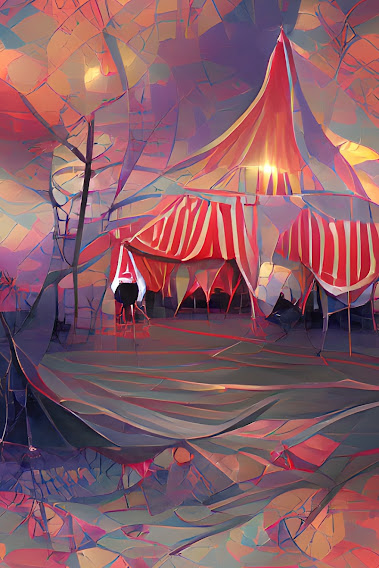
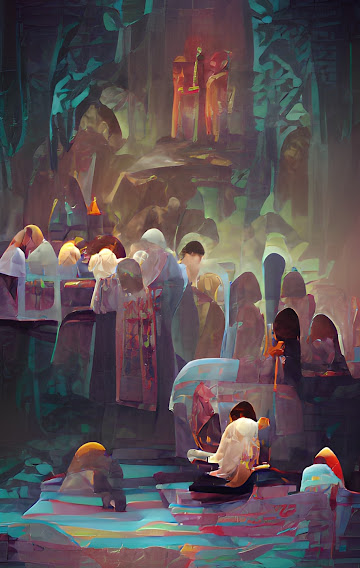
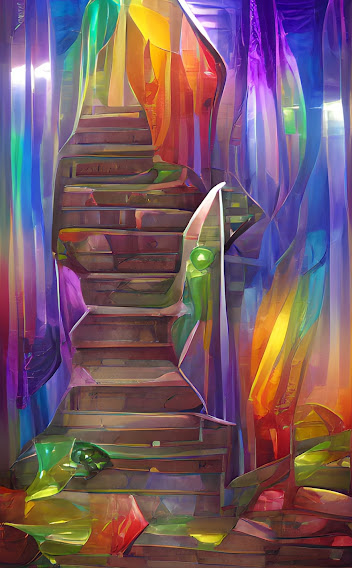
I found an interesting though slightly obscure art app that I wanted to talk about with ya’ll. It’s called Wombo Dream. It is an AI art tool that generates pieces based off of your “prompts” which tend to consist of a few keywords and phrases. It’s a fascinating tool and I’ve played with it on and off for a few weeks now. I think the best way to really explain this AI and how it works is to share with you some of the results I got while using it as well as the prompts I used.

The prompt for the image above was “Circus Tent” and, as you can see, the results are pretty trippy yet also recognizable. Let’s try another!

The prompt for this guy was “cozy coffee shop”. You can definitely see it, even if not everything in the picture is completely identifiable.

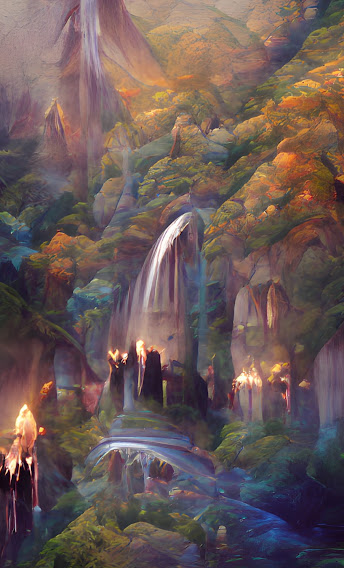
The prompt for this one was “Rivendell” which is a location from Lord of the Rings. I can recognize this one really well, especially with that waterfall in the background.

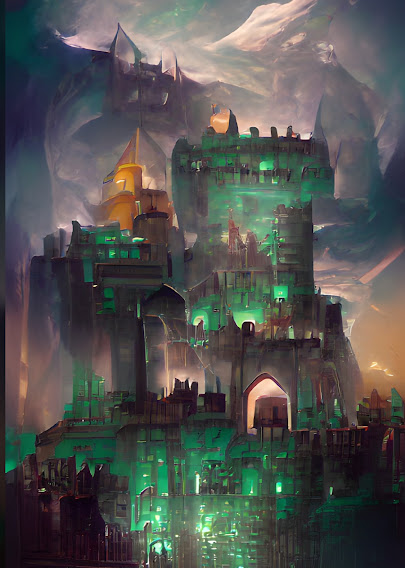
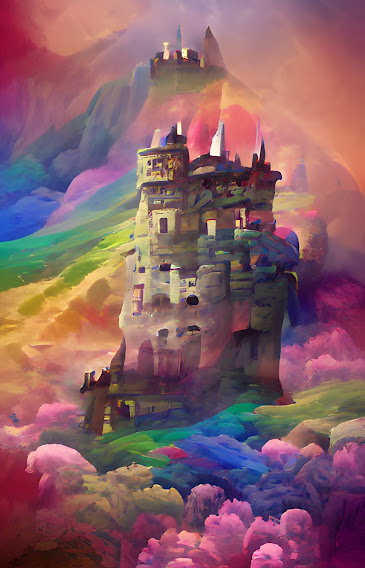
The Prompt for this one was “Emerald Castle”. You can really see the AI doing its best here to create a structure that resembles as such.

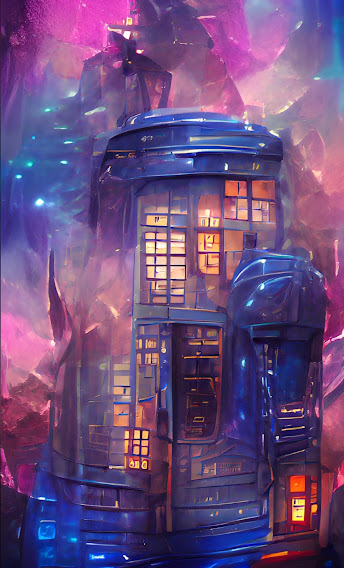
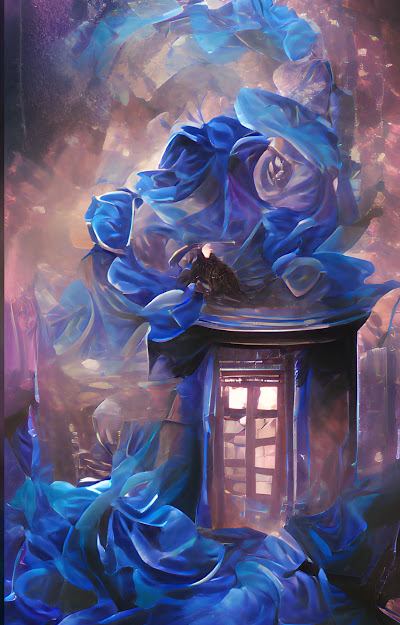
You might be able to tell the prompt for this one already, but in case this structure doesn’t seem at all familiar to you, the prompt that I used was “Tardis Castle.” As in, the Tardis from Doctor Who.

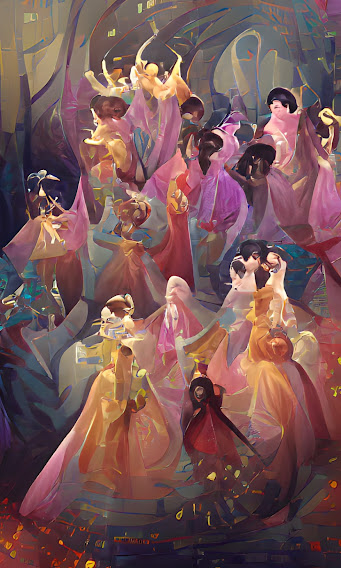
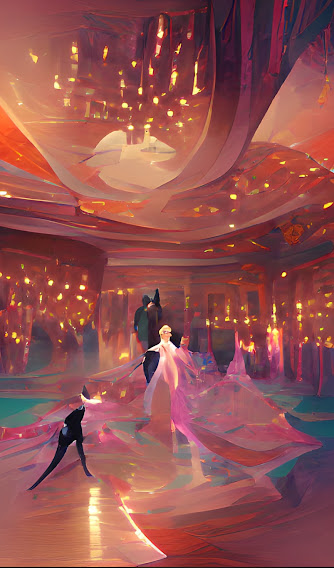
This one is definitely a little vague but hopefully it seems recognizable when I tell you the prompt. The prompt was “The Twelve Dancing Princesses”. I can see them twirling in a group here, their skirts swirling round them creating such an appealing composition for the image. It’s crazy to think that an AI generated this!

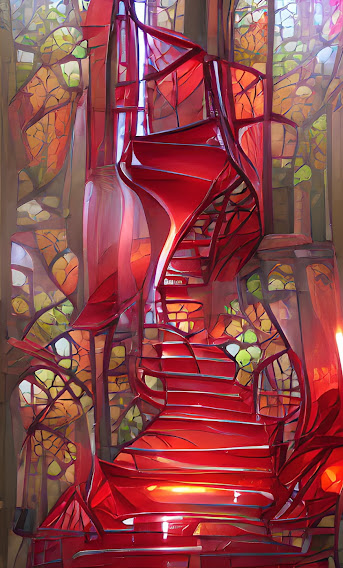
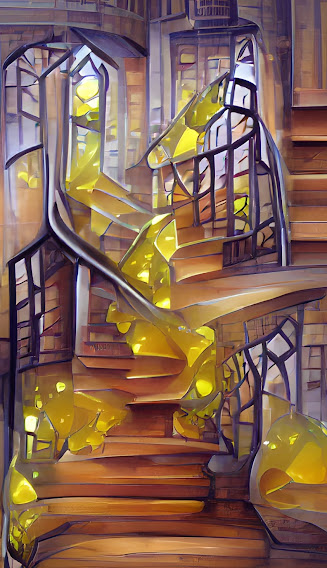
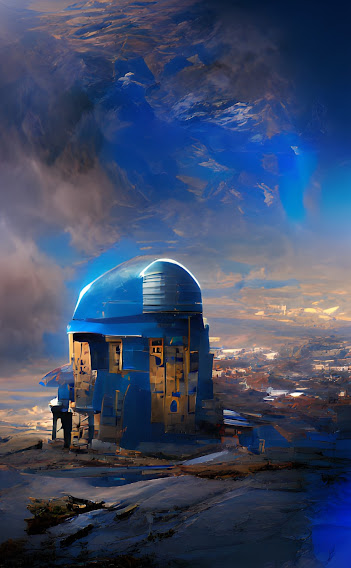
I think you get the idea now so I’m going to stop explaining the prompts and just show you a little showcase of other beautiful images I got from using this tool. Let me know in the comments if you recognize any of them!

I know this was sort of an odd post but hopefully you found yourself just as fascinated as I was upon finding out about this app. Just the idea that a AI tool could create things that look so familiar has such neat implications. Will there be a time when this AI is perfected so well that It will be hard to tell the difference between AI art and human art? I don’t know but until then, I definitely encourage you to check out this art tool. Not only is it fun to play around with, but it might be good for art inspiration or even writing inspiration for when you have a fictional place but aren’t sure how to exactly describe it.

Oke doke! I think that’s about it! Thanks for sitting through my rambling review of an obscure art app.

Take care!