There’s a special kind of writing slump that sneaks up on people if they’re not careful. It’s sometimes not the one where you’ve got zero motivation, but the one where your words feel… stale. The same old metaphors. The same style. The same syntax. It becomes a formula of sorts and doesn’t feel fresh. It gets old.
I think a big culprit behind this is writing without reading.
When we only pour out words but never take any in, our writing starts to echo itself. It’s like talking to yourself in a room with no one else around. Eventually, you’ll run out of new things to say.
Reading gives life to your work. It stretches your brain into shapes you wouldn’t find on your own. You pick up little tricks without even realizing it. This could be a fun phrase, a surprising metaphor, or a way to pace a scene. Sometimes it’s not even about the writing itself but about remembering why you wanted to write in the first place. Books can also remind us of the wonder that made us pull out a pen or our laptop in the first place.
I didn’t read much throughout college and good gracious, it showed in my writing. Everything I wrote felt…Safe. The echo chamber became comfortable. Because, you see, a crappy side effect of not reading is sometimes not even REALIZING the echo chamber your writing is becoming until you sit down with a fresh pair of eyes and you find your own writing boring! It’s bland. It’s missing something. But when I began to pick up reading again (post college), I found writing easier and the quality better.
So if you’re in a slump, maybe the best cure isn’t another thousand words of pushing through. Maybe it’s picking up something off your shelf, letting someone else’s voice break through the echo chamber, and remembering that writing is, at its core, a conversation between you, your imagination, your inspiration, and your readers. And you can’t hold up your end of the conversation if you’re not listening, too.
Anyways, happy Tuesday, and thanks for dropping by and reading my little mini-rant.
I gave TikTok a shot. I really did. I have a WIP poetry book, and frankly, poetry is coming out of my ears at this point. Why not see if TikTok could help me get some eyes on my work? A little poetic clout, perhaps? I have seen so many creators get a nice little audience boost from tik tok but that led me to ask a few questions: First off, how long does this take? Second, how luck based is it? And third, is it something I could even remotely pull off? The only sure-fire way to figure this out for myself was to try. For about 2 weeks. (Ok, ok, it’s not that long of a time frame but I just wanted to give it a quick little go, alright?)
TikTok is an interesting creature when it comes to promoting writing. It moves fast. I soon found out that it moved so fast that most users are like ships passing in the night. They’ll comment something like “Wow, love this!” and then vanish, never to be seen again. Which is nice in the moment, but also? Not super helpful when you’re trying to build a consistent audience.
It seems like the only way to really win at TikTok is to post every single day (consistently for more than two weeks), possibly even multiple times a day, for an extended period of time. And I don’t know about you, but I have a full-time job. I have a life. I have two cats who expect me to provide them with a high standard of living. I cannot be out here churning out viral poetry videos while also making sure I have clean laundry.
Oh, and the algorithm is super punishing if you miss a day or two. When I built what felt like momentum towards the middle of the first week, it was great. My videos were consistently getting around 600-900 views. Then I missed a day and it felt like I was starting on square one all over again.
By the end of the experiment, I ended up with around 49 followers and 1,421 likes. A little disappointing especially given my account had around 40 posts one it. So, I gained like a follower per post I guess? No wonder people have to post a lot to gain traction with that kind of math!
So, for now, my TikTok writing experiment is on pause. But maybe one day, when I have the time (or when my poetry royalties pay my rent—ha!), I’ll give it another go.
Until then, I’ll just be over here, writing poetry and thinking about posting it on TikTok. I hope you’ve found this post insightful and maybe even…helpful? Perhaps I have squelched your curiosity when it comes to sharing your writing on tik tok or at least answered a question or two.
I have historically have had a really forgiving view of AI. I think it’s here to stay and that much is true, but as time has gone on, I have gravitated to a more critical view of AI content, specifically AI writing. I think it’s great for brainstorming when you’re on square 1 or perhaps outlining a blogpost (here is where I reveal that it is not uncommon for me to ask chatgpt for help with organizing blog posts, titling, and other such small tasks that allow me to focus on my blog post’s actual content). Heck, I think it’s maybe even good for writing filler text that allows you to move your story forward until you can return and fill it with something better and far more creative. But over the past year, I’ve really seen the quality of writing content being replaced with quantity and this is no doubt due to the rise of AI.
AI garbage books flood KDP and many so-called-writers are making tutorials on how you can shortcut the process of creating a story and avoid *gasp* writing! I think someday I’ll make a post on this in the future about how these pretend writers must not really enjoy the craft if they’re continuing to engineer ways to NOT write but now is not that time. Today, I’m here to talk about a specific AI writing platform known as LEX.
Lex AI Writing Platform: A Powerful Tool with a Hidden Catch
Lex is one of the most intriguing AI writing tools I’ve explored. With a wide array of functions, it offers a startlingly diverse set of tools. I could see Lex catering to writers across various disciplines due to this diversity, whether you’re drafting blog posts, brainstorming story ideas, or simply fighting off writer’s block. However, as with any tool of this caliber, its strengths come with a critical caveat. But we’ll get there shortly. First, an introduction to Lex’s toolbox is in order.
A Brief Overview of Lex’s Tools
One of the few positives I will say is Lex impresses with its thoughtful organization and user-friendly interface. The platform boasts features designed to streamline the writing process. Maybe a little too streamlined, but again, I’m getting ahead of myself. The tools and functions are as follows:
Idea Generation: It helps writers overcome blank-page syndrome with prompts and suggestions.
Continuity Tools: Lex can pick up where you left off, offering full paragraphs based on the context you provide it.
Editing Suggestions: It attempts to analyze tone, grammar, and structure to help refine your writing.
Customization: You can tweak Lex’s settings to better fit your style or project goals. Probably the most impressive and useful tool in my opinion.
For writers seeking an all-in-one productivity aid, Lex delivers. It’s particularly helpful for outlining or fleshing out ideas quickly. I could see Lex being a useful tool in brainstorming or drafting stages when used wisely. However, we’re going to move on to my main concern with Lex and most Ai writing assistants as a whole.
RIP Individuality
While Lex offers remarkable utility, my primary concern lies in what tools like this mean for the art of writing itself being the erosion of individual style.
When used sparingly, Lex is a fantastic collaborator. Keyword being “sparingly”. How many people will use it sparingly? The temptation to rely on AI for large swaths of text is undeniable, but in doing so, we risk losing the unique voices that define good writing.
To illustrate this concern, I experimented with Lex by beginning a short story:
My opening line: “Deep in the recesses of an experimental laboratory, rows of cages can be found.”
Lex’s continuation: “Within these cages, a colony of felines reside. These are no ordinary cats, however. They are the subjects of a groundbreaking experiment, where scientists seek to unravel the mysteries of genetic manipulation. With each passing day, the cats undergo a series of tests and procedures, their DNA meticulously analyzed and altered. The researchers are driven by a singular goal: to create a new breed of cat, one that possesses enhanced abilities and traits beyond the scope of their natural counterparts.”
On the surface, this continuation isn’t bad—it’s clear, grammatically sound, and flows logically. However, it’s unmistakably AI-generated. The tendency to “tell rather than show” is glaring. Instead of inviting readers into the story through evocative imagery or nuance, Lex provides a clinical summary, flattening the narrative.
This paragraph reads more like a report than an actual story, and, while serviceable, it lacks the depth and personality of human storytelling. Such patterns, if adopted uncritically, could homogenize creative writing, sacrificing artistry for efficiency. I have yet to see any AI writer tackle this concern successfully. Everything a computer spits out tends to sound the same or very similar to each other: bland, uncreative, and report-y. AI tends to be trained on articles and educational resources after all so no surprise there.
Conclusion
Lex is a powerful tool that can be a game-changer for writers, offering diverse features and has a great organization and presentation of said tools. For brainstorming, outlining, and rough drafting, perhaps it’s worth a try. But the ability to write large sections of text quickly can also be its biggest drawback and churn up a lot of concern.
Overall, I think as we incorporate AI into the writing process, we must remain vigilant and oh-so-cautious. Writing is more than putting words on a page despite what school might have taught us. It’s about crafting a voice, an atmosphere, and an experience for readers. Tools like Lex should be wielded with care, enhancing human creativity rather than replacing it. For now, Lex is an impressive companion but ABSOLUTELY not a replacement for the writer’s pen.
Thanks for taking the time read and take care, friends!
For many young writers, the identity of “writer” takes root early. In grade school or high school, it’s easy to dream big and write even bigger. Stories pour out effortlessly between homework assignments, and the dream of publishing a novel or becoming the next great poet feels within reach. Writing becomes a cornerstone of self-expression, a part of who you are. Then, adulthood arrives like an unexpected plot twist, and suddenly, the words stop flowing.
I like to call this phenomenon The Great Writing Recalibration. It’s not just writer’s block in the traditional sense—the frustration of not finding the right words or ideas. It’s the struggle of figuring out where writing fits into the bigger picture of your life. Is it a fleeting phase? An on-and-off-again hobby? A consistent passion? A side hustle? Or is it the full-time job you’ve always dreamed of?
You’re not a failure, okay? We’re all having a hard time here….
The Great Writing Recalibration often begins when you hit the gauntlet of adulthood—new responsibilities, time constraints, and a world that demands practicality. Suddenly, writing no longer feels effortless or essential. The hours you once spent dreaming up stories might now go to a 9-to-5 job, errands, or simply catching your breath. Writing gets pushed to the back burner, and for some, it’s a bitter pill to swallow.
I know, because I’ve been there. For years, I felt like a writing failure. I had proudly finished the first draft of my novel, only to let it sit and collect dust for three years. I’d talk about how I was “working on it” or how I was “so close to finishing,” but deep down, I didn’t want to work on it. It felt like a chore. Each time I sat down to write, it was as though I was forcing myself to relive a version of me that no longer existed—the high school writer who poured her heart into this draft.
Looking back, I realize part of the problem was that I hadn’t considered the possibility that I simply needed a break from writing or that my old stories didn’t speak to me anymore. I didn’t give myself permission to grow beyond them. I was holding onto an idea of what writing “should” be in my life, instead of asking myself what I actually wanted it to be.
The key realization here is that a lack of time reveals priorities. This is not a bad thing—it’s simply life asking you to reassess what matters most. If you’ve always defined yourself as a “writer” but now find that writing has slipped down your list of priorities, that’s okay. It doesn’t mean you’re less creative or that you’ve “lost” something. It means you’re growing up, figuring out who you are, and redefining what you want.
The tricky part is coming to peace with this recalibration. For many, it feels easier to cling to the idea of being a writer and blame an ongoing “writer’s block” for not producing anything. But if months—or even years—pass without the drive to write, it’s worth asking yourself: What role does writing truly play in my life?
If it’s a hobby you love but don’t feel the need to commit to, that’s perfectly valid. If you still dream of making writing a central part of your career, then finding time to nurture it—even in small ways—is essential. And if it’s something that fades from your life entirely, only to resurface years later, that’s okay too. Writing doesn’t demand permanence; it only asks for honesty.
The truth is, adulthood is full of recalibrations. We struggle to define not only writing’s place in our lives but also our very sense of self. And in that process, the role of writing might shift, expand, or contract. Embracing that change—rather than resisting it—can help you move forward without guilt or regret.
The Great Writing Recalibration isn’t a sign of failure. It’s a chance to reflect on your passions, priorities, and evolving identity. Writing will always be there, waiting for you, in whatever role you choose for it. So take the time to decide, and remember: it’s okay if the words come and go, as long as you’re at peace with what you’ve written into the story of your life.
Tennessee weather is so unpredictable. Last week there was a chance of snow, this week it feels mid fall. Not that I’m complaining about the 60-70-ish degree weather. It’s a rather nice break from the grey I’ve been dealing with most of January.
It’s weird to think that it’s already almost March. 2023 felt like it ended just yesterday and suddenly we’re almost 3 months in. I hear that’s a sign you’re getting old but if that’s true, then please don’t tell me and allow me to live in blissful, timeless ignorance.
Hope you all have been doing well and that 2024 (that year still doesn’t feel real) is treating you well! I just thought it would be fun to do a nice little writerly life update seeing as I have a few matters to discuss and update the wide web on. I know you’re all waiting with baited breath.
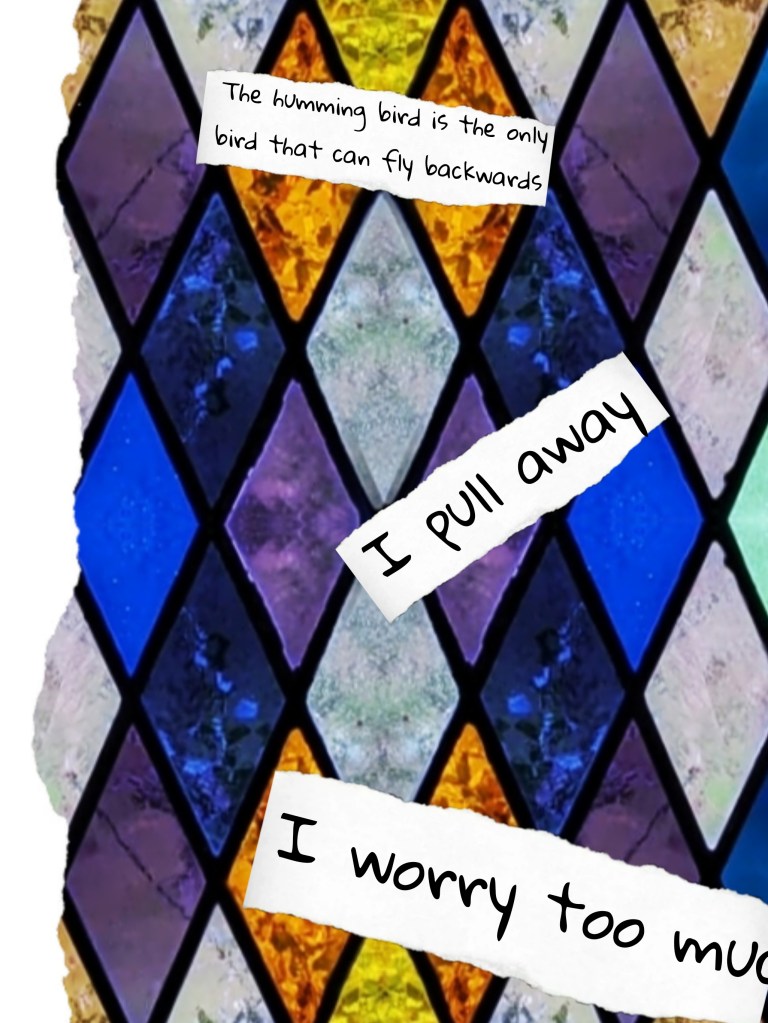
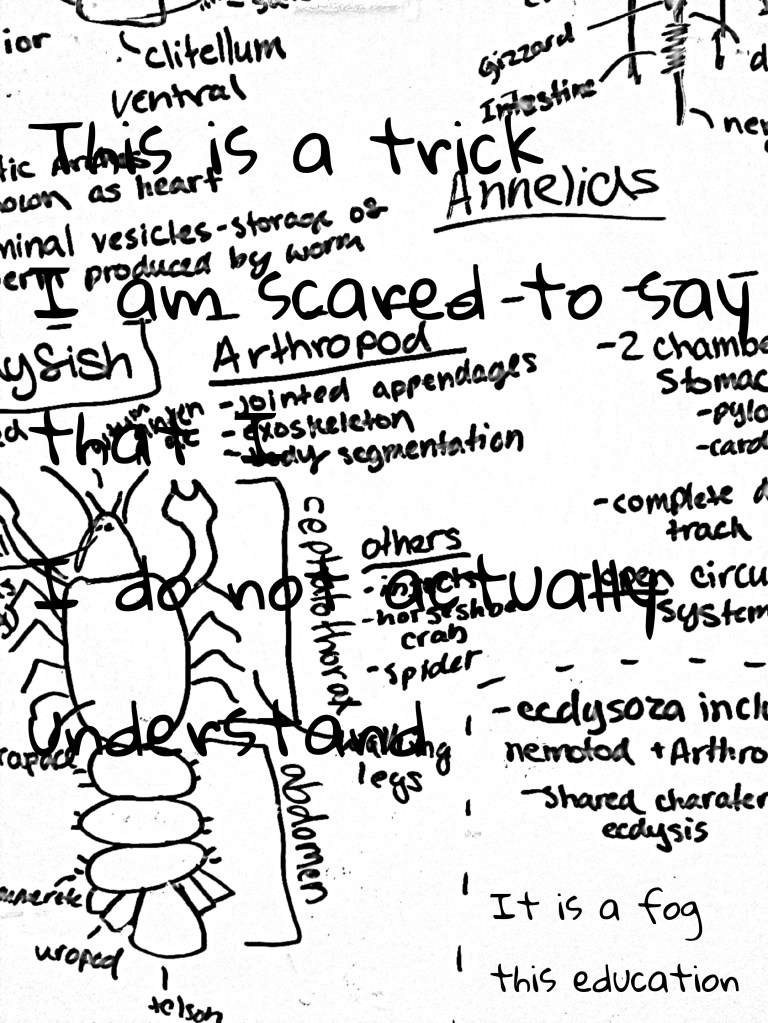
First order of business, I’ve been working on a chapbook! It’s been in the making since last fall semester of 2023 and I finally am pulling all the pieces together. It’s a combination of everything I enjoy- poetry, science, stainglass windows, and angsty little musings about how I’ve poured money into an education and yet, on the cusp of my senior year, I still feel clueless. Yaknow. The standard stuff. A little sneak peak page can be seen below:
I hope to enter a chapbook contest and submit it for online publishing but we’ll see where this little project takes me. It was loads of fun to work on and I can’t wait to see what I end up doing with it whether its publish it or set it on fire. What matters is I am essentially done!
Second order of business, I am taking all writing classes this semester! I just need to finish up my silly little writing minor so I’m taking The Creative Market Place as well as Short stories and Fiction. Oh, and walking. Yes, I am taking a walking class. I needed the credit.
The Creative Market Place is a cool class where I get a little bit more insight on the business side of being a writer. We recently finished up a peer review workshop where we critiqued each other’s papers and reviewed books. Generally workshops can be a source of stress because I want to sit down and write a thorough and extensive feedback paper for each piece but, alas, time is not always on my side. Not to mention the fun of sharing your work to a class room. I was surprised to find that, ironically, sharing my overly angsty, corny poems doesn’t bother me in a class room setting but writing something semi-professional is. I think I just have to try extra hard to be professional and the poetry thing is just kind of fun. So when my professional review sucks, that’s a little more of a blow to my writer ego (something’s gotta keep it in check).
Short stories in fiction is both wonderful and awful. I’m having to fight against my long-winded tendency to describe everything in a room and what every single skin cell looks like on a character. I blame my consumption of Tolkien literature I think.
Final order of business, I am figuring out what I am doing with my life. This has proved to be a most arduous task and I still haven’t quite completed it. Most days I find myself torn between the two moods of “Yay! I’m almost done with school!” and “Oh no, I’m almost done with school!”. I’m not entirely sure what the future has in store for me with a bio degree and a creative writing minor. I am not entirely certain whether this writing thing will just be a brainless little hobby that I do when come home from a long day working at a lab or if it will actually be a part of my professional life. I guess it’s just whatever doors God chooses to open. So, with this in mind, I’m trying not to spontaneously melt from the stress. I know it’ll all turn out alright. All my college seniors out there know the feeling I’m sure.
And that’s it! Or all the important stuff at any rate. Thanks for taking the time to read my existential crisis about my quickly approaching future. Feel free to share any anxiety tips in the comments below and take care!
Childhood. It is something that is near all our hearts. I am sure many of us can recall summers spent outdoors. Bare are feet skimming the soft grass. The scent of freshly cut grass. The distant hum of cicadas. Fireflies blinking and winking at us from the dark. Fresh air that zips past us as we run and play and enjoy nature and childhood freedom.
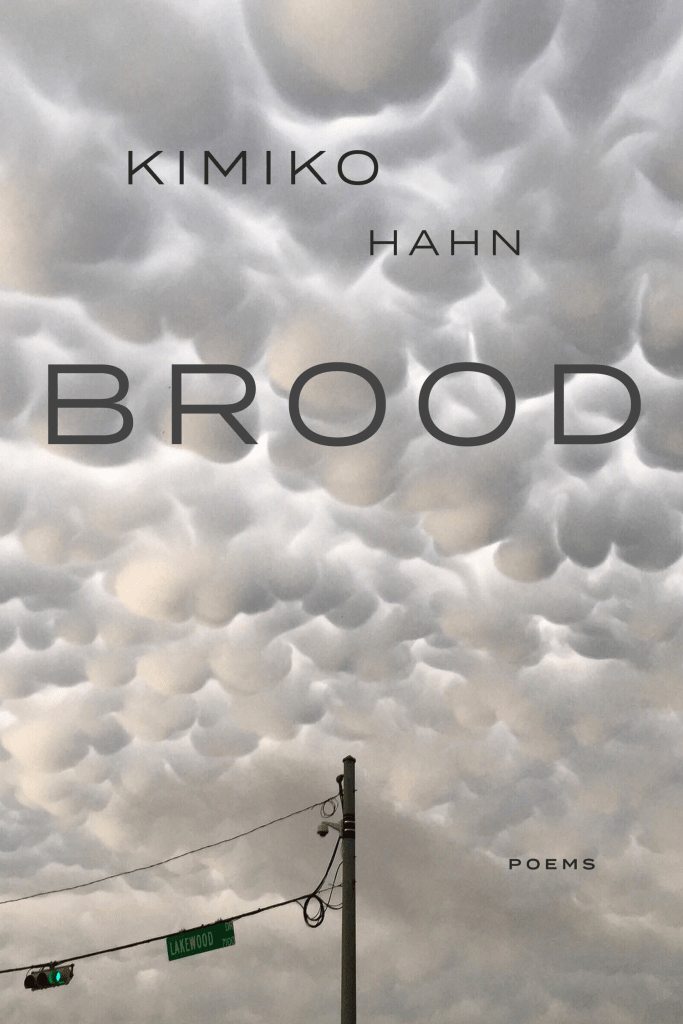
Nature and childhood is often something that is connected in our minds, whether we realize it or not. It is this connection that Kimiko Hahn taps into in her chapbook titled “Brood”. She explores this connection through a series of poems giving us a full sense of her childhood and nostalgia.
Hahn is a seasoned poet who is the author of a whopping 10 poetry books. This includes but it not limited to Foreign Bodies (W. W. Norton, 2020), Brain Fever (Norton, 2014), Toxic Flora (Norton, 2010), The Unbearable Heart (Kaya, 1996) which was the winner of the American Book Award, and Earshot (Hanging Loose Press, 1992), winner of the Theodore Roethke Memorial Poetry Prize and an Association of Asian American Studies Literature Award. Science and nature are common themes in her work and this chapbook is no exception when it comes to this.
Hahn grew up in New York and Tokyo. It makes one wonder if these urban backdrops caused her mind to wonder to what little nature there was in her childhood. Her chapbook “Brood” even opens with a little snapshot of a Damselfly caught in a web.
“When you spot a damselfly
Caught in a spider’s thread
Blow gently…”
Early on, Hahn draws our attention to the delicate and intricacies of nature. But, these pictures are also contrasted with humanity and the modern. One such poem titled “Folding Fan Advertising Kikkoman Soy Sauce” exemplifies this while also introducing us to a memory and a person who has passed.
“My kindergarten handprint in clay! Pearls! But you never belonged to me. I’m not sure I care, odd ephemera in the debris of my father’s home.”
She does the same in the following poem titled “Noise”.
“The neighbors teething baby wails, a grating cranks shut, a woman calls out, a man shouts back, the sanitation truck pulls to the curb with engine, men, and suction…”
Overall, this contrast between nature and the modern creates a well-rounded experience as Hahn delves into feelings of loss, nostalgia, and family. Hahn masterfully weaves these thoughts and ideas together to give us a colorful picture of childhood and her specific upraising. It is just a small peak as the works are often brief, but they are rich with vivid imagery and beautiful scenes that pull us in from the first sentence.
Pssst! Hey! Thanks for reading! This post is a bit different from my usual blog posts but I read this chapbook and did a review on it for school so I wanted to share. I not only got to pick the book but I found it was fun to share my thoughts. If you’re into poetry, definitely check out Kimiko’s work!
Did you know it’s my favorite time of year? The weather is perfect- I love that midrange of temperatures. It’s the time of year when I get to pull out my forty gazillion jackets and give them enough wear to justify the amount of space they take up in my wardrobe. It’s also campfire season, yet another added bonus. I’m an avid loved of s’mores, marshmallows, and the oh-so-good smokey smell.
You want to know what else I love about the weather getting chilly? The appeal of soup increasing by 100%.
Don’t get me wrong, I adore soup normally however, my love only grows when it’s nippy outside and I’ve got a steaming bowl of yummy in front of me. I could have soup all week.
So, in the spirit of fall, I wanted to share some of my favorite soup recommendations with you guys! I know this it totally different from my regular types of post and is more reminiscent of what you’d find on a lifestyle and cooking blog but I can’t help myself. I simply must share the deliciousness of these soups with the world!
Or at least… the five of you who are out there reading this post!
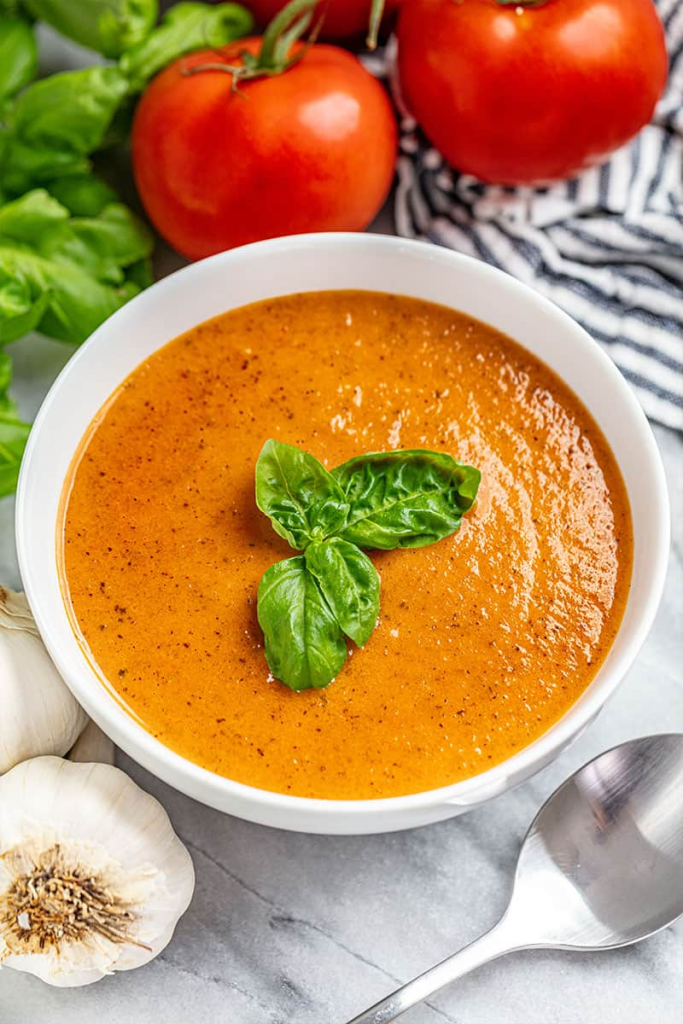
Tomato Basil
I adore tomato soup.
Strangely enough, as a kid, I hated tomatoes but tomato soup? I could eat that stuff for three meals a day. I had a sort of ritual when I ate them too- I’d eat them with ten saltine crackers and would often crunch up the crackers into the soup itself to give it a little crunch. Now this wasn’t always the best idea as halfway through the cracker chunks would become super mushy but my 7-year-old self would not be deterred and persisted in doing this.
Now, while I’m saying it’s not the best way to eat it, Tomato Basil soup still is kind of the bomb, cracker chunks or no cracker chunks.
Zuppa Toscana
My friend. If you have not had this soup, then I implore you to look up a recipe and try it soon. I didn’t even know this soup existed till I worked at a tea shop here in the deep south and they introduced it as one of our soup specials.
And ya’ll.
It. Is. Immaculate.
It’s creamy, has kale but doesn’t taste like it has kale, has a nice zing of Italian sausage, and smells heavenly. This soup can also be enjoyed with saltines which is definitely an added bonus. Please give it a shot if you haven’t tried it already.
Southwest Chicken Soup
For those of us who are Mexican food type people. I love this soup because it tastes amazing, especially when you add an ungodly amount of cheese and maybe even some fritos if you’re feeling spunky. This soup is a solid go-to for my family because it can also be an easy crock-pot recipe.
Loaded Potato Soup
Friends, I must admit, my favorite vegetable is actually not a vegetable but a root. But you must admit, potatoes are quite a blessing that frankly I don’t think humanity deserves, but by the grace of God we have ‘em anyways. And I can’t tell you how much I love my starches. And if you love them too, I guarantee you’re going to love this soup. Or if you just love bacon. This is one of the few soups that you can get away with adding obscene amount of bacon too and it’s still good to eat!
This soup is kind of reminiscent of a loaded potato (as the title may suggest) in addition to being super creamy. I’ve had it a couple times and once while I was sick, and it felt amazing on my scratchy throat. Though one thing I can promise you, if you’re a potato girl, you will enjoy this soup both in sickness and in health.
Beef Stew
Okay, yes, technically this is a stew, but they aren’t that different right? At least, according to google… and you’re not calling google a liar, are you?
Either way, this stuff hits the spot during cold weather, and I’d be ashamed to not include it on the list seeing as how growing up, it was my favorite liquid-based meal (I’m just trying to avoid saying “stew and “soup” now if you can’t tell).
Stick this stuff in a crock pot and let it summer over the course of the day and you will come home to the most glorious of smells.
I personally recommend making fresh bread to go with along with this meal, especially if you have a bread machine so you can avoid the hassle of having to time it to where both things are ready and warm at the same time.
Either way though, bread or no bread, I think Beef Stew is one of God’s great blessings and it’s no wonder humanity has been making stews for goodness knows how long.
And I think that’s it! Those are my favorites anyways. I hope I’ve made you thoroughly hungry, so you feel compelled to quench it with steaming bowl of soup. You’re welcome!
I promised. When I make a promise I will never ever break that promise.
…especially when it comes to making these posts. I sorry, I’m just a helpless pinterest girl.
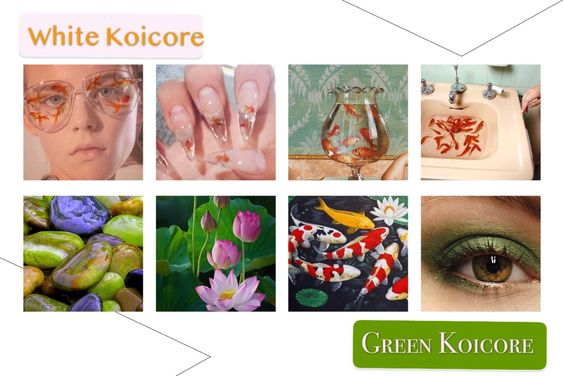
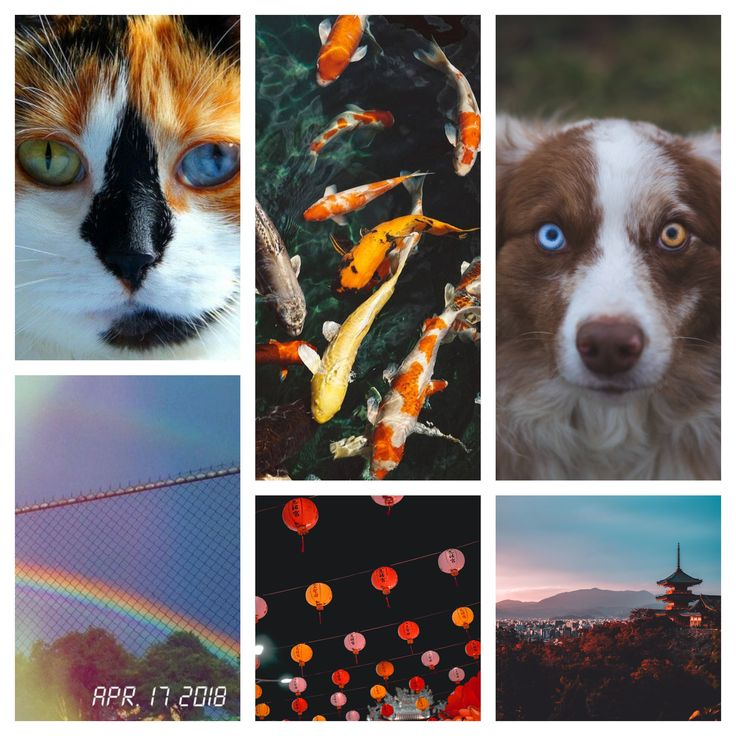
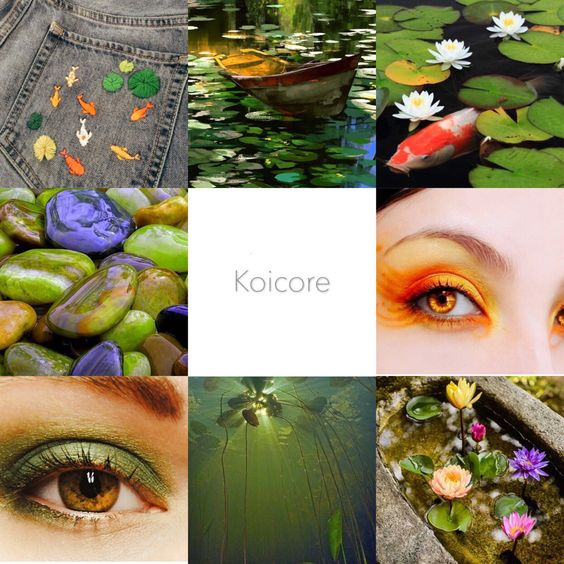
1. Koicore
This is an aesthetic I sort of made up awhile back. Basically it’s characterized by a love of fish, lilypad-esque color schemes, and an emphasis placed upon reducing plastic use. Yaknow, cute stuff like that.
I separated the aesthetic into two types….White Koicore and Green Koicore. I even made a little graphic showing the visual differences between the two.
Cute, right?
Anyways here are a few more mood boards just in case you don’t entirely get the gist just yet.
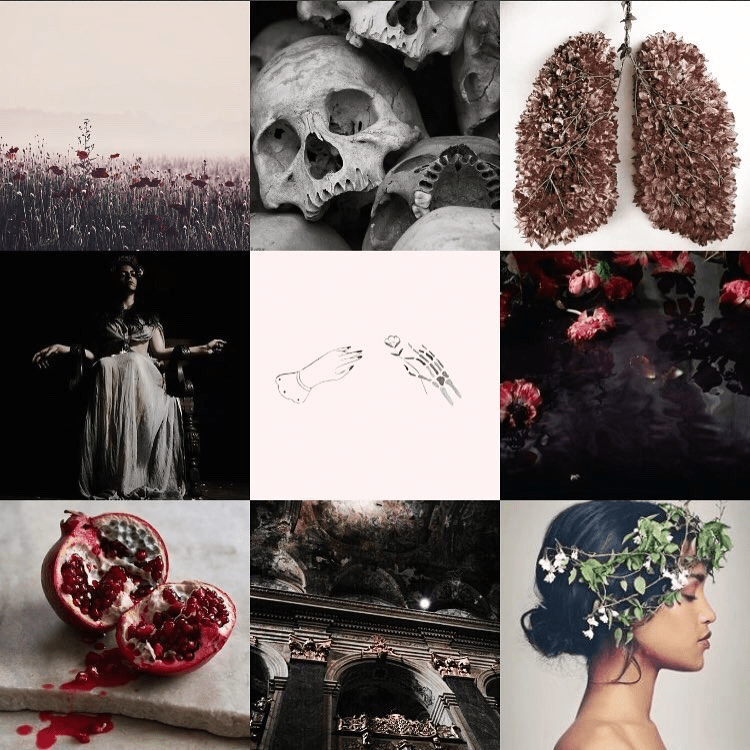
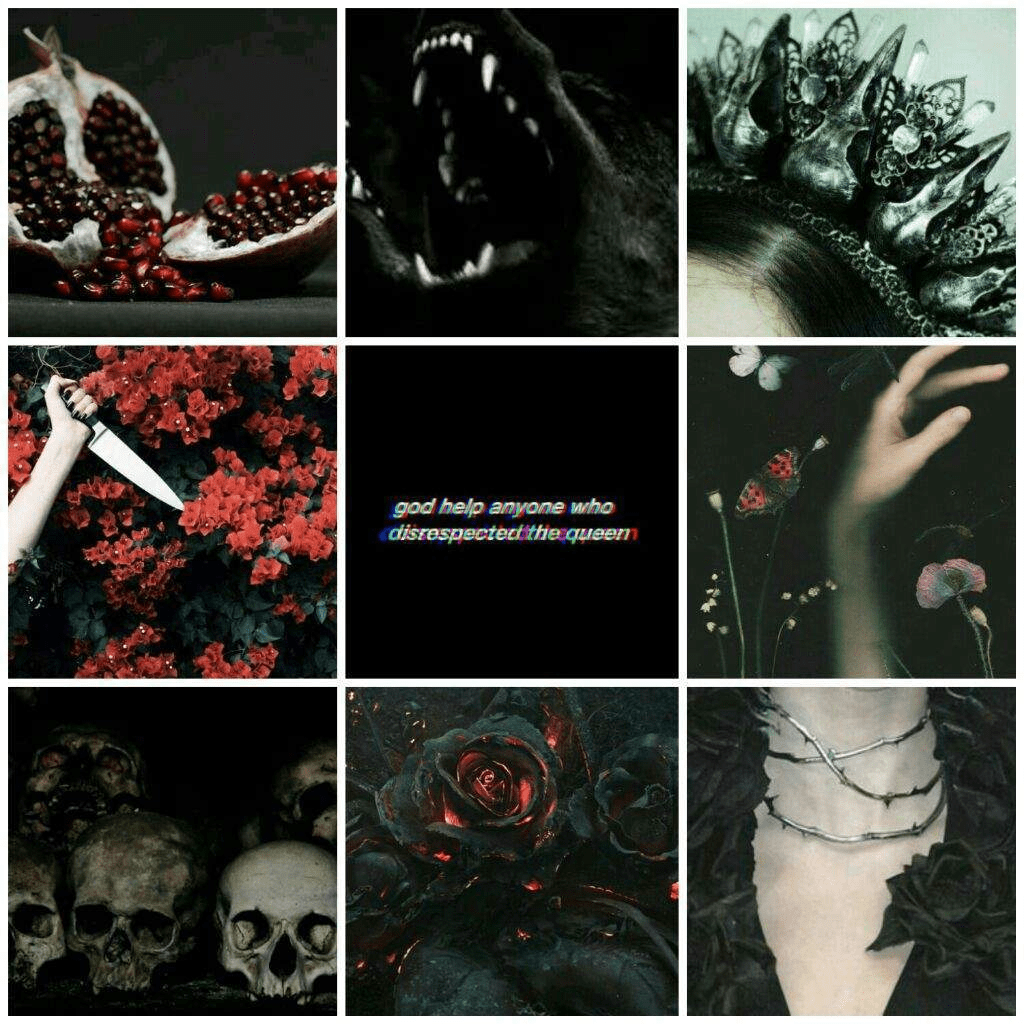
2. Persephone
Kind of proud of the name I came up with for this one. Basically this aesthetic is botanical gothic. It is characterized by statues covered in ivy, a heavy mist hanging about a garden, and pomegranates of course. Perfect for when you’re feeling girly and feral at the same time.
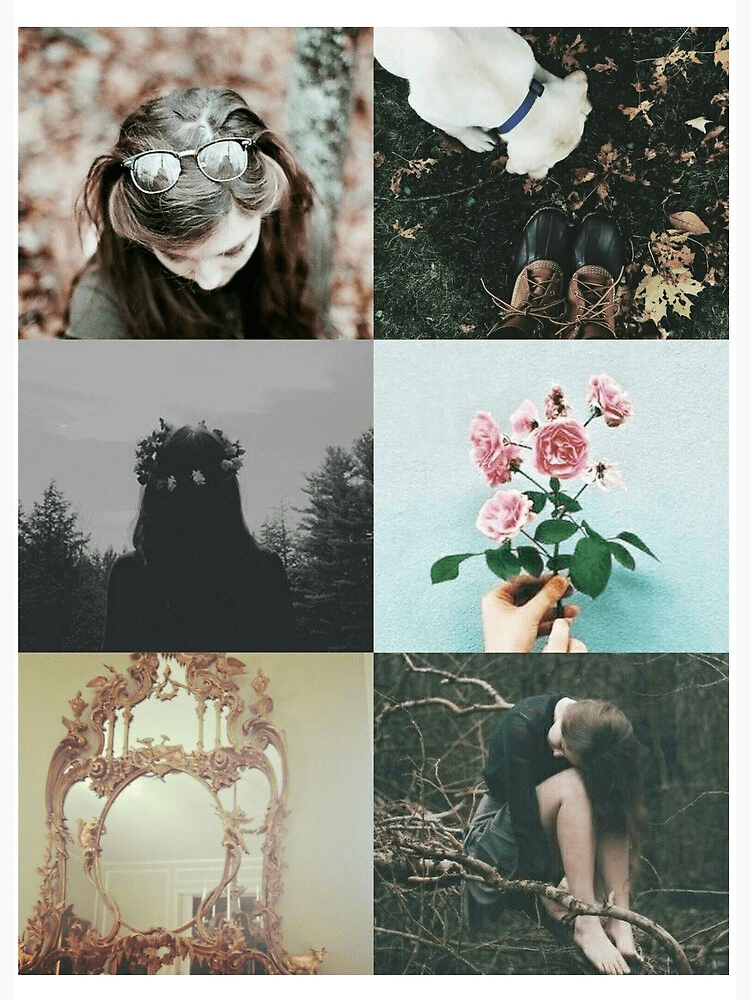
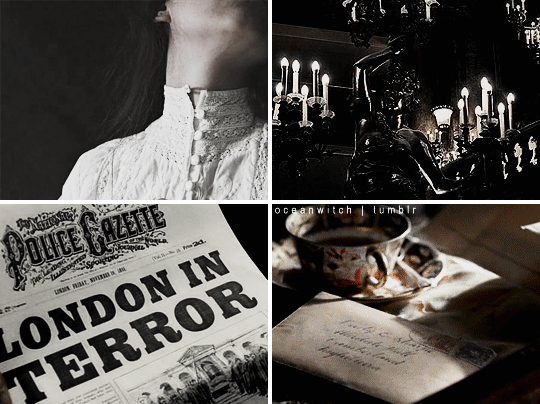
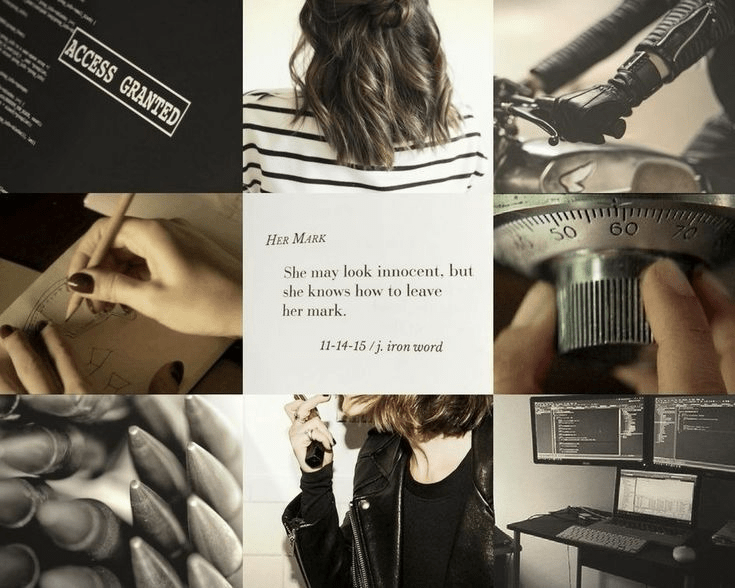
3. Lady Detective
Lord have mercy, I am an absolute sucker for this aesthetic. I couldn’t find any other fitting name for it to be entirely honest. But surely I can’t be the only one who lives vicariously through this aesthetic? Surely? Its the perfect mix of vintage and adventurous that just makes me oh-so-happy. Alas, I blame my obession with Nancy Drew as a child.
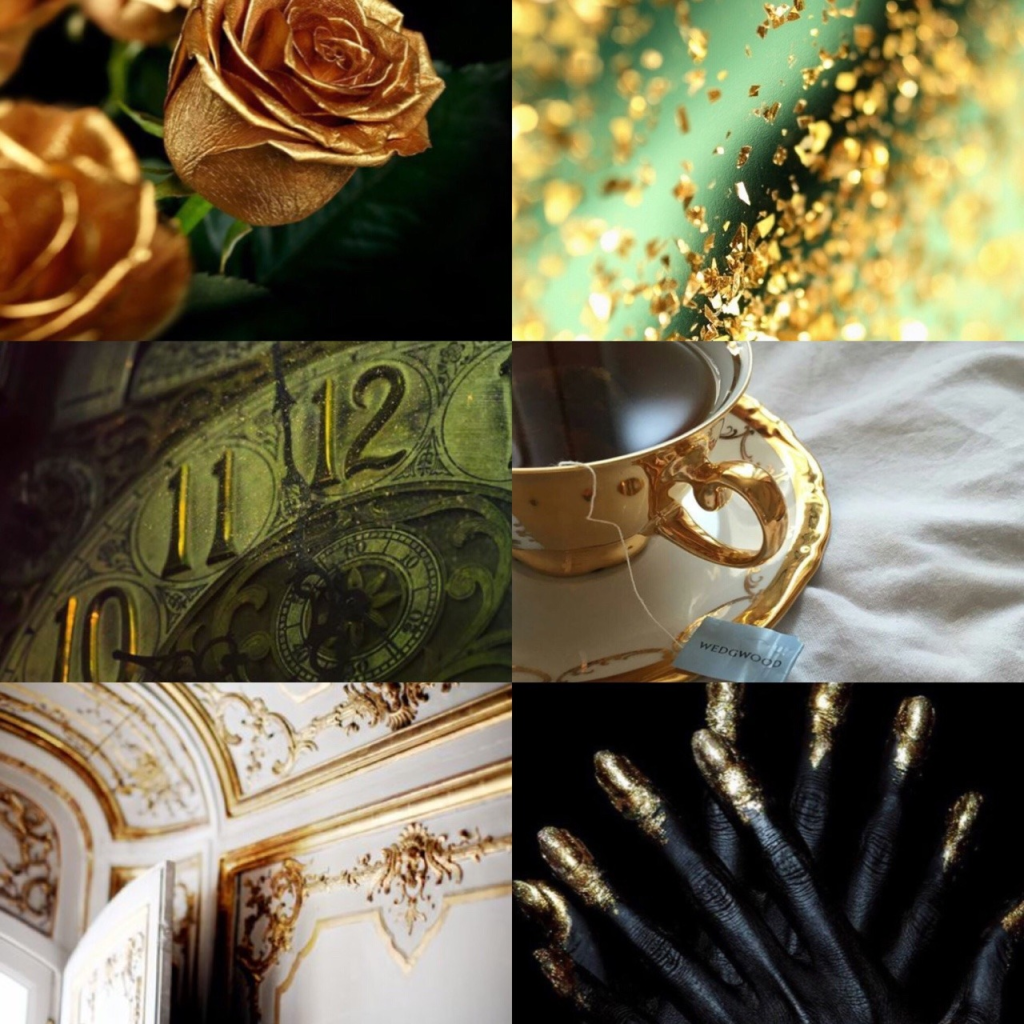
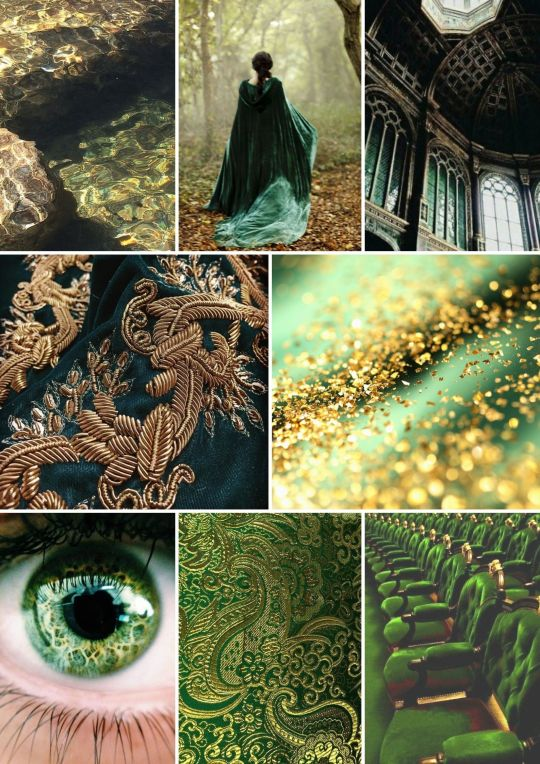
4. Jaded
The perfect mix of luxurious and dark, Jaded is an aesthetic that is characterized by royal imagery as well as the color pairing of green and gold. Examples can be seen below!
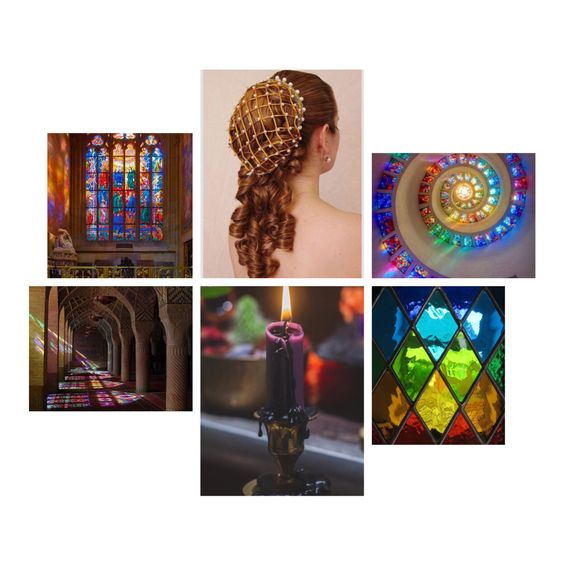
5. Stainglass
There is something magical about stain glass windows. The shimmery, colored says of light that stream through the glass onto altars and pews evoke a such a positive and peaceful feeling. So it’s no wonder that I’m drawn to such an aesthetic as this.
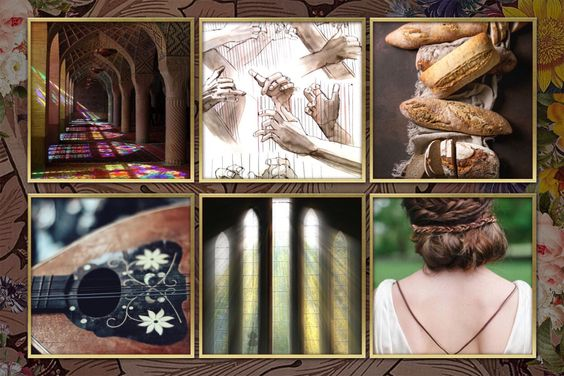
I was sad to find through a few pinterest searches that this aesthetic is severely underrated/barely exists if at all. So I, of course, had to remedy that. I created a new section in my Aesthetics pinterets board and got to work. This aesthetic I think would be characterized by Renaissance-type imagery and fashion. Pearls, harps, lutes, candles, crosses, gold, tapestries, and tunic tops seemed to suit this aesthetic nicely.
I doubt this aesthetic will catch on however, I hope a few pinterest girls who have a thing for medieval inspired fashion and the Renaissance era can appreciate the few moodboards I’ve created.
And I think that just about wraps up our little aesthetic-round up though, if we’re being completely honest here, I’m probably going to continue this series as more novel aesthetic concepts pop into my head or onto my pinterest feed. There is no end in sight! See ya’ll soon!
Good evening, ladies and gents! Hope you are all doing well this fine night!
This weekend I have been busy typing away and making a few changes to my little corner of the internet and I wanted to just give you a quick heads up as to what I’ve been up to!
The “Prompt Directory” Tab
The longer I blog, the more writing prompts I have accumulated and published for the world to see. These prompts, however, due to the format of my site, tend to get lost in the backlog of posts I put out on a pretty regular basis. So, for ease of access, I have made a Prompt Directory tab that can be accessed directly from the menu. There you will find an alphabetized list of every collective prompt category I have covered thus far. I will continue to updated this list as I make more writing prompt posts.
The “Generators” Tab
I don’t know about you, but as a writer I can tell you that I end up googling a lot of name/character generators. You know, to help with inspiration in a specific area when you need it. A few sites I have used for this are known as Springhole.net & Chaoticshiny (definitely check them out if you get the chance). But, despite these sites having an enormous backlog of writing generators, sometimes I found myself searching for a very specific one. So I coded some of my own. During the pandemic, I made of plethora of these generators for all sorts of purposes (but mostly for writing inspiration). Then, a week ago, I decided that it would be fun to share these generators with my fellow writers. So, to make a long story (that I admittedly just told you) short, you can find a categorized list of my generators under my new Generator tab on my site menu.
To Conclude…
Those are my big updates as of right now, but I have a few ideas churning in my head for the future. Feel free to stick around and see whatever changes are coming to my blog next (no pressure though). Thanks for reading & happy blogging!











 By the Brooke