I watched the Indiana Jones Trilogy for the First Time

Hey guys! I know I’ve been quieter this summer, and I want to say I’ve been busy launching my own business or writing a full-length novel, but that would be inaccurate, I fear. This summer has been my movie-buff arc. That’s right: I’ve been catching up on all the movies in my life that people have recommended to me and I put off because… well, college or the lack of access to them. Now with streaming being the norm and no longer having the demand of school sucking my time and soul away, I can “rent” a movie to stream on youtube for three bucks and boom! Movie watched. Also I have one of those phone bundles that gives me access to Disney+ so that’s cool.

ANYWAYS, that’s the context for what I’m about to cover next. I’ve never seen the Indiana Jones movies. Not once. And I set out to fix that. So, here are a few scattered thoughts and ratings I have regarding this legendary set of films.
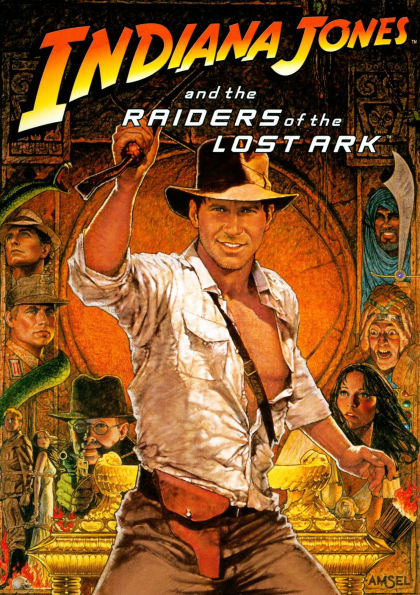
1. Raiders of the Lost Ark: 8/10

This was a delightful romp. It was also neat to see the many gags and bits that have become classic clichés in media due to this film, complete with the classic idol and bag of sand swap, the rolling ball of doom, and much, much more. Also the dude’s face melting off at the end had me in stitches. I don’t know what it was about it but it amused me to no end. My biggest qualm with this film, and most of them, really, was the irritating presence of the female leads. I get it, they’re classic damsels, but DANG I did get sick of the constant “INDYYYYYY” screech that especially plagues these first two films of the trilogy. A small gripe here though I cannot say the same for the second film.
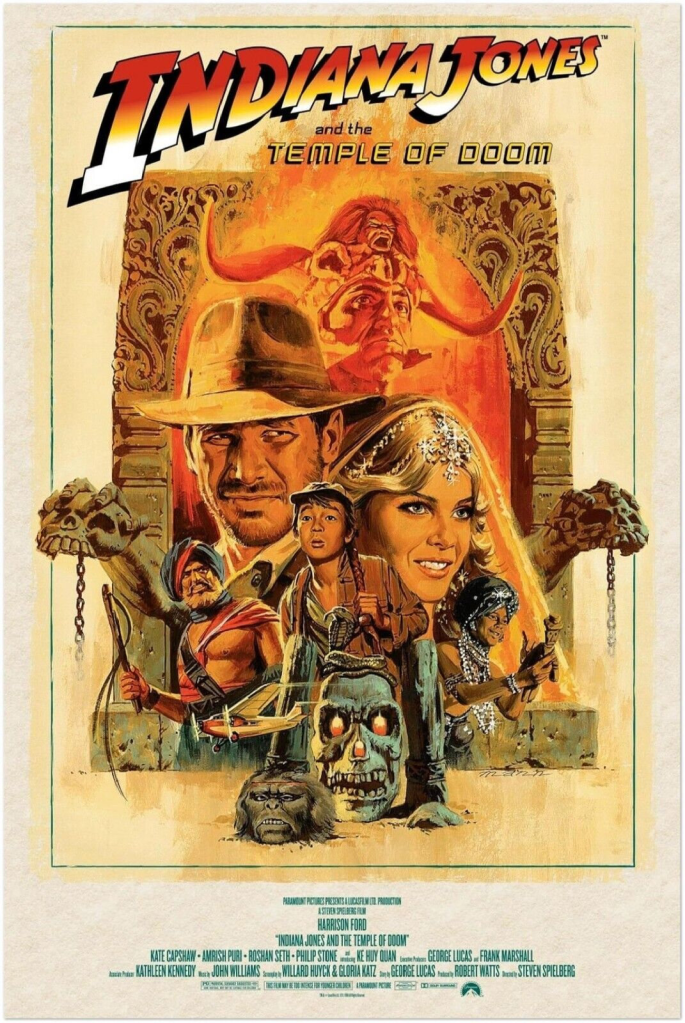
2. The Temple of Doom: 2/10

Wow, did I want to like this film more than I actually did. But I didn’t. Shortround was really carrying here was Willie was probably my least favorite character in this entire set of movies. At first, I thought I might get some relief as Marian unfortunately grated on my last nerve but Willie showed me how much I should have been thankful for when it came to the female lead in the first film. And then there was the Cult stuff…

The charm that seemed to exist in the first film seemed to be replaced in Temple of Doom with an intense feeling of dragging and dread. I felt that far too much time was spent on the weird heart-ripping ritual and the sending of poor sods into the lava pit. There seemed to be a lot of aimless running around, random hypnotism, and drinking and eating nasty-looking liquids, whether it was from a human skull or a gorilla head. The highlight of this film was the mine cart chase. That’s it. That’s where one of the points that this film earned came from. Shortround was the other point. Overall, I have no desire to see this film again.
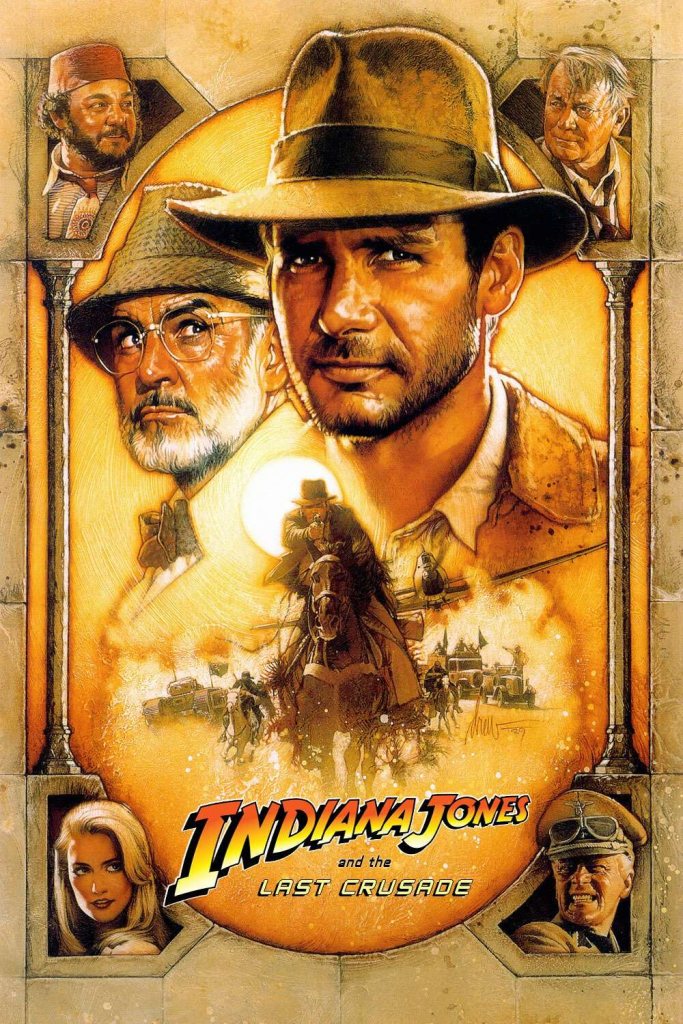
3. The Last Crusade: 9/10

I sharp rebound here. The Last Crusade was my favorite of the three. The female lead, while not being someone I was attached to, served a purpose and shrieked less by quite a considerable margin when compared to the likes of Marian and Willie. And look! We’re back to outsmarting Nazis! Thank goodness! I really do feel like this is where Indiana Jones is at its best.

Another point for the Knight who has stayed alive for hundreds of years just to give cryptic hints as to what Grail one should and shouldn’t choose. His presence was an overall positive. Indy’s Dad was also a fun addition, not only adding stakes for our main character but being a FOIL as well. Indiana, I was surprised to find, doesn’t do a lot of developing in these films. In fact, when thinking about it, he lacks much personality at all; however, what little I can recall of it can be sourced from this movie. I love the reveal of him stealing the Dog’s name for his own, as it gives us the impression that Indy is a dramatic History buff who wants to escape his father’s shadow. It could be argued that Indy doesn’t HAVE to have a deep dive on his character motivations and growth and such, and I would agree, as that is far from the purpose of these films. Little hints like this are still welcome in my opinion.

So there you have it! A brief but accurate synopsis of my thoughts on this classic trilogy. I wish I had more in-depth thoughts to share, but alas, I do not have much else to add except for the fact that I can see why these films became the iconic movies that they are viewed as now.

Thanks for reading!
A Review of Logseq: Is it a Valid Obsidian Alternative?

So, I heard all the hype about Obsidian. Yaknow, the digital brain-builder everyone’s (or at least my side of the internet) raving about. Naturally, I was intrigued by the idea of weaving a web of my thoughts into an interconnected masterpiece. But then I saw the price tag. I wasn’t exactly thrilled to part with my money just yet.

So after a little googling I came up with Log Seq. It’s the free alternative that claims to do the same thing. By the same thing I mean build a network of your thoughts like some sort of mind-map wizardry. So, I took it for a spin for a week, all in the name of saving a buck (or several). Here’s how it went.

The Good Stuff

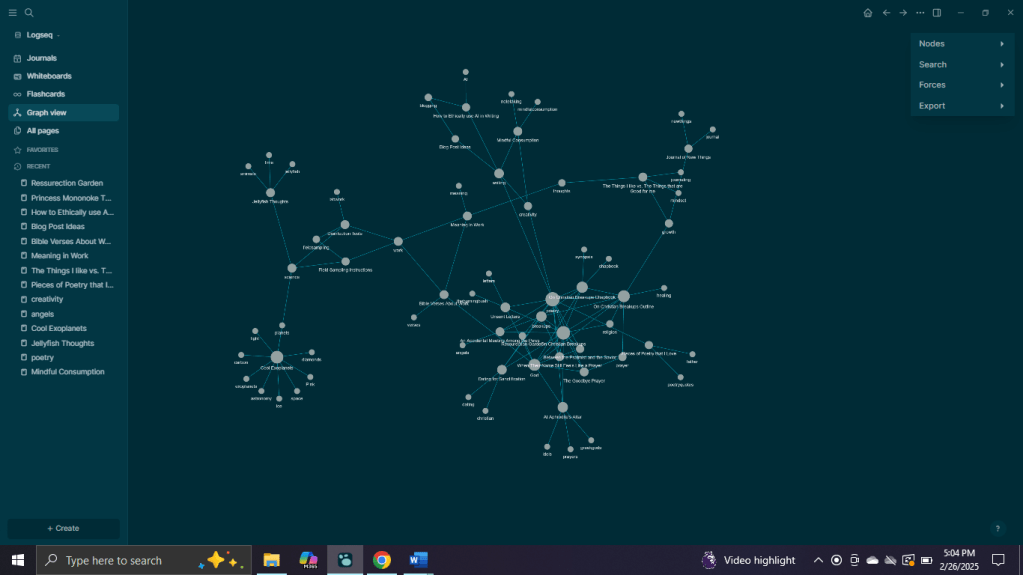
First off, Log Seq is phenomenal. Like, truly fascinating. The ability to link thoughts, ideas, and random musings into this complex web of information is seriously cool. I started from scratch, and by the end of the week, I had an impressive digital mind-map that was organized based off of tags. My main tags were #poetry, #science, #writing, #religion.

The Not-So-Good Stuff

There is only one thing that I really think hurts the log seq experience. Log Seq has no app. And while typing on my laptop is fine when I’m already sitting at it, capturing thoughts throughout the day? Not so much. I don’t know about you, but I have a knack for coming up with my best ideas at the most inconvenient times. Like, standing in line for coffee or pretending to listen during a meeting. Without an app to sync my thoughts, I was left trying to remember everything until I got back to my laptop… which is like trying to carry water in a colander. To well that’s reaaaally far away. An unneccessary metaphor I know. It’s just a funny mental image.

The Verdict

So, would I recommend Log Seq? Definitely. Especially if you’ve got the discipline to sit down and dump your brain at the end of the day. If not, you might be out of luck until they roll out an app. But overall, it’s an incredible tool with a ton of potential. I might just keep using it (at least until my wallet decides Obsidian is worth it).

Oh, and as promised, here’s my brain-web after a week of using Log Seq.

So, what do you think? Have you tried Log Seq or Obsidian? Do you have any other alternatives I should check out? Drop a comment below!

okay byeeee

I Used TikTok as a Slightly Out-of-Touch 20-Something, and Here’s What I Found

If you haven’t joined TikTok yet, you might be wondering: Should I? Maybe you’re feeling FOMO, or maybe your curiosity is piqued by all the buzz. Allow me to satisfy that curiosity and save you the download—it’s not worth it.

Don’t get me wrong, TikTok might’ve been a fun app in its heyday (circa two years ago). Back then, it seemed like a magical place where trends, humor, and creativity collided in glorious harmony. However, as of now, TikTok has become a shadow of its former self, buried under an avalanche of TikTok Shop promotions. Imagine scrolling through your feed, only to be hit with an endless parade of “must-have” items you didn’t ask for. No thanks.

Honestly? I’d rather wait for TikToks to trickle their way over to Instagram Reels, where I can actually enjoy them without feeling like I’m trapped in an infomercial. That’s the beauty of Instagram—it’s like the highlight reel of TikTok, minus the ads.

The (Few) Positives

I will admit, there’s one thing TikTok does better than Instagram: content creation. I found that TikTok’s video editing system is surprisingly intuitive and far superior to Instagram’s. Adding text, syncing to music, and playing with effects felt seamless. I actually enjoyed making videos, which is saying something for someone who only opens the app sporadically.

Speaking of sporadic use, my TikTok “routine” looks something like this:

  1. Open the app once in a blue moon.
  2. Film something fun or quirky (because why not?).
  3. Watch all the TikToks my sister or friends have sent me.
  4. Close the app and forget about it for another week (or two).

Why TikTok Isn’t My Thing

It’s not that TikTok isn’t fun. It’s just that it isn’t fun enough to outweigh the downsides. The sheer volume of ads, coupled with the temptation to waste hours scrolling, made the app feel more like a chore than a source of entertainment. Sure, I could see how it might become a massive time suck, but I never got there because the experience was too frustrating to stick around.

If you’re someone who’s already on TikTok and loves it, more power to you! But if you’re on the fence, take my advice: skip it. You’re not missing much.

Stick to Instagram Reels or good ol’ YouTube, where the best of TikTok inevitably ends up anyway. And if you ever get that itch to try TikTok for yourself? Just remember—your curiosity doesn’t need to be fed that badly.

But in the event you’re already addicted to the app, feel free to drop me a follow here.

Alrighty! Byeeee!

Can Pinterest Actually Help Your Writing?

Welcome to a writer’s guide to Pinterest where I plan to discuss the good, the bad, the pretty. (I’m sorry, I love this tag line format, okay?) And rest assured, as someone who has dumped many, MANY hours that I cannot get back into this social media app, I am an expert on this matter.

Pinterest is where I go to build my dream library, organize my “writing room” ideas, and pin cute coffee shops I probably won’t visit but love to look at. As a writer, Pinterest has been an absolute gem for inspiration; you could almost call it a mood board for my entire brain. But as far as promoting my writing? Well, let’s just say Pinterest isn’t quite built to send people flooding to your latest blog post or novella.

Here’s the scoop on how Pinterest can actually help (and where it kind of misses the mark).

The Good: The Perks of Pinterest for Writers

  1. An Endless Well of Inspiration (Literally, It’s Bottomless)
    If you’re ever stuck on a writing project, Pinterest is the perfect place to scroll through photos of foggy forests, vintage journals, and other people’s aesthetically pleasing bookshelves. The platform is a visual feast, which makes it amazing for building storyboards or getting character inspiration. Dreamy landscape? They’ve got you covered. You’ll be drowning in imagery before you even get through the first page of your search.
  2. Organizing Writing Ideas Like a Pro
    Pinterest boards are a lifesaver when it comes to keeping track of all those ideas we want to come back to someday. Want to keep that list of dialogue ideas, character profiles, or writing prompts handy? Just pin it! In a way, Pinterest lets us organize our creativity, which is both refreshing and slightly magical (especially if you’re like me and tend to misplace things…like ideas).
  3. Perfect for Building an Aesthetic (Hello, Vibes!)
    Whether your story is set in a gloomy castle or a sunny seaside town, Pinterest boards let you curate a “vibe” that can bring your creative world to life. You can find everything from historical costumes to quirky cafes, and it all adds a splash of personality to your work—even if it’s only for you to look at. Sometimes, having that mood board handy is just what you need to get into the writing groove.

The Bad: The Downsides of Pinterest for Writers

  1. Driving Traffic to Your Work? Not So Much
    Here’s the thing: people on Pinterest are mainly looking for visuals and ideas, not links to blog posts. Most users are there to save images, maybe jot down a few notes, and then go on their merry way. I’ve pinned some of my writing work before, but it’s rare for people to follow an image all the way to an actual article or story. Pinterest is more about the “aesthetic save” than the “click-through,” so don’t expect it to be a major traffic source.
  2. Lack of Community Engagement
    Pinterest is not the place to chat, bond over writing struggles, or get feedback on your work. There are no extensive comment sections where people are swapping tips or sharing the same cozy creative space you might find on other platforms. Truth be told, they DO have a comments section on individual pins but it’s not laid out very well nor is it heavily used among the platform’s users. Pinterest is more of a solo mission; everyone’s there for their own pins and projects, so if you’re looking for a writing community, look elsewhere.
  3. It Can Become a Time Sink (Oops)
    Pinterest may look harmless, but let’s not kid ourselves—it’s a gateway to spending hours pinning everything under the sun without actually writing. There’s so much content that it’s easy to fall into the “one more scroll” trap, especially when it feels like you’re being productive. At some point, it’s best to stop pinning and start typing. (Believe me, I speak from experience here, ok.)

The Verdict: Is It Worth It?
If you’re in need of visuals or inspiration, Pinterest is fantastic and I highly recommend it. With your own private library of images to draw from, it can make the writing process a lot more fun as well as help you visualize things you’re struggling to picture yourself. Just don’t rely on it for promotion, because Pinterest users are likely just passing through.

Happy pinning (and happy actually writing, too)!

A Guide to Instagram for Writers: The Good, The Bad, and the Draining

Is a picture really worth a thousand words? Well, we aim to analyze that very thing today as I walk you through what it’s like to use Instagram as a writer. If you’ve some much as even glanced at Instagram, you’ve probably noticed it seems to the hotspot for creatives. I mean, it’s basically one giant virtual gallery of coffee cups, open books, and people with serious-looking headshots writing snappy, one line poems. But is it actually useful for writers trying to build their craft and audience, or just another time-suck we justify as “networking”? Spoiler: it’s a little bit of both.

So here’s the full rundown of using Instagram as a writer—complete with highs, lows, and plenty of aesthetic pressure.

The Good: The Highlights of Instagram for Writers

  1. Connections, Encouragement, and the Validation of Strangers
    Instagram is kind of like the local open-mic night—someone will always clap, even if you just read your grocery list (as long as you use enough hashtags of course). Through hashtags like #WritingCommunity and #AmWriting, you can find other writers to cheer you on and remind you that yes, there are people out there who care deeply about your haiku on existential dread. Plus, it’s a safe bet that people will comment something nice on your posts, even if it’s just a thumbs-up emoji. HOWEVER, whether these are real people or just bots vying for attention to promote themselves everywhere is up for debate.
  2. The Sheer Joy of Making It Look Pretty
    Who doesn’t love a good aesthetic? Instagram encourages us all to be photographers, so if you’ve got snippets of writing or a stack of favorite books, there’s endless fun to be had. (Although, honestly, does my journal really look better next to a potted plant? The people say yes.) If you’re visually inclined, Instagram might be your paradise.
  3. Slow but Steady Growth (If You Have the Patience)
    I can attest to this one personally. When I first tried sharing my writing, I started to see a slow and steady trickle of followers—as long as I was babysitting my page like a needy plant. But take a break? You’ll be lucky if the algorithm even remembers your account exists. It felt like stepping away for a week was like hitting the reset button, and I didn’t have the energy to keep jumping back in. Eventually, I just let it be, and now my poor little writing page is collecting dust in the dredges of the Instagram algorithm. Oops! Sorry, this was supposed to be the positives section. But now that you mention it, I think it’s time we move onto….

The Bad: The Drawbacks of Instagram for Writers

  1. The Algorithm = Frenemy #1
    Oh, the elusive, ever-changing algorithm. Instagram doesn’t just let you share writing; it expects you to be a part-time social media strategist. Posting at the right time? Check. Engaging with followers? Check. Making Reels? Triple check (seriously, Reels are in). And sometimes you’ll pour your soul into a post only for it to be seen by three people, two of whom are your mom and your bestfriend (love ya girl!).
  2. Perfection Pressure: For When Words Aren’t Enough
    Being on Instagram as a writer is kind of like being told you have to paint a picture every time you write a sentence. A good line of poetry is no longer enough—you have to make it look Pinterest-worthy. This can be draining, especially when all you want to do is, you know, write. But you have to! Because this isn’t the time nor the space to share a novel. You MUST stick to the witty one-liners. That’s all people have time for. Instagram content is made to feed an audience in bite-sized portions. And so you must trim the fat.
  3. Time: Instagram Will Eat It All, Trust Me
    Let’s be real—if there’s a way to waste time online, Instagram will help you find it. Between scrolling through your feed, obsessively checking your notifications, and looking for the perfect font for that post, it’s easy to lose hours. And while we could be writing, we’re often scrolling for “inspiration”—or at least that’s what we tell ourselves.

The Verdict: Is It Worth It?
If you genuinely enjoy sharing your work visually and don’t mind the hustle of keeping up with the algorithm, Instagram can be a useful space for writers. But if it’s taking more time than it’s giving back, maybe dial it back. Remember: your worth as a writer isn’t measured by the number of likes.

Happy posting (or happy ignoring the algorithm entirely)!

Google Docs vs. Microsoft Word: Which is the better Word Processing Tool?

Ah, the question that plagues the digital scribes of our time: Google Docs vs. Microsoft Word. Which is better? Which is the stronger writing tool? This really isn’t a question I’ve seen asked a whole lot if I’m being entirely honest, but I have noticed that people tend to be pretty strong on whether or not they prefer one over the other. And why might that be? What strengths do each have to offer? Which would best fit you and your writing style? These are questions I hope to answer as I dive into the pros and cons of each word processor.

Let’s start with the heavyweight champion of the word processing world: Microsoft Word. Ah yes, the familiar embrace of the blue-and-white interface, the comforting click of keys as you type, the reassuring presence of Clippy (may he rest in peace). Word has long been the go-to tool for writers, editors, and procrastinators alike, offering a robust suite of features for crafting everything from essays to epic novels.

With its extensive formatting options, powerful grammar checker, and seamless integration with other Microsoft Office applications, Word is like a well-worn pair of slippers – reliable, comfortable, and always there when you need it.

Need to create a table of contents? Word’s got you covered. Want to track changes or collaborate with colleagues? No problem. Need to add some pizzazz to your document with fancy fonts and snazzy graphics? Just a few clicks away. Any questions or entirely lost? I’ve been a big fan of Microsoft’s help feature where you type into the bar what you’re trying to do. It isn’t perfect as you need to be pretty specific with your wording to find a function, but it’s been more helpful for me than the instances where it isn’t. In fact, this feature is one of the big things I miss when I try to use google docs. I get confused and then go to type it into the help bar only to find that it isn’t there.

Then, emerging from the digital ether like a phoenix rising from the ashes, we have Google Docs. Sleek, streamlined, and oh-so-socially conscious, Docs is the new kid-er, or should I say software? on the block, disrupting the traditional word processing paradigm with its cloud-based collaboration features and minimalist design.

Unlike Word, which requires a hefty software installation and a subscription fee, Docs lives in the cloud, accessible from any device with an internet connection and a web browser. This makes it ideal for collaborative projects, allowing multiple users to edit a document simultaneously and see changes in real-time – no more emailing attachments back and forth or worrying about version control.

But while Google Docs may be the darling of the digital nomad set, it’s not without its drawbacks. The formatting options are somewhat limited compared to Word, and the grammar checker leaves much to be desired. Plus, if you’re a die-hard fan of Microsoft’s suite of Office applications, you may find Docs lacking in some areas. This is my very problem with it- it’s a little TOO minimalist. Everything I want done to my document (within reason of course) I want to be able to do on my singular word processor. I don’t want to have to search out other tools. Sure, if you want to keep it simple and have all your documents on one cloud, that’s great! Sounds like Google Docs is the application for you. For me personally however, it can leave much to be desired features wise.

Let’s not get too ahead of ourselves though before announcing Microsoft Word the supreme word processor. It’s got some glaring flaws too that I think are worth pointing out and going more in depth on. So, let’s take a moment to explore the underbelly of the behemoth that is Microsoft Word. Despite its undeniable dominance in the world of word processing, even this titan has its Achilles’ heel.

First, let’s talk about my main issue with Microsoft products in general- price. One of the most glaring drawbacks of Microsoft Word is its cost. While some users may have access to it through institutional licenses or subscription packages, others may find the standalone price prohibitive, especially for occasional users or those on a tight budget.

Next, let’s discuss Microsoft word’s complexity. While I bashed Google docs for being a bit too simplified, I think an argument could be made that Microsoft Word is too complicated and overloads you with too many options, especially if you’re not used to the plethora of menus. In short, while Word offers a plethora of features and functionalities, this can also be its downfall. The sheer breadth of options available can overwhelm novice users, leading to frustration and a steep learning curve. From formatting quirks to obscure settings buried in nested menus, navigating Word’s labyrinthine interface can sometimes feel tedious and frustrating.

Additionally, it is also worth noting that Word, as an application, is Resource Intensive.  Word is notorious for being a resource hog, consuming memory and CPU cycles like a hungry-hungry hippo. This can lead to sluggish performance on older or less powerful computers, especially when working with large documents or complex layouts.

Next, I want to discuss Word’s issue of Proprietary Formats. Word’s native file format (.docx) can be both a blessing and a curse. While it offers advanced features like document encryption and metadata preservation, it can also pose compatibility issues when sharing files with users of other word processing software. This lock-in to a proprietary format can be frustrating for users who value interoperability and open standards.

So, dear reader, which is the superior writing tool: Google Docs or Microsoft Word? As with all things in life (and I’m sure you saw this coming), the answer ultimately depends on your personal preferences and specific needs. If you value flexibility, collaboration, and ease of access, Docs may be the way to go. But if you crave versatility and a robust feature set, Word reigns supreme.

In the end, whether you’re pounding out a novel, drafting a memo, or composing a love letter to your significant other (hey, no judgment here), the most important thing is to find a writing tool that works for you – because when it comes to putting pen to digital paper, it’s not about the software, it’s about the story you’re telling. So, try not to get all caught up on picking a font or writing tool and just write. I know you’re probably procrastinating just as I am penning this blog post. I guess we’d both better get back to it?

An Honest Review of Substack: Is it worth your time?

Here recently I’ve been hearing a lot about Substack from the greater writing community. Many of my writing professors recommend it, a few of my writing friends have mentioned it, and so I joined to see what the hub-bub was about. After all, monetizing your writing content and having access to your favorite author’s newsletter sounds amazing, right? And a new writing community to interact with? Count me in!

If you’re like me three week ago, then you probably don’t know that is, that’s okay! I’m going to enlighten you with a quick rundown of what Substack is and why I’m on it along with my thoughts on the site as a whole (the good, the bad, and the meh). The most important thing for you to know upfront however is that, in short, it’s a writing community type platform. So if any of that sounds interesting to you, then please, I implore you to keep reading.

What is Substack anyways?

Substack is a platform that lets writers do what they do best: write. But here’s the twist – instead of shouting into the void of social media or hoping for a lucky break with traditional publishing, writers on Substack can build their own audience and connect directly with readers who appreciate their unique voice and perspective via newsletters sent into their feeds. It very similar to wordpress in a way and allows one to consolidate their writer newsletter subscriptions.

Think of it as a DIY publishing empire, minus the stuffy boardroom meetings and corporate red tape. Writers can set up their own newsletter, penning anything from personal essays to political commentary to niche hobby guides, and deliver it straight to their subscribers’ inboxes like a literary love letter.

But wait, there’s more! Substack isn’t just about writing – it’s about building a community. Readers can engage with writers through comments, discussions, and even exclusive Q&A sessions or virtual book clubs. It’s like joining a book club where the author is always present and the snacks are unlimited (well, metaphorical snacks, but you get the idea).  This I think is my favorite potential draw of Substack.

Monetizing Your Writing Content

Additionally, Substack gives writers the freedom to monetize their work on their own terms. Whether it’s through paid subscriptions, one-time donations, or exclusive content for loyal supporters, writers have the power to turn their passion into profit without sacrificing their creative integrity. I mean, I know writing makes a ton of money already but just in case you wanted to make a few more meager coins for your hard writing work.

There are some Potential drawbacks…

I will add that Substack isn’t all sunshine and rainbows. I think it’s a potentially a great platform for writers, of course, but I can already see some potential issues with the site even after just recently signing up. It’s still a somewhat new site having been launched in 2017 (sheesh maybe not that young. That was 6 years ago!) so that is something to keep in mind as it hasn’t had as much time to evolve yet when compared to other popular social medias like Instagram, facebook, or twitter.

Newsletter clutter

With so much content vying for attention, it’s like trying to find a needle in a haystack or, more accurately, like trying to find that one specific paper you’re looking for in a cluttered desk. How’s a reader supposed to keep up with it all? It’s a veritable digital avalanche of words, and if your newsletter isn’t captivating enough, it might just get lost in the shuffle. Only after a few subscriptions, I found my feed cluttered and hard to navigate. With so many options out there, readers might suffer from subscription fatigue and start treating their inbox like a junk drawer – full of forgotten treasures and abandoned dreams.

The Fun of Monetization

While Substack offers writers the tantalizing promise of monetization, turning a profit isn’t always a walk in the park. From setting subscription prices to convincing readers to open their wallets, it’s like trying to sell ice to an Eskimo – or, in this case, selling newsletters to subscribers who’ve already got a full inbox.

How to Even Stand Out?

It is very unclear how to even start building on audience in Substack or how to stand out. Beyond advertising your content on other social medias where you are already assumed to have a following, I haven’t seen much of a way to create a writing community from scratch. Tags don’t really seem to be used though there are separated topic categories that contain a lot of other content creators- an overwhelming amount actually. I find it hard to believe that amongst the many pushed and popular news letters that it would be easy for a starting writer to even be noticed.

Many of Your Favorite Authors are Not to Be found

Substack, being launched in 2017 as I have previously mentioned, could still be classified as a relatively new site. So, as a result, many of your favorite authors probably don’t have one yet or at least aren’t active. As a reader, I would think this would be the biggest draw but I don’t think Substack is popular enough yet to quite offer this as a draw.

Still might be worth it maybe perhaps??

But everything has its ups and downs. Who knows? Maybe Substack really is the future of monetizing your writing content? As a writer myself, I do hope so but I guess we’ll just have to wait and see. I’m just here for the ride. And if you decide that you want to be along for the ride too, here’s my Substack handle: click here!

Take care and Thanks for reading!