Ode to the Pothole on my Morning Commute

Hollowed wound in pavement’s skin,

a crater carved, then left again,

a half-finished thought of city design,

scraped bare then lost to time.

Each morning I brace for your

jolt and jeer,

your greeting sudden, unwelcome, and severe.

You rattle my tires and jar me awake,

you threaten my tread with the toll you take,

And yet, poor pothole, you have been forsaken still,

a casualty not of time but of man’s will.

You were meant to be sealed, smoothed, and made whole.

Yet plans were abandoned and you fell through a hole.

So who am I to curse your despair,

when the world created and left you without care.

Lonely pothole on my well-worn way,

Forgotten by all (except for me each day).

Harvest’s End: A Little Autumn-y short story

I realize this isn’t the correct season to post this but I found it perusing my post archives and realized I never posted it. So, here’s a little bit of Halloween in March. Hope you enjoy! ❤

~*~

“Look, it’s a full moon tonight,” said Tim, holding the freshly carved pumpkin.

“Yep,” replied his sister, Emma. “It’s perfect for Halloween.”

Tim placed the pumpkin on the porch, the candlelight flickering through the carved eyes and mouth. He stepped back and admired his handiwork. The pumpkin looked alive, eager to be part of the night’s festivities.

“What should we name him?” asked Tim.

Emma examined the pumpkin’s toothy grin. “He looks like an Evan.”

Tim wrinkled his nose. “That’s too human.”

“Well, Jack is too cliché,” Emma sighed. “How about Casper? That sounds Halloween-y.”

“Casper was a ghost,” Tim objected. “This pumpkin is orange.”

The twins thought hard until Tim suggested, “What about Rusty?”

This satisfied them both. “Rust it is,” Emma conceded with a nod.

And so his name was Rusty. Rusty felt fortunate to have a name, unlike the smaller pumpkin stationed on the other side of the door, which had been carved by their parents. The twins didn’t even seem to notice the other pumpkin before going back inside to work on their Halloween costumes. It didn’t bother the other pumpkin; both knew they had a job to do.

As the evening fell, Rusty began to feel the warmth of the candle inside him. The flame grew stronger, casting eerie shadows across the porch. The nameless pumpkin had told him about the children dressed in costumes that would soon arrive, looking for treats. Rusty was ready to shine his light and help them find their way their way to the candy bowl.

The first group of trick-or-treaters appeared at the end of the driveway, their eyes lighting up at the sight of Rusty’s glow. They approached the porch, chattering amongst themselves. Rusty felt his heart swell with joy as they exclaimed over his grinning face. One little girl, dressed as a fairy, reached out to touch his carved cheek, her eyes wide as the warmth felt the candle’s warmth against her fingers.

“This one’s got a nice smile,” she told her mother before turning her attention to the selection of candy bars that was being offered. It would be the most important decision of the night after all.

The twins had gone all out with the decorations this year, with spider webs stretching from the porch railings and a scarecrow standing guard over the pumpkin duo. Rusty watched as the children made their selections from the candy bowl, comparing their choices to the others’. The nameless pumpkin was silent beside him, a comforting weight as the night grew darker. Rusty promised himself he’d remember this night forever.

But, like everything, Halloween came and went, and the night passed.

The trick-or-treaters had thinned out, leaving only the occasional straggler to knock on the door. Rusty felt the chill of the night as the candles inside them began to die out, leaving him in darkness. As the warmth of the flame disappeared, he felt strangely hollow, missing its warmth.

In the days that followed, Rusty noticed his smile wasn’t as bright anymore. The edges of his eyes began to sink, and his cheeks grew less plump. When the children passed by without a second glance, he felt a heaviness settle in his chest. He no longer had the joy of trick-or-treaters tromping by but now had to content himself with watching the twins leave for school. Quietly, Rusty hoped the twins would remember him and reignite his candle once more. They did not.

One morning, Rusty mustered the courage to ask the nameless pumpkin next to him, “Why am I changing?”

The nameless pumpkin looked at him with a knowing gaze. “It’s called ‘rotting,’ my friend,” he said gently.

“What’s rotting?”

The nameless pumpkin took a deep, slow breath, his expression calm and tone even. “It’s what happens to all of us after Halloween. We were picked from the patch, carved, and filled with light to bring joy to others. But now, our purpose is fading.”

Rusty’s heart sank. He didn’t want to fade. He enjoyed being the beacon on the porch, the focal point of the twins’ Halloween wonderland. “Can’t we do something to stop it?” he asked.

The nameless pumpkin’s wrinkled eyes looked sad. “This is the natural cycle of our existence. After we’ve served our purpose, we return to the earth. It’s the way of things.”

Rusty stared into the night, the flickering memory of his flame bright in his mind. But what happens after? Will anyone remember us?  The idea of disappearing into the ground frightened him, but each day, he could feel his form softening, his grin losing shape, and his light growing dimmer.

One evening, Emma came out to the porch with a sad look on her face. She picked up Rusty, examining him closely. “You’re not looking too good, buddy,” she said as she examined his softening smile and dark moldy spots. Tim joined her, and together they decided it was time to say goodbye to the pumpkins that had served their purpose and brought joy to many children.

They carried Rusty and his companion to the backyard, where they had a small compost pile, placing the two pumpkins gently onto the soft mound. “This is where we go when we’re done,” whispered the nameless pumpkin. “This is our graveyard.”

Rusty felt the cool earth beneath him, in stark contrast to the warmth of his candle—a memory now distant. He watched as the twins’ footsteps faded into the house, leaving him and the nameless pumpkin to the quiet night and the cold ground.

Days turned into weeks, and the porch grew quieter. The decorations were packed away, and the only visitors to the backyard were squirrels and birds. Rusty felt a strange kinship with his silent companion as they softened and shrank together. Just as he felt his form begin to disappear, the nameless pumpkin whispered, “Look.”

Beside him, a tiny sprout pushed its way through the soil, unfurling a pair of delicate green leaves. “We’re not gone. We’ve just changed. Our light has dimmed, but we’re giving way to life.”

Rusty stared at the sprout, a mix of confusion and wonder filling him. The idea of being part of something bigger brought him comfort. He watched the plant grow stronger, its green tendrils weaving through the remnants of their former selves.

As the days grew shorter and the air crisper, Rusty felt his body softening more, his shell collapsing inward. Yet, his friend’s words remained clear in his mind. “Even in our end, we are the beginning.”

Rusty felt his essence seeping into the soil. The thought didn’t scare him as much anymore. He surrendered to the earth at last, watching the fall leaves drift around him in a flurry of color. It was a peaceful end.

Winter turned to spring, bringing sunshine, birds, and blossoms.

One warm autumn afternoon, Tim and Emma found a tiny pumpkin sprout stretching up from their compost pile. Over the course of summer, this sprout grew into a small pumpkin plant, its vines stretching out, claiming the space that had once belonged to Rusty and the nameless pumpkin. By October, it bore small, round pumpkins—a miniature reflection of those before.

When Halloween came, the twins selected the largest pumpkin from the patch. “This one,” Tim said, holding it up. “Nice and plump.”

Emma nodded in agreement. They carried it inside and laid out their carving tools. That night, as they finished their work and placed a candle inside, the pumpkin’s grin grew wide as the flickering flame filled him with warmth. It was an almost familiar warmth.
Why You Need a “Second Brain” (And the Best Apps to Build One)

Look, my brain is a chaotic place. If I had to describe it, I’d say it’s like an overstuffed filing cabinet, but maybe one that got shook up in a move? Thoughts, ideas, grocery lists, and random existential crises. It’s all jumbled together, friends. I tried keeping track of everything in a planner, in my Notes app, and sometimes in an actual, physical notebook. Unsurprisingly, is still felt as if I was forgetting too much. Mostly writing ideas, maybe a grocery list item here and an appointment there.

That’s when I started doing some digging into the concept of a “second brain.” It’s basically a note-taking system where you offload all your thoughts, ideas, tasks (basically everything) into one organized digital space. The idea is to free up your actual brain for, you know, thinking, rather than frantically trying to remember where you wrote down that brilliant idea at 3 a.m.

I’ve only been looking into this for about a week and a half but here’s what I’ve found as far as notetaking/second brain apps go. I’ll give you a quick summary of each based off of my research and some quick clicking around and experimentation plus my personal opinion of each. Though, I WILL mention that I think each has it’s own strengths and may tailor itself to a different type of brain than mine. So, as cliche as it is, I’ll say to each their own.

Logseq: The Powerhouse for Outliners

If you’re a fan of bullet points, outlines, and linking your thoughts like a digital spider web, Logseq is your new best friend. It’s a free (this is the word that convinced me), open-source app that lets you create daily notes, build outlines, and interlink ideas like crazy. I love it because it’s local-first (meaning my notes are stored on my device, not in the cloud), and it uses plain text files, so I never have to worry about losing my data. Plus, the bi-directional linking lets me see how my thoughts connect over time—perfect for writing projects and organizing ideas. It is a little bare bones I will say and in using it, I definitely wish they had an app so I could sync all my ideas that I take on my phone to my software on my computer. Oh well, can’t have everything.

Why I Love It:

  • Local storage and privacy.
  • Bi-directional linking (think digital mind maps).
  • Outlining is its superpower.
  • It’s free!

Who It’s For:
People who love structure, outlines, and organizing their thoughts in a non-linear way. Writers, researchers, and obsessive list-makers. And for those of us who don’t want to spend money but want something like Obsidian minus the subscription. Which, speaking of which…

Obsidian: The Mind Mapper

Obsidian is the cool kid on the block that everyone’s talking about. It’s all about connecting your ideas with backlinks and visualizing them as a network of thoughts. If you’ve ever wanted to see how your ideas relate to each other like a digital conspiracy board (red strings and all), this is your app (MUCH like Log Seq, like I said).

Why It’s Popular:

  • Graph view to visualize your notes and their connections.
  • Customizable with a ton of community-made plugins.
  • Markdown-based (plain text files for the win).
  • Has an app with across device syncing.

Who It’s For:
Visual thinkers who like seeing the bigger picture. Great for creative projects, research, and anyone who likes to link ideas together. But, as mentioned before, you have to subscribe for this service. If you’re okay with dropping some cash, this one definitely looks the cleanest of all the network based notetaking apps.

Evernote: The Veteran with All the Bells and Whistles

Ah, Evernote. It’s been around forever, and for good reason. It’s toolbox is incredibly diverse. You can save text notes, voice memos, images, web clippings, and even PDFs. It syncs across all devices, so you can access your notes anywhere. But there’s a catch: the free version is pretty limited, and the premium version isn’t cheap (sorry to keep mentioning money but if you’re something like me, you might not have money to burn).

What It’s Good At:

  • Capturing everything—text, voice, images, web clippings.
  • Powerful search features, including text within images.
  • Easy syncing across multiple devices.

Who It’s For:
People who need an all-in-one digital filing cabinet. If you’re constantly gathering information from different sources and want it all in one place, Evernote is your go-to. Just be okay with spending money.

Notion: The All-in-One Workspace

With Notion you can take notes, manage tasks, build databases, and even design a personal wiki. It’s visually appealing and highly customizable, but it can be overwhelming at first because of how much it can do. I tried it for a while, but it felt like using a sledgehammer to crack a nut (just a bit overkill). That said, some people absolutely swear by it for its flexibility and diversity.

What Makes It Stand Out:

  • Highly customizable pages and templates.
  • Collaborative features for team projects.
  • Can be used as a note-taking app, project manager, and even a personal wiki.

Who It’s For:
Power users who want everything in one place. Probably really awesome for someone who does a lot of computer work for their job. If you like customizing workflows and want your notes, tasks, and databases all in one app, Notion is your playground.


Which One’s Right for You?

Choosing a second brain is, as most things are, up to your own personal taste and what type of record keeping jives with your brain. If you love outlining and linking ideas, give Logseq or Obsidian a try. Want a digital Swiss Army knife? Notion’s your best bet. Need a reliable all-in-one solution with easy syncing? Go for Evernote. And if you want something simple, there is definitely no shame in using your phone notes.

Personally, Logseq has caught my eye and I will probably make a whole other post based off of my experience with it. But, if any of the other apps or programs have caught your fancy, why not give ’em a go?

Maybe it’s time to give your brain a break and get yourself a second one. Just a thought. Or maybe mine’s the only one that needs a breather. Either way, thanks for reading!

The Day Microsoft Word and I Broke Up (and How LibreOffice Became My Rebound)

Picture this: A snow day. A rare, magical off day gifted by the powers of winter. Naturally, I did what any introverted poet would do—I decided to spend my day cozied up, writing for my dearest poetry book draft. Dreams of metaphorical brilliance danced through my head as I opened my laptop and double-clicked on my Word document.

And then—BAM. A digital slap to the face.

I couldn’t access my own document. Why? Because my Microsoft Office license, previously covered by my college, had expired. Since I’m no longer a student (shoutout to adulthood and its many expenses), this wasn’t a complete shocker. But the nerve. I was at least a little offended.

Out of curiosity, I decided to see how much it would cost to renew. I figured it couldn’t be that bad. I mean, it’s just a word processor, right?

Y’all. Ten bucks a month. A hundred dollars a year.

FOR WORDS.

Now, I’d like to think I’m a reasonable person, but this was some highway robbery. And the kicker? I couldn’t even open my original document unless I coughed up the cash. Sure, I could access it through the online version of Word, but that interface looked like it had a midlife crisis. Crowded, clunky, and as intuitive as a brick wall. And syncing it? Ha. Not happening.

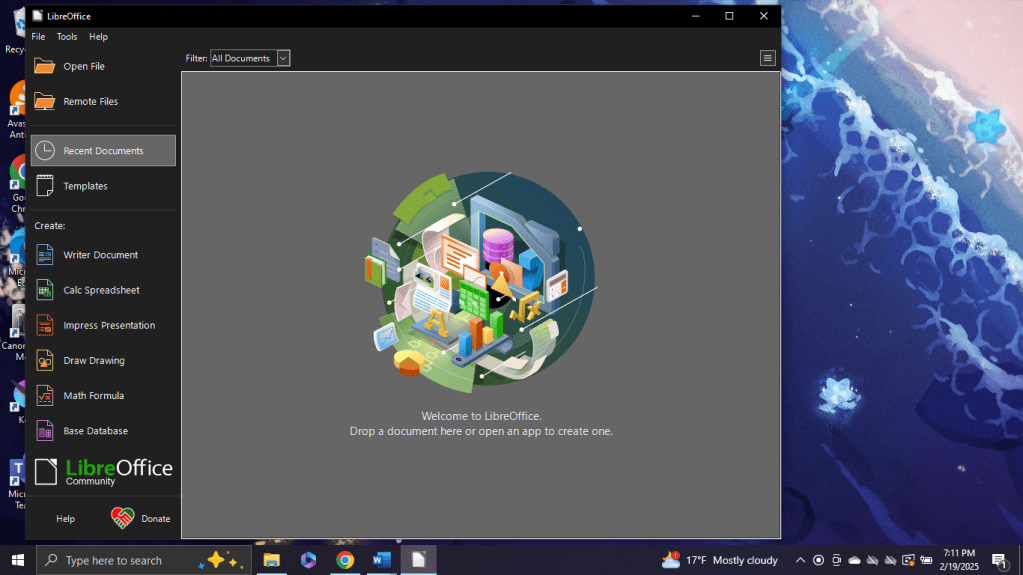
That’s when I hit my limit. I had a poetry book to write, snow day vibes to enjoy, and I wasn’t about to let corporate greed ruin my creative flow. Determined, I opened a new tab and searched for alternatives. That’s when I met my new best friend: LibreOffice.

Let me tell you, LibreOffice is basically Microsoft Office but without the corporate handcuffs. It’s free, offline, and lets me open my own documents without asking for my credit card information. Revolutionary, right?

The best part? It felt just like old-school Word. Simple. Functional. No frills, no nonsense. And, most importantly, no monthly payments draining my bank account. I could write my poetry in peace, snow softly falling outside, without feeling like I had to sell a kidney just to access my own words.

So, here we are. Microsoft Word and I? We’re done. I’ve moved on. LibreOffice and I are getting along great, thank you very much. And the moral of the story? If a company tries to hold your words hostage for a hundred bucks a year, maybe it’s time to break up and find someone (or something) better.

LibreOffice, you’re the real MVP. And Microsoft? Yeah, we’re never, ever getting back together.

How to Develop Your Own Writing Style

Tips to Find Your Voice

In the vast landscape of literature, one of the most cherished attributes a writer can possess is their unique personal style. Much like a fingerprint, your writing style is a distinct imprint of your voice, personality, and perspective. Whether you’re penning prose, composing poetry, or crafting content, cultivating your own literary identity can elevate your work from mere words on a page to a captivating expression of self. So, how does one go about developing their personal style in writing? Let’s delve into the art and craft of writer-ly self-discovery.

1. Know Thyself:

   Before you can develop your personal style, it’s essential to have a deep understanding of who you are as a writer and what you wish to communicate to your audience (Whoever that is! This is another important thing to think about! Who are you writing to? Young Adults? Grieving mothers? Your Great Aunt Mildred? Each of these audiences need different things and you have different things to offer them!) . Reflect on your passions, experiences, and worldview. What themes resonate with you? What emotions stir your soul? By tapping into your innermost thoughts and feelings, you lay the foundation for your unique literary voice. What story do you want to tell? And to whom?

2. Read Widely and Analytically:

   Reading is the nourishment of the writer’s soul. It is the protein shake of your writing inspiration diet… alright this metaphor is falling apart quickly so let’s keep going before somebody notices….

Immerse yourself in a diverse range of literature, from classic novels to contemporary poetry, from genre fiction to literary essays. Pay attention not only to the stories themselves but also to the stylistic choices of the authors. Notice the rhythm of their sentences, the cadence of their prose, the imagery they employ. Take inspiration from writers you admire while remaining true to your own voice. Which CAN be easier said than done. Try to not get all caught up in one singular writer’s work or one genre for fear of having one type of inspirational voice droning in your head. I’m really bad about this too when I write right after listening to an audio book. I am not British and yet sometimes I type like I am because Patrick Stewart reading the Chronicles of Narnia is phenomenal.

3. Experiment with Different Forms and Genres:

   Don’t be afraid to step outside your comfort zone and explore various forms and genres of writing. Whether it’s crafting short stories, experimenting with flash fiction, or delving into creative nonfiction, each genre offers its own unique opportunities for expression. Allow yourself the freedom to play with language, structure, and narrative voice until you find the perfect fit for your style.

4. Hone Your Craft:

   Developing your personal style is an ongoing journey that requires dedication and practice. Commit to honing your craft through regular writing exercises, workshops, and feedback from peers. Pay attention to the feedback you receive (even if it makes you cry sometimes. The only thing worse than killing your darlings is hearing them be critiqued), but always trust your instincts and stay true to your artistic vision. Remember, there are no shortcuts to mastery; it’s through persistence and perseverance that your voice will truly shine.

5. Embrace Authenticity:

   Above all, authenticity is the cornerstone of developing your personal style in writing. Don’t try to mimic the voices of others or conform to trends (As previously stated. Sorry Patrick Stewart); instead, embrace your unique perspective and let your voice ring true. Your readers will be drawn to the sincerity and originality of your writing, and it’s through embracing your authentic self that you’ll forge a deep and lasting connection with your audience (Good ol’ Aunt Mildred or whomever you’ve decided upon).

To Wrap Things Up…

I hope you find these tips both enjoyable and helpful to you. And remember, your voice might change a little with time because, after all, YOU change as well. And that’s okay. It’s alright if you need to revisit your goals. It is okay to reshape your voice along with your experiences as needed or even if you simply notice a shift in your writing over time. As a writer, adopting the mantra that change is good can help you down the road.

Good luck out there and remember- there’s no one who can tell your story like you.

Why I Write

For school, I was tasked for reading a great many number of essays on a singular topic: “Why I Write”. These readings included “Why I Write” by George Orwell, “Why I Write” by Joan Didion, “Why I Write” by Terry Williams, “Why Write” by Paul Austers, “Why I Write” by Reginald Shepherd. Turns out, writers are very concerned about tackling this question and rightly so. Burn-out is a common term used in writing spaces and for good reason. It besets you quickly when you least expect it. Why? Who knows, the answer is rarely the same from person to person. Then there is the whole conundrum of “how so I get out of this head space?”. Turns out, defining your motivations and why you do this whole writing schtick is one good way to get out of this swirling mental blackhole. And so, I created my own “Why I Write” constitution/statement of my own. While this was indeed a school assignment, I still would love to share it. This exercise was unexpectedly cathartic and I definitely recommend you give it a shot if you ever find yourself in a flurry of self doubt and find yourself asking, “Why am I doing this again?”.

I’ve included the video version (created by yours truly) and the essay itself in case you don’t feel like watching my mini-movie filmed on a my old-as-dirt ipad (edited with imovie of course). I won’t be (that) offended, I promise.

The Video:

The Essay:

Why I Write

By Brooke Freeman

I write for a great many number of reasons as do most people I think. Strangely enough, I made a list back in middle school of this very thing. At the tender age of 12, I found that sometimes I didn’t want to work on my story. And so, I made a master list of writing motivation. I dug it up for this question and have been pleasantly surprised that the reasons still very much ring true.

I’m going to share this list with you now in its true form, complete with the starry 2014 bulleted points I had copy-and-pasted from the internet because I could never figure out how to make special characters myself. I will also elaborate on how each reason is true to me to this very day. It’s nice to know that, if anything, I’m consistent.

The feeling of reaching that plot twist

As a kid, I posted to a lot of kid targeted writing chat boards. These boards have long since shut down but in this little internet space, I found an audience. Other kids, like me, who loved writing and loved reading. From early on, I found the joy of writing something unexpected and the reaction of those who read it. Even now, this is a process I still find myself taking joy in. Really it’s the community created in such moments that I find myself coming back to.

Getting to write that scene.

The scene that pictured in all it’s glory. Perhaps the very scene that got me writing the story in the first place to write up to. My chance to drop that one-liner that my young self thought was oh-so-clever. And yet I still do this now. A dynamic captures my fancy. A scene springs to life vividly in my head and I need to write it. And then I build the world around it.

Improving your writing ability

Improvement is a strange thing. I never felt like I was improving until I figured out that it often takes the form of reading one’s past work and cringing. This is something that is even more accurate now that I’m in college as I find myself cringing a lot at whatever work I pumped out in high school. And yet I don’t hate it. You don’t hate a time capsule because it’s old and outdated. You marvel at it and all the trinkets inside. And then you think about how much has changed, most of it for the better.

Making your thoughts more cohesive.

That feeling of seeing a project come together is unmatched. I tasted it as a middle-schooler and thought “wow, that’s pretty neat to see how it ties together”. But as life has gotten messier and my thoughts and brain even more so, I think this reason has become more and more prevalent for me.

Holding your published book in your hands.

I want to hold my words in printed form. Not that that gives them any more importance, but I am drawn to the physical space that words can take up when they’re printed. They’re beautiful as well as accessible.

The aesthetic of the writing life is impeccable. Drink some tea, type away on a rainy day- indulge in it.

Pompous and shallow as it may sound, writing feels important while you’re doing it. It feels whimsical and sometimes even mysterious. It’s easy to romanticize. Not that you should believe yourself any better than those around you but there should be a certain amount of joy you should take in your writing work. I write because I love doing it. I indulge in it.

Hearing from other people who have been touched by your work.

And here we are back at community. It has been a big driving force for me as I continue onward on my writing journey. From 12 years old to present, I loved the connection I got from my work. I had no promise back then that my writing would make it big or make an enormous, uncompromising difference. But maybe it did to a fellow 12-year-old browsing a writing message board. It did for me after all.

But I don’t think it’s sufficient to leave it here. Yes, these reasons are still accurate but they are no longer the full extent as to why I write. I think it would be an indicator of lack of growth within the last 10 years to no add to this list by quite a margin.

I am finding in my 20’s that I write because I love. I can end the sentence there as cliché as I’m sure it sounds. But I won’t.

I write because I love so many things. I love peeling oranges on my front apartment steps. Write because I love petting cats that never belong to me but begrudgingly accepts my affection. I love rain, birds, cathedrals, breakfast, coffee, stars, journals that are empty, journals that are filled, cattle on grass, autumn, pancakes, skeletons, tacos, photos, brown eyes, blue eyes, my mother, my sisters, my brother, and my father. I write because I love.

And finally, I write because God has been kind enough (or cruel enough), to put words in inside of me. Then he allowed me to be fed on a steady diet of books. All kinds of books too. Apologia Science textbooks, The Magic Treehouse books, Narnia, Little house on the prairie, Nacy Drew, The Magic Thief, Lord of the Rings, Calvin and Hobbes just to name a few really important ones. I was fed until I was swollen with words and ideas. Then I was handed a pen and paper-or should I say a laptop with a slow internet connection, a pinball game, and a writing program. Then later a typewriter marked down to $50 at a thrift store. Then an actual laptop. Now it’s a Journal. Paper cradled in Leather.

I write because I am overwhelmed by everything it feels like. Some mornings I feel it more deeply than others. And when I do, I crack open my journal or open up my delipidated laptop. And then I write.

Playlists I’ve been playing on Loop

Music has the remarkable ability to set the mood for any creative endeavor. Whether you’re crafting an intense action scene or a poignant love letter, the right musical backdrop can transport you to the emotional landscape you wish to convey. The beat, rhythm, and melody become the heartbeat of your writing, infusing it with the desired atmosphere.

But I’m sure you already know that. My core audience is writers and we love a good backdrop to day dream to. So, I thought it would be fun to share writing playlists that I’ve been playing on repeat because they provide the perfect atmosphere for whatever I’m working on.

This Gremlincore playlist sets a sort of carefree and quirky vibe. I sometimes just put it on when I’m cooking- I don’t have to be writing. It feels like walking through a forest. I feels like catching lightning bugs. It feels like- I need to be paying more attention to whatever I’m doing. I’ve only gotten three words into my story and I’m already distracted by the immaculate atmosphere this playlist creates.

However, one little side note, if you don’t listen to anything else on this playlist, please check out the “Tardigrade Song” by cosmo sheldrake. It is an immaculate work of scientifically accurate art.

Yeaaaah, it’s no secret I’m a very distracted writer these days. But guess what! Music can help with that too! For many writers, creating a zone of focus is crucial if you’re going to get anything done. Music that is instrumental or ambient genres can act as a sort of shield against the distractions that my brain can conjure up. The rhythmic patterns and soothing melodies serve as a buffer, helping me to immerse myself in their work and maintain a steady flow of ideas. Or at least that’s the hope. This playlist particularly has helped me get quite a few writing assignments done as of late so maybe check it out.

Creating the perfect ambiance for writing involves a delicate balance of sounds that can transport you to a mental space conducive to creativity. Ambient noises and curated playlists can play a pivotal role in setting the tone for your writing environment. The subtle hum of raindrops, the distant chirping of birds, or the calming rustle of leaves—these ambient sounds can transform your workspace into a haven for inspiration…..

….. orrrrrr maybe you just wanna feel like a weary traveler trying to furiously write in a rambunctious tavern. When it comes to ambient noises, I tend to go for fantasy settings especially. I just want to feel like something is going on around me and ambient noises greatly help with this craving. I think it may be a partial side effect of living in a house with siblings growing up and having to get some writing or project done nonetheless.

Don’t mind me living out my Barbie’s 12 Dancing Princesses fantasy over here. This playlist is PERFECT for that or perhaps to be the backdrop of any regency/royal story you’re writing. It’s whimsical, magical, dreamlike- all the good things. Check it out if you’re delusional like me and am still living out that princess fantasy.

Aaaaand I think that just about does it! And now I shall attempt to wrap up this silly little sunday blog post of mine!

Ahem!

The joy of crafting creativity lies not only in the words we put on paper but also in the environment we cultivate. The subtle interplay between ambient noises and curated playlists enhances the writing experience, making it more enjoyable AND immersive. Remember, it’s about the journey NOT the destination. (or some drivel like that. Insert dramatic pause here so you have time to let that profound knowledge sink in).

So, the next time you embark on a writing adventure, consider the mood you desire to set. Whether you choose the gentle whispers of nature, that chatter of a tavern, or the curated tunes of a carefully crafted playlist, I hope the playlists I have shared can be a part of your fun little writing sessions. Happy writing!

How to Write a Good Short Story

Hey friends! Hope you’re doing well this evening. It’s chilly where I’m at and the roads are all iced over so I did college remotely today. It went well and I think I’m starting strong though it’s hard to say since I’ve only been able to attend one full day in person. The classes I’m in this semester are all writing classes since I’ve finished up all the science ones for my biology degree.

One class I’m taking this semester is known as Fiction and short stories. I’m taking this class for my creative writing minor (and for fun!) and because I’ve always struggled a bit with writing short stories. I have this awful habit of rabbit trailing and expanding where it is incredibly unnecessary. You can’t afford to do this in short stories especially. They kind of need to be…yaknow, short. It’s always been a struggle of mine. It’s actually rather intimidating to me to develop so much of a story in such a short amount of time.

This got me sort of thinking about all the elements that go into a strong short story. So, in the spirit of helping me figure out how I can write an effective short story myself, I decided to identify what exactly makes a GOOD short story.

˗ˏˋ ★ ˎˊ˗˗ˏˋ ★ ˎˊStart with a Strong Idea˗ˏˋ ★ ˎˊ˗˗ˏˋ ★ ˎˊ

Begin with a clear and intriguing concept. A short story doesn’t have the luxury of extensive development as previously mentioned, so choose a focused and powerful idea.

˗ˏˋ ★ ˎˊ˗˗ˏˋ ★ ˎˊDevelop Memorable Characters˗ˏˋ ★ ˎˊ˗˗ˏˋ ★ ˎˊ

Even in a short story, your characters should be distinct and memorable. Readers should connect with them or be intrigued by their qualities. Focus on their motivations and how they contribute to the plot.

˗ˏˋ ★ ˎˊ˗˗ˏˋ ★ ˎˊEstablish a Strong Setting˗ˏˋ ★ ˎˊ˗˗ˏˋ ★ ˎˊ

Set the scene effectively. While you may not have room for extensive world-building, provide enough details to immerse readers in the story. Use sensory details to evoke a sense of place.

˗ˏˋ ★ ˎˊ˗˗ˏˋ ★ ˎˊCreate a Compelling Opening˗ˏˋ ★ ˎˊ˗˗ˏˋ ★ ˎˊ

Grab your reader’s attention from the beginning. Open with a strong line, an intriguing situation, or a question that piques curiosity. The opening sets the tone for the entire story.

˗ˏˋ ★ ˎˊ˗˗ˏˋ ★ ˎˊMaintain a Clear Plot Structure˗ˏˋ ★ ˎˊ˗˗ˏˋ ★ ˎˊ

Short stories typically have a simpler structure than novels, but they still require a clear beginning, middle, and end. Develop a plot with a distinct conflict and resolution. Also consider carefully the motivations at play in your tale and how such motivations conflict with each other.

˗ˏˋ ★ ˎˊ˗˗ˏˋ ★ ˎˊFocus on a Single Theme or Message˗ˏˋ ★ ˎˊ˗˗ˏˋ ★ ˎˊ

Short stories are most effective when they have a central theme or message. Identify the core idea you want to convey and weave it into the narrative. Avoid trying to tackle too many themes in a short space. This can make your story seem scattered and unconnected.

˗ˏˋ ★ ˎˊ˗˗ˏˋ ★ ˎˊShow, Don’t Tell˗ˏˋ ★ ˎˊ˗˗ˏˋ ★ ˎˊ

You’ve heard it a million times but I think it’s always worth reiterating. Don’t trick yourself into believing that you don’t have any time at ALL in a short story to provide clear imagery. Use vivid descriptions and action to show what’s happening rather than telling the reader. Engage the senses and create a visual and emotional experience.

˗ˏˋ ★ ˎˊ˗˗ˏˋ ★ ˎˊBuild Tension˗ˏˋ ★ ˎˊ˗˗ˏˋ ★ ˎˊ

Since you have limited space, build tension efficiently. Create conflict early on and escalate it steadily, leading to a satisfying resolution. Tension keeps readers engaged. Ask yourself “what is pulling my reader forward to finish my piece?”

˗ˏˋ ★ ˎˊ˗˗ˏˋ ★ ˎˊCraft Dialogue Carefully˗ˏˋ ★ ˎˊ˗˗ˏˋ ★ ˎˊ

Dialogue is a powerful tool in a short story. Make each line count, revealing character traits, advancing the plot, or adding atmosphere. Ensure that it feels natural and serves a purpose. You don’t have time to indulge in empty chatter between characters. Unless, of course, it’s in character (see Treebeard from The Lord of the Rings here. Though that reference may not be super accurate as The Lord of the Rings was hardly a short story.”

˗ˏˋ ★ ˎˊ˗˗ˏˋ ★ ˎˊConsider the Ending˗ˏˋ ★ ˎˊ˗˗ˏˋ ★ ˎˊ

A short story’s ending should be impactful. It doesn’t necessarily have to be a twist, but it should leave a lasting impression. Consider the emotional resonance you want to achieve. What do you want to leave your readers with. What do you want them to think about upon your story’s end?

˗ˏˋ ★ ˎˊ˗˗ˏˋ ★ ˎˊEdit Ruthlessly˗ˏˋ ★ ˎˊ˗˗ˏˋ ★ ˎˊ

Or kill your darlings or whatever. Given the limited space, every word should contribute to the story. During the editing process, be ruthless in cutting unnecessary elements. Ensure that each sentence serves a purpose. If you’re anything like me, this may feel a little painful. I make the mistake of feeling each line is precious to me. Unfortunately, this is not the case and some decisions must be made to further the conciseness of the story.

˗ˏˋ ★ ˎˊ˗˗ˏˋ ★ ˎˊSeek Feedback˗ˏˋ ★ ˎˊ˗˗ˏˋ ★ ˎˊ

Share your short story with others and gather feedback. Other perspectives can provide valuable insights and help you identify areas that may need improvement.

Remember that brevity is key in a short story. Every element, from characters to plot points, should serve the overall narrative purpose. Experiment with different styles, voices, and themes to discover what works best for your story.

Phew. That was a lot. But I think making a concise list helped me work through what to focus on when writing for my class. Perhaps this list will help you too? Either way, thanks for taking the time to read! Thanks for stopping by!

Writing Space Decor Tips

I wrote a post about this awhile back called “Ways to Brighten up Your Writing Space” and while I do still like that post and think it’s useful, I do want to create a more broad post on how you can go about creating a space that’s really your own. While a list of specific items you could use to decorate your spice is nice, I wanted to take a little step back and talk about other strategies you could consider employing to make your writing atmosphere that much more inspiring.

Creating a writer’s bedroom or a cozy little writing space involves designing an area that fosters creativity, focus, and comfort. =So here are a few things for you to think about as your decorating it.

1. ˗ˏˋ ★ ˎˊ˗˗ˏˋ ★ ˎˊ˗Cozy Reading Nook:˗ˏˋ ★ ˎˊ˗˗ˏˋ ★ ˎˊ˗

   – Design a comfortable reading corner with a plush chair or cozy bean bag, a soft throw blanket, and ample cushions. Add a small bookshelf or floating shelves for easy access to your favorite books.

2. ˗ˏˋ ★ ˎˊ˗˗ˏˋ ★ ˎˊ˗Inspiring Wall Art:˗ˏˋ ★ ˎˊ˗˗ˏˋ ★ ˎˊ˗

   – Decorate the walls with motivational quotes, literary-themed prints, or artwork that inspires creativity. Consider a large chalkboard or corkboard for jotting down ideas, outlines, or favorite quotes.

3. ˗ˏˋ ★ ˎˊ˗˗ˏˋ ★ ˎˊThink about your color Palettes: ˗ˏˋ ★ ˎˊ˗˗ˏˋ ★ ˎˊ˗

   – Choose a color scheme that promotes focus. Soft, neutral tones like beige, light gray, or muted blues and greens can create a calming atmosphere while bright, exciting colors like red and yellow may excite your brain into work mode. Pick whatever works for you.

4. ˗ˏˋ ★ ˎˊ˗˗ˏˋ ★ ˎˊ˗Personalized Bookshelves:˗ˏˋ ★ ˎˊ˗˗ˏˋ ★ ˎˊ˗

   – Arrange your bookshelves in an organized and visually pleasing manner. Mix books with personal items, decorative pieces, and plants to add warmth and personality.

5. ˗ˏˋ ★ ˎˊ˗˗ˏˋ ★ ˎˊ˗Comfortable Writing Desk:˗ˏˋ ★ ˎˊ˗˗ˏˋ ★ ˎˊ˗

   – Invest in a comfortable and functional writing desk. Make sure it’s spacious enough for your writing essentials, and consider a desk with drawers for extra storage.

6. ˗ˏˋ ★ ˎˊ˗˗ˏˋ ★ ˎˊ˗Task Lighting:˗ˏˋ ★ ˎˊ˗˗ˏˋ ★ ˎˊ˗

   – Install adequate task lighting on or near the writing desk to reduce eye strain. Adjustable desk lamps or wall-mounted lights can provide focused illumination for your writing space.

7. ˗ˏˋ ★ ˎˊ˗˗ˏˋ ★ ˎˊ˗Candles or Essential Oil Diffusers:˗ˏˋ ★ ˎˊ˗˗ˏˋ ★ ˎˊ˗

   – Create a calming atmosphere with scented candles or essential oil diffusers. Scents like lavender, eucalyptus, or citrus can enhance concentration and relaxation.

8. ˗ˏˋ ★ ˎˊ˗˗ˏˋ ★ ˎˊ˗Comfortable Bedding:˗ˏˋ ★ ˎˊ˗˗ˏˋ ★ ˎˊ˗

   – Opt for soft and comfortable bedding to ensure a good night’s sleep. A cozy bed with plush pillows and a warm throw can also serve as an additional reading or writing space.

9. ˗ˏˋ ★ ˎˊ˗˗ˏˋ ★ ˎˊ˗Bulletin Board or Pinboard:˗ˏˋ ★ ˎˊ˗˗ˏˋ ★ ˎˊ˗

   – Install a bulletin board or pinboard near your desk to display notes, outlines, and visual inspirations. This can help you stay organized and keep important information easily accessible.

10. ˗ˏˋ ★ ˎˊ˗˗ˏˋ ★ ˎˊ˗Soft Area Rug:˗ˏˋ ★ ˎˊ˗˗ˏˋ ★ ˎˊ˗

    – Place a soft area rug near your writing desk or reading nook to add warmth and texture to the room. This can make the space more inviting and comfortable.

11. ˗ˏˋ ★ ˎˊ˗˗ˏˋ ★ ˎˊ˗Nature-Inspired Elements:˗ˏˋ ★ ˎˊ˗˗ˏˋ ★ ˎˊ˗

    – Integrate natural elements into your decor, such as potted plants, succulents, or small indoor trees. Nature-inspired decor can promote a sense of tranquility and creativity.

12. ˗ˏˋ ★ ˎˊ˗˗ˏˋ ★ ˎˊ˗Wall-Mounted Shelves:˗ˏˋ ★ ˎˊ˗˗ˏˋ ★ ˎˊ˗

    – Install wall-mounted shelves above the desk or beside the bed to save space and showcase your favorite books, writing tools, and decorative items.

13. ˗ˏˋ ★ ˎˊ˗˗ˏˋ ★ ˎˊ˗Personalized Art and Memorabilia:˗ˏˋ ★ ˎˊ˗˗ˏˋ ★ ˎˊ˗

    – Display personal artwork, awards, or items that hold sentimental value. Surrounding yourself with meaningful objects can enhance your connection to the space.

14. ˗ˏˋ ★ ˎˊ˗˗ˏˋ ★ ˎˊ˗Ambient Lighting:˗ˏˋ ★ ˎˊ˗˗ˏˋ ★ ˎˊ˗

    – Use ambient lighting, such as string lights or a soft pendant light, to create a cozy and inviting atmosphere. Dimmable lights can be adjusted to suit different moods and tasks.

15. ˗ˏˋ ★ ˎˊ˗˗ˏˋ ★ ˎˊ˗Noise-Canceling Elements:˗ˏˋ ★ ˎˊ˗˗ˏˋ ★ ˎˊ˗

    – Consider adding noise-canceling elements like heavy curtains or a comfortable chair with sound-absorbing upholstery to create a quieter and more focused environment.

Remember to personalize the space with items that inspire you and make you feel comfortable. A writing space should be a retreat that encourages creativity and provides a peaceful sanctuary for your writing endeavors.

And What Are We Praying to?

“Stop worshipping answers,” the wise ones declare,
In the quiet of wisdom, breathe the open air.
For truth is a river, winding, untamed,
In the dance of questions, knowledge is named.

In the hush of the cosmos, where mysteries reside,
The seeker finds solace, on truth’s gentle tide.
Not in rigid doctrines or dogmas confined,
But in the ebb and flow of the curious mind.

Let queries unfurl like petals at dawn,
In the garden of wonder, where wisdom is drawn.
Each puzzle, a thread in the fabric of thought,
A tapestry woven, in questions, we’re taught.

The stars in their silence, the oceans profound,
Whisper the secrets that answers can’t sound.
For the essence of knowing is not in the end,
But the journey through questions, a lifelong friend.

So cease the relentless pursuit of the final,
Embrace the uncertainty, the enigma, the primal.
In the chapel of wonder, let questions be sung,
The hymn of the curious, forever young.