

I have taken a brief break from my writing related posts to bring you this statement:
There are jellyfish who have been to space.
The fact that this statement is true makes me happy as well as utterly curios, as I am sure you are (and a little bit jealous now that I think about it. These little creatures have been to space and somehow I haven’t? The injustice!).
So, why exactly did we, as a human race, decide to send jellyfish to space? Don’t we already have enough weird hobbies?
The answer is actually quite simple: for science.
Funnily enough, this occurred all the way back in the 1990’s (and I’m only just now finding this out! My education has failed me!)
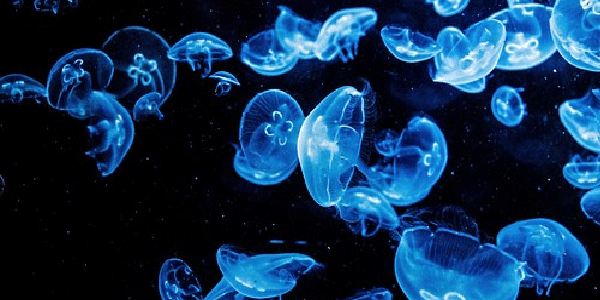
The long answer is it was for a project NASA came up with to launch a load of 2,478 jellyfish polyps. These creatures were contained within flasks and bags that were filled with artificial seawater. Another fun little sub-fact about this experiment is the species they sent into space were called “Moon Jellyfish”.
They then reproduced to where there were near 60,000 jellyfish orbiting our little planet. A whole giant sub group of space jellyfish had been born without any knowledge of Earth’s gravity.
Which was the point.
Scientists did this bizarre experiment to figure out how a jellyfish that developed in space would respond to earthly gravity, because, despite the sea creatures not having legs, they do have a sensitivity to gravity. Turns out a space jellyfish has more issues getting used to earth’s gravity when they were raised in space, implying that a creature raised space’s inner ear and overall body’s sense of gravity is impeded when they are raised in space with 0 gravity. In short, jellyfish, when raised in space, were found unfit for life on Earth.
So what does this prove?
Well it implies the effects being raised in space might have on a person and may mess up their sense of gravity as well. This is important for people to know if we ever want to pursue a space colony of sorts or what would happened if a child were raised on a space expedition.
So yeah! For science!

 By the Brooke